
US Revokes Brazil Ambassador's Visa Amid Diplomatic Tensions
The US revoked the visa of Brazil's ambassador to Washington in an escalating diplomatic feud, retaliating after Brasilia denied entry to two American officials ahead of Brazil's presidential election. Tensions over election meddling, tariffs, and the stalled Daniel Perez nomination deepen.
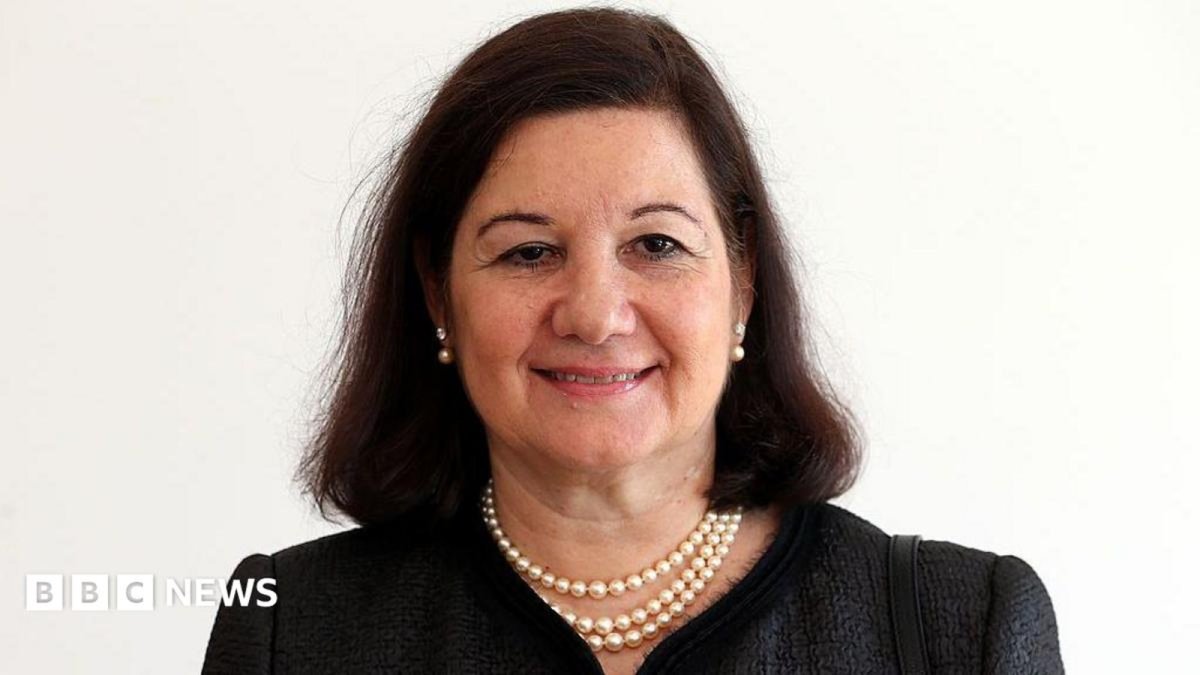
The United States has revoked the visa of Brazil's ambassador to Washington, a move that has sent shockwaves through diplomatic circles in Brasilia and deepened a rift between two of the Americas' largest democracies ahead of Brazil's presidential election in October. The decision, confirmed by a US State Department official, is the latest and most personal escalation in a feud that has been building for months, touching on everything from election integrity to trade tariffs. For Brazilians, the sight of their top diplomat being stripped of travel privileges in the United States is a stark reminder of how far relations have fallen, and a sign of the turbulent political season ahead.
US revokes Brazilian ambassador's visa in escalating row
Brasilia, Brazil — The visa cancellation for Ambassador Maria Luiza Ribeiro Viotti comes as a direct response to Brazil's decision last month to deny entry to two US State Department officials. The Brazilian government, led by President Luiz Inácio Lula da Silva, accused those officials of seeking to "meddle" in the country's electoral process, a charge the US has dismissed as "baseless." While a US official was careful to state that the action does not mean Viotti is expelled or permanently banned from the country, the message is unmistakable: Washington is demanding reciprocity, and it is willing to turn the screws on a key diplomatic partner to get it.
The Visa Revocation and Reciprocal Diplomacy
The mechanics of the visa revocation were confirmed by a State Department spokesperson who framed the move as a "reciprocal action" after weeks of failed back-channel negotiations. "We communicated continually with the Brazilian government for weeks and have given the Brazilian government every opportunity to do the right thing, yet they have continually delayed and obfuscated," the spokesperson said. The department added that while Viotti's visa is now void, "additional diplomatic options remain on the table," leaving the door open for further punitive measures if Brasilia does not adjust its posture.
In a statement to the BBC, the Presidency of the Republic of Brazil pushed back hard, labeling the US justifications for cancelling the envoy's visa as "false." The Brazilian response reflects a deep-seated frustration in Itamaraty, the foreign ministry, which views the US actions as a coordinated campaign to undermine Brazil's sovereignty ahead of a high-stakes vote.
The Denied US Delegation and Election Meddling Dispute
The immediate trigger for the crisis was Brazil's decision to block two senior US officials—Riley M Barnes, an assistant secretary of state for democracy, human rights, and labour, and Samuel Samson, a deputy assistant secretary in the same section—from entering the country in late July. The US officials had planned a visit focused on freedom of expression, religion, and election integrity, and were expected to meet with right-wing candidate Flávio Bolsonaro. The Brazilian presidency told the BBC that the planned visit was "an unacceptable attempt to interfere in the country's domestic political process," a justification that Washington has rejected outright.
This is not a minor bureaucratic spat. The denial of visas to senior diplomats is an extraordinary act in international relations, reserved for moments of acute crisis. By barring the delegation, Lula's government signaled that it views the US State Department under Secretary Marco Rubio as an active adversary in the electoral arena, not a neutral observer.
Flávio Bolsonaro's Voting Machine Claims and the TSE Rejection
At the center of the storm is Flávio Bolsonaro, the son of former President Jair Bolsonaro, who is currently serving a 27-year prison sentence for plotting a coup after losing the last election. A few weeks ago, Flávio told a roomful of diplomats that Brazil's electronic voting machines had the same origin as Venezuela's, citing a CIA report about electoral fraud in that country. He later denied questioning the integrity of Brazil's system, claiming he merely wanted more international observers. However, the damage was done, and the Brazilian government used his remarks as justification for blocking the US delegation.
Flávio's claims have been categorically rejected by Brazil's Superior Electoral Court (TSE), which oversees the country's elections. The Brazilian electronic voting system has been praised by independent experts as one of the most secure in the world, with a robust audit trail and no recorded cases of fraud since its implementation in 1996. The TSE's rejection of Flávio's insinuations is a critical counterweight to the narrative being pushed by the Bolsonaro camp, which continues to sow doubt about the electoral process.
The Daniel Perez Ambassadorship Standoff
Adding another layer to the conflict is Brazil's refusal to approve Donald Trump's nominee for US ambassador to Brazil. Trump nominated Daniel Perez, a state representative from Florida and a close ally of Secretary Rubio, on 1 June—without seeking Brazil's approval beforehand, a common diplomatic courtesy that was notably absent. The Brazilian government has told the BBC that it is abiding by international law and that the Perez request "remains under review," a diplomatic euphemism that suggests the nomination is effectively frozen.
This standoff is significant because it signals that Brazil is unwilling to accept the Trump administration's picks without question. President Lula has been publicly critical of the State Department under Rubio, accusing it of increasing intervention in Latin American politics, including endorsing conservative candidates in regional elections. The Perez nomination is now caught in the crossfire, a hostage to the broader deterioration in bilateral relations.
Broader US-Brazil Tensions: Tariffs and Gang Designations
The visa dispute is not an isolated incident but part of a broader pattern of friction that has flared up in recent months. The US has reimposed tariffs on Brazilian goods, a move that has hit Brazilian exporters hard and drawn sharp criticism from Brasilia. Additionally, Washington has designated Brazilian gangs as terrorist organizations, a classification that Brazil views as an infringement on its domestic security policy and a potential pretext for US intervention in the Amazon region.
These issues have created a toxic atmosphere where even routine diplomatic functions become battlegrounds. The tariffs, in particular, have economic consequences that resonate with ordinary Brazilians, who are already struggling with inflation and unemployment. The gang designations, meanwhile, touch on sensitive issues of national sovereignty, particularly in the favelas of Rio de Janeiro and São Paulo, where US counter-narcotics policies are viewed with deep suspicion.
What This Means for Brazil's Election Season
With the presidential election roughly two months away, the diplomatic crisis is injecting a volatile element into an already polarized political landscape. Lula's government is likely to use the visa revocation as evidence that the US is trying to interfere in the election, a narrative that resonates with his base and with voters who harbor anti-American sentiments. Conversely, Flávio Bolsonaro and his allies will seize on the crisis to argue that Lula's foreign policy has isolated Brazil and damaged its standing on the world stage.
The TSE's rejection of Flávio's voting machine claims is a crucial safeguard, but the political noise surrounding the election is likely to intensify. International observers, including those from the UN and the OAS, will be watching closely, and any perception of external interference—real or imagined—could cast a shadow over the results. The Brazilian electorate, already deeply divided, now faces the prospect of an election conducted under the cloud of a major diplomatic rupture.
Regional Context: US Pressure Across Latin America
Brazil is not alone in feeling the squeeze from Washington. Across Latin America, the Trump administration has adopted a more aggressive posture, particularly under Secretary Rubio, who has made no secret of his preference for conservative governments in the region. From endorsing candidates in elections to imposing sanctions and tariffs, the US is reasserting its influence in a region that has increasingly sought to chart its own course.
This is a delicate moment for Latin American diplomacy. Countries like Argentina, under President Javier Milei, have aligned closely with Washington, while others, like Mexico and Colombia, have sought to maintain a more independent stance. Brazil, as the region's largest economy and most populous nation, is the natural leader of the latter camp, and its confrontation with the US is being watched closely by its neighbors. The outcome of this standoff could set the tone for US-Latin American relations for years to come.
What Happens Next
The immediate future is uncertain. The US has said that "additional diplomatic options remain on the table," suggesting that further measures could follow if Brazil does not relent on the Perez nomination or the visa denials. Brazil, for its part, has shown no signs of backing down, with the presidency dismissing US justifications as "false." The risk of a full-blown diplomatic rupture is real, though both sides have stopped short of severing ties entirely.
For Ambassador Viotti, the practical impact of the visa revocation is unclear—she may still be able to conduct her duties from Washington, but her ability to travel freely within the US is now severely restricted. For the Brazilian government, the crisis is a test of its resolve and its ability to navigate a hostile US administration without sacrificing its national interests. As the election approaches, all eyes will be on Brasilia and Washington to see who blinks first.
This article was produced with AI-assisted research and editorial support. Sources: BBC News.
By Elena Vasquez, Staff Writer
What's Your Reaction?
 Like
0
Like
0
 Dislike
0
Dislike
0
 Love
0
Love
0
 Funny
0
Funny
0
 Wow
0
Wow
0
 Sad
0
Sad
0
 Angry
0
Angry
0
Latin America Correspondent at Global1.News. Based in Mexico City, covering politics, economics, energy, and culture across the region. Brings an on-the-ground perspective to stories spanning from the Rio Grande to Patagonia.









Comments (0)