
US offers $1bn to Colombia on new right-wing president's first day of office
US pledges $1bn to Colombia's new right-wing president Abelardo de la Espriella on his first day, promising an "all-out war" on cartels. The shift isolates Brazil's Lula ahead of October's election against Flávio Bolsonaro.
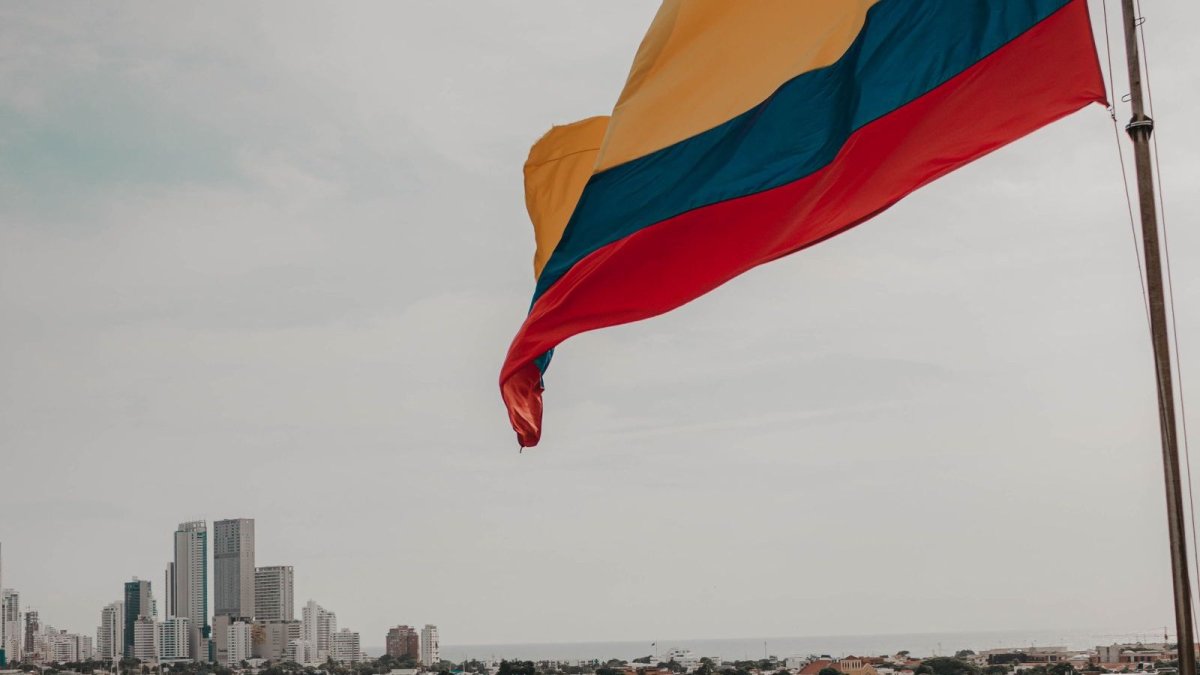
Within hours of Abelardo de la Espriella taking the oath of office in Cali on Friday, Washington pledged $1 billion in security assistance to Colombia — a declaration of intent that echoed across a region already tilting decisively to the right. For those who lived through Plan Colombia, the script is familiar: a new hardline president, a US cheque, and a promise of "all-out war" against drug cartels. The question is whether this time the ending will be different — and what it means for the rest of Latin America, including Brazil, where Luiz Inácio Lula da Silva faces his own electoral reckoning in October.
Bogotá, Colombia — The first day of Abelardo de la Espriella's presidency did not look like a typical transfer of power in this Andean nation. Instead of Bogotá's colonial halls, the millionaire lawyer chose the western city of Cali for his swearing-in ceremony — a deliberate signal of rupture with the political elite he has spent his campaign mocking as "the usual suspects". And before the day was out, the United States had put its financial weight behind him, with the State Department announcing a $1 billion "security package" to fight organised crime and illegal immigration.
The $1bn pledge and the "all-out war" promise
Speaking to troops at a nearby military base in his first official address, de la Espriella left no doubt about the direction of his government. He vowed to crush armed insurgents, rebuild Colombia and defend democracy "by reason or by force", promising that in "the age of the Tiger" — his self-styled nickname — criminals would find no refuge anywhere. "There will not be a single place in our territory where criminals can feel safe," he declared. It was the language of a commander, not a negotiator, and it marked a definitive break with the approach of his predecessor, Gustavo Petro.
The US State Department framed the $1 billion package as a tool to achieve "our shared goals", pointing to the fight against organised crime and illegal immigration — two issues on which US President Donald Trump repeatedly attacked Petro's record. The pledge came just hours after de la Espriella was sworn in, underlining the alignment between the two governments. Trump had already endorsed the then-candidate before the June election, saying de la Espriella had the "total support and strength of the United States behind him" and predicting a "much better relationship" with Colombia. That prediction is now being put into practice.
From "total peace" to "iron fist" — the Petro reversal
The contrast between the two Colombian administrations could not be starker. Gustavo Petro, Colombia's first left-wing president, pursued what he called a "total peace" strategy to resolve the country's internal armed conflict — an unprecedented attempt to negotiate with guerrilla groups while offering financial incentives to farmers to abandon coca cultivation. His government prioritised dialogue over bullets, seeking to address the root causes of violence rather than simply its symptoms.
Critics say the strategy failed. Membership of armed groups has expanded in recent years, and a brutal conflict between rival rebel factions along the Colombia-Venezuela border displaced tens of thousands of people last year. Violence, extortion and drug trafficking continued to plague vast swaths of the country. Trump, for his part, repeatedly blamed Petro's policies for the flow of drugs and migrants into the United States. De la Espriella has now pledged to abandon "total peace" entirely, replacing it with what he calls an "iron fist". His model is not Colombia's past but the present of El Salvador and Ecuador, where Nayib Bukele and Daniel Noboa have pursued heavy-handed crackdowns on gangs — and both enjoy significant domestic popularity as a result.
Petro, who could not stand for another term, backed left-wing candidate Iván Cepeda in the election that followed. Both had insisted Colombia should not become another "vassal" of the United States. Cepeda lost. And in one of his first acts as president, de la Espriella has pledged to join the "Shield of the Americas" security partnership founded by Trump — a formal alignment Petro had resisted.
The "Shield of the Americas" and a region shifting right
Colombia's accession to the Shield of the Americas brings it into league with other right-wing governments that have courted the Trump administration, most notably Argentina under libertarian President Javier Milei — a figure de la Espriella has said he admires. The benefits of such alignment are tangible: Argentina received a $20 billion US Treasury bailout, and Trump has made clear that support is conditional on Milei remaining in power, saying he would feel "a lot differently" about backing the country if a left-wing president were to replace him.
The message has not been lost on the region. Trump has threatened Cuba with treatment similar to that meted out to Venezuela's socialist President Nicolás Maduro, who was seized along with his wife, Cilia Flores, to stand trial on drug charges in the United States — a move that cleared the way for US firms to tap Venezuela's oil reserves. Petro was highly critical of that operation and of Trump's broader influence in Latin America. But with Petro now out of office, one of the region's most vocal critics of US intervention has been silenced.
De la Espriella's election is the latest in a cascade of rightward shifts across Latin America, driven by economic hardship and public fear of gang violence. Bukele in El Salvador, Noboa in Ecuador, Milei in Argentina, Keiko Fujimori in Peru, and now de la Espriella in Colombia — the political map of the region is changing colour.
What it means for Brazil and Lula's shrinking alliances
For Lula da Silva, the Colombian result is more than a distant diplomatic shift — it narrows an already thin field of allies in South America. With Petro gone and Fujimori ascendant in Peru, the Brazilian president has lost two sympathetic partners in quick succession. His remaining allies form a dwindling list, and his ambitions of regional integration and Amazonian cooperation now face a wall of right-wing governments far more receptive to Washington than to Brasília.
The timing could not be worse. Brazil holds presidential elections in October, and Lula will face Flávio Bolsonaro, the son of jailed former President Jair Bolsonaro — a far-right populist with close relations to Trump and whose movement has drawn inspiration from the very leaders now consolidating power across the region. The shifting regional landscape is not merely a diplomatic concern for Lula; it is ammunition for his domestic opponents, who will argue that Brazil is being left behind as its neighbours turn toward a new model of security and economic policy.
There is also deeper anxiety in Brasília about the precedent being set. The seizure of Maduro, the threats against Cuba, and now the spectacle of a US-backed Colombian president promising to crush the left's legacy "by reason or by force" — these are not abstract regional developments for Brazilian policymakers. They are warnings about what happens to leaders who fall out of favour with Washington.
The October test: Flávio Bolsonaro and the region's future
The Brazilian election in October is shaping up to be the decisive battleground for Latin America's political direction. If Flávio Bolsonaro were to win, the region's rightward shift would become nearly total — a hemisphere aligned behind a Trumpian vision of security, trade and sovereignty. If Lula were to hold on, Brazil would become the last great counterweight to Washington's reassertion of influence in Latin America.
De la Espriella's victory offers a template for the Bolsonaro campaign. Like the Colombian, the Brazilian candidate is running as an outsider against the political establishment, promising an "iron fist" against crime and a closer alliance with the United States and Israel. The Colombian's decision to take his oath of office in Cali rather than Bogotá — and his media-savvy performance as a maverick millionaire — are tactics that resonate beyond Colombia's borders. Strategists on both sides will be studying the de la Espriella playbook closely.
For now, the $1 billion pledge stands as both a reward and a promise. It rewards de la Espriella for his alignment with Washington, and it promises similar treatment to any Latin American leader willing to follow the same path. The region has seen this movie before — Plan Colombia, the free trade agreements, the repeated cycles of US-backed security offensives that have failed to end drug trafficking or bring lasting peace. What is new is the speed and explicitness with which the United States is now choosing its friends and punishing its adversaries.
Colombia's new president has promised to rebuild his country and defend democracy "by reason or by force". The coming months will test whether the "age of the Tiger" brings the security Colombians crave, or simply a return to the familiar pattern of violence and intervention that has marked the region's history for decades. For Brazilians watching from afar, the stakes of October have never been clearer.
By Elena Vasquez, Staff WriterThis article was produced with AI-assisted research and editorial support. Reporting is based on sources cited in the article.
What's Your Reaction?
 Like
0
Like
0
 Dislike
0
Dislike
0
 Love
0
Love
0
 Funny
0
Funny
0
 Wow
0
Wow
0
 Sad
0
Sad
0
 Angry
0
Angry
0

Latin America Correspondent at Global1.News. Based in Mexico City, covering politics, economics, energy, and culture across the region. Brings an on-the-ground perspective to stories spanning from the Rio Grande to Patagonia.











Comments (0)