
U.S. Military Disables Three Iranian Oil Tankers After Missiles Target Navy Ships
U.S. forces disabled three Iranian oil tankers after IRGC missile attacks on Navy ships, escalating a six-month conflict. CENTCOM warns of economic costs, while Iran's state media disputes details. Global oil markets brace for volatility as the truce remains collapsed.
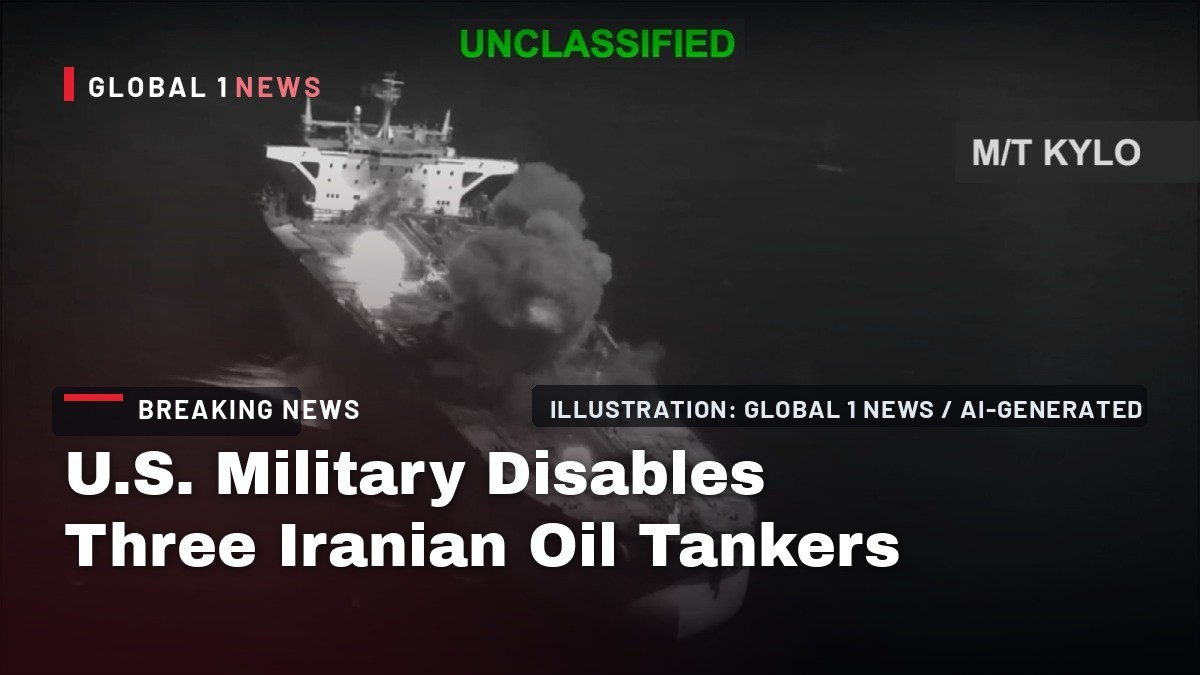
The United States military struck and disabled three Iranian crude-oil tankers on Saturday, September 5, 2026, after the Islamic Revolutionary Guard Corps (IRGC) launched ballistic missiles toward two U.S. Navy warships patrolling regional waters. U.S. Central Command (CENTCOM) confirmed that an aircraft carrier and a guided-missile destroyer evaded "multiple unprovoked Iranian attacks," with no American personnel injured in the exchange. The strikes mark a significant escalation in the six-month conflict, targeting the economic lifeline that funds the IRGC and its armed proxies across the Middle East.
According to CENTCOM's primary release, U.S. forces "permanently disabled" the IRGC crude carrier M/T Downy off the coast of Kharg Island and the M/T Stark 1 near the port of Jask, east of the Strait of Hormuz. A third, unladen carrier—the M/T Kylo, also known as the "Noxen"—was "completely destroyed" in the Gulf of Oman after being struck in multiple critical locations. CENTCOM said the crew of the Kylo was directed to abandon ship before the final strike, underscoring an effort to minimize casualties even as the military pursued its objective.
Admiral's Warning: Economic Cost Over Military Escalation
Adm. Brad Cooper, CENTCOM commander, delivered a stark message following the operation: "Let the message to the IRGC be clear: If you shoot at two of our ships, we will impose an even higher economic cost—taking out three of yours." His statement framed the strikes as a deliberate strategy to degrade Iran's oil export capacity rather than engage in a broader naval confrontation. Cooper added that the U.S. will "not hesitate to defend American forces, and if necessary, destroy Iran's limited and exposed oil fleet."
The admiral's language reflects a calculated shift in tactics. By targeting tankers rather than military assets, the U.S. aims to choke off the revenue stream that sustains the IRGC's operations. CENTCOM described the three vessels as part of a "multibillion-dollar shadow network" that finances Iranian proxies in Lebanon, Yemen, and Syria. The choice of targets—Kharg Island and Jask—is significant: Kharg Island hosts the terminal through which Iran exports most of its oil, making it a strategic chokepoint for Tehran's economy.
Secretary of War Pete Hegseth reinforced the administration's stance in a social media post following the strikes. "It's simple: if Iran shoots at U.S. ships, we will destroy (and sink) their oil tankers. All they have to do is not shoot at @USNavy," he wrote. The blunt warning leaves little room for ambiguity, signaling that Washington views the tanker fleet as a legitimate target in response to any aggression against American naval forces.
Iranian State Media Offers Divergent Account
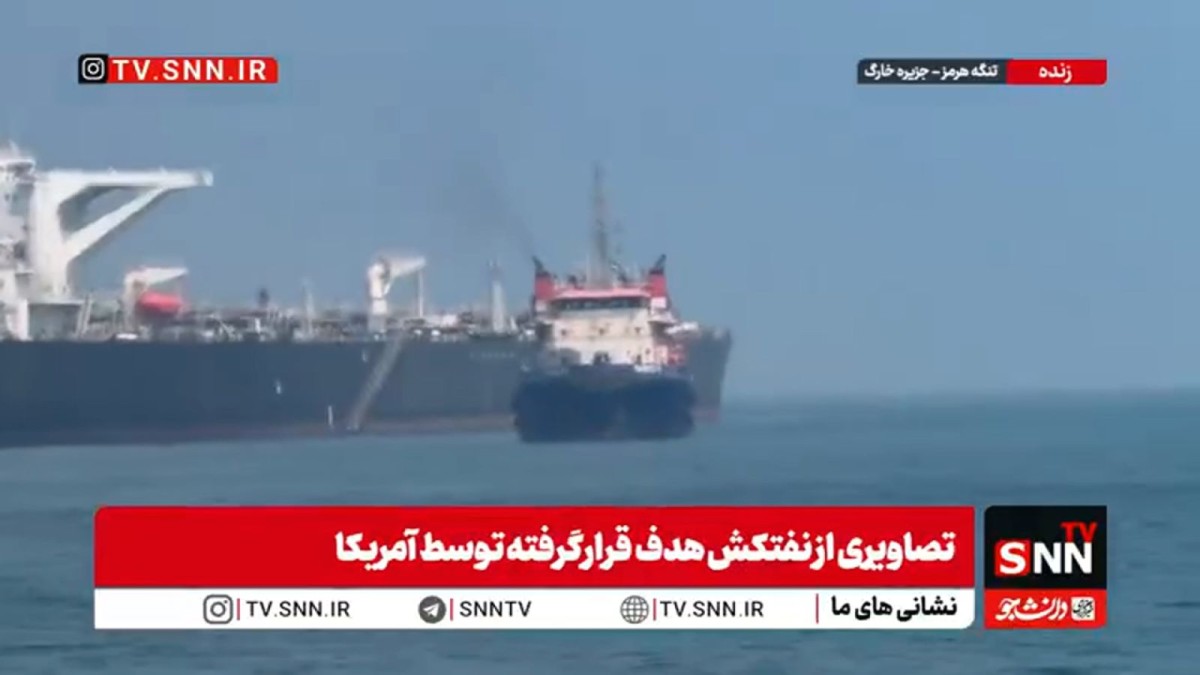
Iranian state broadcaster IRIB reported that U.S. forces struck three Iranian oil tankers in the Persian Gulf and Sea of Oman, but its account differs on key details. A reporter on Kharg Island in Bushehr Province said an Iranian tanker was targeted near the island in the morning, with no casualties reported, and that the vessel's cooling system extinguished the fire within the first hour. Iranian state TV earlier claimed four missiles struck a tanker about six miles (10 km) from Kharg Island, suggesting a more limited attack than CENTCOM described.
IRIB also said two tankers were struck in the Jask area of Hormozgan province, but provided no further details on their condition or crew status. Notably, there was no immediate official statement from Tehran's government, leaving a vacuum in the narrative. The discrepancy between CENTCOM's account of "permanent disablement" and IRIB's suggestion of contained damage highlights the fog of war and the propaganda battle that accompanies every strike in this conflict.
CNN reported that radio warnings were issued before at least one strike, including a U.S. aircraft telling the Stark 1's crew it had 10 minutes to clear the stern. This detail suggests the U.S. military took steps to avoid civilian casualties, even as it pursued the destruction of the tankers. The warning time, while brief, indicates an operational protocol designed to balance military objectives with humanitarian considerations.
Six Months of Conflict: From Feb. 28 to the Present
The tanker strikes are the latest chapter in a conflict that began Feb. 28, 2026, with U.S. and Israeli attacks on Iran. Now in its sixth month, the war has been described as on-again/off-again, with periods of intense fighting punctuated by fragile ceasefires. The conflict escalated dramatically in mid-April when Iran moved to effectively shut the Strait of Hormuz, a critical artery for global oil supplies. The U.S. responded with a naval blockade of Iranian ports, tightening the economic noose around Tehran.
The stakes are immense. Before the war, the Strait of Hormuz carried roughly 20 million barrels of oil and petroleum products a day—about one-fifth of global supply—and handled on the order of 138 vessels daily. Any sustained disruption to this waterway sends shockwaves through global energy markets, affecting prices at the pump for consumers worldwide. Oil market analysts have warned of fresh pressure on prices and shipping insurance with each escalation round, and Saturday's strikes are unlikely to ease those concerns.
Diplomatic efforts have faltered repeatedly. Washington and Tehran signed an interim agreement on June 17, 2026, intended to wind down the conflict, reopen the strait, and pause fighting for 60 days while opening negotiations on Iran's nuclear program. That truce collapsed on July 8, 2026, just three weeks into the pause, with both sides trading blame for the breakdown. Since then, the conflict has simmered, with occasional flare-ups keeping the region on edge.
This Week's Escalation: First Strikes in Over a Month
This week marked a turning point, as the two sides traded strikes for the first time in more than a month. Earlier in the week, at least five people were killed during a U.S. bombardment of southern Iran, according to reports from the region. The deaths, while not officially confirmed by CENTCOM, underscore the human cost of a conflict now in its sixth month.
The missile attacks on U.S. Navy ships that preceded Saturday's tanker strikes suggest the IRGC is willing to risk direct confrontation with American forces. The fact that both warships evaded the attacks without casualties may embolden U.S. commanders to pursue even more aggressive targeting of Iran's oil infrastructure. Admiral Cooper's warning about destroying Iran's "limited and exposed oil fleet" hints at a broader campaign to come if the IRGC continues its provocations.
The timing is politically sensitive. With U.S. congressional elections scheduled for November, President Donald Trump's administration faces pressure to project strength abroad while managing domestic concerns about inflation and energy prices. Trump's characterization of the conflict as "small potatoes" on Sept. 4, a day before the tanker strikes, increasingly looks at odds with the reality of a widening naval confrontation in the Persian Gulf.
Kharg Island: The Economic Heart of Iran's Oil Exports
Kharg Island's role in Iran's oil infrastructure cannot be overstated. The island hosts the terminal through which Iran exports most of its crude, making it a strategic target for any military campaign aimed at crippling Tehran's economy. Saturday's strike on the M/T Downy off Kharg Island's coast was likely intended to disrupt loading operations and signal that no vessel is safe, even in Iran's most protected waters.
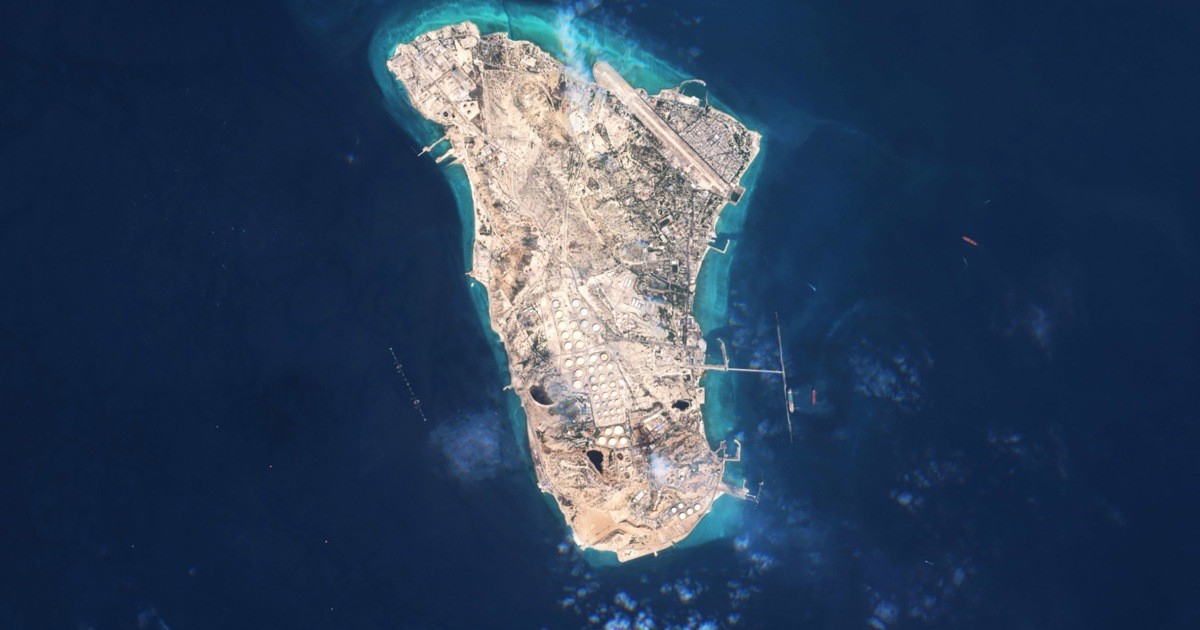
The choice of Jask as a target is equally significant. Located east of the Strait of Hormuz, Jask has been developed as an alternative export point, allowing Iran to bypass the strait if it is closed. By striking the M/T Stark 1 near Jask, the U.S. is effectively closing off Iran's backup options, forcing Tehran to confront the reality that its oil exports can be severed regardless of route.
The destruction of the M/T Kylo in the Gulf of Oman adds another layer to the message. The vessel, described as unladen, was "completely destroyed" after being struck in multiple critical locations. Its crew was directed to abandon ship first, a detail that suggests the U.S. is mindful of international law and public opinion even as it pursues a policy of economic warfare against the IRGC's shadow fleet.
Global Markets Brace for Fresh Volatility
The immediate impact of Saturday's strikes will be felt in global oil markets when trading opens on Monday. Analysts had already warned that each escalation round in the conflict would add a risk premium to crude prices, and the targeting of tankers near Kharg Island and Jask is likely to exacerbate those concerns. Shipping insurance rates in the region, already elevated, could spike further as insurers reassess the risks of transiting Persian Gulf waters.
For consumers, the stakes are personal. Higher oil prices translate directly into higher costs at the pump, higher heating bills, and higher prices for goods transported by sea. The one-fifth of global supply that flows through the Strait of Hormuz is not an abstract statistic; it is the lifeblood of the global economy, and any disruption sends ripples through every sector. The U.S. naval blockade and Iran's attempts to close the strait have already tested the resilience of supply chains, and Saturday's strikes add another layer of uncertainty.
The broader geopolitical implications are equally significant. The conflict has drawn in regional actors, with Iran's proxies in Yemen, Lebanon, and Syria responding to events in the Gulf. The U.S. strikes on tankers may be intended to deter further IRGC aggression, but they also risk provoking a retaliatory response that could widen the conflict. The absence of an official statement from Tehran leaves open the question of how Iran will respond, and whether the cycle of strikes and counter-strikes can be broken.
What Comes Next: A Fragile Calculus of Deterrence
For now, the U.S. has drawn a clear line: attack American ships, and Iran's oil fleet will pay the price. Admiral Cooper's warning that the U.S. will "not hesitate" to destroy Iran's exposed tankers suggests that Saturday's strikes are not a one-off response but a template for future engagements. The question is whether the IRGC will test that resolve again or recalibrate its tactics to avoid direct confrontation with U.S. naval forces.
The human cost of the conflict remains a sobering counterpoint to the strategic calculus. The five people killed earlier this week in southern Iran, the crews forced to abandon ship, and the civilians caught in the crossfire of a war over oil and nuclear ambitions—these are the realities that often get lost in discussions of deterrence and economic pressure. As the conflict enters its seventh month, the toll on ordinary people in Iran and the region continues to mount.
For readers watching from afar, the takeaway is clear: this conflict is not abstract, and its consequences will be felt in ways both large and small. From the price of gasoline to the stability of global shipping lanes, the strikes on three Iranian tankers are a reminder that the world's energy supply rests on a fragile foundation. The coming days will reveal whether Iran chooses to retaliate or step back from the brink, but one thing is certain: the status quo is unsustainable, and the pressure for a diplomatic solution will only intensify as the costs of conflict grow.
By Jessica Ali, Staff Writer
This article was produced with AI-assisted research and editorial support. Sources: U.S. Central Command, CNN, Associated Press, NBC News, Iranian state media (IRIB/Tasnim).
What's Your Reaction?
 Like
0
Like
0
 Dislike
0
Dislike
0
 Love
0
Love
0
 Funny
0
Funny
0
 Wow
0
Wow
0
 Sad
0
Sad
0
 Angry
0
Angry
0

Editor-in-Chief at Global1.News. Atlanta-based journalist who cuts through the BS and tells it like it is. Lead anchor, host, and the voice you hear when the spin stops and the truth starts.












Comments (0)