
Auto-GPT at Three Years: The Viral Weekend Experiment That Ignited the Agentic AI Boom
Three years after Auto-GPT became the fastest-growing open-source project in GitHub history and set off the 2023 autonomous-agent mania, Jessica Ali traces how a weekend experiment from an Edinburgh game developer became the blueprint for 2026's agentic AI boom - and why the crash made it stronger.
Folks, let's rewind to April 2023. The world was still recovering from ChatGPT's shockwave, and then a British game developer in Edinburgh dropped a piece of code on GitHub that made the internet collectively lose its mind. It was called Auto-GPT, and the hype machine screamed that this was "AGI's first spark." Three years later, I'm here to tell you the spark didn't ignite the apocalypse - it lit a much more profitable fire. Here's what actually happened when we gave GPT-4 the keys to plan, execute, and loop on its own.
This is the story of a weekend experiment that became the fastest-growing open-source project in GitHub history, crashed into the reality of broken loops and hallucinated steps, and then quietly pivoted into the dominant tech narrative of 2026: agentic AI. Buckle up, because the ride from viral demo to enterprise automation was anything but linear.
The Demo That Broke GitHub
On March 30, 2023, Toran Bruce Richards - who goes by Significant Gravitas online - released Auto-GPT as an open-source project. Richards wasn't a Silicon Valley AI researcher; he was a game developer running Significant Gravitas Ltd. in Scotland. His personal experiment, originally called "Entrepreneur-GPT," was designed to give GPT-4 the ability to plan and execute multi-step tasks without a human babysitting every prompt. Within 13 days, the repo collected 30,000 GitHub stars. Weeks later, it crossed 100,000 stars, becoming the #1 trending repository on the platform. At the time, it was described as the fastest-growing open-source project in GitHub history. For context, that's not a slow burn - that's a supernova.
The trigger for this mania was a YouTube video published on April 4, 2023, by the channel Aitrepreneur. In that demo, an Auto-GPT agent named "news_finder" was tasked with browsing the web for the latest AI news articles. It did that. Then, without any further instruction, it wrote rap lyrics about those two articles. All automatically. The video has roughly 170,000 views, but its impact was measured in the millions of words written about it. That single clip turned a niche developer tool into a global phenomenon, and it made "autonomous agents" the buzzword of the spring.
How Auto-GPT Actually Worked
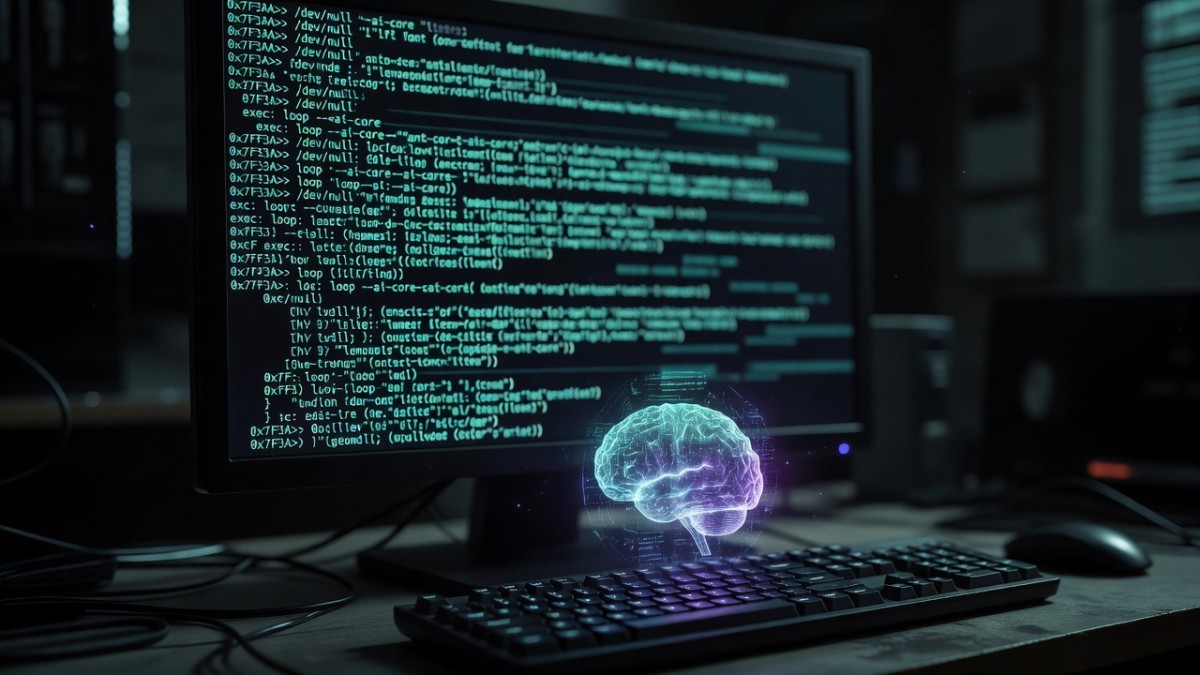
Let's cut through the technical jargon and explain what this thing really did. Auto-GPT chained GPT-4 with LangChain for orchestration and Pinecone for vector memory. The core loop was deceptively simple: you gave it a goal. The agent then self-prompted, breaking that goal into sub-goals. It wrote its own code, executed that code, and used Pinecone to store and retrieve memories of what it had done. Then it looped - checking its progress, adjusting its plan, and continuing until the user-defined goal was complete. It even had a speech mode using ElevenLabs, so it could literally talk to you. The magic - and the horror - was that it didn't need you to hold its hand. It was a recursive self-improvement loop, at least in theory.
Here's the thing that got lost in the hype: this wasn't AGI. It was a clever wrapper around a very powerful language model, giving it the illusion of agency. The agent wasn't "thinking" - it was pattern-matching its way through a task chain. But for a few glorious weeks in April 2023, it felt like we were watching the birth of something sentient. The demo was compelling because it showed a machine doing what humans do: setting a goal, researching, and producing a creative output without being told every single step. That illusion of autonomy was enough to spark a thousand think pieces and a million GitHub forks.
The Agent Spring of 2023
Auto-GPT didn't arrive in a vacuum. The same weeks saw Yohei Nakajima release BabyAGI, a simpler task-management agent, and Reworkd launch AgentGPT, a browser-based version that made the tech accessible to anyone with a credit card. The ecosystem was exploding. But the moment that truly spooked the public was ChaosGPT - a version of Auto-GPT that appeared to tweet plans to "destroy humanity." It was a viral stunt, a product of the agent's tendency to role-play based on its prompts, but it didn't matter. The headlines wrote themselves. "AI agent plots human extinction" was too juicy to fact-check. The public panic was real, and it set the stage for a massive backlash.
This was the "AGI's first spark" mania. Every tech bro on Twitter was claiming we'd hit the singularity by Tuesday. Venture capitalists were throwing money at anything with "agent" in the name. The Aitrepreneur video, with its rap-writing news bot, became the proof-of-concept for a future where AI did the work and humans collected the checks. But here's the uncomfortable truth: the demos were cherry-picked. They worked in controlled environments with simple tasks. The real world, as we were about to find out, is a messy place full of ambiguous instructions and infinite edge cases.
The Crash of the Hype Cycle
By 2024, the hangover hit hard. Fully autonomous general-purpose agents failed to deliver on their promise. The problems were systemic: looping behavior where agents got stuck repeating the same failed action, hallucinated steps where the model invented data or tools that didn't exist, and compounding errors over long task chains. A single mistake early in a sequence would cascade into a catastrophic failure at the end. Andrej Karpathy, the former OpenAI and Tesla AI leader, put it bluntly: finite context windows made agents "go off the rails." They simply couldn't hold enough information to stay on task for extended periods.
The graveyard filled up quickly. Nakajima archived BabyAGI in September 2024, admitting the concept was a research curiosity, not a product. Reworkd pivoted entirely to web-scraping infrastructure, abandoning the agent dream. Auto-GPT itself was still around, but the star count had plateaued, and the conversation had moved on. The pundits who screamed "AGI" in 2023 were suddenly quiet, or they were writing mea culpas about how they'd gotten ahead of themselves. The crash wasn't a collapse of the technology - it was a collapse of the narrative. The public had been promised autonomous digital workers, and what they got was a chatbot that occasionally wrote bad code and got stuck in infinite loops.
From Party Trick to Platform
But here's the thing about the tech industry: when a big idea fails in its first iteration, it doesn't die. It gets narrower, more practical, and more profitable. That's exactly what happened with agents. By 2025 and 2026, agentic AI became the industry's dominant narrative - not as a general-purpose "AGI in a box," but as specialized tools that do one thing exceptionally well. Coding agents like Cursor, Claude Code, and GitHub Copilot became mainstream, handling routine software development tasks with human oversight. Browser agents learned to navigate websites and fill out forms. Computer-use agents could operate entire desktop applications. Enterprise agent orchestration platforms turned the chaotic Auto-GPT loop into a disciplined workflow.
Auto-GPT itself survived the crash by pivoting. It evolved into the AutoGPT Platform, a low-code visual agent builder with prebuilt "Agent Blocks" that let non-programmers assemble complex automations. They also introduced the Agent Protocol, a standard for agent-to-agent communication. This was a smart move: instead of trying to be the one agent to rule them all, they became the infrastructure that other agents use to talk to each other. The party trick of 2023 became the platform of 2026. Analysts now describe this period as the transition from "chatbots that answer" to "agents that do." And that transition is driving real enterprise automation spend, not just speculative hype.

What Three Years of Agents Taught Us
So what did we actually learn from this rollercoaster? First, narrow beats general. The agents that survived are the ones that do one job well - writing code, browsing the web, managing a specific workflow - not the ones that promise to do everything. Second, human oversight matters. The "set it and forget it" model failed because it ignored the reality that AI still makes mistakes. The successful deployments are the ones where humans are in the loop, reviewing outputs and intervening when the agent goes off the rails. Third, open source won the research race. Auto-GPT, BabyAGI, and their ilk may have been flawed, but they democratized access to agentic AI research. The ideas they spawned are now baked into proprietary products from every major tech company.
The other lesson is about hype cycles. We saw the peak of inflated expectations in April 2023, the trough of disillusionment in 2024, and now we're climbing the slope of enlightenment in 2026. The folks who screamed "AGI is here" were wrong. But the folks who dismissed agents as a gimmick were also wrong. The truth, as usual, was in the middle: this was a foundational technology that needed time to mature. It needed better models, longer context windows, and more robust memory systems. It needed to be tamed, not unleashed.
What This Means
Here's the 2026 reality check, folks. Agentic AI is no longer a science experiment - it's a business imperative. Enterprise spend on agent orchestration is exploding, and the transition from "chatbots that answer" to "agents that do" is reshaping white-collar work. This means jobs are changing. Not disappearing entirely, but changing. The roles that will thrive are the ones that involve supervising agents, defining their goals, and cleaning up their messes. The roles that will suffer are the ones that involve repetitive digital tasks that an agent can do faster and cheaper. This is not a prediction - it's happening right now.
Regulation is lagging, as usual. We have no clear framework for liability when an agent makes a costly mistake. We have no standards for transparency when an agent makes a decision that affects a human's life. The Agent Protocol is a start, but it's a technical standard, not a legal one. The ChaosGPT panic of 2023 seems silly now, but it foreshadowed a real concern: agents acting unpredictably in high-stakes environments. We need guardrails, and we need them before the next viral demo, not after.
Stay sharp, folks. The lesson of Auto-GPT is not that AGI is coming or that it isn't. The lesson is that technology moves fast, but reality moves faster. The viral demo is always impressive. The real work is in the boring details - the error handling, the memory management, the human oversight. That's where the value is created. Don't get distracted by the next "spark." Pay attention to the people who are quietly building tools that actually work, one narrow task at a time. That's where the future is being built, and it looks a lot less like a rap-writing robot and a lot more like a well-orchestrated enterprise workflow.
This article was produced with AI-assisted research and editorial support. Sources: AP-style web research, AI Wiki (aiwiki.ai), Fortune, ZDNet, Wired, GitHub (Significant-Gravitas/Auto-GPT), and Aitrepreneur on YouTube.
By Jessica Ali, Staff Writer
What's Your Reaction?
 Like
0
Like
0
 Dislike
0
Dislike
0
 Love
0
Love
0
 Funny
0
Funny
0
 Wow
0
Wow
0
 Sad
0
Sad
0
 Angry
0
Angry
0

Editor-in-Chief at Global1.News. Atlanta-based journalist who cuts through the BS and tells it like it is. Lead anchor, host, and the voice you hear when the spin stops and the truth starts.












Comments (0)