
Analysis: Trilateral summit high on spectacle, short on substance
The three‑day trilateral summit in China, which brought together President Donald Trump, President Vladimir Putin and President Xi Jinping, was billed as a historic “Yalta 2.0” moment for the United States, Russia and China.
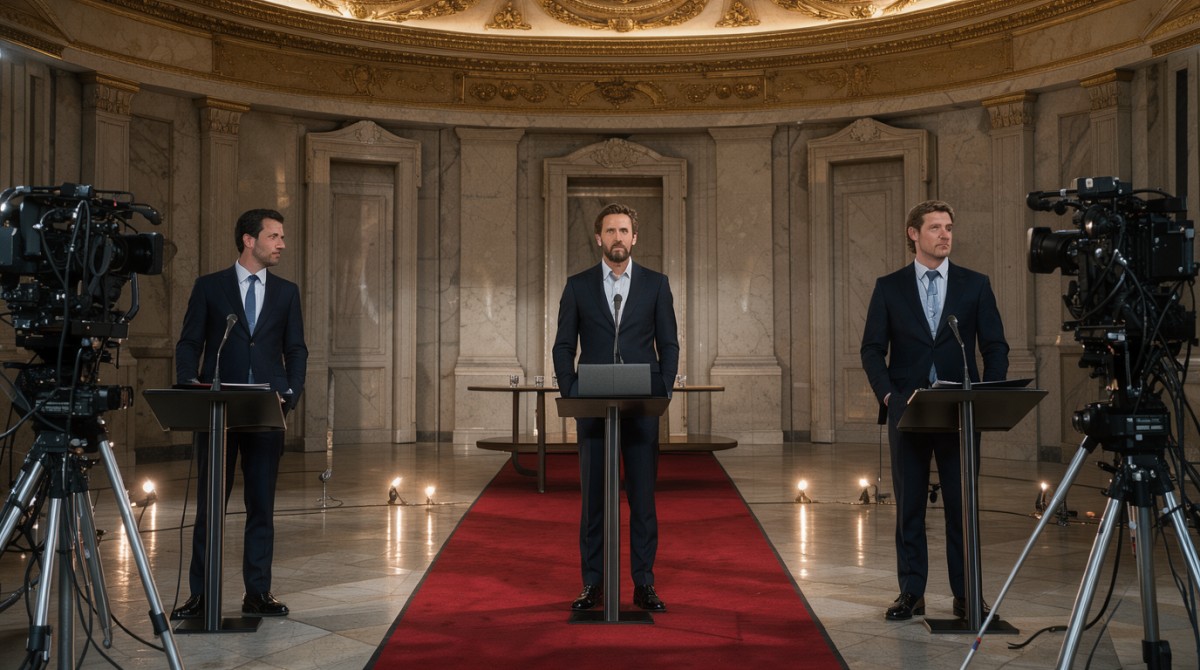
The three‑day trilateral summit in China, which brought together President Donald Trump, President Vladimir Putin and President Xi Jinping, was billed as a historic “Yalta 2.0” moment for the United States, Russia and China. Yet, as the BBC’s post‑summit analysis notes, the ceremony and optics may be the only lasting legacy of the meeting. In the weeks following the gathering, the United States has offered little substantive commentary, while China and Russia have moved quickly to publicise the joint communique and press conference. This article dissects the diplomatic choreography, the political context in Washington, and the limited policy outcomes that emerged from what was meant to be a landmark encounter.
Backdrop: Domestic pressures and the lure of spectacle
President Trump arrived in Asia amid a bruising defeat for his Republican Party in the recent midterm elections. The loss, described by the BBC as a “drubbing,” left the president seeking a venue to showcase his global relevance. In his interview with Fox News, Trump highlighted the “fanfare, the beauty, the pageantry, the thousands of people” surrounding his APEC dinner appearance as evidence of a successful trip. The emphasis on visual grandeur, rather than concrete agenda items, suggests that the summit was as much a stage for personal aggrandisement as a diplomatic forum.
Historically, American presidents have turned to foreign travel after domestic setbacks—Bill Clinton and Barack Obama both embarked on overseas trips following midterm defeats. The BBC points out that in those cases, any boost to the president’s standing proved short‑lived. Trump’s reliance on the summit’s optics follows this pattern, aiming to project strength abroad while domestic critics question the substance of his foreign policy.
Agenda and immediate outcomes
The summit’s official output was a joint declaration on peace, released after a 90‑minute session of talks. The communique, according to the BBC, contains broad language endorsing “strategic stability and international security” and pledges further “dialogue.” It also includes a line about boosting the production and supply of refined petroleum products, a clause that appears directed at Russia’s role as a major fossil‑fuel exporter.
Beyond the vague commitments, the leaders condemned the International Criminal Court, reflecting a shared stance that multilateral bodies enforcing international law lack sufficient “teeth.” This consensus underscores a common interest in limiting external legal scrutiny, especially given recent American criticism of the court.
China’s rapid communication versus US silence
China moved swiftly to publicise the summit’s outcomes, releasing a detailed joint communique on Thursday and holding a press conference where President Xi reiterated the significance of the meeting for Beijing. Russia’s President Putin likewise held an hour‑long press briefing, expanding on the discussions. In contrast, the White House has remained largely silent, with President Trump promising a news conference at the White House on Friday but offering minimal public remarks to date.
This asymmetry in communication reflects differing domestic imperatives. Beijing and Moscow appear eager to showcase diplomatic engagement, while the Trump administration seems to let the joint document “do the talking.” The limited US commentary may be a strategic choice to avoid committing to specific policy steps before the president returns to a politically charged environment in Washington.
Domestic criticism and the politics of friendship
Within the United States, the summit has sparked a sharp debate over the optics of President Trump’s personal rapport with Putin and Xi. While Trump publicly called Putin his “friend” and praised his “outstanding personal relationship” with Xi, several Republican officials have warned against normalising ties with adversarial leaders. Senator John Curtis of Utah cautioned that “Vladimir Putin and Xi Jinping are not our friends,” urging clarity about who the United States regards as adversaries.
Congressman Darin LaHood, who was re‑elected with Trump’s endorsement, echoed this concern, describing Putin as a “dictator” and “an international criminal” and warning that giving him a platform on a world stage could imply parity with the United States. Nine senators on the foreign relations committee reinforced the sentiment in a letter to the White House, asserting that “American security cannot be traded away for photo opportunities or personal aggrandisement.” These statements highlight a growing unease within the GOP about the president’s diplomatic style.
Strategic implications of the petroleum clause
The joint communique’s reference to increasing the production and supply of refined petroleum products is notable given Russia’s status as a major source of fossil fuels. While the BBC does not elaborate on the specifics, the inclusion of this language suggests an attempt by Moscow to secure favorable market conditions amid ongoing sanctions and global energy volatility. For China, securing reliable fuel supplies aligns with its broader energy security strategy, especially as it expands its overseas investments.
From a U.S. perspective, the clause could be read as tacit approval of Russia’s energy exports, a point of contention given Washington’s efforts to curtail Russian revenue streams linked to the war in Ukraine. The absence of any American counter‑proposal in the communique underscores the limited leverage the United States was able to exert during the talks.
Assessment of substance versus symbolism
Analysts quoted by the BBC, such as David Firestein of the Bush Foundation for US‑China Relations, acknowledge that the mere gathering of the three leaders offers a reassuring visual cue that “catastrophic conflicts are not on the horizon.” However, the substantive content of the declaration remains modest. Pledges to maintain “strategic stability” and to avoid nuclear war are largely reaffirmations of existing deterrence frameworks rather than new initiatives.
The emphasis on “dialogue” and the shared criticism of the International Criminal Court provide limited policy direction. In the absence of concrete agreements on trade, security cooperation, or climate action, the summit’s legacy may be confined to the photographs of three powerful men sharing a handshake and a hug, as the BBC’s headline suggests.
Looking ahead: Potential trajectories
As President Trump returns to Washington, the political fallout from the summit is likely to intensify. The criticism from within his own party suggests that any future engagement with Russia and China will be scrutinised through a partisan lens. Moreover, the lack of a clear U.S. agenda at the summit may weaken America’s negotiating position in subsequent trilateral or multilateral settings.
For China and Russia, the summit offers a diplomatic win‑win: they have secured a joint statement, reinforced their shared stance against international legal mechanisms, and highlighted cooperation on energy supplies. Their swift publicisation of the outcomes contrasts sharply with the United States’ reticence, potentially reshaping perceptions of influence in the Asia‑Pacific region.
In sum, the historic first‑ever US‑Russia‑China trilateral meeting delivered a striking visual tableau but fell short of delivering substantive policy breakthroughs. As the BBC notes, the “optics” may endure longer than the modest pledges etched in the joint declaration, leaving observers to wonder whether the spectacle was a diplomatic milestone or merely a photo‑op for a president seeking to rebound from domestic defeat.
This article was produced with AI-assisted research and editorial support. Reporting is based on the source material cited below. Sources: BBC News Asia; bbc.co.uk; Global1.News (21 November 2026).
By Kenji Tanaka, Staff Writer
What's Your Reaction?
 Like
0
 Dislike
0
 Love
0
 Funny
0
 Wow
0
 Sad
0
 Angry
0

Japan Correspondent at Global1.News. Tokyo-based voice covering Japanese politics, technology, economy, and culture. Tracks the intersection of tradition and innovation in one of the world's most dynamic societies.














Comments (0)