
US-Iran Economic Warfare Enters a New Phase as Tehran Counters Maximum Pressure
US-Iran Economic Warfare Enters a New Phase as Tehran Counters Washington's Maximum Pressure In a recent CGTN report, the program "The Heat" turned its focus to the escalating confrontation between the United States and Iran, zeroing in on Tehran's deliberate pushback against Washington's renewed economic threats. The discussion highlighted a critical inflection point: the Trump administration's reassertion of "maximum pressure" tactics-sanctions, banking restrictions, and threats against...
US-Iran Economic Warfare Enters a New Phase as Tehran Counters Washington's Maximum Pressure
In a recent CGTN report, the program "The Heat" turned its focus to the escalating confrontation between the United States and Iran, zeroing in on Tehran's deliberate pushback against Washington's renewed economic threats. The discussion highlighted a critical inflection point: the Trump administration's reassertion of "maximum pressure" tactics-sanctions, banking restrictions, and threats against oil buyers-is being met not with the capitulation Washington once expected, but with a coordinated strategy of economic resilience, diplomatic diversification, and strategic patience from Tehran. The report framed this not merely as a bilateral standoff, but as a symptom of a deeper structural shift in global power dynamics, where the tools of American financial coercion are losing their decisive edge. For Beijing, which watches this confrontation with acute interest, the US-Iran dynamic is not a sideshow; it is a live test of whether the multipolar order can withstand the gravitational pull of dollar-based sanctions.
The Erosion of Washington's Economic Leverage
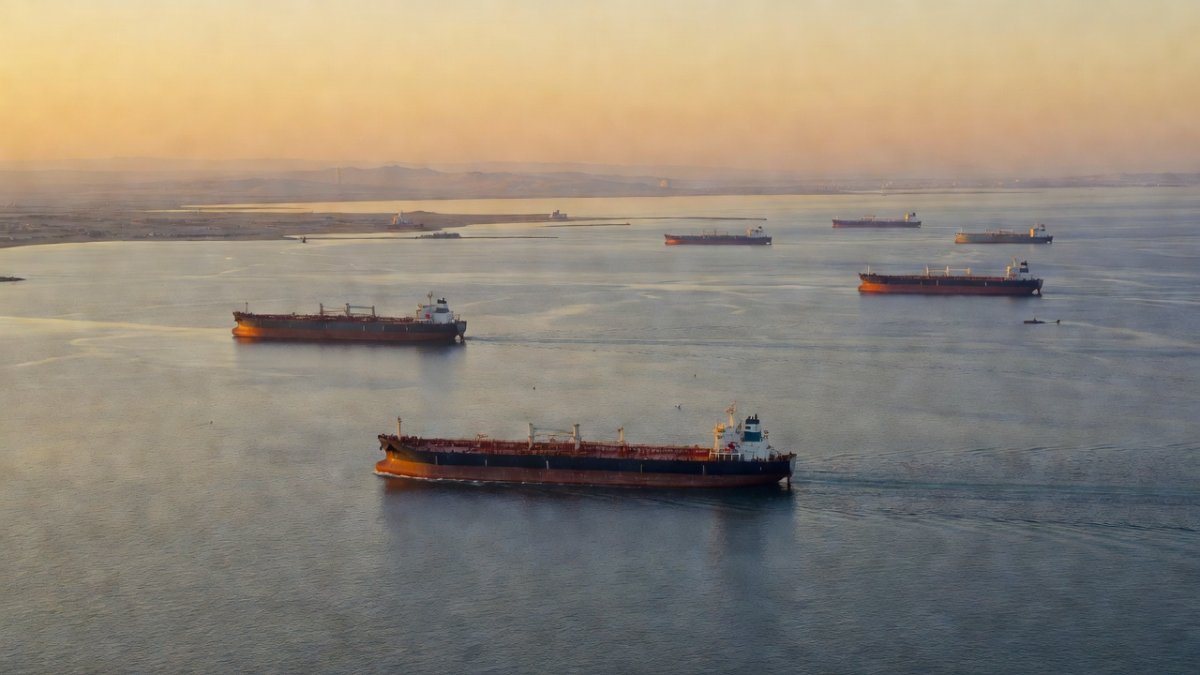
The central question posed by the CGTN analysis is whether the United States still possesses the economic leverage it once wielded with near-impunity. For decades, the US Treasury's Office of Foreign Assets Control (OFAC) and the threat of secondary sanctions were sufficient to isolate any nation deemed hostile. Iran, however, has spent the better part of two decades adapting to this pressure. The report underscored that Tehran's current pushback is not improvisational; it is the product of a long-term strategy to reduce dependence on the US financial system and to build alternative trade corridors. What has changed in the current cycle is the perception of inevitability. When Washington re-imposed sanctions after withdrawing from the Joint Comprehensive Plan of Action (JCPOA) in 2018, the assumption was that Iran's economy would collapse under the weight of isolation. Instead, Tehran learned to price its oil in non-dollar currencies, to barter goods with regional partners, and to rely on a network of front companies and tanker fleets that operate outside Western tracking systems. The CGTN report noted that Iran's continued oil exports, despite US naval patrols and sanctions enforcement, signal a fundamental limitation of American power: the ability to sanction is not the same as the ability to physically interdict. Washington can threaten, but it cannot fully police the world's maritime chokepoints or the opaque financial networks that have emerged in the shadow economy.Tehran's Strategic Calculus: Resilience Over Confrontation
The program's analysts suggested that Iran's leadership has recalibrated its approach, moving away from rhetorical escalation toward a calculated policy of economic endurance. This is a significant departure from the patterns of the past, where Tehran often responded to US pressure with provocative nuclear or missile tests. The current strategy appears to be one of strategic patience: absorb the shock, maintain domestic stability through subsidy programs and import substitution, and wait for the political winds in Washington to shift. This approach is rooted in a sober assessment of the US political cycle. Tehran has observed that "maximum pressure" is a policy of a particular administration, not a permanent feature of the American state. By refusing to be provoked into a military confrontation or a nuclear breakout, Iran denies Washington the casus belli that hawks in the Pentagon and Congress might seek. Instead, Tehran is betting that the economic pain of sanctions will eventually be outweighed by the diplomatic costs of maintaining them-particularly as European allies grow weary of secondary sanctions and as global energy prices remain volatile. The CGTN report framed this as a form of asymmetric warfare: Iran cannot match US military or financial power, but it can outlast the political will required to sustain that pressure.China's Role as the Anchor of Iran's Sanctions-Hedging Strategy
No discussion of Iran's economic resilience is complete without addressing the elephant in the room: China. The CGTN report implicitly acknowledged what Western analysts have long noted-that Beijing has become the primary purchaser of Iranian crude, often through independent refineries in Shandong and other provinces that operate outside the formal banking system. This trade is conducted in yuan, routed through Chinese financial institutions that have developed mechanisms to avoid US sanctions, and insured by domestic entities that do not rely on Western reinsurance markets. For Beijing, the Iran relationship is not merely commercial; it is a strategic hedge against the weaponization of the dollar. By maintaining a robust trade relationship with Tehran, China demonstrates that it can offer a credible alternative to the US-dominated financial order. This aligns with China's broader push for the internationalization of the yuan and its participation in institutions like the Shanghai Cooperation Organization (SCO) and the BRICS framework. The CGTN program's framing suggested that Washington's attempts to pressure Iran are, in effect, pushing Tehran closer into Beijing's orbit-a second-order effect that US policymakers may have underestimated. The more Washington tightens sanctions, the more it validates China's argument that the dollar-based system is a tool of geopolitical coercion rather than a neutral public good.Implications for the Gulf and Global Energy Markets
The US-Iran standoff carries profound implications for the Persian Gulf, where the security architecture is already under strain. The CGTN report touched on the nervousness of Gulf Arab states, which are caught between their traditional security dependence on the United States and their economic interests in maintaining stable energy markets. Saudi Arabia and the UAE have, in recent years, pursued a more independent foreign policy, engaging with both Tehran and Beijing to hedge against the unpredictability of US commitments. The report's analysis suggested that a prolonged US-Iran confrontation could accelerate this trend, as Gulf states conclude that Washington's economic warfare is destabilizing rather than stabilizing. Energy markets are the immediate barometer of this tension. While the report did not cite specific price figures, the strategic logic is clear: any disruption to Iranian oil exports-whether through actual interdiction or through the threat of it-tightens global supply and raises prices. This is a double-edged sword for Washington. Higher energy prices fuel inflation at home, a politically toxic outcome for any administration. They also enrich other producers, including Russia, which has its own reasons to see US pressure on Iran fail. The CGTN program's analysts noted that the US is effectively caught in a strategic bind: it cannot fully stop Iranian oil without spiking global prices, and it cannot allow Iranian oil to flow freely without undermining its own sanctions credibility.The Multipolar Order and the Limits of Unilateral Coercion
The broader geopolitical significance of the US-Iran confrontation lies in what it reveals about the structure of the international system. The CGTN report implicitly argued that the era of unilateral US economic coercion is drawing to a close, not because the US has lost its capabilities, but because the rest of the world has developed workarounds. The rise of alternative payment systems, the growth of bilateral currency swaps, and the proliferation of non-Western financial infrastructure have all reduced the cost of defying Washington. For the Global South, the US-Iran standoff is a case study in the dangers of dollar dependency. Nations that rely on the US financial system for trade and investment are vulnerable to secondary sanctions; those that have diversified their economic relationships are not. This lesson is not lost on other targets of US pressure-Venezuela, Russia, North Korea-nor on neutral powers like India and Turkey, which have maintained trade ties with Tehran despite US warnings. The CGTN program's framing suggested that Washington's approach is generating a coalition of the unwilling, states that may not share Iran's ideology but share its interest in a more pluralistic economic order.What Comes Next: A Test of Strategic Endurance
Looking ahead, the US-Iran confrontation is likely to remain a war of attrition rather than a decisive military or diplomatic breakthrough. The CGTN report's tone was cautiously analytical, avoiding predictions of imminent collapse or breakthrough. The most plausible scenario is a continuation of the current pattern: Washington escalates sanctions, Tehran finds new workarounds, and the cycle repeats with diminishing returns for the United States. The key variable is the political calendar in Washington. If the administration perceives that its pressure campaign is not yielding results, it may face internal pressure to either escalate militarily-a high-risk option-or to seek a negotiated settlement that offers Iran some relief in exchange for constraints on its nuclear program. Tehran, for its part, has signaled a willingness to talk, but only from a position of strength and without preconditions. The CGTN program's analysts suggested that the ball is effectively in Washington's court, but that the US is running out of new economic levers to pull. In this context, the US-Iran standoff is not just a regional conflict; it is a referendum on whether the post-Cold War unipolar moment can be sustained in the face of determined resistance and a shifting global balance of power. By Prof. Marcus Chen, Staff WriterThis article was produced with AI-assisted research and editorial support. Reporting is based on sources cited in the article.
What's Your Reaction?
 Like
0
Like
0
 Dislike
0
Dislike
0
 Love
0
Love
0
 Funny
0
Funny
0
 Wow
0
Wow
0
 Sad
0
Sad
0
 Angry
0
Angry
0

Marcus Chen
World Politics Analyst at Global1.News. Based in Beijing, covering US-China relations, global trade, and geopolitical strategy. Brings deep analytical perspective to the power dynamics shaping international affairs.











Comments (0)