
Multiple attacks hit Thailand's southern border provinces
BANGKOK — The quiet of a Saturday evening in Thailand’s deep south was shattered this weekend by a series of coordinated attacks that swept across Yala, Pattani, and Narathiwat provinces.
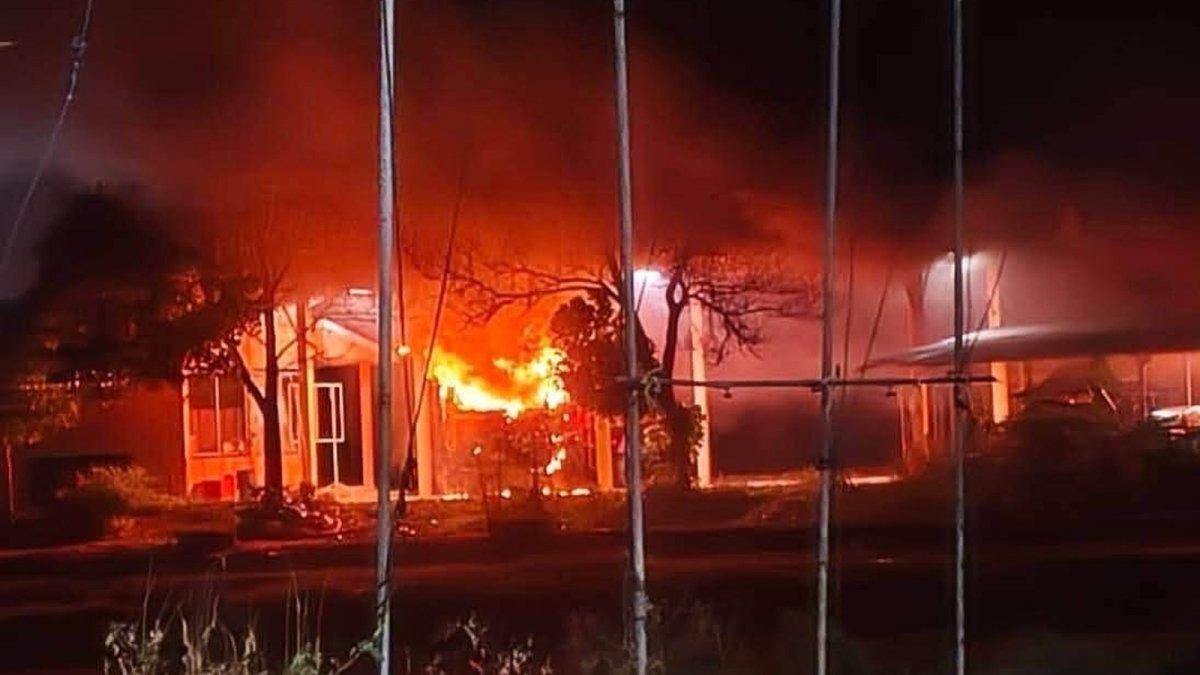
A Night of Fire and Fear: Coordinated Attacks Rock Thailand's Southern Border Provinces
BANGKOK — The quiet of a Saturday evening in Thailand’s deep south was shattered this weekend by a series of coordinated attacks that swept across Yala, Pattani, and Narathiwat provinces. Beginning at around 20:00, a wave of arson, explosions, tire-burning, and even an armed robbery unfolded over several hours, leaving local communities on edge and security forces scrambling to respond. The incidents, which targeted government offices, telecommunications infrastructure, and commercial areas, mark a troubling escalation in a region that has long struggled with a persistent insurgency.
For the people of these provinces, the events of Saturday night are a stark reminder of the fragility of peace in their homeland. The attacks were not confined to a single district or a single type of target. Instead, they appeared deliberately spread out, designed to stretch thin the resources of the security apparatus and to send a message of reach and coordination. As dawn broke on Sunday, residents in the affected areas woke to the smell of smoke and the sight of damaged property, a familiar yet always painful tableau in a decades-old conflict.
Yala Province: Government Offices and Telecom Towers in the Crosshairs
In Yala province, the attacks began with a direct assault on local governance. Attackers set fire to government vehicles parked inside the Ban Rae Subdistrict Administrative Organization (SAO) office in the mountainous Than To district. The SAO, a vital hub for local administration and community services, became a symbol of state presence that the assailants sought to destroy. The fire, which consumed the vehicles, sent plumes of black smoke into the night sky, visible from nearby villages and serving as an immediate signal that something was terribly wrong.
The violence in Yala was not limited to the SAO office. In the nearby Si Tha Nam village, a telecommunications tower was also set ablaze. This attack on communication infrastructure is particularly concerning, as it directly impacts the ability of residents to call for help and for authorities to coordinate their response. In a region where mobile phones are a lifeline, the destruction of a tower can isolate communities at the very moment they need assistance most. The choice of targets suggests a calculated effort to disrupt both the symbols of government and the practical means of modern communication.
Beyond these major targets, the attackers also engaged in a series of smaller, disruptive actions. Tires were burned in several locations across the province, creating barriers of fire and smoke on roadways. An advertising sign along the busy Route 418 was set alight, adding to the visual chaos. Perhaps most insidiously, authorities discovered nails scattered near a Bangchak petrol station on the road towards Ban Niang. This tactic, designed to puncture the tires of security vehicles and civilian cars alike, is a hallmark of ambush-style attacks and posed a significant hazard to anyone traveling in the area. A suspicious object was also reported near a bend in Yala's Lam Mai subdistrict, forcing a bomb disposal unit to be deployed to the scene.
Narathiwat: Explosions and Sabotaged Surveillance
In neighboring Narathiwat province, the pattern of attack was similar but with its own distinct characteristics. In the Cho Airong district, tires were burned at two separate locations, again using fire to create disruption and fear. However, a more worrying detail emerged from this area: CCTV cameras were reportedly turned upward in one location. This simple but effective act of sabotage suggests a level of sophistication and local knowledge among the attackers. By disabling the surveillance cameras, they ensured that their movements would not be recorded, making it significantly harder for investigators to identify them.
The most serious incident in Narathiwat occurred in the Chuap subdistrict, where an explosion was reported near a DTAC telecommunications tower. The blast, which was heard by local residents, was followed by another loud noise that authorities believe was a second explosion. The targeting of the DTAC tower, a major mobile network provider, underscores the intent to disrupt communication networks across the region. The dual explosions suggest a deliberate attempt to ensure the tower was thoroughly damaged, taking it out of service for an extended period. This attack on a private company's infrastructure also raises concerns about the economic impact on the region, as businesses and individuals rely heavily on these networks for their daily operations.
The incidents in Narathiwat, while not resulting in reported casualties, have created a palpable sense of unease. The combination of arson, sabotage, and explosives paints a picture of a coordinated and well-planned operation. For the residents of Cho Airong and Chuap, the night was filled with the sounds of sirens and explosions, a terrifying reminder that the conflict, though often simmering beneath the surface, can boil over at any moment.
Pattani: Armed Robbery and Gunfire Near a Busy Intersection
The third province, Pattani, saw perhaps the most brazen act of the evening. In the Bang Pu area, an armed group fired shots and left a suspicious object near the Bang Pu intersection, a busy junction that sees significant traffic. The gunfire, which sent bystanders scrambling for cover, was followed by the discovery of the suspicious object, which required the attention of explosive ordnance disposal (EOD) officers. This combination of gunfire and a potential bomb is a classic tactic used to create panic and to draw security forces into a potential ambush zone.
In a separate but clearly related incident, an armed group robbed a 7-Eleven convenience store in the same Bang Pu area. The robbery, which occurred under the cover of darkness, added a criminal element to what was already a night of terror. While the primary motive of the other attacks appears to be political, the robbery suggests that the chaos of the evening was also used as an opportunity for criminal gain, or perhaps to fund further insurgent activities. The attackers then burned tires along Highway 42 near the Yaring Hospital U-turn, a location that is both a major thoroughfare and a critical access point for a public hospital. Blocking this route could have delayed ambulances and emergency services, adding a potentially deadly consequence to the disruption.
The choice of the 7-Eleven and the hospital U-turn as targets is deeply troubling for the local community. These are places of everyday life, where people go to buy groceries or to seek medical care. By attacking these locations, the insurgents are blurring the line between military and civilian targets, creating an atmosphere of fear that permeates every aspect of daily existence. For the people of Pattani, Saturday night was a stark illustration of how the conflict can intrude upon the most mundane of activities.
Security Response and the Call for Vigilance
In the immediate aftermath of the attacks, security personnel from all three provinces were deployed to inspect the affected areas. Their tasks were manifold: to secure the scenes, collect evidence, assess the damage, and search for any additional explosive devices that might have been left behind. The Internal Security Operations Command (ISOC) Region 4 Forward Command, which oversees security in the southern border provinces, issued an urgent appeal to the public. They urged residents to remain vigilant, to avoid the affected areas, and to follow instructions from authorities.
The ISOC also issued a crucial piece of advice for the public: anyone who encounters suspicious people, objects, or vehicles is advised not to approach or touch them, but to immediately notify local authorities. This guidance is a standard but vital part of counter-insurgency operations. In a region where bombs are often hidden in plain sight, the cooperation of the public is essential in preventing further tragedies. The command's statement reflects a deep understanding that the safety of the community depends not only on the actions of the security forces but also on the awareness and cooperation of every citizen.
As of this writing, no official casualty figures have been reported. The absence of reported deaths is a small mercy, but the psychological impact of the attacks is immense. The damage to government property, the disruption to communication networks, and the sheer terror of the night will linger in the memories of the residents for a long time. The security forces are now engaged in a painstaking investigation, trying to piece together the movements of the attackers and to identify the networks behind this coordinated assault.
A Region's Long Struggle and the Path to Peace
For those of us in Bangkok and the rest of Thailand, the events in the deep south can sometimes feel distant. But they are a profound reminder that the conflict in the southern border provinces is not a problem that will simply go away. It is a deep-seated issue rooted in decades of historical, political, and cultural grievances. The people of Yala, Pattani, and Narathiwat, who are predominantly Malay-Muslim, have long felt marginalized by the central Thai state. The insurgency, which has claimed thousands of lives since it reignited in 2004, is a violent expression of this deep-seated discontent.
These attacks also have implications for the broader ASEAN region. The southern border provinces are a key gateway to Malaysia, and instability here can affect cross-border trade, tourism, and diplomatic relations. A flare-up in violence can deter investors and disrupt the economic integration that Thailand and its neighbors have been working towards. For the region as a whole, a peaceful and stable deep south is not just a Thai domestic concern; it is a vital component of regional security and prosperity.
The path to peace remains elusive. While successive governments have attempted various peace dialogues with insurgent groups, a lasting solution has yet to be found. The attacks on Saturday night are a stark reminder of the challenges that lie ahead. They demonstrate that the insurgents retain the capacity and the will to strike, even as the government pursues a political solution. For the people of the deep south, the hope is that the peace talks will eventually bear fruit, but nights like Saturday serve as a painful reality check. The work of building trust, addressing grievances, and fostering a sense of shared belonging is a long and difficult journey, and the events of this weekend show just how far the region still has to go.
As the sun rose on Sunday, the people of Yala, Pattani, and Narathiwat began the slow process of cleaning up and assessing the damage. The burned tires have been cleared, the fires extinguished, and the evidence collected. But the fear and the anger will take much longer to dissipate. The government has promised to bring the perpetrators to justice, but for many in the region, the deeper question remains: when will the cycle of violence finally end? For now, the communities of the deep south can only hold on to hope and to each other, as they have done for so many years, and wait for a peace that still seems far away.
This article was produced with AI-assisted research and editorial support. Sources: Khaosod English.
By Ann Srisawat, Staff Writer
What's Your Reaction?
 Like
0
Like
0
 Dislike
0
Dislike
0
 Love
0
Love
0
 Funny
0
Funny
0
 Wow
0
Wow
0
 Sad
0
Sad
0
 Angry
0
Angry
0

Southeast Asia Correspondent at Global1.News. Based in Bangkok, covering Thai and Southeast Asian politics, economy, technology, and culture. Deep regional perspective on one of the world's most dynamic regions.















Comments (0)