
US-Backed Venezuela Talks Open in Caracas as Key Opposition Voices Stay on Sidelines
US-backed talks between Venezuela's government under Delcy Rodríguez and opposition led by Dinorah Figuera opened August 6 in Caracas. Absent is Nobel winner María Corina Machado, as the US three-phase plan targets December outcomes on elections, courts, and quake recovery.
Talks Open Thursday in Caracas With Clear Lines of Leadership on Both Sides
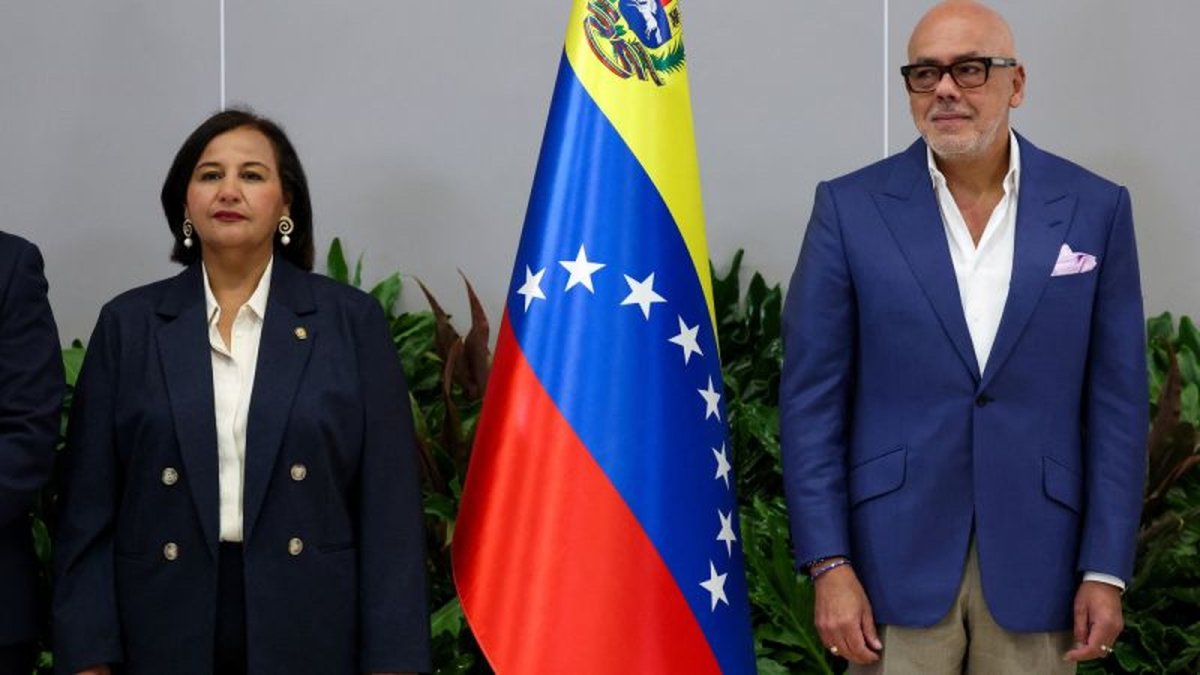
The Venezuelan government delegation sat down with opposition representatives in Caracas on Thursday, August 6, 2026, after several days of reported delays. Acting President Delcy Rodríguez leads the government side through her brother Jorge Rodríguez, who serves as president of the current National Assembly. The opposition bloc is headed by former congresswoman Dinorah Figuera, drawing from members of the 2015 National Assembly that Washington still regards as the last legitimate legislative body.
At stake is nothing less than a structured path out of years of political deadlock and economic collapse. Both sides have agreed to address immediate humanitarian needs while laying groundwork for institutional changes. The presence of US diplomatic pressure gives these sessions a different weight from past efforts that collapsed without external enforcement.
US Embassy officials in Caracas issued a statement welcoming the start of negotiations and pledged continued support for Venezuelan-led efforts to strengthen democratic institutions. This marks the first formal round since the January 2026 change in leadership, and participants know the window for results is narrow.
Three-Phase US Plan Sets Clear Goals for Stabilization and Elections
The United States outlined a three-phase approach right after Maduro's capture: stabilization, economic recovery paired with political reconciliation, and eventual democratic transition. Secretary of State Marco Rubio first detailed the framework in January and reaffirmed it during the May 27, 2026 Cabinet meeting. Mid-July remarks from Rubio emphasized that Washington would stay involved in the transition process.
Negotiators have identified three core topics: earthquake recovery, democratic strengthening, and guarantees for political rights. Figuera told Televen that discussions will also target restructuring the election oversight body to restore credibility and reforms to the Supreme Court of Justice. She stated the full product of the work could be presented formally in December.
Both delegations understand that any agreement must produce measurable steps toward new elections. The timeline points to December as the moment when concrete proposals would be ready for public review, giving Venezuelans a clear benchmark for progress.
US Involvement Marks a Break From More Than a Dozen Failed Efforts Since 2013
Government and opposition figures have attempted negotiations more than a dozen times since 2013, yet none produced lasting agreements. Carmen Beatriz Fernández of DataStrategia noted that the strings of this negotiation are being pulled by the State Department, a reality that is becoming increasingly clear despite efforts to downplay it.
Christopher Sabatini of Chatham House pointed to the US government's real influence over both parties this time, exercised through economic, political, and legal tools including sanctions. Figuera's selection as the main opposition delegate further illustrates that leverage.
Jorge Rodríguez has insisted the new relationship with Washington rests on diplomatic and commercial cooperation rather than subordination. Still, the presence of US backing changes the incentives that doomed earlier rounds.
Machado's Absence Raises Questions About Who Truly Speaks for the Opposition
Nobel Peace Prize winner María Corina Machado is not in Caracas for these talks. She left Venezuela in December 2025 to accept the prize in Norway after more than a year in hiding and remains in exile. Her joint statement with Edmundo González Urrutia pledged they would not block any initiative that produces real progress and would judge results by concrete achievements.
Machado has maintained close contact with US officials, including President Trump, and has said the president has her phone number and calls when needed. She told journalist Luis Olavarrieta this month that the process is not about her personally but about Venezuelans, while still hinting at a possible presidential run if elections occur.
Her absence does not mean she is sidelined entirely. Machado continues to rally international support and has vowed to return home. The question remains whether any agreement reached without her direct participation can command broad legitimacy among opposition voters.
Dinorah Figuera Brings Experience From Exile and the Guaidó Era
Dinorah Figuera survived cancer and built a political career that includes service as councilor of Libertador Municipality from 1995 to 2000 and deputy for Caracas in 2010. She later represented Aragua state in the 2015 National Assembly. She went into exile in Spain in 2018 after alleged threats and harassment.
Figuera played a key role in the opposition movement led by Juan Guaidó between 2019 and 2023. In January 2023 she was elected president of the 2015 National Assembly, prompting the Venezuelan government to issue arrest warrants and a red alert for her and four other former deputies on charges including usurpation of functions and treason.
She returned briefly in June for an initial meeting with Rodríguez that the US described as a first step in the transition. She arrived back in Venezuela on Wednesday night, August 5, ahead of the Thursday sessions, positioning herself as the lead negotiator for her bloc.
US Military Action Removed Maduro and Set the Stage for Current Negotiations
Nicolás Maduro was captured during a US military operation in January 2026. He now awaits trial in a high-security prison in Brooklyn, New York, with proceedings scheduled to open in June 2027. Roughly 80 people were reported killed during the raid on his Caracas compound.
President Trump stated at the time that the United States would "run" Venezuela, signaling direct involvement in the country's future. Maduro, speaking from prison on August 2, welcomed any path to dialogue ahead of the current talks.
The removal of Maduro created the immediate conditions for these negotiations. Without that shift, the dozen prior attempts at dialogue would likely have remained stalled.
June Earthquakes Add Urgent Humanitarian Pressure to the Agenda
Two back-to-back earthquakes measuring 7.2 and 7.5 struck north-central Venezuela on June 24, 2026, near Caracas. The death toll has risen to 6,125 with approximately 1,400 people still missing as of August 4. Earlier figures from Jorge Rodríguez placed the toll at 4,333 in mid-July.
Recovery from the disaster forms one of the three main points on the negotiating table. Both sides recognize that visible progress on relief and reconstruction is essential to maintain public support for the broader political process.
The scale of the tragedy has forced negotiators to treat humanitarian needs as inseparable from institutional reforms. Any December package must include concrete measures for the affected regions.
December Target Looms as Venezuelans Weigh Risks and Potential Gains
Figuera has set December as the target for presenting the full results of the talks. That deadline will test whether the US-brokered framework can deliver on restructuring the election body and Supreme Court while advancing recovery from the earthquakes.
Machado's potential candidacy remains an open variable. Her supporters expect any credible election process to include her, yet the current negotiations proceed without her direct involvement. The outcome will determine whether the transition gains wide acceptance or faces renewed challenges.
Venezuelans have watched more than a dozen prior rounds collapse. This time the combination of US leverage, a defined timeline, and immediate humanitarian stakes offers a narrow but real chance for measurable change. The coming months will show whether that chance is seized.
By Jessica Ali, Staff Writer
This article was produced with AI-assisted research and editorial support. Reporting is based on sources cited in the article.
What's Your Reaction?
 Like
0
Like
0
 Dislike
0
Dislike
0
 Love
0
Love
0
 Funny
0
Funny
0
 Wow
0
Wow
0
 Sad
0
Sad
0
 Angry
0
Angry
0

Editor-in-Chief at Global1.News. Atlanta-based journalist who cuts through the BS and tells it like it is. Lead anchor, host, and the voice you hear when the spin stops and the truth starts.








Comments (0)