
U.S. Army Fires Off Virtually All Precision Strike Missiles in Five-Month Iran Conflict
U.S. Army has used virtually all of its ATACMS and Precision Strike Missile stockpiles during the five-month Iran war, sources say. With 65% of Patriot interceptors and 38% of THAAD stocks drawn down, Trump and the Pentagon defend readiness as Lockheed Martin and RTX race to rebuild.
Exclusive Sources Detail Unprecedented Depletion of ATACMS and PrSM
The U.S. Army has used up much of its global stockpile of highly accurate long-range missiles during its five-month war with Iran, according to three people familiar with the data. The missiles are principally the Army’s surface-to-surface weapons, known as Army Tactical Missile Systems and Precision Strike Missiles. The U.S. has used virtually all of these weapons, according to two of the sources. The degree to which the military is running out of ATACMS and Precision Strike Missiles has not been previously reported.
These long-range munitions, which cost more than $1 million each, are an important part of the military’s arsenal, allowing accurate strikes from a safe distance. U.S.-supplied ATACMS have played a key role in the war in Ukraine, allowing Ukrainian forces to attack targets inside Russia. The Precision Strike Missile is a newer, more advanced generation that will replace the ATACMS, which have a shorter range.
The dramatic rundown in precision, long-range missiles means President Donald Trump may have to rely more on riskier, piloted bombing missions if he relaunches large-scale attacks on Iran. The sources declined to say how many of each munition the U.S. had left. Trump launched the Iran war jointly with Israel in February, predicting that the conflict would last a short time.
Why These Weapons Matter in Modern Warfare
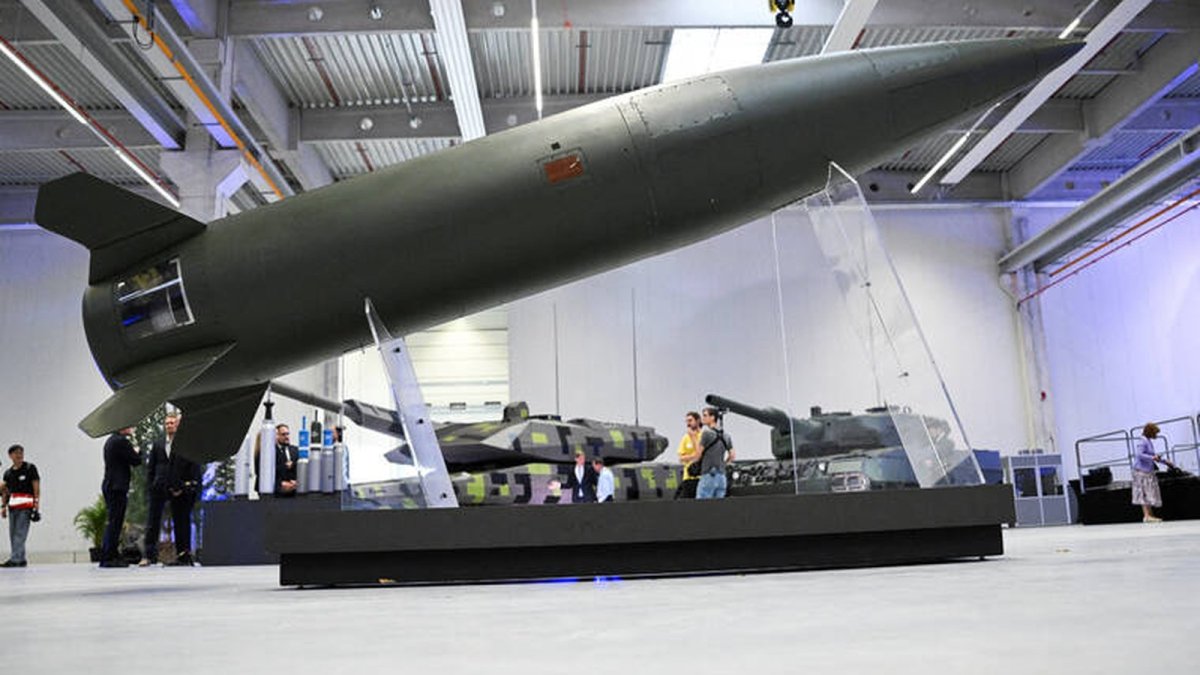
ATACMS remains the U.S. Army’s primary tactical ballistic missile currently in service. Fired from the M142 HIMARS and M270 Multiple Launch Rocket System, it reaches approximately 300 km depending on the variant and carries a 227 kg unitary warhead guided by an inertial navigation system supported by GPS. Its successor, the Precision Strike Missile, is compatible with the same launch platforms but carries two missiles per launch pod instead of one.
In its Increment 1 configuration, PrSM officially exceeds a range of 400 km, with further increases expected through the Increment 2 and Increment 4 variants currently under development. The missile incorporates an open systems architecture designed to facilitate future upgrades, an inertial navigation system with GPS guidance, and trajectory planning capabilities that allow attacks from multiple approach angles, complicating enemy interception efforts.
The extensive use of these missiles reflects the nature of the campaign conducted against Iran. During the initial phases of the conflict, U.S. operations focused on integrated air defense systems, ballistic missile batteries, command centers, Islamic Revolutionary Guard Corps infrastructure, and deeply buried ammunition storage sites.
Readiness Concerns for Future Conflicts
The falling missile supplies could limit the U.S. ability to deter adversaries, including Russia and China. Analysts agree that certain munitions, including artillery shells and several types of missiles, are being produced at record levels but caution that supplies might fall short of what is needed for a prolonged war.
Because these weapons allow the military to attack targets from a distance, analysts say they would be valuable in a war against an adversary with strong air defenses, such as China. They have been used to strike targets inside Iran, according to a March report by the Center for Strategic and International Studies.
According to the report, Precision Strike Missile stockpiles were low to start with, since it is a relatively new munition, but the U.S. military has ordered a large number of them for 2027. The Army has said that ATACMS are being phased out and that production is shifting to the newer Precision Strike Missiles.
Broader Arsenal Strain Across Defensive Systems
Last week, the Center for Strategic and International Studies published a report estimating that between February and July about 65% of Patriot interceptors had been expended and that the number of THAAD ballistic missile interceptors in U.S. stockpiles was at least 38% lower than at the start of the war. Patriots and THAADs are systems that detect and destroy incoming missiles and are among the most effective in the country’s arsenal.
The U.S. also burned through a little less than half of its global supply of Tomahawk cruise missiles, which are generally launched from ships, since the start of the war, one of the sources said. The Tomahawk is a Navy weapon, launched from destroyers, cruisers and submarines, and has long served as the sea service’s principal means of striking heavily defended targets without risking pilots.
Raytheon, a unit of RTX, has reached a tentative multi-year agreement with the Pentagon aimed at boosting Tomahawk production, alongside increases in other munitions, as Washington races to rebuild stockpiles. Lockheed Martin, which makes the ATACMS and Precision Strike Missiles along with the anti-ballistic missile THAAD system, did not immediately respond to questions about supply levels.
Internal White House Debate Over Continued Strikes
The supply figures have circulated inside the federal government over the last week during tense conversations inside the Trump administration about how much longer the U.S. can continue striking Iran without drawing down the stockpile to levels that would limit the military’s ability to respond to crises elsewhere.
One of the sources said the drawdown of the ATACMS and Precision Strike Missile stockpiles reflected a decision by the Trump administration to avoid riskier ways of attacking Iranian targets, such as by using piloted aircraft to drop bombs. Military leaders have for weeks warned the president that stockpiles of defensive weapons, including Patriot interceptors, which are effective against ballistic missiles, were dwindling, said two of the sources.
Last week, several media outlets reported Trump had decided not to launch another massive offensive inside Iran in part because his military advisers had warned about the U.S. stockpile. A U.S. official disputed those accounts, saying Trump chose not to move forward with another attack because of pressure from Gulf states.
Administration Rebuttal and Official Statements
Asked for comment on the stockpile data, the White House issued a statement from Trump, saying the U.S. had far more munitions than anyone in the world and far more than needed. “Our defense companies are, at this moment, making more munitions than they have ever made before, in addition to expanding their plants and equipment at record levels,” Trump said.
Responding to a request for comment, chief Pentagon spokesperson Sean Parnell said: “America’s military is the most powerful in the world and has everything it needs to execute at the time and place of the President’s choosing. We have executed multiple successful operations across combatant commands while ensuring the U.S. military possesses a deep arsenal of capabilities to protect our people and our interests.”
A fourth person familiar with the matter said that despite the high usage of precision weapons, the U.S. can resupply. Central Command, which oversees U.S. forces in the Middle East, has been able to reload from U.S. military supplies around the world, the person said. The sources interviewed for this story spoke on the condition of anonymity.
Production Ramp and Industrial Base Expansion
Lockheed Martin is gradually increasing PrSM production as the missile replaces ATACMS, while also expanding manufacturing capacity for PAC-3 MSE and THAAD interceptors. Recent U.S. defense budgets also allocate several billion dollars to expanding the missile industrial base, particularly in solid rocket motors, energetic materials, seekers, and electronic components, all of which have been identified as key production bottlenecks.
RTX is negotiating a multi-year agreement with the Pentagon aimed at accelerating Tomahawk production. The Middle East conflict has sparked intense debate about Trump’s authority to prosecute hostilities against Iran without congressional authorization. No request for a declaration of war or an authorization to use military force has been submitted to Congress.
Indo-Pacific Readiness Tradeoffs Loom Large
Planning documents published in recent years by the U.S. Army and the Department of Defense have consistently concluded that high-intensity conflicts require substantially larger missile inventories than those maintained following the wars in Iraq and Afghanistan. ATACMS, PrSM, Tomahawk, Patriot, and THAAD were specifically intended for the opening phases of conflicts against adversaries equipped with advanced air defense networks.
Their rapid consumption had therefore been anticipated in major war scenarios, but the campaign against Iran represents the first prolonged demonstration of those projected requirements under sustained combat conditions. Washington is now seeking to rebuild its inventories before another major contingency emerges.
Analysts say the drawdown raises concerns about the military’s readiness for future conflicts, particularly in the Indo-Pacific theater where similar long-range precision capabilities would be essential against peer adversaries.
By Jessica Ali, Staff WriterThis article was produced with AI-assisted research and editorial support. Reporting is based on sources cited in the article.
What's Your Reaction?
 Like
0
Like
0
 Dislike
0
Dislike
0
 Love
0
Love
0
 Funny
0
Funny
0
 Wow
0
Wow
0
 Sad
0
Sad
0
 Angry
0
Angry
0

Editor-in-Chief at Global1.News. Atlanta-based journalist who cuts through the BS and tells it like it is. Lead anchor, host, and the voice you hear when the spin stops and the truth starts.















Comments (0)