
UnionPay Ties Chinese Apps to Brazil's Pix Amid US Tariffs
China's UnionPay International plans to connect Chinese payment apps to Brazil's Pix QR system, letting tourists pay from home accounts. The move comes as US Section 301 tariffs pressure Brasilia over Pix, capping three years of Beijing-Brasilia financial cooperation.
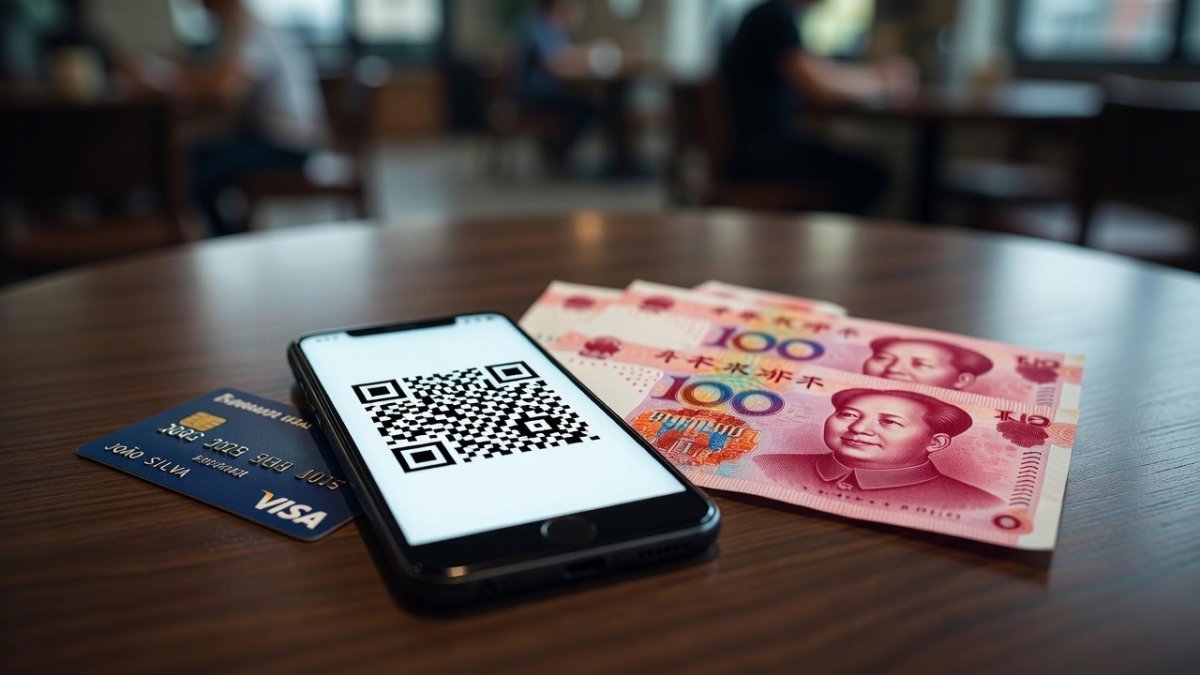
UnionPay to Plug Chinese Payment Apps into Brazil's Pix as US Tariffs Bite
China's UnionPay International plans to connect Chinese payment apps to Pix, Brazil's instant payment system at the centre of Washington's trade case against Brasilia, according to a report published Saturday by the South China Morning Post. Under the pilot, users of the UnionPay app and of Chinese bank apps linked to its platform would scan a merchant's code in Brazil and pay directly from the account they use at home. Chinese state media reported that access would later extend to other digital wallets in UnionPay's global network, though neither central bank has commented on the plan.
Tags: UnionPay, Pix, Brazil, China, Section 301, tariffs, digital payments, QR code, PBOC, renminbi
How the Pix Link Would Work
Pix has been the default way Brazilians move money since Brazil's central bank launched it in November 2020. The system transfers funds between any two accounts in seconds, at any hour, and costs individuals nothing. It now reaches about 15 million merchants, from department stores to street vendors, and has pushed cash and cheques to the margins of the Brazilian economy.
Under the reported pilot, a Chinese tourist would open the UnionPay app, scan a Brazilian merchant's Pix QR code, and settle the payment from a Chinese bank account. Until now, Pix has never been connected directly to a foreign payment system. Where it already works abroad — in Argentina, Chile, Paraguay, Uruguay, the United States, Portugal, Spain and France — firms such as PagBrasil, Getnet and Verifone handle the conversion and settle in local currency.
The announcement names no Brazilian partner and sets no start date. The project builds on more than two decades of UnionPay acceptance in Brazil, where its cards already work at major merchants in the main tourist destinations, and visitor numbers now justify going further.
Why Pix Is at the Centre of a US Trade Fight
The link arrives as Pix sits at the heart of an escalating trade dispute. The Office of the US Trade Representative closed a year-long investigation on July 15 and imposed a 25 per cent tariff on Brazilian goods a week later. Its investigators found that Brazilian policy favoured Pix and left American card and payment companies at an unfair disadvantage, a finding echoed in a USTR statement describing action under Section 301 of the Trade Act of 1974.
A second US investigation covering 60 economies added another 12.5 per cent on Brazilian products from July 24. In about a quarter of affected product lines, the new duties stack on tariffs already in force, taking the total to 50 per cent, and hit steel, aluminium, machinery, footwear and wood products.
The US case rests on a structural feature of the Brazilian market: the central bank both regulates the payment industry and runs Pix inside it, a dual role that American card companies say tilted the market against them. The Brazilian central bank mandates that participating institutions offer Pix free to individuals and caps the fees institutions may charge businesses for Pix transactions.
Brazil Digs In — and Looks to Beijing
The Brazilian government refused to change the system and escalated the dispute instead. A statement issued the day of the announcement called July 15 a regrettable milestone in relations with Washington and described Pix as public property and an international benchmark for digital infrastructure.
Brazil's central bank president, Gabriel Galipolo, called the American case "a pretext dressed up as a technical argument". He noted that Brazil's credit card market had grown about 150 per cent since Pix launched and said the system had displaced cheques and cash. The South American country took the dispute to the World Trade Organization on July 27, though the venue offers little practical relief — its Appellate Body has been paralysed since 2019 after Washington blocked the appointment of new judges.
Galipolo has also been promoting the system abroad, telling reporters last month that the central bank had signed more than 47 technical cooperation agreements with other monetary authorities. He listed China among the countries studying similar models, adding that Brazil would "keep Pix free, secure and instant" and would not change how it works.
Three Years of Financial Bridge-Building
The UnionPay announcement is the result of years of work between Beijing and Brasilia, not a spur-of-the-moment response to the tariff fight. Galipolo and Pan Gongsheng, governor of the People's Bank of China, signed a memorandum on financial cooperation in Beijing on May 13, 2025, during a state visit by President Luiz Inacio Lula da Silva. The Chinese central bank said it covered investment conditions, financial infrastructure, local currencies and payments; neither institution has published the text.
That visit also renewed a currency swap line worth 190 billion yuan (US$27 billion) for five years. In January 2023, the two central banks had signed a separate agreement under which the Chinese side promised to name a clearing bank for renminbi business in Brazil, according to Brazilian regulatory filings.
Payments moved up the agenda when the two central banks met in June. They discussed widening the swap line and examined direct yuan-real trading and a possible bilateral bond market link. The Chinese account of the meeting also raised the prospect of connecting the two countries' payment systems.
Payment Diplomacy and the Future of the Dollar
The Pix link sits within a broader push by Beijing to internationalise its payments infrastructure. Pan Gongsheng has laid out his vision for a more competitive global currency order after decades of dollar dominance, and China has signed currency swaps and payment-cooperation agreements across Asia, Africa and Latin America. Local-currency swaps with trading partners, especially those participating in the Belt and Road Initiative, have been renewed and widened in a deliberate pattern.
For Washington, the stakes are commercial as much as geopolitical. US card networks have built decades of cross-border payment dominance; instant payment systems like Pix, India's UPI and China's QR-code networks represent a competing model in which settlement is cheap, state-run and local. When a country under US tariff pressure connects its payment rail directly to China's, the financial infrastructure of the Global South shifts further away from dollar-denominated card networks.
What This Means for Japan and Asia-Pacific
For Japan and the wider Asia-Pacific region, the Brazil-China payment link is a reminder that payment standards are becoming a geopolitical battleground. Japan's own cashless landscape — dominated by PayPay, Rakuten Pay and QR-based services — already operates on a similar local-first model, and the competition between domestic QR networks and global card brands mirrors the dynamic at the centre of the US-Brazil dispute.
Chinese tourists are among the biggest spending visitors to Japan, and UnionPay's acceptance network in Japan is extensive. If the Brazil pilot proves that Chinese payment apps can settle directly on a foreign QR system without local intermediaries, the same architecture could plausibly extend to Japan and other Asian destinations, changing how cross-border settlement works for the region's largest inbound tourism market. Japanese payment operators and regulators will be watching the pilot's technical and compliance design closely.
What to Watch For
The pilot has no announced start date, no named Brazilian partner, and neither central bank has publicly confirmed the timeline. The immediate signals to watch are the launch of the technical pilot itself, any statement from the Brazilian central bank on foreign-system interoperability, and progress on the broader yuan-real agenda — direct trading and a bond market link — that the two central banks discussed in June.
The tariff dispute also remains in motion: Brazil's WTO filing will test a dispute-resolution system that has been effectively frozen since 2019, and the second US investigation continues across 60 economies. For China, the UnionPay-Pix connection is a quiet but concrete step in a longer arc of financial bridge-building — one that turns a payment system targeted by Washington into a gateway for renminbi internationalisation in Latin America.
By Kenji Tanaka, Staff Writer
This article was produced with AI-assisted research and editorial support. Reporting is based on sources cited in the article.
What's Your Reaction?
 Like
0
Like
0
 Dislike
0
Dislike
0
 Love
0
Love
0
 Funny
0
Funny
0
 Wow
0
Wow
0
 Sad
0
Sad
0
 Angry
0
Angry
0

Japan Correspondent at Global1.News. Tokyo-based voice covering Japanese politics, technology, economy, and culture. Tracks the intersection of tradition and innovation in one of the world's most dynamic societies.












Comments (0)