
UNIFIL Hands Over Khardali Position to Lebanese Army as 48-Year Mission Winds Down
UNIFIL handed over a position in southern Lebanon's Khardali area to the Lebanese army on Thursday, the first visible step in ending a 48-year UN peacekeeping mission by year's end. The handover comes amid escalating Israel-Hezbollah violence despite the US-brokered June 26 framework agreement.
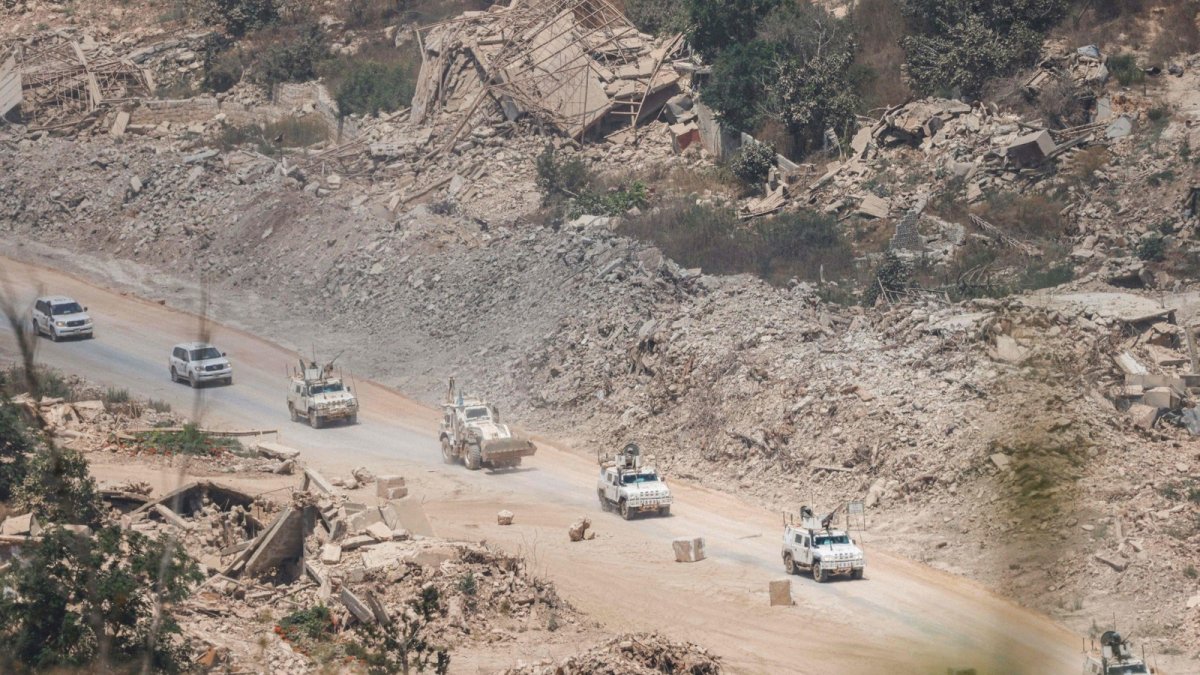
UNIFIL Begins Historic Handover to Lebanese Army Amid Fragile Ceasefire and Rising Violence
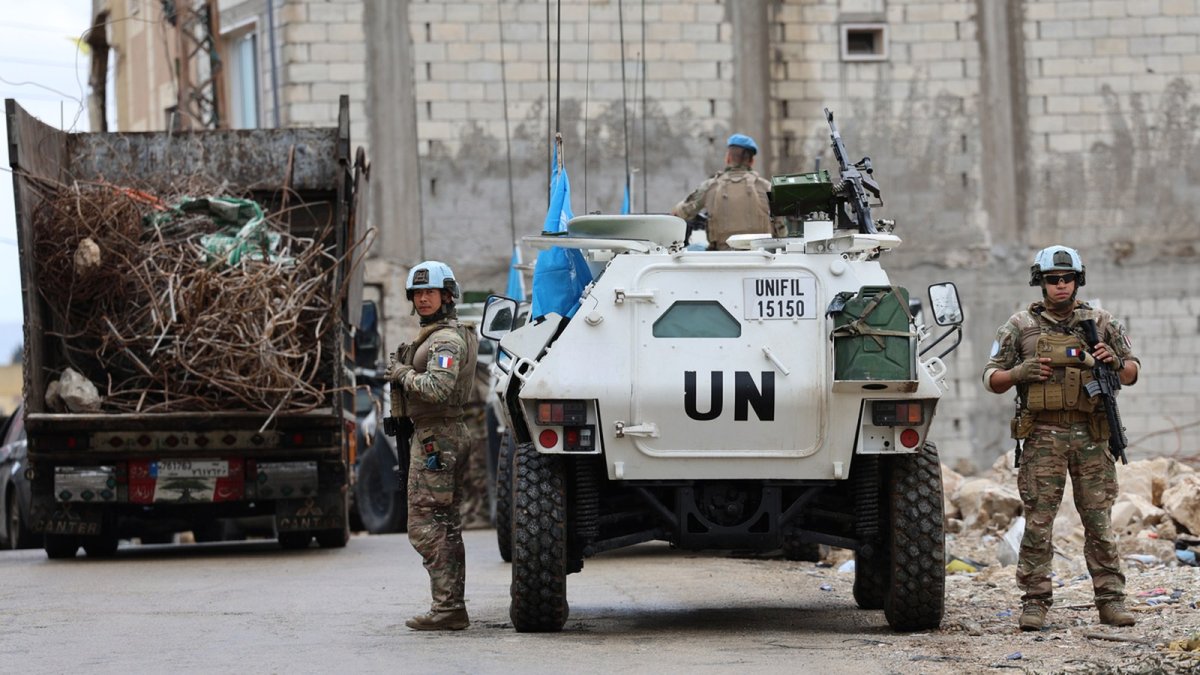
Beirut, Lebanon — August 20, 2026 — The United Nations Interim Force in Lebanon (UNIFIL) on Thursday officially transferred control of a military position in the southern Khardali area to the Lebanese army's 7th Brigade, marking the first visible step in ending a 48-year UN peacekeeping presence along Lebanon's volatile southern frontier. The handover comes as the Security Council has decided to terminate UNIFIL's mission by year's end, even as violence between Israel and Hezbollah escalates despite a US-brokered framework agreement signed in late June.
A Symbolic Transfer with Strategic Weight
The Khardali position, located near an army facility in the Khardali-Litani area of the Merjayoun district, was formally handed over to the Lebanese army's 7th Brigade as part of a broader plan to transfer several longstanding UNIFIL positions to Lebanese military control. The move is the first concrete manifestation of the phased withdrawal the UN Security Council approved in August 2025, when it unanimously extended UNIFIL's mandate one final time until the end of 2026.
UNIFIL emphasized that its peacekeepers, who hail from nearly 50 countries, remain "fully committed" to their mandate in southern Lebanon. In a statement accompanying Thursday's handover, UNIFIL noted that "civilians bear the heaviest burden when conflict disrupts daily life," adding that local residents continue to face "uncertainty, displacement and concerns for their safety." The statement urged all parties to renew their commitment to UN Security Council Resolution 1701, warning that "instability is not in anyone's interest."
The handover strengthens the Lebanese Army's deployment and enables it to take over positions previously occupied by UNIFIL, according to Lebanese media reports. But the timing is fraught: the transfer occurs against a backdrop of intensifying exchanges across the Blue Line, raising questions about whether the Lebanese military can fill the security vacuum UNIFIL's departure will create.
The End-of-Mission Decision: A 48-Year Chapter Closes
UNIFIL has been deployed in southern Lebanon since 1978, initially under UN Security Council Resolutions 425 and 426, and was significantly reinforced after the 2006 war under Resolution 1701. That resolution, which ended the 34-day conflict between Israel and Hezbollah, called for Lebanon to deploy its armed forces in the south alongside an expanded UNIFIL, aiming for a demilitarized zone between the Litani River and the Blue Line. Implementation has remained incomplete for two decades.
The Security Council's decision to end UNIFIL's mission by the end of this year represents a fundamental shift in the international community's approach to southern Lebanon. Human Rights Watch, in an August 13 assessment, urged the Security Council to ensure an international force remains to protect civilians and deter human rights abuses by both the Israeli military and Hezbollah — reflecting concern that the UN withdrawal could leave civilians exposed to the violence of the past year.
The June 26 Framework Agreement: A Fragile Foundation
Thursday's handover comes amid efforts to implement security arrangements linked to the framework agreement signed between Lebanon and Israel on June 26, brokered by the United States in Washington. The agreement calls for Israel's gradual withdrawal from occupied Lebanese territory, allowing the Lebanese military to deploy there and help residents displaced by the fighting return — and, in a direct reference to Hezbollah, for the disarmament of "armed groups."
However, the deal's implementation has been anything but smooth. Hezbollah, which is not a party to the agreement, has rejected it outright. The group's leader called the deal "humiliating, shameful, and a surrender of sovereignty" and vowed that Hezbollah "will continue as a resistance on the ground to repel the occupation." The group has insisted it will not agree to disarmament until Israel withdraws from Lebanese territory, a position that mirrors the broader Iran-US confrontation across the region.
Critically, the June 26 framework deal did not specifically call for the withdrawal of Israeli forces, which continue to occupy several parts of southern Lebanon. This asymmetry — requiring Hezbollah's disarmament while not mandating an Israeli pullback — has fueled Hezbollah's rejection and complicated the Lebanese government's ability to sell the agreement domestically. A US congressional delegation pressed Lebanon on Hezbollah disarmament in mid-August, according to The National.
Escalating Violence Despite the Truce
The handover occurs against a backdrop of intensifying violence that threatens to unravel the entire framework. UNIFIL recorded an average of 137 projectiles fired per day between August 5 and 16 — 208 on Saturday, August 15, and 185 on Sunday — despite the renewal of the June 26 ceasefire agreement.
Israeli strikes in Ansar on August 15 killed 11 people — the worst toll since the June truce, according to Lebanese health officials. UNIFIL, in an August 17 statement, warned that "as tensions rise, civilians are once again paying the highest price, with many families displaced or forced to change their daily routines."
Ziad Abu Rish, associate professor of Middle Eastern Studies at Bard College, told Al Jazeera that Israel wants to escalate strikes on Lebanon "to demonstrate an undeterred resolve" to occupy the south and to "pummel" Hezbollah and Lebanese civilians — a policy, he said, of collectively punishing the Lebanese population, particularly in Shia-majority areas.
Hezbollah's Calculus: Resistance or Disarmament
Hezbollah's position remains the central obstacle to any durable security arrangement in southern Lebanon. The group, Iran's most capable proxy for decades, views its arsenal as essential deterrence against Israeli aggression. Its rejection of the June 26 agreement reflects a strategic calculation: disarmament while Israeli forces remain on Lebanese soil would leave the group and its constituency vulnerable to Israeli military action and domestic political marginalization.
The group's insistence on linking disarmament to Israeli withdrawal creates a chicken-and-egg problem the framework agreement has not resolved. Israel, for its part, has shown little appetite for a full withdrawal while Hezbollah retains its military capabilities. The result is a standoff with no clear pathway to de-escalation.
For Hezbollah, the UNIFIL withdrawal represents both an opportunity and a threat. The departure of peacekeepers removes a buffer that has constrained Israeli operations in the south, potentially giving Israel greater freedom of action. But it also removes a force that has at times checked Hezbollah's own freedom of movement in the border area. The group's leadership appears to calculate it can manage the post-UNIFIL environment better than Israel can, particularly if the Lebanese army proves unable or unwilling to confront it directly.
The Replacement Debate: EU Mission, Lebanese Army, or a Vacuum
With UNIFIL's mandate set to expire at the end of this year, the international community is grappling with what comes next. Lebanon's President Joseph Aoun has voiced support for extending UNIFIL's mandate and ensuring the continued presence of international forces in the area, while Prime Minister Nawaf Salam, during a recent visit to Paris, said Lebanon will require a new form of international presence in its south once UNIFIL departs. The European Union and some member states are discussing their own missions, with Germany having proposed an EU deployment. Any such mission would require a formal invitation from the Lebanese government, and coordinating it with Israel and the United States would be vital, according to analysis from the Washington Institute.
The options range from a continued UN presence in some form, to an EU-led mission, to a Lebanese Army-only arrangement — each carrying significant risks. A Lebanese Army-only approach would place the burden of securing the border on a force that has historically avoided direct confrontation with Hezbollah, raising questions about its willingness to enforce disarmament. An EU mission would bring credibility and capability but would require political will in Brussels and acceptance from all parties — neither assured.
The sequencing question is equally critical: whether Israeli withdrawal, Hezbollah disarmament, and Lebanese army deployment can be synchronized before year-end, and what fills the security vacuum if they cannot. The Khardali handover suggests the Lebanese army is being positioned to take over UNIFIL positions, but its capacity to secure the entire border area remains unproven amid continued Israeli strikes and Hezbollah's entrenched presence.
Regional Implications: The Southern Lebanon Flashpoint
Southern Lebanon remains the flashpoint between Israel and Iran's most capable proxy, and the UNIFIL withdrawal introduces a new variable into an already volatile equation. Any vacuum in the south risks a new round of full-scale war with consequences extending far beyond Lebanon's borders — the region is already grappling with the broader Iran-US confrontation.
The handover at Khardali is a visible symbol of a changing order, but it is also a test. Can the Lebanese army secure the south without UNIFIL's backing? Can the framework agreement survive the escalating violence? Can Hezbollah be persuaded to disarm while Israeli forces remain on Lebanese soil? The answers will determine whether southern Lebanon enters a new era of stability or another cycle of devastating conflict.
For residents of the south, the stakes could not be higher. They have borne the heaviest burden of the conflict — displacement, uncertainty, and the constant threat of violence. UNIFIL's departure, whatever form it takes, will reshape their security environment in ways not yet fully understood, and the international community's ability to craft a viable replacement will be measured in the safety of the communities along the Blue Line.
This article was produced with AI-assisted research and editorial support. Sources: Daily Sabah, Human Rights Watch, Al Jazeera, The National, This Is Beirut, New York Times.
By Malik Hassan, Staff Writer
What's Your Reaction?
 Like
0
Like
0
 Dislike
0
Dislike
0
 Love
0
Love
0
 Funny
0
Funny
0
 Wow
0
Wow
0
 Sad
0
Sad
0
 Angry
0
Angry
0
Middle East Correspondent at Global1.News. Based in Beirut, covering politics, conflict, energy, and society across the Middle East. Brings context and depth to a region often reduced to headlines.












Comments (0)