
Iran Tests US Resolve as Trump Declares Economic D-Day
The expiration of the 60-day US-Iran interim agreement on August 17 has catapulted the two adversaries into a new and dangerous phase of confrontation. President Donald Trump's declaration of "ECONOMIC D-DAY!" against Tehran signals a deliberate shift from military strikes to financial warfare, a strategy that US nuclear expert Jason Brodsky argues will face its ultimate test in the coming weeks as Iran probes for weaknesses in the American coalition.
The expiration of the 60-day US-Iran interim agreement on August 17 has catapulted the two adversaries into a new and dangerous phase of confrontation. President Donald Trump's declaration of "ECONOMIC D-DAY!" against Tehran signals a deliberate shift from military strikes to financial warfare, a strategy that US nuclear expert Jason Brodsky argues will face its ultimate test in the coming weeks as Iran probes for weaknesses in the American coalition.
Economic D-Day: Trump's Financial Warfare Gambit Against Iran Faces Its Moment of Truth
Washington, D.C. – August 20, 2026 — The Trump administration has declared economic war on the Islamic Republic of Iran, vowing "TREMENDOUS economic consequences" for any nation that dares to do business with Tehran. The announcement, delivered via Truth Social on August 19, extends the pressure campaign known as "Operation Economic Fury" that has been waged since April 2026, targeting Iran's oil transportation networks, shadow fleet, and financial infrastructure with unprecedented severity.
The Brodsky Thesis: Iran Will Test, But Washington Has the Will
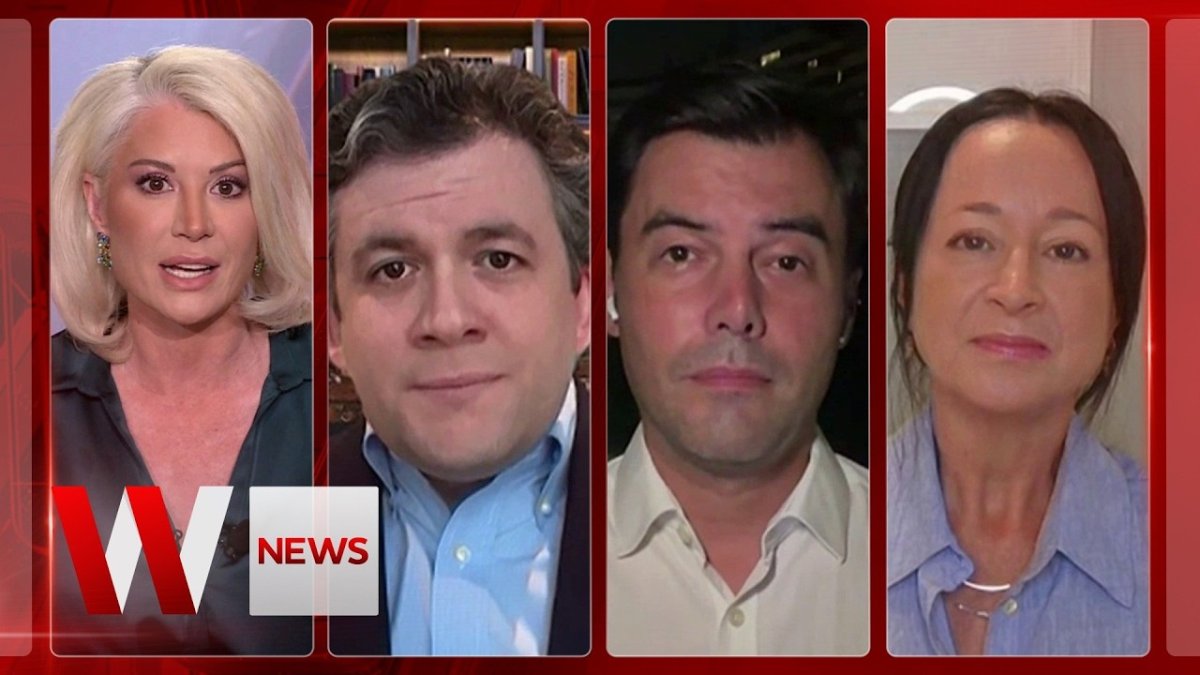
Jason Brodsky, Policy Director at United Against Nuclear Iran (UANI), articulated the strategic calculus underpinning the current standoff in an interview with Al Arabiya English's W News program. "Iran will test the United States and its allies," Brodsky asserted, "but the US has the will to see this through." This assessment comes at a critical juncture: the June 2026 US-Iran Memorandum of Understanding expired on August 17 with no follow-on agreement, and Trump has categorically ruled out an extension, demanding that Iran "surrender" and abandon any nuclear weapons ambitions.
Brodsky's analysis frames the current confrontation as a test of resolve on both sides. For Tehran, the objective is to identify cracks in the American-led coalition, exploit economic vulnerabilities, and demonstrate that the costs of sustained pressure outweigh the benefits. For Washington, the challenge is maintaining unity among Gulf partners, European allies, and Asian energy consumers while Iran's economy buckles under the combined weight of sanctions, a US naval blockade, and the disruption of Strait of Hormuz shipping lanes.
Operation Economic Fury: The Machinery of Financial Warfare
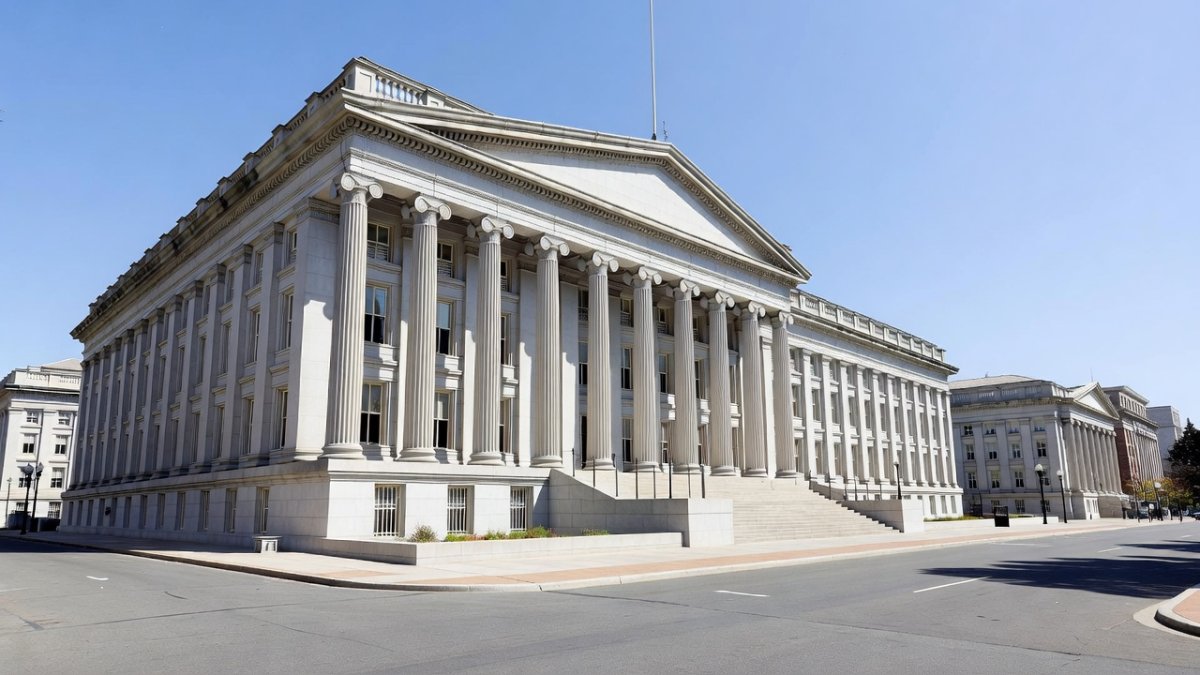
The "Economic D-Day" declaration represents the culmination of a sanctions architecture that the Treasury Department's Office of Foreign Assets Control (OFAC) has been constructing since April. The campaign has already targeted more than two dozen individuals, companies, and vessels tied to Iranian oil shipping magnate Mohammad Hossein Zandi, a Hizballah-linked gold scheme benefiting Iran's military, and a China-based petroleum terminal network sanctioned by the State Department on May 1, 2026.
Iranian Foreign Minister Abbas Araghchi has dismissed the economic "D-Day" as a prelude to "further defeat" for the United States, while Tehran officially characterizes the sanctions as "economic terrorism." President Masoud Pezeshkian's government faces the unenviable task of managing an economy already battered by years of sanctions, recent military strikes, and the psychological impact of Supreme Leader Ali Khamenei's uncompromising posture toward negotiations.
The strategic logic behind Operation Economic Fury is straightforward: deprive Iran of the revenue streams that fund its regional proxies, nuclear program, and ballistic missile development. By targeting the shadow fleet that transports Iranian oil, the petroleum terminal networks in China that receive it, and the financial mechanisms that facilitate transactions, Washington aims to strangle Iran's economy without committing additional military assets to the region.
Strait of Hormuz: The Chokepoint That Could Trigger Regional War
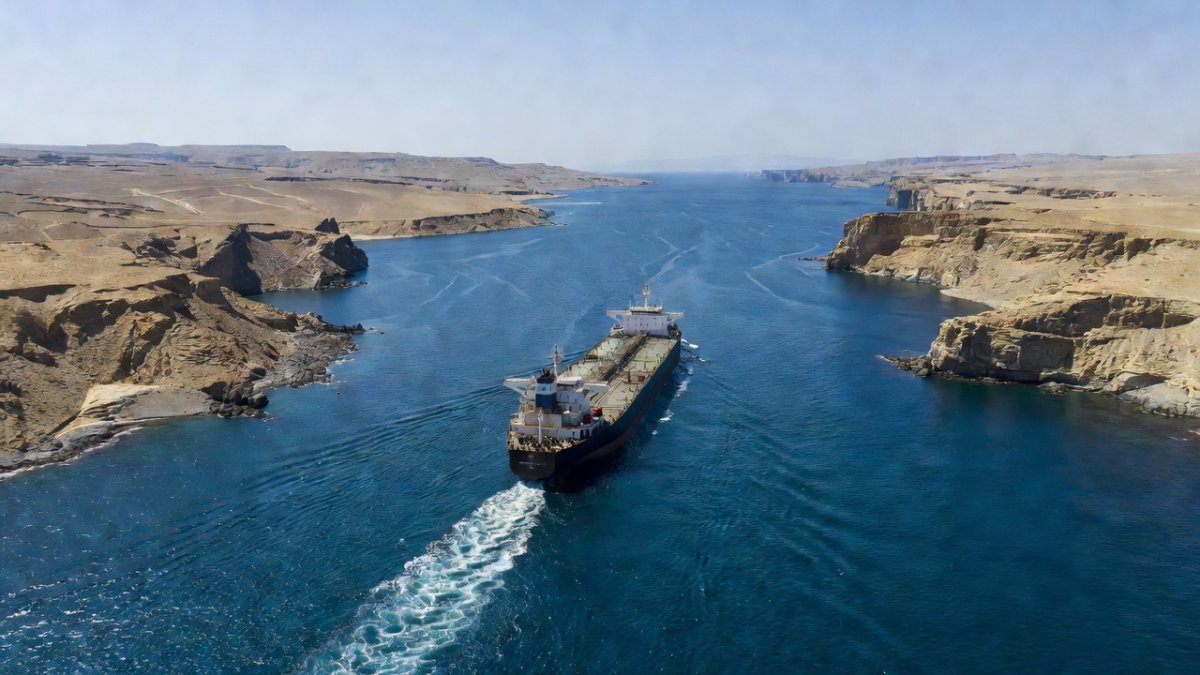
The Strait of Hormuz remains the central flashpoint of this confrontation. Preliminary data from the week of August 10-16 shows 73 transits through the strait, down from 91 the previous week, as tanker operators weigh the risks of navigating waters where Tehran has targeted users and Washington has blockaded Iranian ports. Oil tanker rates have soared toward US$500,000 per day, a figure that reflects both the heightened risk premium and the reduced availability of vessels willing to transit the region.
Roughly 20% of global oil flows through the Strait of Hormuz, making it the world's most critical energy chokepoint. The disruption of shipping lanes has immediate consequences for global energy markets, Asian economies dependent on Gulf crude, and the broader international financial system. Trump's threat to Oman over Strait of Hormuz shipping talks underscores the administration's willingness to pressure even its Gulf partners to maintain the blockade's integrity.
Brodsky's analysis suggests that Iran's targeting of Hormuz users represents a calculated escalation designed to raise the costs of the American campaign. By attacking tankers and threatening shipping, Tehran hopes to create a constituency among energy importers—particularly China, India, and Japan—that will pressure Washington to moderate its approach. The question is whether the United States can sustain the blockade and sanctions regime long enough for Iran's economy to buckle.
The Nuclear File: 8,294 Kilograms of Enriched Uranium and Counting
Beneath the economic confrontation lies the nuclear question that has driven US policy toward Iran for over two decades. The International Atomic Energy Agency (IAEA) reported Iran's enriched uranium stockpile at 8,294.4 kilograms (18,286 pounds), an increase of 1,690 kilograms since the previous report, with accelerated production of near-weapons-grade uranium enriched to 60% purity. IAEA Director General Rafael Grossi has acknowledged that verification efforts have been hindered by security conditions, raising concerns about the international community's ability to monitor Iran's nuclear activities.
The June 2026 US-Iran MoU included Iran's commitment not to develop or acquire a nuclear weapon, with future negotiations over the handling of the highly enriched uranium stockpile. However, the agreement's expiration without a follow-on accord leaves the stockpile's fate uncertain. Trump has stated that the United States will obtain Iran's enriched uranium stockpile "one way or the other," a formulation that leaves both diplomatic and military options on the table.
The June 2025 strikes by Israel and the United States on Iranian nuclear facilities demonstrated the military option's viability but also its limitations. While the strikes set back Iran's program, they did not eliminate it, and Tehran has since accelerated its enrichment activities. The current stockpile of 8,294.4 kilograms represents a significant increase from previous reports, suggesting that Iran has used the interim period to expand its nuclear capabilities rather than constrain them.
Regional Dynamics: Gulf Allies, Israeli Calculations, and the China Factor
The pressure campaign against Iran unfolds against a backdrop of complex regional dynamics. Gulf Arab states, particularly Saudi Arabia and the United Arab Emirates, have historically viewed Iran's nuclear program with deep suspicion but have also sought to avoid being drawn into a direct confrontation. The Trump administration's blockade of Iranian ports and threats against Hormuz users place these states in an uncomfortable position, caught between their security alliance with Washington and their economic interests in regional stability.
Israel's role in this confrontation cannot be overstated. The June 2025 strikes demonstrated Israel's willingness to act unilaterally against Iran's nuclear program, and Israeli intelligence continues to provide crucial information about Iranian activities. Prime Minister Benjamin Netanyahu's government has consistently advocated for maximum pressure on Tehran, viewing the nuclear program as an existential threat that must be eliminated regardless of diplomatic considerations.
China's position is equally critical. As Iran's largest oil customer and a major investor in Iranian infrastructure, Beijing has resisted American pressure to sever economic ties with Tehran. The State Department's sanctions on the China-based petroleum terminal network represent a direct challenge to Chinese commercial interests, raising the stakes in the broader US-China competition. Whether Beijing will comply with American demands or continue to facilitate Iranian oil sales will significantly determine the pressure campaign's effectiveness.
Economic Resilience: Can Iran's Economy Buckle Before the US Coalition Fractures?
Experts at an Iran International townhall in Washington argued that Iran's economy is likely to buckle faster than the US or global economy under the combined pressure of war, sanctions, a US blockade, and Hormuz disruption. This assessment aligns with Brodsky's confidence in American resolve, but it also raises questions about the timeline and the potential for unintended consequences.
Iran's economy has demonstrated remarkable resilience over four decades of sanctions, developing informal networks, barter arrangements, and alternative financial channels that have allowed it to survive and even thrive in some sectors. However, the current campaign is qualitatively different: the combination of military strikes, a naval blockade, comprehensive financial sanctions, and the disruption of Hormuz shipping creates a multi-front pressure that Iran has never before experienced simultaneously.
The Iranian rial has depreciated significantly against the dollar, inflation has accelerated, and unemployment remains stubbornly high. The Pezeshkian government's ability to maintain social stability in the face of economic hardship will be tested in the coming months, particularly if the sanctions begin to bite in earnest. Supreme Leader Khamenei's authority may be sufficient to maintain political control, but economic discontent could manifest in ways that challenge the regime's stability.
Brodsky's thesis that Iran will test the United States and its allies suggests that Tehran will seek to exploit any divisions within the American coalition. European states have historically been more skeptical of maximum pressure campaigns, preferring diplomatic engagement to economic warfare. The Trump administration's willingness to threaten even Gulf partners like Oman over Hormuz shipping talks indicates a willingness to alienate allies in pursuit of the campaign's objectives, a strategy that carries both risks and rewards.
Parallels and Precedents: North Korea and the Limits of Pressure
The episode also touched on North Korea, with South Korea's defense minister estimating that Pyongyang possesses 80-120 nuclear warheads. Hours after Trump announced his willingness to meet Kim Jong Un, North Korea fired 10 short-range ballistic missiles, a demonstration of the limits of personal diplomacy and the persistence of military confrontation. The parallel with Iran is instructive: both nations have developed nuclear programs in defiance of international pressure, and both have demonstrated a willingness to escalate in response to American overtures.
However, the Iran case differs in critical respects. Iran's economy is far more integrated into global markets than North Korea's, making it more vulnerable to sanctions. Iran's regional proxies—Hizballah, Hamas, the Houthis, and various Iraqi militias—provide Tehran with leverage that Pyongyang lacks. And Iran's position astride the Strait of Hormuz gives it a strategic asset that North Korea cannot match. These differences suggest that the pressure campaign against Iran may succeed where similar efforts against North Korea have failed, but they also indicate the potential for escalation that could draw the United States into a broader regional conflict.
The Road Ahead: Scenarios and Strategic Implications
As the confrontation enters its most intense phase, several scenarios are possible. The most optimistic outcome would see Iran's economy buckle under pressure, forcing Tehran to accept a comprehensive agreement that addresses the nuclear program, ballistic missile development, and regional activities. This outcome would validate Brodsky's confidence in American resolve and establish a precedent for future pressure campaigns against other adversaries.
A more pessimistic scenario involves Iranian escalation, whether through renewed attacks on Hormuz shipping, missile strikes on Gulf states, or proxy attacks on American interests in the region. Such escalation could draw the United States into a broader military confrontation, with unpredictable consequences for global energy markets and regional stability. The Trump administration's willingness to use military force, demonstrated by the June 2025 strikes, suggests that this option remains on the table.
The most likely outcome lies somewhere between these extremes: a prolonged period of economic warfare, punctuated by periodic escalations and diplomatic overtures, that gradually erodes Iran's capacity to sustain its nuclear program and regional ambitions. The question is whether the United States and its allies can maintain the pressure long enough for this erosion to produce a meaningful change in Iranian behavior.
Brodsky's assessment that "Iran will test the United States and its allies, but the US has the will to see this through" captures the essence of the current moment. The coming weeks and months will determine whether that confidence is justified or whether the pressure campaign will fracture under the weight of economic costs, diplomatic resistance, and Iranian counter-escalation. For the Middle East and the global energy market, the stakes could not be higher.
By Malik Hassan, Staff Writer
This article was produced with AI-assisted research and editorial support. Reporting is based on sources cited in the article.
What's Your Reaction?
 Like
0
Like
0
 Dislike
0
Dislike
0
 Love
0
Love
0
 Funny
0
Funny
0
 Wow
0
Wow
0
 Sad
0
Sad
0
 Angry
0
Angry
0

Middle East Correspondent at Global1.News. Based in Beirut, covering politics, conflict, energy, and society across the Middle East. Brings context and depth to a region often reduced to headlines.










Comments (0)