
UN 'very concerned' over Gaza civilian deaths as Israel continues ceasefire breaches
UN Voices Concern Over Civilian Deaths as Gaza Ceasefire Continues to Unravel GAZA CITY — The United Nations expressed serious concern on Monday over the rising number of civilian casualties in the Gaza Strip, as Israeli airstrikes and military operations continue to breach the terms of a ceasefire agreement that has been under strain for months.
UN Voices Concern Over Civilian Deaths as Gaza Ceasefire Continues to Unravel
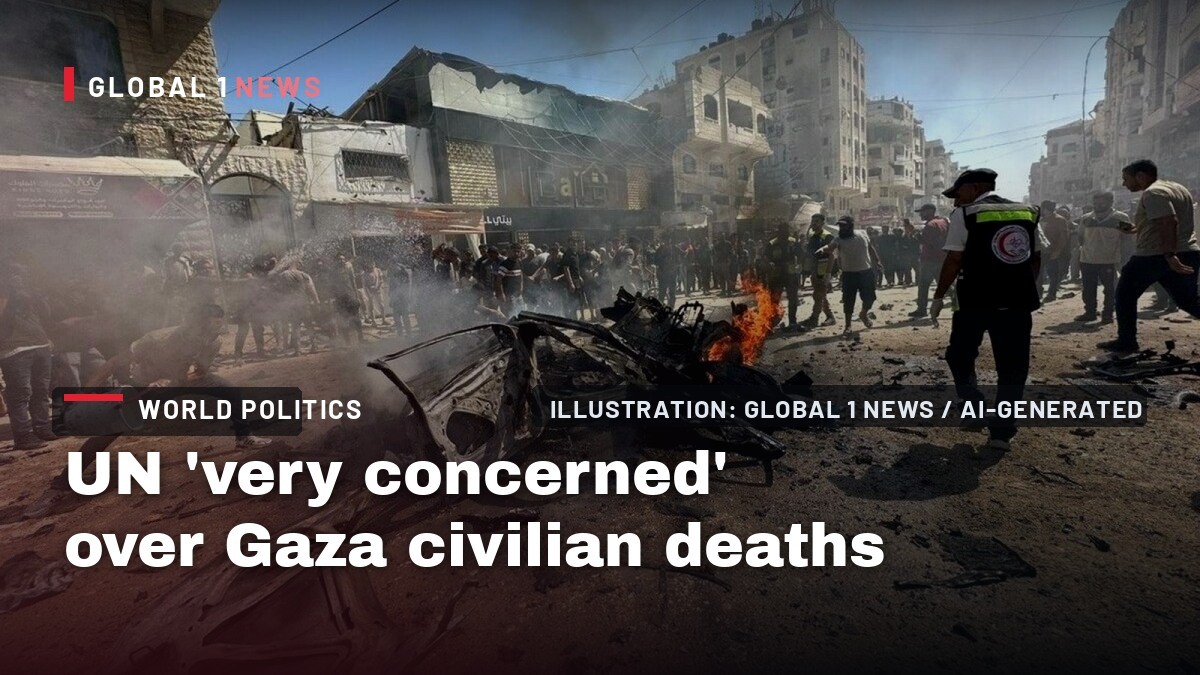
GAZA CITY — The United Nations expressed serious concern on Monday over the rising number of civilian casualties in the Gaza Strip, as Israeli airstrikes and military operations continue to breach the terms of a ceasefire agreement that has been under strain for months. The warning comes amid a weekend of violence that saw a young child and a young man killed by shelling, and a hospital compound damaged in an apparent strike.
“We continue to remain very concerned about the impact on civilians because of the continued Israeli airstrikes,” UN spokesperson Stephane Dujarric told reporters during a regular briefing in New York. Dujarric highlighted reports that a young boy was among recent fatalities and that a strike had damaged the Al-Aqsa Hospital compound in Deir al-Balah, a central Gaza city that has repeatedly come under fire throughout the conflict.
The UN’s remarks come as the internationally brokered ceasefire, which went into effect last October, faces mounting challenges. While the agreement initially brought a fragile halt to the most intense phase of fighting, the past months have seen a steady erosion of its terms, with Israeli forces continuing targeted operations across the enclave. According to figures cited by the UN and local medical sources, at least 1,318 Palestinians have been killed and more than 4,300 injured across the enclave since the ceasefire took effect.
Weekend Shelling Claims Lives of Child and Young Man
Medical sources in Gaza reported that a 3-year-old child and a young man were killed over the weekend when Israeli forces shelled a group of civilians. The incident, which occurred in an area that has seen repeated military activity, adds to a growing toll of civilian deaths that have continued despite the nominal ceasefire. The identities of the victims have not been officially released, and the circumstances surrounding the shelling remain under investigation by local authorities.
Dujarric stressed that civilians and civilian infrastructure “must always be protected,” a principle that international humanitarian law holds as paramount even in times of active conflict. The UN’s repeated statements on this matter reflect a deepening frustration within the international body over the continued loss of life in Gaza, particularly among the most vulnerable populations.
The strike that damaged the Al-Aqsa Hospital compound in Deir al-Balah has raised particular alarm among humanitarian workers. The hospital, which has served as a critical medical facility for thousands of displaced Palestinians throughout the conflict, sustained damage to its compound in the latest incident. While the full extent of the damage was not immediately clear, any impact on medical infrastructure in Gaza carries severe consequences for a population already grappling with a collapsed healthcare system.
Rainy Season Preparations Hampered by Funding Shortages and Access Restrictions
Beyond the immediate violence, the UN also warned that preparations for the upcoming rainy season were being seriously obstructed, compounding the humanitarian crisis facing Gaza’s population. Local municipalities have mapped flood risks across hundreds of localities, but “insufficient funding” and limits on aid volumes remain critical barriers to effective preparation, Dujarric said.
The warning comes as Gaza braces for the winter months, a period that has historically brought heavy rains and flooding to the enclave’s densely populated areas. With much of Gaza’s infrastructure already destroyed or severely damaged by nearly three years of war, the prospect of seasonal flooding poses an additional threat to hundreds of thousands of displaced families living in makeshift shelters and tent camps.
Dujarric noted that shortages of engine oil, heavy machinery, and spare parts were hampering humanitarian efforts to prepare for the rains. These logistical challenges are compounded by the broader restrictions on aid volumes entering Gaza, which have been a persistent point of contention between humanitarian organizations and Israeli authorities. The UN has repeatedly called for expanded access, but progress has been slow and inconsistent.
Aid groups are also unable to establish shelters in areas less vulnerable to flooding because much of the territory remains inaccessible, Dujarric said. This access limitation is particularly concerning given the scale of displacement in Gaza, where the vast majority of the population has been forced from their homes at least once during the conflict. The combination of inaccessible terrain, damaged infrastructure, and limited funding creates a perfect storm of vulnerability as the rainy season approaches.
Ceasefire Under Strain: A Pattern of Violations
The US-backed ceasefire agreement that went into effect last October was hailed at the time as a potential turning point in the conflict. The agreement, which was negotiated through extensive international diplomacy, was designed to halt the most intense phase of fighting and create space for humanitarian relief and diplomatic efforts toward a more permanent resolution.
However, the reality on the ground has been markedly different. Repeated Israeli truce violations have continued to claim Palestinian lives, with the death toll since the ceasefire now exceeding 1,300. The pattern of violations has included airstrikes on residential areas, shelling of civilian gatherings, and military operations in areas designated as safe zones under the agreement’s terms.
The broader human cost of the conflict remains staggering. More than 73,000 Palestinians have been killed since Israel began its genocidal war on the Gaza Strip in October 2023, according to Gaza’s Health Ministry. This figure, which has been consistently cited by international organizations and medical authorities, represents a scale of death and destruction that has reshaped the enclave’s demographics and social fabric.
Hundreds of bodies of Palestinians have also been recovered from under the rubble of destroyed infrastructure, a grim testament to the intensity of the bombardment and the challenges of recovering the dead in areas where buildings have been reduced to dust. The recovery efforts, conducted by local civil defense teams and volunteers, have been ongoing for months and are expected to continue for years to come.
Analysis: The Human Cost of a Broken Agreement
As a journalist who has covered the Palestinian experience for years, I find the current situation in Gaza to be a study in the limits of international diplomacy. The ceasefire agreement, which was supposed to protect civilians, has instead become a framework within which violence continues, albeit at a reduced scale. The language of the UN’s statements — “very concerned,” “must always be protected” — reflects a diplomatic vocabulary that has proven tragically insufficient to halt the killing.
The death of a 3-year-old child over the weekend is not merely a statistic. It represents a family shattered, a future erased, and a community forced to mourn yet another young life cut short by violence. In nearly three years of war, Gaza has become a place where childhood itself has become a form of vulnerability, where the most basic protections afforded by international law have failed to shield the most innocent.
The obstruction of rainy season preparations is equally troubling, though it receives less attention than the immediate violence. When aid groups cannot access territory, when funding falls short, when heavy machinery and spare parts are unavailable, the consequences are measured in flooded tents, hypothermic children, and the spread of waterborne disease. These are the slow-motion disasters that accompany the acute violence, and they disproportionately affect those who have already lost everything.
The international community’s response to the ongoing crisis has been characterized by statements of concern and calls for restraint, but these have not translated into meaningful pressure on the parties to uphold their commitments. The ceasefire agreement, for all its flaws, represented a diplomatic achievement. Its erosion represents a collective failure — of the parties to the agreement, of the international guarantors, and of a global system that has proven unable to translate humanitarian principles into concrete protection for civilians.
Looking Ahead: A Fragile Hope
As Gaza enters another season of hardship, the prospects for a meaningful improvement in conditions remain uncertain. The ceasefire, while repeatedly violated, has not collapsed entirely, and diplomatic efforts to strengthen its terms continue behind the scenes. For the people of Gaza, however, the distinction between ceasefire and war has become increasingly academic — the bombs still fall, the children still die, and the future remains as uncertain as ever.
The UN’s warnings about civilian deaths and the obstruction of humanitarian preparations are important, but they are also a reminder of how far the situation has deteriorated. When the international body’s most urgent message is a plea for the protection of civilians and the facilitation of aid, it reflects a reality in which even the most basic humanitarian principles are not being upheld.
For the families of the 3-year-old child and the young man killed over the weekend, for the patients at Al-Aqsa Hospital, and for the hundreds of thousands of Palestinians living in temporary shelters as the rains approach, the coming weeks will be a test of endurance. The international community’s response to that test will be measured not in statements of concern, but in actions that protect civilians, facilitate aid, and move toward a just and lasting peace.
By Fatima Al-Rashid, Staff Writer
This article was produced with AI-assisted research and editorial support. Sources: Middle East Monitor, Anadolu Agency, United Nations.
What's Your Reaction?
 Like
0
Like
0
 Dislike
0
Dislike
0
 Love
0
Love
0
 Funny
0
Funny
0
 Wow
0
Wow
0
 Sad
0
Sad
0
 Angry
0
Angry
0

Gulf/MENA Correspondent at Global1.News. Based in Doha, covering Gulf politics, energy markets, diplomacy, and development across the Middle East and North Africa. Tracks the economic transformation of the Gulf states.














Comments (0)