
Iran's Unseen Leader Calls for Muslim Unity Against US, Israel
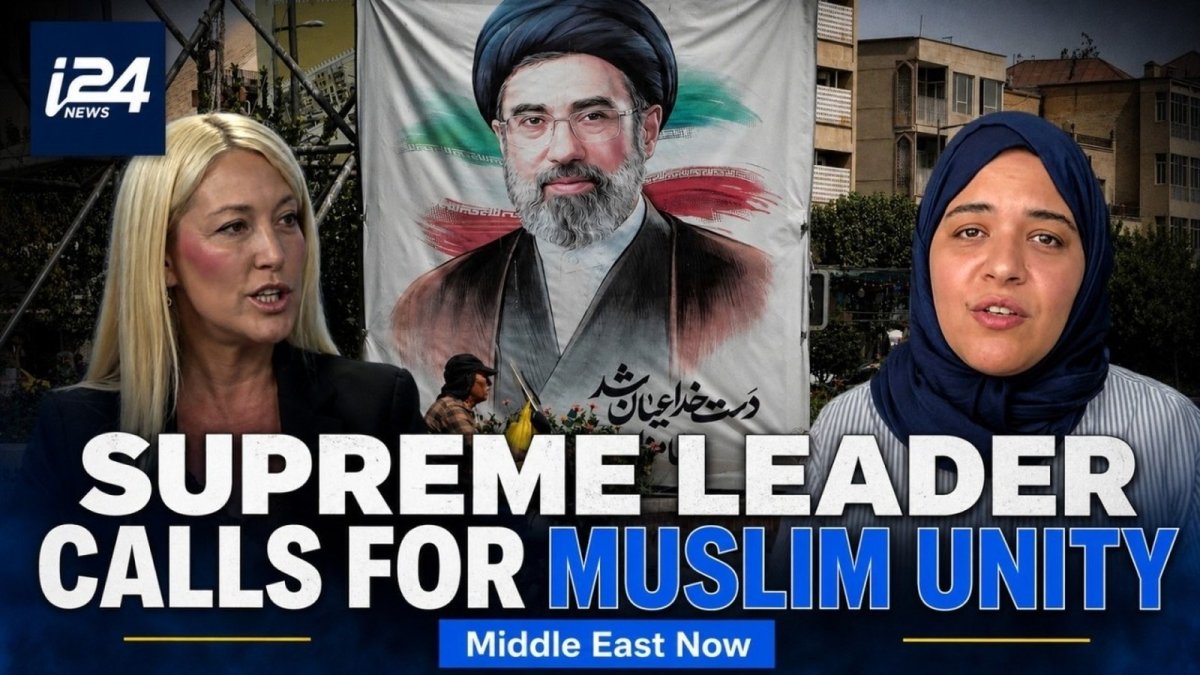
In a recent i24NEWS English report, the focus turned to a rare and significant written message from Iran's Supreme Leader Ayatollah Seyyed Mojtaba Khamenei, his first major public communication in six months. The message, published on the official Khamenei Telegram channel on August 30, 2026, calls for Muslim unity against the United States and Israel, framing the conflict as a collective struggle rather than an Iranian one.
In a recent i24NEWS English report, the focus turned to a rare and significant written message from Iran's Supreme Leader Ayatollah Seyyed Mojtaba Khamenei, his first major public communication in six months. The message, published on the official Khamenei Telegram channel on August 30, 2026, calls for Muslim unity against the United States and Israel, framing the conflict as a collective struggle rather than an Iranian one. This marks a critical moment for regional diplomacy, coming as a fragile ceasefire holds between Tehran and Washington following the February war.
Iran's Unseen Leader Calls for Muslim Unity Against US, Israel
Jerusalem, Israel — September 2026 — Iran's Supreme Leader Ayatollah Seyyed Mojtaba Khamenei has broken six months of public silence with a written message urging Muslim nations, particularly Gulf states, to unite against what he called the "criminal rulers of the United States and the illegitimate Zionist regime." The statement, issued on the birth anniversary of the Prophet Muhammad and marking Islamic Unity Week, represents the most significant ideological pronouncement from the Iranian leadership since the February 28, 2026, Israeli strike on a Tehran bunker that killed his father, Ayatollah Ali Khamenei, and wounded Mojtaba himself. Israeli defense officials in Jerusalem are closely analyzing the text, viewing it as evidence that Iran's ideological apparatus remains intact even as its military and economic power has been severely degraded.
A Written Message From an Unseen Leader
The message, published on the official Khamenei Telegram channel on August 30, 2026, was timed to coincide with Islamic Unity Week, an annual observance celebrating the Prophet Muhammad's birth. In it, Mojtaba Khamenei urged Muslim countries, especially the Gulf states, to "identify your real enemy, understand his plan and confront it." He explicitly stated that the United States and Israel are not enemies of Iran alone but of the broader Muslim world, arguing that "the criminal rulers of the United States and the illegitimate Zionist regime are sworn enemies of this unity and friendship."
The Supreme Leader called for cooperation across various fields and mutual defense among Muslim nations, warning that anyone who creates divisions among Muslims, "knowingly or unknowingly," is helping Islam's enemies. He posed a pointed rhetorical question: would Palestinians have been left "so helpless" if Muslims had been united? This framing directly ties regional disunity to Palestinian suffering, a theme that resonates across the Arab street and in capitals from Riyadh to Doha. For Israeli analysts, the message is a clear attempt to reposition Iran as the defender of the Palestinian cause and the vanguard of anti-Israel sentiment, even as Tehran's ability to project military power has been sharply curtailed.
Six Months After the War: A Weakened but Defiant Tehran
The context of this message is critical. Six months after the February 28, 2026, Israeli strike that killed Ali Khamenei and launched the Iran-US war, a ceasefire holds between Iran and the United States and Israel, but there is no formal peace agreement. Mojtaba Khamenei, who was injured in the same attack that killed his father, has not appeared publicly since, making this written message one of his most significant communications in half a year. The Iranian economy is under severe strain, with the Iranian president reporting that foreign trade has shrunk by a third under American sanctions and blockade. New US sanctions were announced in recent days, adding further pressure to an already beleaguered economy.
The Supreme Leader has urged Iranians and the broader Muslim world to reduce reliance on the US dollar, a familiar refrain that now carries added weight given the economic crisis. Shipping through the Strait of Hormuz has fallen sharply, with The Jerusalem Post reporting that vessel crossings dropped to about five per day over the weekend, a dramatic decline from pre-war levels. In a related development, a new head of the Basij paramilitary force, Hojatoleslam Taeb, a close ally of Mojtaba Khamenei, recently gave a speech invoking resistance, signaling that the regime is maintaining its ideological posture despite its weakened state. Israeli intelligence assessments suggest that while Iran's conventional military capabilities have been degraded, its network of proxies and its ideological influence remain potent tools.
Gulf Dilemma: Between Washington and Tehran
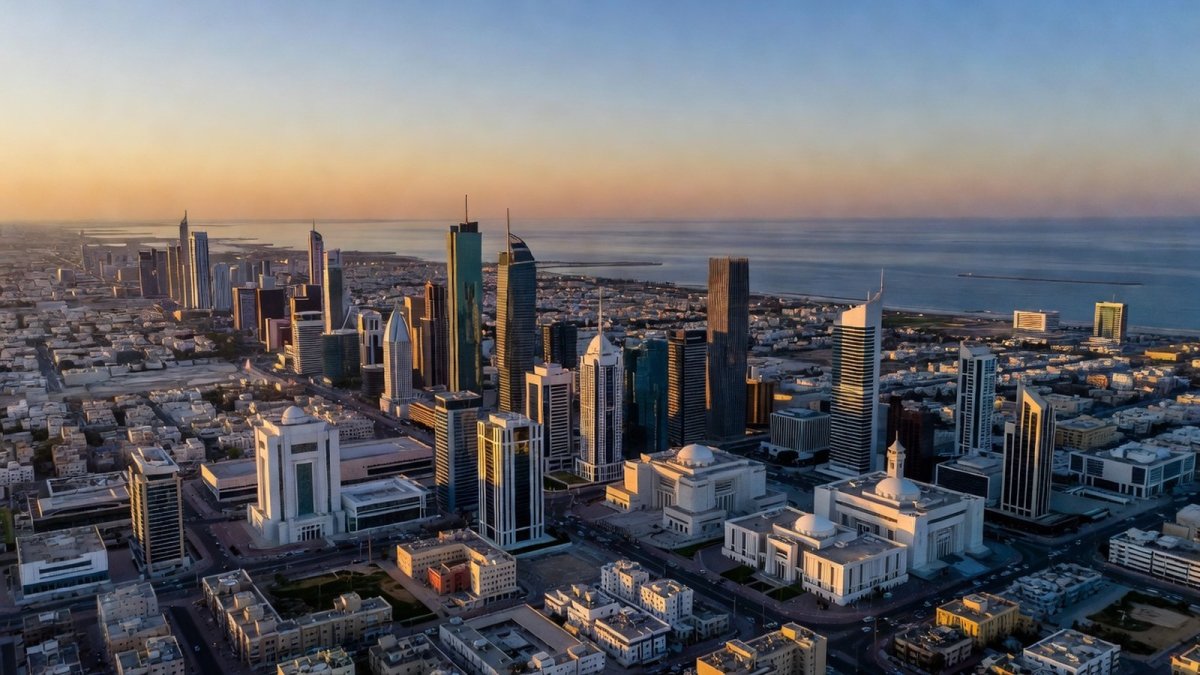
The Gulf states — Saudi Arabia, the UAE, Qatar, and Oman — find themselves in an increasingly difficult position as they navigate complex relationships with both Washington and Tehran. The Supreme Leader's message specifically targets these nations, urging them to reconsider their alignment with the United States and their normalization efforts with Israel. Analysts see this as an attempt by the unseen leader to reassert ideological leadership over the Muslim world and push back against a US-aligned regional order, including the Gulf-Israel normalization efforts that have advanced in recent years.
The UAE and Bahrain normalized relations with Israel under the Abraham Accords, and Saudi Arabia has been in ongoing discussions about a potential normalization deal, though the war and its aftermath have complicated those talks. The emerging debate over a new West Asian security architecture is central to this dynamic, with Gulf states weighing their security needs against their economic interests and their populations' sentiments regarding Palestine. Regional tensions also include Turkey-Israel friction, which has added another layer of complexity to the security landscape. For the Gulf monarchies, the Supreme Leader's message is both a warning and an invitation, but it comes at a time when Iran's economic leverage is at its weakest in decades.
Diplomatic and International Reactions
International reactions to the Supreme Leader's message have been measured but telling. The United States, which maintains a significant military presence in the Gulf, has dismissed the call for unity as a sign of weakness rather than strength. US officials point to Iran's economic collapse and military degradation as evidence that Tehran is in no position to lead a unified Muslim front. However, the message has found resonance in some quarters, particularly among Islamist movements and in countries where anti-American sentiment runs high. Egypt and Jordan, both of which have peace treaties with Israel, have remained publicly silent on the message, reflecting their delicate balancing act between Washington, Jerusalem, and their own domestic constituencies.
The United Nations has not issued an official response, but diplomatic sources indicate that the message has complicated efforts to establish a post-war security framework for the region. Turkey, which has its own frictions with Israel, has not endorsed the Supreme Leader's call but has also not rejected it, leaving room for interpretation. The European Union, which has been involved in ceasefire monitoring, is watching the situation closely, concerned that any escalation in rhetoric could undermine the fragile peace. For Israel, the message reinforces long-standing warnings about Iran's regional ambitions, even as Tehran faces its worst economic crisis in decades. The Israeli Foreign Ministry has not issued a formal response, but officials in Jerusalem are treating the message as a strategic document that reveals Iran's intentions and its assessment of the current balance of power.
Analysis: What This Means for Israel and the Region
For Israeli security planners, the Supreme Leader's message is a reminder that military victory does not automatically translate into ideological defeat. Jerusalem views Iran as militarily weakened but ideologically unbroken, and this message is evidence that Tehran intends to continue its struggle through political, economic, and proxy means. Israeli defense officials are tracking Iranian efforts to rebuild influence in the Gulf and among its proxies, including Hezbollah in Lebanon, Hamas in Gaza, and the Houthis in Yemen. The message's emphasis on Muslim unity is particularly concerning because it seeks to frame the conflict in religious terms, potentially mobilizing populations across the region against Israel and the United States.
The timing of the message, coming during Islamic Unity Week and amid a fragile ceasefire, suggests that Tehran is positioning itself for a long-term ideological campaign rather than a military one. The appointment of Hojatoleslam Taeb as head of the Basij force, a close ally of the Supreme Leader, indicates that the regime is consolidating its internal control and preparing for sustained resistance. For Israel, the implications are clear: the military threat may have diminished, but the ideological and political challenges remain. The debate over a new West Asian security architecture, which has been gaining momentum since the war, now takes on added urgency as Iran seeks to shape the narrative in its favor.
Looking ahead, the coming months will be critical in determining whether the ceasefire can be transformed into a more durable arrangement or whether the region slides back into conflict. The Supreme Leader's message is a signal that Iran is not ready to accept a US-aligned regional order, and it will likely intensify efforts to undermine Gulf-Israel normalization and to position itself as the champion of Palestinian rights. For Israel, the challenge is to counter this narrative while maintaining the security gains achieved during the war. The path forward will require a combination of military readiness, diplomatic engagement, and a clear articulation of Israel's vision for the region's future.
By Hannah Berg, Staff Writer
This article was produced with AI-assisted research and editorial support. Reporting is based on sources cited in the article.
What's Your Reaction?
 Like
0
Like
0
 Dislike
0
Dislike
0
 Love
0
Love
0
 Funny
0
Funny
0
 Wow
0
Wow
0
 Sad
0
Sad
0
 Angry
0
Angry
0
Israel Correspondent at Global1.News. Based in Tel Aviv, covering Israeli politics, security, technology, and society. Provides balanced, deeply-sourced reporting on one of the most closely-watched regions in the world.












Comments (0)