
Ukraine's Bold Strike Hits Russia's Last Naval Stronghold
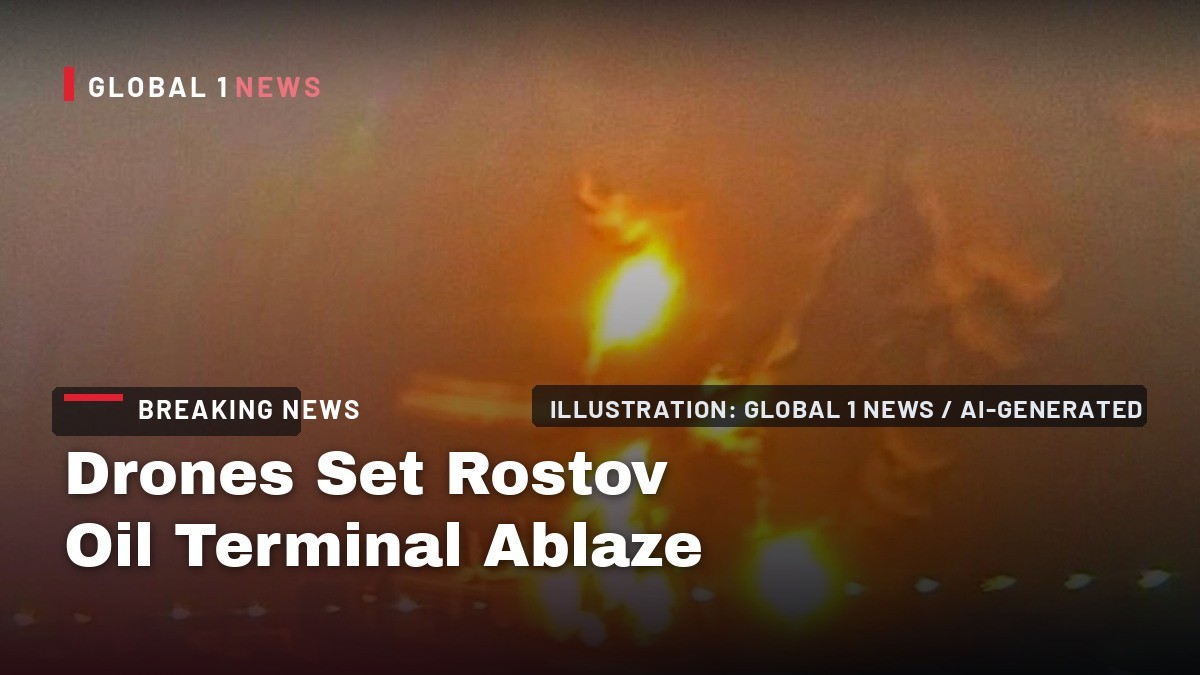
Overnight on August 11-12, 2026, Ukrainian forces launched a massive, coordinated assault on the Russian Black Sea port of Novorossiysk, striking the naval base, grain terminals, piers, air defenses, and critical port infrastructure in a single, devastating blow.

Overnight on August 11-12, 2026, Ukrainian forces launched a massive, coordinated assault on the Russian Black Sea port of Novorossiysk, striking the naval base, grain terminals, piers, air defenses, and critical port infrastructure in a single, devastating blow. This is the story of a "unique operation" that targeted the last major stronghold of the Russian fleet, and the global shockwaves that are still rippling through energy and grain markets.
Ukraine's Bold Strike Hits Russia's Last Naval Stronghold
Kyiv, Ukraine — Folks, let's cut through the fog of war and get straight to it. While the world was sleeping, Ukraine rewrote the rules of naval warfare again. This wasn't a skirmish. This was a statement. A combined, domestically-produced arsenal of jet-powered drones, Neptune anti-ship missiles, and uncrewed maritime systems—sea drones—slammed into the heart of Russia's Black Sea logistics hub. We are talking about a port that is simultaneously a military fortress, a grain export giant, and the terminus for a pipeline that keeps Kazakhstan's economy breathing. And for one horrific night, it all went dark.
The Strike That Shook Russia's Last Naval Stronghold
Let's set the scene. Novorossiysk is not just another city on the map. It is the linchpin of Russia's naval power in the region, the last major base after earlier Ukrainian strikes degraded their positions in Crimea. It is also a bustling commercial artery for grain and oil. According to reports from RBC-Ukraine and India Today, President Volodymyr Zelenskyy described the operation as "unique," specifically targeting what he called "the last major stronghold of the Russian fleet in the Black Sea, more than 300 kilometers from the front line." That distance is key, folks. This wasn't a border skirmish; this was a deep, surgical strike into the rear echelon of the Russian war machine.
The sheer audacity of the attack cannot be overstated. For months, we have watched Ukraine develop a "veto-proof" arsenal—weapons with no Western restrictions on their use. As reported by RBC-Ukraine, NV, and TechTimes, the strike package included Palianytsia jet-powered drones, Neptune anti-ship missiles, and uncrewed maritime systems. All of it made in Ukraine. All of it designed to bypass the red tape that often hampers Western-supplied weapons. This is the new reality of the war: a Ukrainian military that is increasingly self-sufficient in its ability to reach deep into Russian territory and disrupt the economic engines that fund the invasion.
A 'Unique Operation' — What Ukraine Threw at Novorossiysk
Let's break down the weapons systems, because the diversity of the attack tells us a lot about Ukrainian strategy. The Palianytsia drone is a jet-powered marvel, designed for speed and penetration. The Neptune missile is a proven ship-killer, a name that has haunted the Russian fleet since the sinking of the Moskva. And then you have the sea drones—uncrewed vessels skimming the waves, weaving through harbor defenses. This wasn't a one-trick pony. This was a symphony of destruction, a coordinated effort to overwhelm Russian air defenses and naval protection simultaneously.
The choice of weapons is also a political statement. By using exclusively domestic systems, Kyiv is signaling to its allies and its enemies that it does not need permission to defend itself. There are no restrictions on where these weapons can go or what they can hit. As NBC News reported, Kyiv officials say this uncrewed fleet has succeeded in limiting the movements of Russia's once-dominant Black Sea navy—one of Ukraine's biggest accomplishments of the war. And last night, they proved it again, right in the heart of Russia's "safe" harbor.
Four Warships Damaged and Grain Terminals Silent
Now, let's get to the damage assessment, and this is where the story gets even more significant. According to Ukraine's General Staff, as reported by RBC-Ukraine, four Russian warships in Novorossiysk sustained varying degrees of damage in the overnight strike. Four. That is not a symbolic hit; that is a tangible degradation of Russia's naval capability. We are not just talking about scratches on the paint. These are vessels that may be out of commission for weeks or months, further reducing the already limited offensive capability of the Black Sea Fleet.
But the military damage is only half the story. The economic impact is potentially catastrophic for Russian export revenues. Bloomberg reported that three of Russia's largest grain terminals at Novorossiysk halted operations after being damaged. Reuters and the Moscow Times added that NKHP, one of the largest terminals, halted work, citing three industry sources. Demetra Holding also confirmed its terminal was damaged. We are talking about the breadbasket of Russian exports grinding to a halt. Vedomosti, via Meduza, notes that Novorossiysk has three grain terminals total—and it appears all of them have been taken offline. Reuters sources were careful to note there were no injuries at the terminals themselves, but the operational silence is deafening.
Russia's Response and the Human Toll
So, how did Moscow react? With a familiar mix of bravado and grim acknowledgment. Moscow reported that more than 500 Ukrainian drones were intercepted across the region—a staggering number that speaks to the scale of the assault. But despite the air defense claims, the attack got through. Novorossiysk Mayor Andrey Kravchenko wrote on Telegram, "Novorossiysk endured a horrific night." He confirmed that residential buildings were hit. This is the reality of modern warfare: even when targeting military and economic infrastructure, the collateral impact on civilians is unavoidable.
Now, we must address the human cost with precision and attribution. Al Jazeera reported three people killed in the overnight attacks on Russian and Ukrainian ports combined. The Moscow Times reported one person killed in Novorossiysk specifically. We are not going to spin these numbers, folks. We are going to report them as they were given to us. Every single life lost is a tragedy, and we must be clear that these figures come from the outlets named, as the fog of war makes independent verification difficult in real-time. The mayor's own words paint a picture of a city under siege, a civilian population caught in the crossfire of a war that continues to expand its geography.
Why This Port Matters — Oil, Grain, and the CPC Pipeline
Let's zoom out for a second, because the importance of Novorossiysk cannot be overstated. This is not just a naval base. As TechTimes and the Kyiv Post highlighted, it is the terminus of the Caspian Pipeline Consortium (CPC), which carries Kazakh crude roughly 1,510 kilometers (938 miles) from the Tengiz oil field. This pipeline is critical to Kazakhstan's exports. It is the lifeblood of the Kazakh economy. And it runs through Russian territory, making it a geopolitical hostage in this conflict.
By striking Novorossiysk, Ukraine is not just hitting Russia; they are sending a message to the entire region. They are demonstrating that they can disrupt global energy flows at will. The grain terminals are equally vital. This port is a major artery for wheat and corn exports that feed import-dependent states in North Africa and the Middle East. When these terminals go silent, the world feels it. The ripple effects are immediate, and they are felt in the wallets of consumers and the stability of governments thousands of miles away.
The JD Vance Oil Tanker Deal
This brings us to the diplomatic tightrope walk that is happening behind the scenes. According to the Financial Times, as cited by Reuters, Ukraine had agreed to pause drone strikes on non-Russian oil tankers using Novorossiysk and infrastructure critical to Kazakhstan's crude exports. This was reportedly the result of a request from U.S. Vice President JD Vance in a phone call with President Zelenskyy, aimed at stabilizing global energy flows. The logic is simple: if you disrupt Kazakh oil exports, you spike global prices and alienate a country that is not a belligerent in this war.
But here is the crucial nuance, folks. Kyiv agreed to pause strikes on non-Russian tankers and Kazakhstan's critical infrastructure. They did not agree to stop striking Russian military targets. And that is exactly what they did. The attack last night was a surgical strike on the naval base and port infrastructure—military and economic targets that fund the Russian war effort. Reuters and the Kyiv Post confirm that Kyiv continued striking Russian military targets at the port. This is a masterclass in strategic communication: Ukraine showed it can be a responsible global actor while simultaneously reminding Moscow that no corner of its war machine is safe.
What This Means for Global Markets
The immediate market reaction is predictable, but the long-term implications are staggering. Hamer Intel analysis, cited in the source material, suggests that Russian grain export capacity from Novorossiysk may be temporarily reduced. This is supporting wheat and corn futures and complicating supply for import-dependent states. RBC-Ukraine ran a headline that says it all: "Russia could lose up to a third of its exports." A third, folks. That is a massive hole in the global supply chain.
We are looking at a scenario where the price of bread in Cairo and the price of fuel in Brussels are now directly tied to the security situation in a Russian port city. The July strikes had already halted oil loadings and disrupted energy markets. Now, with the grain terminals silent, we are facing a dual shock. This is not just a military story; it is an economic story with the potential to trigger food insecurity and political instability in vulnerable regions. The markets are jittery, and they have every right to be.
What Comes Next
So, what happens now? The wider war context is grim. The Kyiv Independent reported that on the same day, Russian forces attacked Ukraine overnight with an Iskander-M ballistic missile, a Kh-31P anti-radiation missile, Kh-35 guided air-launched missiles, and 138 Shahed-type drones. Russian attacks killed 8 and injured 57 across Ukraine over the past day, including a deadly strike on an oil tanker truck in Odesa Oblast. The Russians are not backing down, and they are exacting a brutal toll on Ukrainian civilians.
Politically, President Zelenskyy is already looking ahead. Al Jazeera reported that he said Russia would use next month's election as a pretext to declare a new mobilization. This is a warning that the war is not winding down; it is potentially escalating. The strike on Novorossiysk is a high-risk, high-reward gambit. It demonstrates Ukrainian strength and resolve, but it also invites retaliation. The question now is whether Russia will respond with a massive missile barrage on Ukrainian cities, or whether they will be forced to divert resources to protect their own critical infrastructure.
Folks, this is the story. A war that was supposed to be a three-day special operation has turned into a grinding conflict where Ukraine is now dictating the tempo of attacks on Russian soil. The strike on Novorossiysk is a game-changer. It proves that Ukraine has the will and the means to hit Russia where it hurts—not just on the battlefield, but in the ports and pipelines that fuel the Russian economy. The world is watching, and the markets are voting with their dollars. The last major stronghold of the Russian fleet is no longer a sanctuary. It is a target. And last night, it was hit.
By Jessica Ali, Staff Writer
This article was produced with AI-assisted research and editorial support. Sources: Reuters, Al Jazeera, NBC News, Bloomberg, Kyiv Independent, RBC-Ukraine, Kyiv Post, Moscow Times, Financial Times.
What's Your Reaction?
 Like
0
Like
0
 Dislike
0
Dislike
0
 Love
0
Love
0
 Funny
0
Funny
0
 Wow
0
Wow
0
 Sad
0
Sad
0
 Angry
0
Angry
0

Editor-in-Chief at Global1.News. Atlanta-based journalist who cuts through the BS and tells it like it is. Lead anchor, host, and the voice you hear when the spin stops and the truth starts.














Comments (0)