
Putin Threatens Retaliation if Europe Seizes Russian Ships
President Vladimir Putin has threatened retaliation in kind if European nations seize Russian commercial vessels, calling the EU's new shadow fleet confiscation mechanism 'piracy and robbery' and ordering the Defense Ministry to prepare a response.
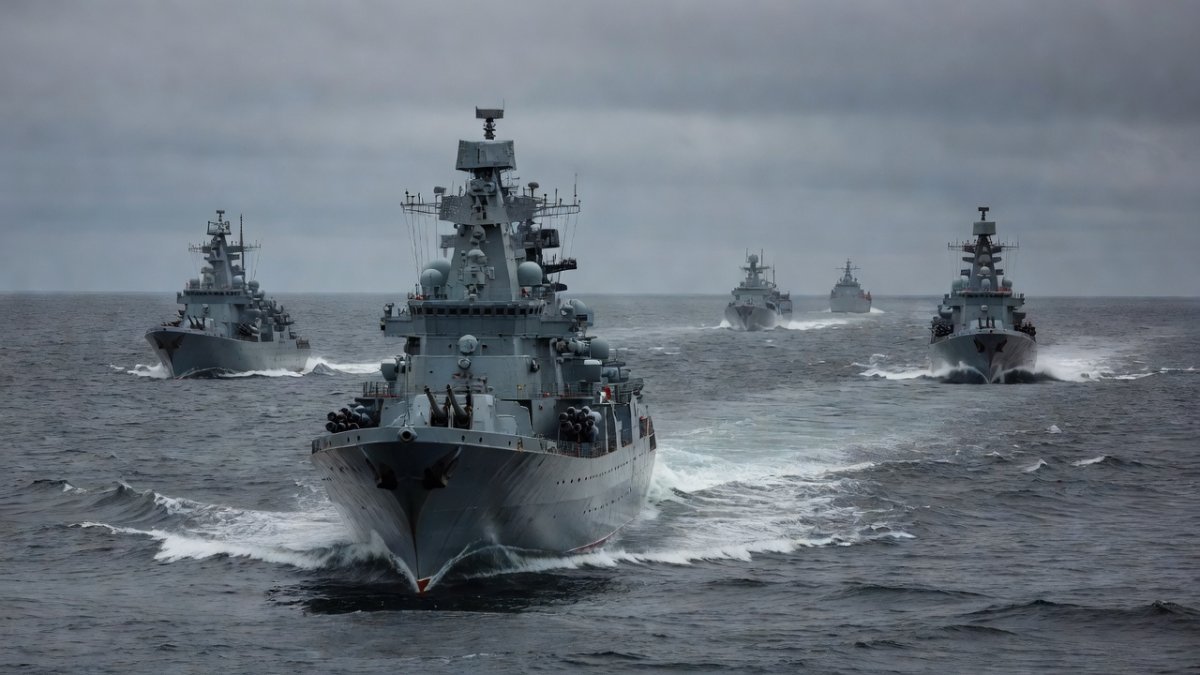
President Vladimir Putin has threatened to retaliate in kind against European nations if they proceed with plans to seize Russian commercial vessels, escalating a new front in the economic war over Moscow's shadow fleet. Speaking aboard the missile cruiser Varyag during a meeting with Pacific Fleet personnel on Wednesday, Putin described the European Union's new confiscation mechanism as "piracy and robbery," and warned that Russia's response would not be limited to the waters where any seizures occur.
Putin Threatens Retaliation if Europe Seizes Russian Ships
Moscow – August 12, 2026 — The warning follows the European Union's adoption in July of a mechanism allowing member states to confiscate and sell Russian oil carried aboard shadow fleet vessels attempting to evade the bloc's sanctions. The measure, introduced as part of the EU's 21st sanctions package, also covers grain cargoes, and has already resulted in the detention of five tankers carrying Russian oil since the start of the year.
Putin's Direct Warning to Europe
"We see the authorities of certain countries attempting, in violation of international maritime law, to restrict the movement of vessels operated by our businesses," Putin said. "And recently, they went so far as to consider seizing our vessels and selling the property they have plundered from us. This is, of course, nothing other than piracy and robbery."
The Russian president said Moscow would take similar action if European countries put the measures into practice, adding that Russia's response would not necessarily be confined to the same waters where its ships were seized. "We will not necessarily act in the waters where raids on our ships and vessels are being planned, but wherever we ourselves consider it necessary and appropriate. Anywhere, including in the Pacific Fleet's area of responsibility," he said.
Defense Ministry Ordered to Prepare Response
Putin said the Defense Ministry had already received instructions to prepare a response to the EU's confiscation mechanism. Pacific Fleet Commander Viktor Liina, who was present at the meeting, told Putin that the Russian military had conducted a "detailed analysis" of maritime traffic in the Asia-Pacific region.
"We know the routes, what they are carrying and whose ships they are," Liina said, according to the Kremlin's readout of the meeting. The admiral reported that 1,001 vessels had passed through Russia's exclusive economic zone along the Kuril Islands between April 24 and Aug. 6, including 379 sailing under the flags of countries that Moscow officially classifies as "unfriendly." Those vessels included 273 dry bulk carriers and 71 tankers, Liina said. Twenty-six were British and nine were French.
The Shadow Fleet Strategy Under Pressure
The EU's new mechanism targets the shadow fleet — a network of aging tankers and cargo ships that Moscow has used to circumvent Western sanctions imposed since the full-scale invasion of Ukraine in February 2022. These vessels, often operating with opaque ownership structures and flying flags of convenience, have been central to Russia's ability to maintain oil revenues despite successive rounds of sanctions from Brussels, Washington and London.
According to shipping analysts, the shadow fleet has allowed Russia to redirect crude exports from European buyers to customers in Asia, particularly India and China, while avoiding the G7 price cap of $60 per barrel. The EU's decision to move from sanctions to active confiscation represents a significant escalation, targeting not just the cargo but the vessels themselves.
Detentions and Seizures Since the Start of the Year
EU countries and Britain have detained five tankers carrying Russian oil since the start of the year, according to the information presented during Wednesday's meeting. The MV South Star was stopped on July 20 in an operation involving EU countries. France intercepted the tankers Grinch, Deyna and Tagor before later releasing them, while Britain has held the Smyrtos, carrying 100,000 metric tons of oil, since June 14.
Sweden in March detained the dry cargo ship Caffa, which Kyiv said had been transporting grain from Russian-occupied Ukrainian territory. Sweden's Supreme Court ruled in August that the ship should be handed over to Ukraine, setting a legal precedent for the transfer of seized assets to Kyiv.
Legal and Diplomatic Ramifications
The detentions have raised complex questions under international maritime law. Russia has consistently argued that the seizures violate the United Nations Convention on the Law of the Sea, which guarantees freedom of navigation. European officials, however, maintain that the measures are justified as part of sanctions enforcement and target vessels engaged in activities that undermine the sanctions regime.
Brussels has framed the confiscation mechanism as a means of increasing pressure on Moscow while also providing a potential funding source for Ukraine's reconstruction. The European Commission has estimated that the shadow fleet comprises hundreds of vessels, and the sale of confiscated tankers could generate significant revenue.
Kremlin's Pacific Focus and the Kuril Islands Factor
Putin's decision to deliver the warning from the Pacific Fleet's area of responsibility is significant. The Kuril Islands, a chain of disputed islands between Russia and Japan, have become a strategic flashpoint in recent years, with Moscow increasing military deployments there. The islands sit astride key shipping lanes connecting the Pacific Ocean to the Sea of Okhotsk, and Russia's exclusive economic zone around them is rich in fish and potentially hydrocarbon resources.
Liina's detailed briefing on vessel traffic in the region suggests that the Russian military is actively monitoring commercial shipping and could be preparing to intercept vessels belonging to "unfriendly" states. The mention of 26 British and nine French vessels passing through the zone is a pointed reminder that European commercial interests are within reach of Russian naval assets.
European Perspective on the Escalation
European officials have dismissed Putin's threats as rhetorical posturing, noting that Russia's navy has limited capacity to interdict commercial shipping far from its shores. However, the prospect of Russian retaliation against European vessels has raised concerns among shipping companies and insurers, who fear a cycle of seizures that could disrupt global trade routes.
EU foreign policy officials have stated that the confiscation mechanism is designed to be proportionate and targeted, applying only to vessels identified as part of the shadow fleet. They have also pointed to the legal basis for the measures, arguing that the vessels are engaged in activities that violate EU sanctions and that the confiscation of assets is a standard tool in international law enforcement.
Analysis and Implications
Analysts suggest this confrontation marks a new phase in the economic war between Russia and the West. The shadow fleet has been a critical lifeline for the Kremlin, allowing it to sustain oil exports and generate revenue for the war effort in Ukraine. By targeting the vessels themselves, the EU is attempting to dismantle this infrastructure, forcing Russia to either find new ways to transport its oil or accept reduced revenues.
Putin's threat of retaliation "wherever we ourselves consider it necessary and appropriate" could indicate that Moscow is preparing to seize European commercial vessels in response. The Pacific Fleet's detailed tracking of shipping traffic suggests that the Russian military has already identified potential targets. This could include vessels carrying goods to or from Japan, South Korea, or other US allies in the region, creating a new flashpoint in the Asia-Pacific.
The situation also carries risks for ordinary Russians, who could face higher prices for imported goods if shipping disruptions affect trade. The Russian economy has already been strained by sanctions, and a maritime confrontation could further isolate Moscow from global markets.
For the EU, the challenge will be to maintain unity and legal coherence as it implements the confiscation mechanism. The detentions so far have been carried out by individual member states, and there are questions about how the proceeds from any sales would be distributed. The case of the Caffa, which Sweden's Supreme Court ordered handed over to Ukraine, could provide a template for future transfers.
As both sides dig in, the risk of a maritime incident that escalates beyond economic measures into direct military confrontation cannot be dismissed. Putin's warning, delivered from the deck of a missile cruiser, was carefully choreographed to signal that Russia views the EU's actions as an attack on its sovereign interests. The coming months will test whether either side is willing to back down, or whether the shadow fleet becomes the battleground for a broader conflict.
By Irina Volkov, Staff Writer
This article was produced with AI-assisted research and editorial support. Reporting is based on sources cited in the article.
What's Your Reaction?
 Like
0
Like
0
 Dislike
0
Dislike
0
 Love
0
Love
0
 Funny
0
Funny
0
 Wow
0
Wow
0
 Sad
0
Sad
0
 Angry
0
Angry
0
Russia/Eastern Europe Correspondent at Global1.News. Covering Russian politics, energy, security, and the shifting dynamics of the post-Soviet space. Provides clear-eyed analysis on one of the world's most opaque regions.











Comments (0)