
Ukraine Signals Openness to Diplomacy Amid UN General Assembly Gatherings
As the United Nations General Assembly convenes in New York this week, the spotlight on Eastern Europe sharpens alongside the usual chorus of Middle Eastern and global security concerns.
As the United Nations General Assembly convenes in New York this week, the spotlight on Eastern Europe sharpens alongside the usual chorus of Middle Eastern and global security concerns. In a brief but significant statement captured by TRT World’s correspondent Hasan Abdullah, Ukrainian officials indicated a willingness to pursue a diplomatic pathway to end the conflict with Russia, even as they prepare for the harsh winter months that could see renewed Russian offensives. This development arrives at a moment when the great‑power rivalry and regional fault lines—from Sunni‑Shia competition to energy security calculations—are shaping diplomatic calculations across the broader Eurasian landscape.
Contextualising Ukraine’s Diplomatic Overture
The Ukrainian government’s articulation of openness to a diplomatic solution does not emerge in a vacuum. Since the outbreak of hostilities, Kyiv has consistently framed its position around the principles of sovereignty and territorial integrity, while also seeking to keep the diplomatic door ajar for a negotiated settlement that could avert further devastation. The current statement, delivered as world leaders gather in New York, underscores a strategic timing: the UN General Assembly provides a global platform where the narratives of conflict and peace are amplified.
Historically, diplomatic overtures from conflict‑affected states have been used to signal both resolve and flexibility, a duality that can influence the calculations of external actors. In Ukraine’s case, the expressed willingness to engage diplomatically may serve multiple audiences: domestic constituencies yearning for an end to the war, Western allies monitoring Kyiv’s political resilience, and Moscow, which continues to leverage military pressure as a bargaining chip.
While the video report does not detail the specific parameters of any proposed diplomatic framework, the mere articulation of openness can be interpreted as a calibrated move. It suggests that Kyiv remains prepared to negotiate, provided that any settlement respects its core demands. This stance aligns with the broader pattern of conflict resolution where the weaker party signals readiness to talk while retaining leverage on the ground.
Winter Threats and Military Calculus
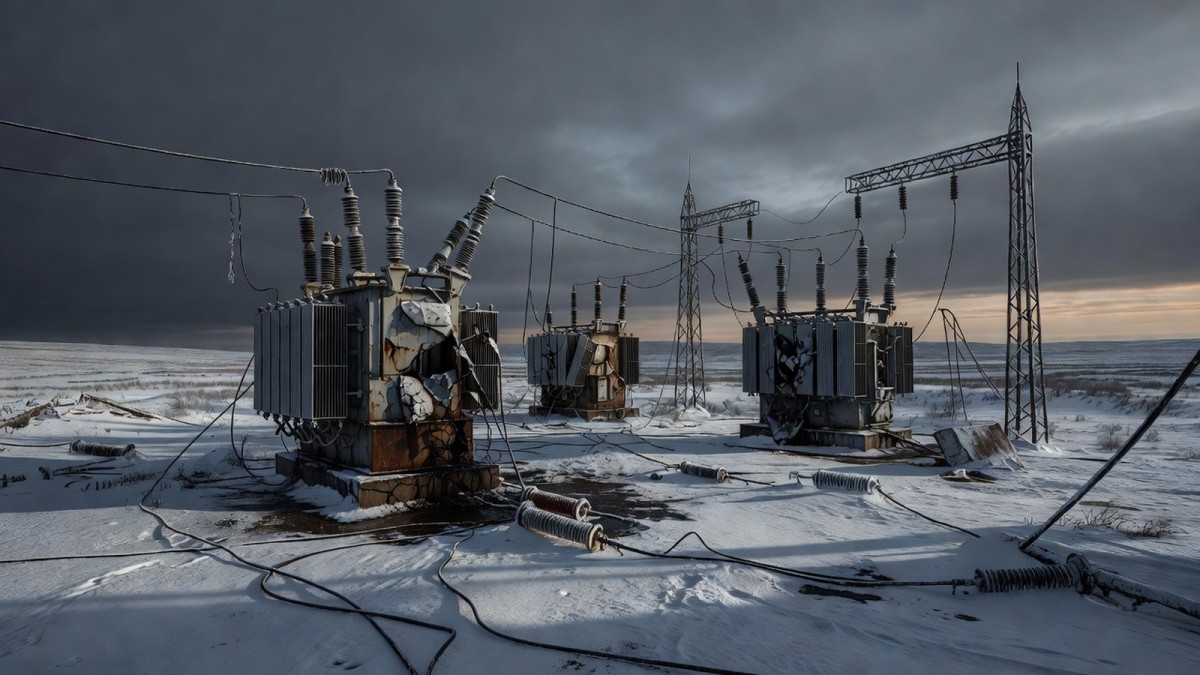
Hasan Abdullah’s reporting also highlighted Ukraine’s anticipation of a potentially harsher winter season, during which Russian forces may intensify attacks. The seasonal dimension of the conflict has long been a factor in Eastern European warfare, with harsh weather conditions historically influencing operational tempo and logistics. Ukraine’s preparation for a “possible Russian attacks” in winter reflects an acute awareness of how environmental factors can be weaponised.
The prospect of intensified winter operations carries implications beyond the immediate battlefield. A renewed surge in hostilities could strain Ukraine’s already stretched resources, potentially prompting Kyiv to accelerate diplomatic outreach as a means of mitigating further losses. Conversely, it may also harden resolve among Ukrainian officials who view a diplomatic concession as a sign of weakness in the face of external aggression.
From a regional perspective, the anticipation of winter fighting resonates with the energy security concerns that dominate Middle Eastern and Gulf policy discussions. A protracted conflict in Ukraine threatens to keep global oil and gas markets volatile, a scenario that Gulf states monitor closely. Any escalation in the coming months could reverberate through energy prices, influencing the fiscal calculations of oil‑exporting economies already navigating a transition toward diversification.
Great‑Power Dynamics at the UN General Assembly
The UN General Assembly serves as a diplomatic arena where the United States, the European Union, China, and Russia each project their strategic narratives. Ukraine’s diplomatic overture, delivered in this setting, is likely to be received through the prism of these great‑power rivalries. The United States and its European allies have consistently championed a robust response to Russian aggression, while also advocating for a political solution that respects Ukraine’s sovereignty.
China’s position, traditionally emphasizing the primacy of dialogue and non‑interference, may find resonance with Kyiv’s expressed openness to negotiations. However, Beijing’s strategic partnership with Moscow complicates any overt support for a settlement that could be perceived as undermining Russian interests. This delicate balance underscores the broader geopolitical chessboard on which Ukraine’s diplomatic signals are being played.
Russia, for its part, has repeatedly framed the conflict as a security imperative, often rejecting external diplomatic pressure as interference. The indication that Ukraine is willing to discuss a diplomatic route could be leveraged by Moscow to claim that Kyiv is seeking a “peace at any price,” a narrative that has been employed in previous diplomatic overtures. The interplay of these narratives at the UNGA will shape the subsequent diplomatic environment surrounding any potential peace talks.
Implications for Middle Eastern Alliances
While the Ukraine‑Russia war is geographically distant from the Gulf, its diplomatic ripples are felt across the region. Gulf states, particularly Saudi Arabia and the United Arab Emirates, have been navigating a complex diplomatic landscape that balances their strategic partnership with the United States against a pragmatic engagement with Russia, especially in the energy sector. Ukraine’s openness to diplomacy may be viewed by these states as an opportunity to encourage a de‑escalation that could stabilise global energy markets.
Moreover, the broader Sunni‑Shia competition, which often influences regional alignments, may see a subtle shift as Gulf states assess the benefits of a more stable Europe for their own security calculations. A reduction in European energy demand volatility could free up resources for Gulf nations to invest in diversification projects, aligning with their long‑term economic strategies.
Turkey, a NATO member with deep economic ties to both Europe and Russia, also watches the Ukrainian diplomatic stance closely. Ankara’s foreign policy has often balanced its NATO commitments with a pragmatic engagement with Moscow, especially concerning energy imports and regional security concerns. Ukraine’s willingness to negotiate could provide Turkey with a diplomatic opening to mediate or facilitate dialogue, enhancing its role as a regional broker.
Energy Market Outlook Amid Diplomatic Signals
The global energy market remains highly sensitive to geopolitical developments, and the Ukraine‑Russia conflict continues to be a primary source of volatility. Ukraine’s indication that it is open to a diplomatic solution may be interpreted by market participants as a potential, albeit uncertain, pathway to de‑escalation. However, the concurrent warning of a possible winter offensive tempers any optimism, suggesting that immediate market reactions will remain cautious.
For the Gulf, which dominates global oil production, the prospect of a more stable European energy demand environment could influence production decisions. If a diplomatic settlement were to reduce the urgency of European gas imports from Russia, the region might see a modest shift in demand patterns, potentially affecting pricing dynamics and influencing the strategic calculations of OPEC+ members.
In addition, the United States, a major producer of shale gas and oil, monitors the conflict closely as it impacts its own energy export strategy. A diplomatic breakthrough could reduce the impetus for the U.S. to increase European gas supplies, thereby reshaping trans‑Atlantic energy trade flows. These interlinked considerations underscore how a diplomatic signal from Kyiv reverberates through the complex web of global energy interdependence.
Prospects for a Sustainable Settlement
Assessing the likelihood of a durable settlement requires weighing Ukraine’s diplomatic openness against the entrenched positions of the parties involved. Kyiv’s statement, as reported by TRT World, signals a strategic flexibility that could be harnessed by international mediators, particularly those with credibility among both Western and Russian circles. The United Nations, with its convening power, may serve as a platform for preliminary talks, especially given the timing of the General Assembly.
Nevertheless, the underlying security concerns that drive Russian military actions remain a formidable obstacle. The anticipation of a winter offensive indicates that Moscow retains the capacity and willingness to intensify pressure, which could be used as a bargaining chip in any negotiation. The balance of power on the ground will therefore continue to shape the contours of any diplomatic engagement.
For the Middle East, the evolution of this diplomatic process will be watched closely, as it will inform regional calculations regarding security cooperation, energy market stability, and the broader great‑power rivalry that influences the region’s strategic environment. A peaceful resolution, even a partial one, could reduce the geopolitical turbulence that fuels uncertainty in the Gulf, allowing regional actors to focus more on internal reforms and diversification agendas.
By Malik Hassan, Staff Writer
This article was produced with AI-assisted research and editorial support. Reporting is based on the source material cited below. Sources: TRT World video report (23 September 2026); TRT World; Global1.News
What's Your Reaction?
 Like
0
Like
0
 Dislike
0
Dislike
0
 Love
0
Love
0
 Funny
0
Funny
0
 Wow
0
Wow
0
 Sad
0
Sad
0
 Angry
0
Angry
0

Middle East Correspondent at Global1.News. Based in Beirut, covering politics, conflict, energy, and society across the Middle East. Brings context and depth to a region often reduced to headlines.













Comments (0)