
Türkiye's message to world from Poland
In the broader tableau of Sunni‑Shia competition, great‑power rivalry and the scramble for energy security, the emergence of Turkey as a pivotal security partner for Europe is underscored by its recent showcase at the 34th International Defense Industry Fair (MSPO 2026) in Kielce, Poland.
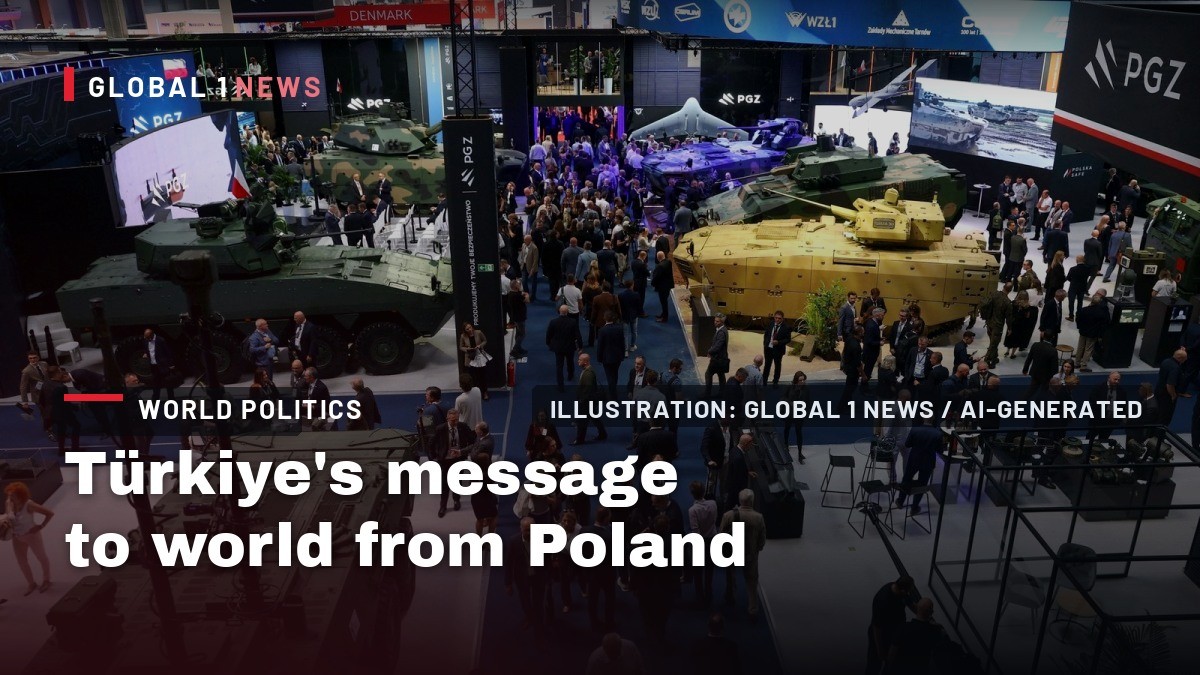
In the broader tableau of Sunni‑Shia competition, great‑power rivalry and the scramble for energy security, the emergence of Turkey as a pivotal security partner for Europe is underscored by its recent showcase at the 34th International Defense Industry Fair (MSPO 2026) in Kielce, Poland. The fair, a focal point for NATO’s eastern flank, offered a vivid illustration of how Ankara’s diplomatic resolve, military capacity and defence‑industry dynamism are converging to reshape the continent’s security architecture.
Strategic depth of the Turkey‑Poland partnership
During the fair, Turkey’s ambassador to Warsaw, Rauf Alp Denktaş, highlighted the historic and contemporary dimensions of the bilateral relationship. He reminded listeners that diplomatic ties span more than six centuries, while a formal strategic partnership has been in place since 2009. This long‑standing connection is reinforced by the fact that Turkey and Poland together command the two largest land forces within NATO’s European command, with Turkey ranking first and Poland second. Such a military balance, coupled with both nations being among the world’s leading economies, positions the alliance as a cornerstone of European defence.
Denktaş, the 114th Turkish ambassador to Poland—a number that underscores the depth of the relationship—emphasised that the defence industry now drives the partnership. He noted that Poland allocates the largest share of its national income to defence among NATO members, making Turkey’s advanced production capacity and operational expertise especially valuable to Warsaw.
Turkey’s ascent as a global defence exporter
Professor Haluk Görgün, president of Turkey’s Defence Industries, presented compelling export data that signal Turkey’s rapid rise on the world stage. In the previous year, Turkey shipped more than 230 defence products to 185 countries, elevating it to the position of the world’s 11th‑largest defence exporter. Since the start of 2026, Turkish defence exports have amassed a total of $6.4 billion, reflecting a sustained growth trajectory.
Contrary to a common perception that Turkish arms sales are primarily directed toward African and Asian markets, Görgün clarified that 56 percent of last year’s exports were destined for European and NATO partners. This shift illustrates Turkey’s deepening integration into the security ecosystems of its western allies and underscores the strategic relevance of its product portfolio to the continent’s defence needs.
Industrial localisation and technology transfer
One of the key drivers behind Turkey’s export success, as highlighted at the fair, is the dramatic rise in localisation. While the defence‑industry localisation rate stood at roughly 20 percent two decades ago, it now exceeds 80 percent. This evolution signals that Turkey is no longer a mere assembler of foreign components; it has become a source of indigenous technology and production expertise.
Beyond selling finished products, Turkish firms are increasingly sharing know‑how and collaborative frameworks with partner nations. The narrative advanced at MSPO stressed that Turkey’s defence sector now offers a model of technology transfer, enabling allies to develop domestic capabilities while benefiting from Turkish design and engineering standards.
Triad of power: diplomacy, military and industry
Ahmet Akyol, general manager of Aselsan, framed Turkey’s rising strategic weight as the product of three interlocking elements: effective diplomacy, a robust armed force and a thriving defence industry. When these pillars align, they generate a “significant power multiplier,” according to Akyol. Diplomatic outreach opens procurement windows, the Turkish Armed Forces (TSK) provide deterrence, and the defence industry guarantees that this power remains autonomous and sustainable.
This synergy was evident in the expanding cooperation with Poland. Initial collaboration in border‑security systems has broadened to include radar and electro‑optical solutions, with a new contract signed at MSPO for the next phase of the project. Such deepening ties illustrate how Turkish diplomatic initiatives translate into concrete, technology‑driven outcomes on the ground.
Electronic warfare leadership
Akyol also highlighted Aselsan’s standing in the global electronic‑warfare arena, asserting that the company ranks among the top three worldwide in this domain. Ongoing work on electronic‑warfare systems for Poland, including payloads for unmanned vehicles, is proceeding as planned. This capability is increasingly critical as modern battlefields become saturated with sensors, drones and networked platforms, making electronic dominance a decisive factor.
The emphasis on electronic warfare reflects a broader trend within Turkey’s defence strategy: moving beyond conventional kinetic assets toward integrated, information‑centric solutions that can shape the electromagnetic spectrum and protect allied forces from emerging threats.
Missile and munition breakthroughs
The Roketsan exhibition showcased a suite of advanced missile and munition technologies that illustrate Turkey’s leap forward in precision strike capability. The Teber guidance kit, for instance, converts standard bombs into high‑precision smart munitions with a reach of up to eight kilometres, enhancing stand‑off strike options for ground forces.
Roketsan also displayed the Sungur system, a low‑altitude air‑defence solution that reduces reliance on foreign suppliers, and the Khan missile, offering a strategic reach of 300 kilometres. Complementing these are the IHA‑230, a 150‑kilometre range munition that enables unmanned aerial vehicles such as the Akıncı to engage targets beyond hostile air‑defence envelopes, and the MAM‑T variant equipped with an imaging infrared seeker for improved target discrimination in contested electronic‑warfare environments. The Pusu system, employing Cirit missiles, provides a mobile, low‑cost defence against drones and helicopters, underscoring Turkey’s focus on counter‑UAS solutions.
Implications for Europe’s security architecture
The collective messages delivered at MSPO 2026 signal a strategic shift: Turkey is no longer positioned merely as a weapons supplier but as a partner that exports technology, trust and long‑term strategic collaboration. For Europe, this translates into a diversified supply chain, reduced dependence on traditional Western arms exporters, and a partner capable of co‑developing cutting‑edge systems tailored to NATO’s evolving threat environment.
Poland’s explicit endorsement of Turkey’s defence‑industry model, coupled with the concrete contracts signed at the fair, suggests that other NATO members may look to Ankara for similar partnerships. As Turkey continues to integrate its diplomatic outreach, military credibility and industrial capacity, it is poised to play an increasingly central role in shaping Europe’s security architecture amid the intersecting pressures of great‑power competition and regional instability.
This article was produced with AI-assisted research and editorial support. Reporting is based on the source material cited below. Sources: Daily Sabah Middle East; dailysabah.com; Global1.News (23 September 2026).
By Malik Hassan, Staff Writer
What's Your Reaction?
 Like
0
Like
0
 Dislike
0
Dislike
0
 Love
0
Love
0
 Funny
0
Funny
0
 Wow
0
Wow
0
 Sad
0
Sad
0
 Angry
0
Angry
0

Middle East Correspondent at Global1.News. Based in Beirut, covering politics, conflict, energy, and society across the Middle East. Brings context and depth to a region often reduced to headlines.













Comments (0)