
Hegseth says Iran has choice between deal or ‘devastation’
In a stark warning delivered to future officers at the University of Tennessee, U.S. posture that blends diplomatic pressure with the explicit threat of overwhelming military force.
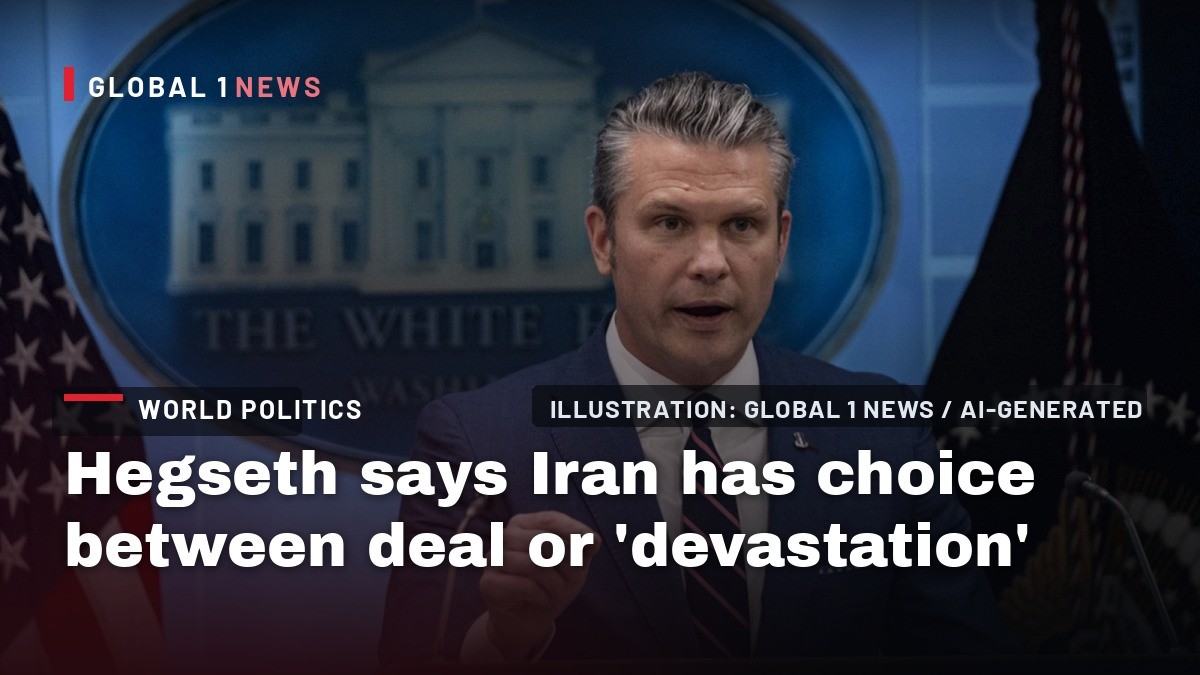
In a stark warning delivered to future officers at the University of Tennessee, U.S. Defense Secretary Pete Hegseth told a room of Reserve Officers’ Training Corps cadets and military recruits that Iran must choose swiftly between abandoning its “nuclear ambitions” and confronting what he described as “the kind of devastation that America can bring and will bring swiftly if necessary.” The remarks, reported by Anadolu Agency, underscore a renewed U.S. posture that blends diplomatic pressure with the explicit threat of overwhelming military force.
Hegseth’s ultimatum and its legal implications
Hegseth’s statement frames Iran’s nuclear program as a matter of immediate security, positioning the United States as the arbiter of Tehran’s choices. International law, however, demands that any use of force be justified under the United Nations Charter, either in self‑defence or with Security Council authorization. By presenting a binary “deal or devastation” scenario, the defense secretary sidesteps the multilateral processes that typically govern sanctions, inspections and, if necessary, collective security actions. The language of “swift devastation” raises concerns among human‑rights observers about the proportionality and discrimination required in any future military response.
Moreover, the emphasis on “nuclear ambitions” conflates Tehran’s civilian nuclear activities with its broader regional behavior, including support for proxy forces. While the International Atomic Energy Agency (IAEA) monitors Iran’s nuclear compliance, the United Nations has not formally labeled Iran’s program a breach of the Non‑Proliferation Treaty. Hegseth’s rhetoric therefore amplifies a narrative that could be used to justify pre‑emptive action without a clear legal basis, a development that human‑rights advocates warn could set a dangerous precedent for future conflicts.
The missile arsenal as a deterrent
According to Hegseth, Tehran is simultaneously building a “large conventional missile arsenal” to deter any military response while pursuing its nuclear objectives. The United States views this buildup as a strategic lever, intended to complicate any potential strike on Iranian sites. The existence of such a missile force, however, does not automatically legitimize a pre‑emptive attack; rather, it underscores the risk of escalation should the United States decide to employ force.
From a humanitarian perspective, the deployment of conventional missiles across densely populated regions raises the specter of civilian casualties in any conflict. International humanitarian law obliges parties to distinguish between combatants and civilians and to take all feasible precautions to minimize harm. The presence of a robust missile network in Iran, coupled with the United States’ stated willingness to deliver “devastation,” intensifies the potential for collateral damage, a reality that must be weighed against any claimed security benefits.
Funding proxy wars: Hezbollah and the Houthis
Hegseth highlighted Iran’s financial support for Hezbollah in Lebanon and the Houthis in Yemen, describing these relationships as part of a broader pattern of “funding the proxies.” By linking Iran’s nuclear pursuits to its regional proxy activities, the defense secretary seeks to broaden the justification for a hardline stance. Yet, the causal connection between Tehran’s alleged funding and its nuclear program remains analytically tenuous without concrete evidence presented in the public domain.
The human cost of these proxy wars is profound. In Yemen, the Houthi conflict has already generated one of the world’s worst humanitarian crises, with famine and disease claiming countless lives. In Lebanon, Hezbollah’s militarization contributes to a fragile security environment that hampers reconstruction and civilian safety. By framing these proxy relationships as a single threat axis, the United States risks conflating distinct crises, potentially obscuring targeted diplomatic pathways that could address each situation on its own merits.
Trump’s broader strategy of power reassertion
The remarks fit within President Donald Trump’s broader agenda to “reassert American power,” as Hegseth noted in his briefing. This strategy, according to the defense secretary, includes confronting drug cartels, limiting the influence of Iran, China and Russia in Latin America, and pursuing “generational implications” in Venezuela. The intertwining of these objectives signals a shift toward a more confrontational foreign policy that prioritizes military presence and partnership building across the Western Hemisphere.
From a human‑rights lens, such a policy raises questions about the United States’ commitment to multilateralism and the rule of law. While confronting illicit drug trafficking and curbing the influence of rival powers are legitimate security concerns, the emphasis on “generational implications” suggests a willingness to employ force or coercion to achieve strategic ends. This approach can undermine diplomatic solutions and exacerbate tensions in regions already burdened by conflict and instability.
Venezuela as a strategic partner
In discussing Venezuela, Hegseth described the country as a “strategic partner” with valuable oil resources, noting that U.S. operations there would have “generational implications.” The framing of Venezuela as a partner, rather than an adversary, signals a nuanced shift in U.S. policy that seeks to leverage economic interests alongside security objectives. However, the language also hints at a willingness to intervene militarily if perceived threats to American interests arise.
The human impact of any potential U.S. involvement in Venezuela cannot be ignored. The nation has endured years of economic collapse, food shortages and political repression. A military operation, even if framed as protective of oil assets, could destabilize an already fragile society, leading to further displacement, loss of life and erosion of basic services. International law requires that any use of force be proportionate and necessary, standards that are difficult to meet in a scenario where economic interests are a primary driver.
Implications for regional security and civilian populations
Hegseth’s articulation of a “choice” for Iran reverberates beyond Tehran’s borders, affecting neighboring states and civilian populations across the Middle East. The threat of “devastation” amplifies anxiety among ordinary Iranians who already face economic hardship and political repression. A military strike, even if limited to strategic sites, could trigger widespread civilian casualties, infrastructure destruction and a humanitarian crisis reminiscent of past conflicts in the region.
Beyond Iran, the broader U.S. posture—linking nuclear concerns with proxy financing and regional influence—creates a climate of heightened tension. Nations such as Lebanon, Yemen and Iraq could see increased pressure from both Tehran and Washington, potentially drawing them deeper into proxy confrontations. The resulting insecurity threatens to erode already fragile humanitarian gains, impede aid delivery and exacerbate displacement across the region.
Paths forward: diplomacy, accountability and human rights
While Hegseth’s statements reflect a hard‑line stance, international law and human‑rights norms suggest that diplomatic engagement remains the most viable path to de‑escalation. The IAEA continues to monitor Iran’s nuclear activities, and renewed talks, as referenced in related coverage, have called for “credible guarantees” against new attacks. Such guarantees could serve as a foundation for a verifiable agreement that addresses both nuclear concerns and regional security.
For the United States, aligning its security objectives with international legal standards would require transparent communication with the United Nations, adherence to the principles of proportionality and distinction, and a genuine commitment to protecting civilian lives. By foregrounding human‑rights considerations and seeking multilateral solutions, Washington can avoid the pitfalls of unilateral military threats and contribute to a more stable, just Middle East.
This article was produced with AI-assisted research and editorial support. Reporting is based on the source material cited below. Sources: Middle East Monitor; middleeastmonitor.com; Global1.News (18 October 2026).
By Fatima Al-Rashid, Staff Writer
What's Your Reaction?
 Like
0
Like
0
 Dislike
0
Dislike
0
 Love
0
Love
0
 Funny
0
Funny
0
 Wow
0
Wow
0
 Sad
0
Sad
0
 Angry
0
Angry
0
Gulf/MENA Correspondent at Global1.News. Based in Doha, covering Gulf politics, energy markets, diplomacy, and development across the Middle East and North Africa. Tracks the economic transformation of the Gulf states.










Comments (0)