
‘VP could still be convicted outside impeachment’
Manila – The latest development in the impeachment saga of Vice President Sara Duterte has added a new dimension to the public’s concern over the use of confidential funds.
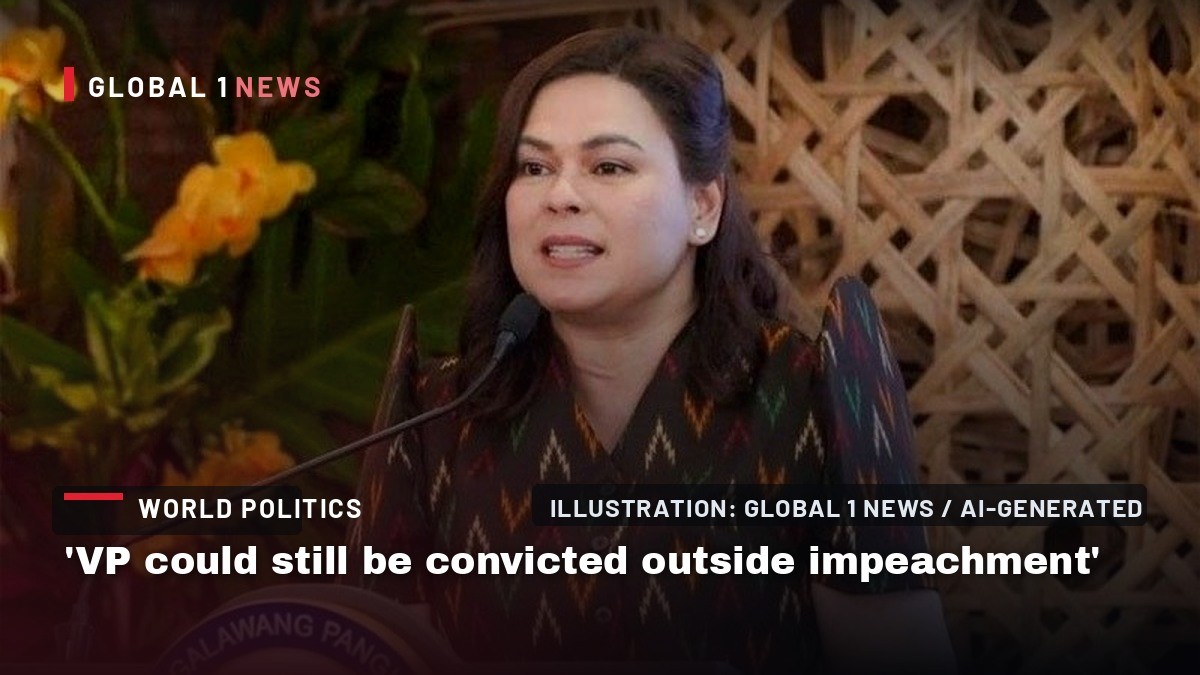
Manila – The latest development in the impeachment saga of Vice President Sara Duterte has added a new dimension to the public’s concern over the use of confidential funds. House prosecution panel spokesman Rep. Zia Alonto Adiong told reporters on Tuesday that the evidence uncovered by the Commission on Audit (COA) could still serve as the basis for a criminal conviction, even though the impeachment trial has already shed some of the most contentious articles.
COA’s notice of disallowance sparks fresh legal questions
According to Rep. Adiong, the COA’s notice of disallowance concerning P73.287 million in confidential expenses incurred by the Office of the Vice President in December 2022 is a pivotal piece of the puzzle. The audit finding, he said, “strengthened rather than weakened the prosecution’s assessment of the confidential funds evidence.” While the figure itself was highlighted in the audit, the spokesperson did not elaborate on the specific items that comprised the disallowed amount.
What matters most for ordinary Filipinos is the implication that public money—money that could have been used for barangay projects, health services, or education—may have been diverted for personal or political gain. The COA’s role as the government’s fiscal watchdog gives its findings a weight that can be carried into criminal courts, a point that Adiong emphasized as a potential pathway to accountability beyond the Senate’s impeachment jurisdiction.
From impeachment to criminal prosecution: A strategic shift
During the impeachment trial, the prosecution presented a series of witnesses and documents that traced the flow of confidential funds to security officers and showed how the Office of the Vice President allegedly complied—or failed to comply—with government rules governing such expenditures. However, the Senate ultimately decided to drop Article I, which dealt directly with the misuse of confidential funds, along with two other articles.
Adiong explained that the removal of Article I “removed a possible additional route to conviction before the Senate impeachment court,” prompting the prosecution to focus its efforts elsewhere. The decision to concentrate on Article II, which accuses the Vice President of amassing unexplained wealth, reflects a strategic pivot: securing a single conviction on any article would suffice to trigger the constitutional consequences the House seeks.
Understanding Article II: Unexplained wealth under scrutiny
Article II, the remaining pillar of the impeachment case, alleges that Vice President Duterte has accumulated wealth that cannot be accounted for by her lawful earnings. While the source material does not detail the specific assets or amounts in question, the accusation aligns with a broader pattern of public officials being investigated for wealth that appears disproportionate to their salaries.
For many Filipinos, especially those who run sari‑sari stores or work overseas as OFWs, the notion of unexplained wealth among public servants strikes a chord. It raises concerns about fairness and the integrity of public service, reinforcing the community’s demand for transparent and accountable governance.
Potential criminal charges: What the COA finding could mean
Rep. Adiong stressed that the COA’s disallowance could be used as prima facie evidence of misuse of public funds “to benefit one’s interest or oneself.” In legal terms, prima facie evidence is sufficient to establish a case unless contradicted by further proof. This suggests that prosecutors could file criminal charges based on the audit alone, independent of the impeachment outcome.
Should criminal proceedings be initiated, the case would likely move to the Department of Justice and, eventually, the courts. The possibility of a criminal conviction carries significant ramifications: beyond the political fallout, it could result in penalties such as fines, restitution, or even imprisonment, depending on the severity of the offense as determined by the courts.
Implications for the Senate impeachment court
The Senate’s impeachment trial, while still ongoing, now faces the reality that a conviction could be secured outside its own deliberations. The House’s focus on securing a single conviction—whether through Article II or a separate criminal case—means that the Senate’s role may become more symbolic than decisive.
Nevertheless, the Senate remains a crucial arena for public accountability. Its proceedings are televised, allowing citizens to witness the testimonies of witnesses and the presentation of documents. The public’s watchful eye, especially in a democratic context that values bayanihan and transparency, ensures that any attempt to sidestep accountability will be met with scrutiny.
Public reaction: From barangay halls to social media
Across the archipelago, the news has sparked conversations in barangay halls, online forums, and among OFWs sending remittances home. Many Filipinos see the COA’s findings as a vindication of their long‑standing concerns about the misuse of confidential funds, which have historically been shrouded in secrecy.
Community leaders and civil‑society groups have called for a thorough investigation, urging the Department of Justice to act promptly. The sentiment is clear: ordinary Filipinos want assurance that public money—whether earmarked for health, education, or infrastructure—will be used for its intended purpose, not to line the pockets of the powerful.
Looking ahead: What the next steps could mean for governance
As the Senate continues its impeachment trial and the House weighs the possibility of filing criminal charges, the outcome will likely set a precedent for how confidential funds are monitored and prosecuted in the future. Strengthening COA’s audit powers and ensuring that findings can be seamlessly translated into criminal cases could become a focal point of legislative reform.
For now, the Filipino people remain vigilant, watching how the institutions—Congress, the Senate, the Department of Justice, and the COA—navigate this high‑stakes test of accountability. The hope is that whatever the verdict, it will reinforce the democratic principle that no public official is above the law, and that the resources meant for the nation’s development truly serve the Filipino people.
This article was produced with AI-assisted research and editorial support. Reporting is based on the source material cited below. Sources: Philstar.com; Global1.News (18 October 2026).
By Bella Reyes, Staff Writer
What's Your Reaction?
 Like
0
Like
0
 Dislike
0
Dislike
0
 Love
0
Love
0
 Funny
0
Funny
0
 Wow
0
Wow
0
 Sad
0
Sad
0
 Angry
0
Angry
0

Philippines/Southeast Asia Correspondent at Global1.News. Manila-based journalist covering Philippine politics, environment, maritime security, and social issues. Passionate about marine conservation and the communities protecting the Philippines' natural heritage.














Comments (0)