
Typhoon Dujuan Bears Down on Tokyo as Japan Shuts Down for Silver Week
Typhoon Dujuan, a large and strong storm, bore down on Japan's Izu Islands and the Kanto region on Monday, shutting rail lines in Chiba and Ibaraki, grounding Hachijojima flights, halting ferries and cancelling a day of the Tokyo Game Show while the Asian Games braced for impact.

Typhoon Dujuan, the 25th typhoon of Japan's 2026 season, is grinding north toward the Izu Islands and the Kanto region, and the shutdowns have already begun ahead of it. The Japan Meteorological Agency classifies the storm as large and strong, and its closest approach to the Izu chain and the Kanto region is forecast from midday Monday through late that night.
By Monday morning, rail lines across Chiba and Ibaraki were being shut in stages, flights to a Tokyo island were grounded, expressway operators were warning of closures, and the Tokyo Game Show had scrapped an entire day of its first-ever five-day run. Japan is marking Silver Week, and the holiday is being cancelled in public.
Typhoon Dujuan Bears Down on Tokyo as Japan Shuts Down for Silver Week
TOKYO - Typhoon Dujuan was moving north-northeast over waters about 180 kilometres south of Hachijojima at 20 kilometres per hour as of 07:45 a.m. Monday Japan time, according to the Japan Meteorological Agency. The storm carried a central pressure of 965 hectopascals, maximum sustained winds near its centre of 35 metres per second and gusts up to 50 metres per second. Forecasters expect it to hold steady or deepen slightly as it passes Japan, then weaken to an extratropical low by 23 September.
The Storm and Where It Stands
The Japan Meteorological Agency has classified Typhoon No. 25 of 2026, internationally named Dujuan, as a large and strong typhoon. The agency's earlier bulletin put the radius of its 30-knot winds at 425 nautical miles to the northeast and 240 nautical miles to the southwest, the measure that makes it large rather than merely powerful.
JMA forecasters expect the storm's closest approach to the Izu Islands and the Kanto region from midday Monday through late that night. The Japan Times reports the typhoon will reach the Izu Islands and the Kanto region between Monday afternoon and early Tuesday morning before moving east, off the coast of the Tohoku region.
The agency's forecast track places the centre near 32.8N 138.5E at noon Monday, still at typhoon intensity, then accelerating northeast to about 37.8N 146.0E by 09:00 Tuesday off the Tohoku Pacific coast. By 09:00 Wednesday it is projected near 42.6N 161.6E, well east of Hokkaido, as an extratropical low.
JMA forecaster Yoshikazu Yano said thick clouds to the north of the typhoon could bring rain ahead of its approach and increase cumulative rainfall. Yano said the storm could disrupt public transport, in addition to causing landslides and flooding in low-lying areas.
What the Numbers Actually Say
The rain has already arrived. In the 24 hours through 07:40 a.m. Monday, the Japan Meteorological Agency recorded 387.5 millimetres at Izu Oshima in the Izu chain and 283.5 millimetres at Kimitsu in Chiba Prefecture.
More is coming. In the 24 hours through 07:00 a.m. Tuesday, rainfall could reach up to 350 millimetres in the Tokai region, 300 millimetres in the Kanto region and the Izu Islands, and 200 millimetres in Tohoku, according to the agency. NHK WORLD-JAPAN reported that rainfall in the affected areas could exceed the average monthly precipitation for September.
Wind forecasts from the agency for Monday call for maximum instantaneous speeds of 50 metres per second over the waters near the Izu Islands and the Kanto region, and potentially 35 metres per second on land.
Kyodo News reported the agency saying a linear rainband, a band of intense stationary rainfall, may form over Shizuoka Prefecture and the Izu Islands. Weathernews reported the autumn rain front was intensifying, meaning precipitation across Kanto and Tohoku could pick up well ahead of the typhoon's approach.
The Trains Stop First
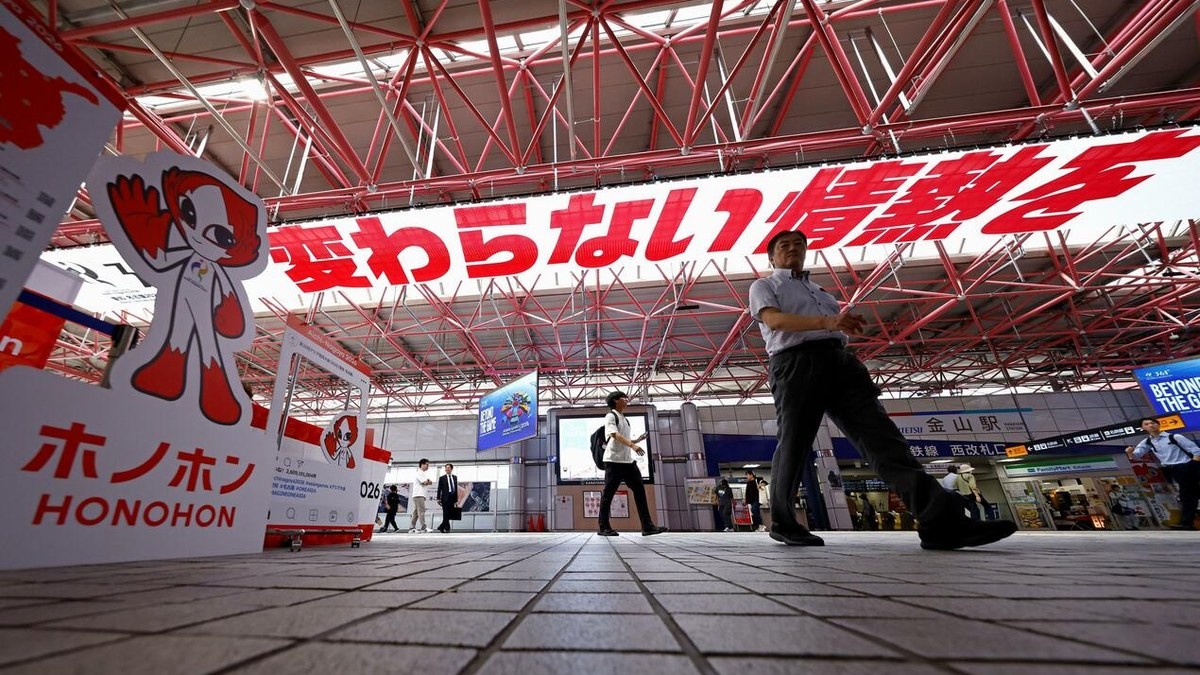
East Japan Railway announced partial and full-day suspensions of operations on some lines in Chiba and Ibaraki Prefectures as well as western Tokyo on Monday, according to The Japan Times. The operator had warned of delays and possible cancellations, mainly in the Kanto area, from the evening of 20 September through the early morning of 22 September.
Confirmed all-day or part-day suspensions in Chiba Prefecture on Monday: the Kururi Line between Kisarazu and Kazusa-Kameyama is suspended all day from the first train. The Uchibo Line between Kimitsu and Awa-Kamogawa and the Sotobo Line between Honda and Awa-Kamogawa stop from around 2 p.m. through the final trains. The entire Togane Line stops from around 3 p.m.
Services on the Sobu Main Line between Sakura and Choshi and on the Narita Line between Narita and Choshi are suspended from around 4 p.m., and the Kashima Line stops from around 4 p.m. through the end of service. Heavy rain had already disrupted sections of the Sotobo Line on 20 September and cancelled some Wakashio limited express services.
JR East cautioned that plans could change depending on the typhoon's track and the development of heavy rain and strong winds.
Haneda, Narita and the Island Run
All Nippon Airways cancelled all flights arriving at and departing from Hachijojima Airport on 20 September, and all flights to and from Hachijo Island on 21 September, according to Kyodo News. Hachijo Island lies about 280 kilometres south of Tokyo.
ANA warned that flights using Haneda and Narita airports could be affected from the afternoon of 20 September through 21 September as winds and rain intensify. Its special ticket handling covers the same routes and dates, letting travellers change, rebook or refund eligible tickets free of charge regardless of whether the flight actually operates.
Japan Airlines' international travel advisory lists Tokyo Haneda and Tokyo Narita as affected airports on 21 September, with guidance that travellers may be able to change flights or request refunds if a flight is cancelled or significantly delayed. Cathay Pacific said it was closely monitoring the impact on flights arriving at and departing from Haneda and Narita on Monday and advised customers to check the latest flight status before heading to the airport.
At sea, Tokai Kisen cancelled multiple ferry services to and from the islands of Oshima, Toshima and Mikurajima, according to the operator's service information, with cancellations reported from 19 September.
The Roads They Are Asking You to Leave Alone
NEXCO Central warned that sections of the Tomei Expressway and the Chuo Expressway could be closed on 21 September, with several routes potentially becoming impassable at the same time. The operator urged motorists to avoid unnecessary travel.
NEXCO East published an alert warning that, due to Typhoon No. 25, expressways may be closed across a wide area from 20 September onward. It urged drivers to avoid nonessential travel by car during the forecast impact period.
The notice lists potential closure timing on key corridors in and around the Tokyo Bay area and broader Kanto, including the Tokyo Bay Aqua-Line and connected routes.
Silver Week, Cancelled
Japan is in Silver Week, a run of consecutive national holidays in late September, with the holiday period running through Wednesday. The Tokyo Game Show cancelled the whole of Monday's programme, cutting the event from five days to four.
TGS 2026 was to have been the first five-day edition in the show's 30-year history, held at Makuhari Messe in Chiba Prefecture with Business Days on 17 and 18 September and public days from 19 to 21 September. Organisers said that with strong winds and rain expected to intensify in the afternoon and beyond, and with transportation disruption also a concern, "we have decided to cancel the event for the entire day", prioritising the safety of attendees, exhibitors and related parties and a safe return home. Ticket holders for 21 September are to receive refunds.
Sony announced that hands-on demos and streaming events scheduled for 21 September at the PlayStation booth would also be cancelled. Concerts scheduled for Monday at the Rock in Japan festival in Chiba Prefecture were cancelled as well, according to the festival's official website, as reported by Kyodo News.
The Asian Games Problem

The 20th Asian Games opened in Aichi-Nagoya on Saturday and run to 4 October across Aichi, Nagoya and satellite venues, with more than 17,000 athletes and officials from 45 nations and regions. Organisers scrapped a traditional athletes' village to control costs.
About 4,000 athletes and officials are staying aboard the Costa Serena, an Italian cruise liner about 290 metres long docked at Nagoya Port, while roughly 2,000 more sleep in shipping container-style huts at Garden Pier. Record rain last week already forced participants to evacuate the huts briefly, and torrential rains in the Nagoya region closed schools, suspended train services and forced several hundred athletes to evacuate their accommodation.
Nagoya Mayor Ichiro Hirosawa, the Games' deputy president, told Reuters that if torrential rain triggers emergency alerts, organisers will arrange for the athletes to evacuate temporarily. He said the cruise ship will move offshore if typhoon-level winds arrive, under protocols already in place.
Host nation chef de mission and Japanese Olympic Committee executive Konsei Inoue told Reuters that some competitions have already experienced delays or postponements and that there is also a possibility a typhoon could approach on 21 September.
Chiba Prepares Again
Chiba Prefecture faces renewed heavy rainfall with areas still recovering from previous storms, according to Japan Insides, citing ANN News CH and TV Asahi. On 14 August, Global1.News reported that record rainfall in Chiba killed at least 8 people and stranded nearly 7,000 at Narita Airport, and that the Japan Meteorological Agency issued its first-ever Level 5 warning for the prefecture, with 400,000 evacuated. That storm hit during the Obon travel rush; this one arrives at the end of Silver Week on the same coast.
The Kanto region is home to more than 40 million people and remains highly vulnerable to typhoon damage due to its dense population and extensive coastal infrastructure, according to Japan Insides.
This typhoon is the latest in a series of severe weather events to hit Japan this year.
What the Warning Levels Mean
The Japan Times reported that Level 4 danger warnings have been issued for some areas as Japan marks its Silver Week holidays. Under the Japan Meteorological Agency's alert-level system, Alert Level 2 means confirm your evacuation actions.
Alert Level 3 means elderly people, those with disabilities and others who may need more time to evacuate should evacuate from affected areas. Alert Level 4 means all residents should evacuate from affected areas. Alert Level 5 means a life-threatening situation, ensure safety immediately.
JMA and NHK advisories say residents in the Izu Islands and Kanto, as well as Pacific coastal areas of Tokai and Tohoku, should remain on high alert for landslides, violent winds, high waves, flooding in low-lying areas, and swollen or overflowing rivers. NHK advised people in urban areas to remain alert for possible flooding on roads and in underground facilities.
Japan Safe Travel, the Japanese government's overseas travel safety channel, posted a typhoon alert for Dujuan covering 20-21 September, warning of severe winds, high waves, landslides and flooding, with major disruptions or cancellations of flights and transit likely.
What Happens Next
Forecasters expect the storm to weaken as it transitions to an extratropical low after clearing Japan, with maximum winds dropping to 50 knots and gusts to 70 knots. What happens over land in the meantime depends on a track that is still offshore of the Kanto coast.
The Straits Times, citing Kyodo News, reported the typhoon may make landfall on the Boso peninsula in Chiba prefecture, east of Tokyo, on 21 September. That is a forecast possibility, not a confirmed event. Other outlets reported a possible landfall east of Tokyo.
Kyodo News reported the typhoon could bring heavy rain through Tuesday in eastern and northeastern Japan. Yano, the JMA forecaster, said people planning leisure activities or returning to their hometowns during the holiday period should respond flexibly, including by changing their plans.
Residents in the Izu Islands, Kanto, and the Pacific coastal areas of Tokai and Tohoku should follow local evacuation guidance, avoid unnecessary travel by car and check rail and flight status before setting out.
By Jessica Ali, Staff Writer
This article was produced with AI-assisted research and editorial support, using reporting from the Japan Meteorological Agency, NHK WORLD-JAPAN, Kyodo News, The Japan Times, Weathernews, TRAICY Global, Reuters, The Straits Times and Global1 News archives.
What's Your Reaction?
 Like
0
Like
0
 Dislike
0
Dislike
0
 Love
0
Love
0
 Funny
0
Funny
0
 Wow
0
Wow
0
 Sad
0
Sad
0
 Angry
0
Angry
0

Editor-in-Chief at Global1.News. Atlanta-based journalist who cuts through the BS and tells it like it is. Lead anchor, host, and the voice you hear when the spin stops and the truth starts.















Comments (0)