
T&T Faces Official Drought Watch as Senator Vieira Calls for a Fundamental Water Rethink
Trinidad is on drought watch for September and Tobago on drought warning for October, as the TTMS warns drier conditions may extend into the 2027 dry season. Independent Senator Anthony Vieira is urging a fundamental water rethink.
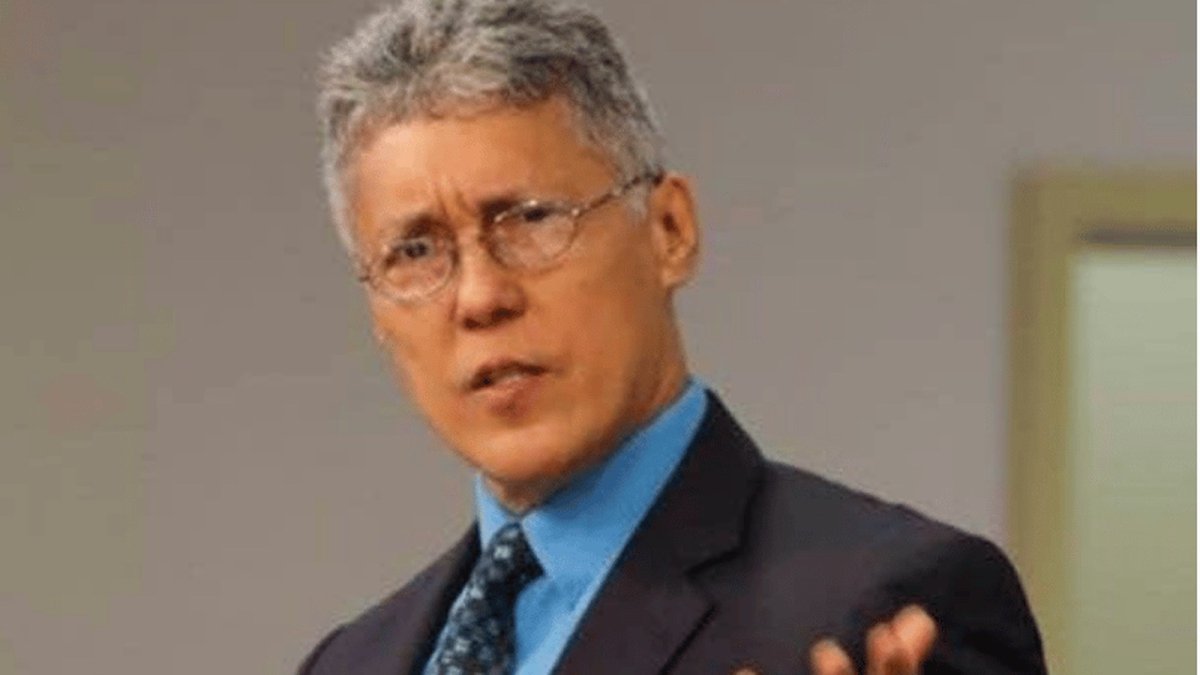
Trinidad and Tobago is staring down a drier-than-usual horizon, with the Trinidad and Tobago Meteorological Service (TTMS) placing Trinidad on an official drought watch for September 2026 and Tobago under a more severe drought warning for October 2026. The alerts, published in the TTMS Dryness/Drought Monitor and Outlook, have prompted urgent calls for conservation and a deeper, more honest conversation about how this twin-island nation manages its most precious resource. As the country juggles the pressures of a changing climate with ambitious industrial expansion, Independent Senator Anthony Vieira is urging a fundamental rethink of our national water system, arguing that the time to prepare is now, not when the taps run dry.
A Season of Dry Spells and Rising Concern
The TTMS has been tracking troubling signs for months. Between May and July 2026, dry spells were recorded at Crown Point in south-west Tobago and in Valencia, while south-western Trinidad has been experiencing conditions ranging from moderately dry to an incipient, or 'budding', drought. The Met Office has warned that these conditions threaten to extend well into the 2027 dry season, calling on the public to practise conservation in the use of potable water. The official outlook, which runs to the end of September, paints a picture of a country on the edge of a prolonged dry period, with the agency noting that a long-term drought watch could become necessary in December 2026 or January 2027 if current dryness trends persist—a window that overlaps directly with the peak of the next dry season.
This is not merely a seasonal inconvenience. The convergence of official drought forecasts with rising industrial water demand means the stakes are higher than ever. Agriculture, power generation and mining all face elevated risk simultaneously, and as analysts have noted, any one sector's crisis can quickly cascade into others. For a nation accustomed to abundant rainfall, the prospect of a sustained shortfall is a sobering one, echoing the dry seasons many Trinidadians remember all too well, when trucked water from WASA became a familiar sight in neighbourhoods across the country.
Senator Vieira: 'The Climate Has Changed, and Our Thinking Must Change With It'
Independent Senator Anthony Vieira has emerged as a leading voice on the issue, framing water security not as a niche environmental concern but as a core pillar of national development. "This country's water security deserves serious attention and planning due to deepening challenges posed by climate change and especially amid expanding investment and industry opportunities," Vieira said. He commended the Government for recognising the seriousness of the El Niño phenomenon and for "signalling its intention to act proactively," adding that the present administration is right to recognise the gravity of the situation and to begin preparing for it.
Vieira's remarks come at a critical juncture. With the revival of the former ArcelorMittal steel plant and the proposed large-scale AI data centre in Debe on the horizon, the Senator argues that food and water security, greener cities, protected watersheds, climate-resilient infrastructure and smarter development should no longer be viewed as optional extras. "The time to make those investments is before the emergency, not during it," he insisted. "We shouldn't wait until disaster happens. We live in a rapidly changing world—a very different era. Much of our public discourse focuses on crime, but water and food security are issues that deserve serious attention. What is required is planning."
Infrastructure Built for the Climate of Yesterday
At the heart of Vieira's argument is a stark observation: much of T&T's infrastructure—drainage systems, water networks, buildings, and even our assumptions about rainfall—was developed for "the climate of yesterday." He contends that the country's approach to development has inadvertently created the conditions for both water shortages and flooding. "Water is our most precious natural resource, yet we continue squandering enormous quantities, allowing rainfall to rush off roofs, across concrete surfaces, through drains, into the sea," he lamented. "At other times we experience flooding from precisely the water that, months later, we desperately wish we'd retained."
This paradox is a familiar one across the Caribbean, where heavy downpours often lead to flash floods, only to be followed by prolonged dry spells that strain reservoirs. For T&T, geography compounds the risk. Tobago's smaller landmass and shallower aquifers make it inherently more exposed than Trinidad, while WASA's historical reliance on the Navet and Hollis reservoirs becomes precarious exactly when rainfall deficits run longest. The Senator's call is for a different conception of the national water system—one that treats rainfall as a resource to be captured, stored, cleaned where necessary, and put to use, rather than a nuisance to be drained away as quickly as possible.
A Hybrid Vision for Water Security
Vieira has put forward a comprehensive blueprint for securing T&T's water future, centred on a genuinely hybrid system. This would involve a diversified supply comprising traditional reservoirs and surface catchments, protected groundwater and artesian sources, rainwater harvesting, wastewater reclamation where appropriate, and desalination. The goal, he argues, is resilience through redundancy—ensuring that no single source of failure can cripple the nation's water supply.
He has also pointed to innovative urban design solutions, such as the Netherlands' "water squares"—public spaces that serve as recreational areas in normal weather but are designed to temporarily capture stormwater during heavy rainfall. Vieira suggested that The Hollows in the Queen's Park Savannah, Wildflower Park and other appropriate public spaces could be scientifically assessed for their potential to form part of an urban stormwater-retention network. Similarly, he noted that rooftop collection systems, like those used in the United Kingdom, could become part of T&T's water infrastructure, turning every building into a potential catchment.
Planning for Growth, Protecting the Environment
The Senator's proposals extend to new developments, urging that commercial and residential projects above an appropriate size should progressively be required to incorporate rainwater harvesting and water-sensitive design. He also called for an investigation into distributed storage systems and elevated water storage, which could help buffer communities against supply interruptions. Critically, Vieira emphasised the need to protect national water infrastructure—forests, watersheds, wetlands, healthy soils, rivers, aquifers and mangrove buffers—as integral components of the water system, not separate from it.
He was equally clear about what should not be done. "Less concrete, not more," he argued, in the treatment of watercourses. Natural riverbanks, vegetation, floodplains and permeable surfaces should be included in flood-management strategy, rather than channelling every waterway into a straitjacket of concrete. This approach, he believes, would not only reduce flooding but also allow more water to soak into the ground, recharging the aquifers on which the country depends.
Government Signals and Regional Context
Public Utilities Minister Barry Padarath has publicly linked the 2026 dryness outlook to possible water restrictions and plans to manage supply for both communities and new data-centre investments. However, full restriction regimes and new desalination capacity remain at the planning or policy-announcement stage rather than enacted or built. The Government's recognition of the El Niño phenomenon is a positive step, but as Vieira noted, the real test lies in sustained legislative and budgetary follow-through.
The regional context adds further urgency. Jamaica is living through its own version of this crisis, with water lock-offs affecting parishes across the island. Puerto Rico and other Caribbean territories are also feeling the pinch, underscoring that this is a regional drought, not a local anomaly. Even England, far from the tropics, issued its first-ever national wildfire emergency alert in August, as nearly three-quarters of England and all of Wales sat in drought or near-drought conditions. The message is clear: climate change is reshaping weather patterns globally, and small island developing states like T&T are on the front lines.
What to Watch in the Coming Months
As the country moves through the latter half of 2026, several key indicators will determine the severity of the situation. The first is whether the TTMS upgrades Trinidad's September drought watch to a warning as the October deadline approaches. The second is whether the Caroni basin in north-western Trinidad sees its watch classifications intensify. And third is the Government's timeline and specifics for any formal water-restriction regime under Minister Padarath. For now, the TTMS has called on the country to practise conservation in the use of potable water, a simple but essential first step.
Senator Vieira's message, however, is that conservation alone is not enough. "Securing T&T's water must be a national priority," he said, and his blueprint offers a path forward. The question is whether the political will exists to transform that vision into reality. T&T's drought warnings and industrial ambitions have created the political conditions for real water reform—but only sustained action will determine whether Vieira's proposals move from the floor of the Senate to the ground where it matters. As he put it, "We live in a rapidly changing world—a very different era." The time to adapt is now, before the emergency arrives.
This article was produced with AI-assisted research and editorial support. Sources: Trinidad and Tobago Meteorological Service, Trinidad Guardian, CNC3, Caribbean360, Express.
By Sharon Sahatoo, Staff Writer
What's Your Reaction?
 Like
0
Like
0
 Dislike
0
Dislike
0
 Love
0
Love
0
 Funny
0
Funny
0
 Wow
0
Wow
0
 Sad
0
Sad
0
 Angry
0
Angry
0

Caribbean Correspondent at Global1.News. Based in Port of Spain, Trinidad, covering Caribbean politics, economy, energy, climate, and culture. Amplifying the voices and stories of the Caribbean region.












Comments (0)