
Trump Team Drafts Post-War Mideast Blueprint to Contain Iran and Reshape Regional Alliances
The Trump administration is drafting what officials describe as a comprehensive post-war blueprint for the Middle East, weeks after the latest unraveling of the U.S.-Iran ceasefire exposed the fragility of the region’s security landscape. According to an Axios report published Friday, the...
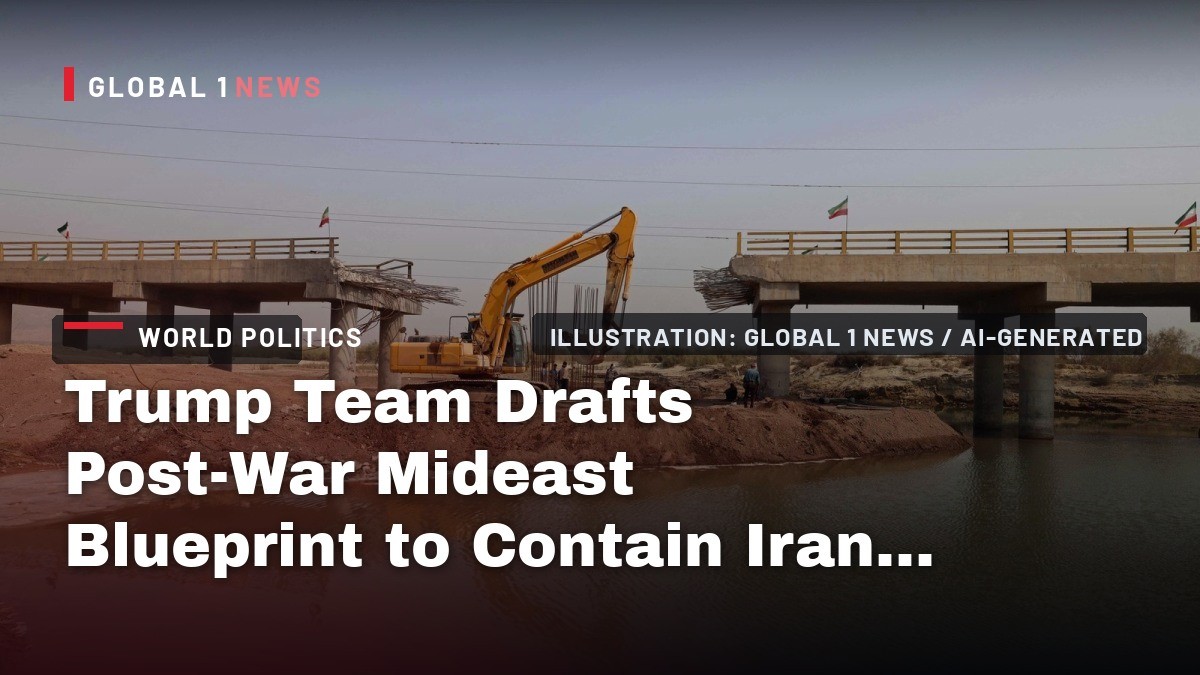
The Trump administration is drafting what officials describe as a comprehensive post-war blueprint for the Middle East, weeks after the latest unraveling of the U.S.-Iran ceasefire exposed the fragility of the region’s security landscape. According to an Axios report published Friday, the emerging strategy is designed to contain Iran, resolve the fallout of the Oct. 7, 2023 attacks, and expand the Abraham Accords—potentially delivering a long-sought Saudi-Israeli normalization deal. The plan is still in its early stages, with White House officials cautioning that it is not yet final.
Trump Team Drafts Post-War Mideast Blueprint to Contain Iran and Reshape Regional Alliances
Washington, D.C. – September 4, 2026 — The Trump administration is quietly drafting a comprehensive post-war strategy for the Middle East, an ambitious blueprint designed to curb Iran’s regional influence, cement a new security architecture among U.S. partners, and potentially deliver the crown jewel of Arab-Israeli normalization—a Saudi-Israeli deal—according to a report from Axios correspondent Barak Ravid published this week. The strategy remains in its early formulation stages, with senior political and interagency officials engaged in planning that is intended to guide U.S. policy once the current conflict with Iran concludes and during the final two years of Trump’s term. President Donald Trump has personally discussed the framework with senior advisers in two recent meetings, privately describing his vision as "something much bigger" for the region, though the White House declined to comment on the specifics of the report.
An Emerging Framework: Three Pillars of a Post-War Order
The nascent strategy, as described by two U.S. officials and two other sources with knowledge of the deliberations, appears to rest on three interconnected priorities. The first pillar involves constructing a durable regional alliance of U.S. partners explicitly designed to contain Iran, with Washington serving as the security guarantor. This would represent a formalization of the ad-hoc coalition that has operated during the 2026 conflict, transforming wartime cooperation into a peacetime architecture. The second priority addresses the unresolved fallout from the Oct. 7 attacks, including the next phase of Trump’s ceasefire plan for Gaza, the negotiation of a security agreement between Israel and Syria, and the full implementation of the Israel-Lebanon agreement. The third and most geopolitically explosive objective is the expansion of the Abraham Accords through a potential Saudi-Israeli normalization agreement, a move that would fundamentally alter the region’s strategic map.
A source briefed on the drafting process cautioned that the plan is far from finalized, noting, "They are cooking it but it is not yet cooked." The same source emphasized the integrative ambition of the project: "The idea is to tie a whole lot of things in the region together—how you create a regional alignment after the war. It is still unclear if all U.S. allies in the region will be on board." This uncertainty underscores the diplomatic heavy lifting required to align the interests of Gulf states, Israel, and other partners into a cohesive, U.S.-backed framework.
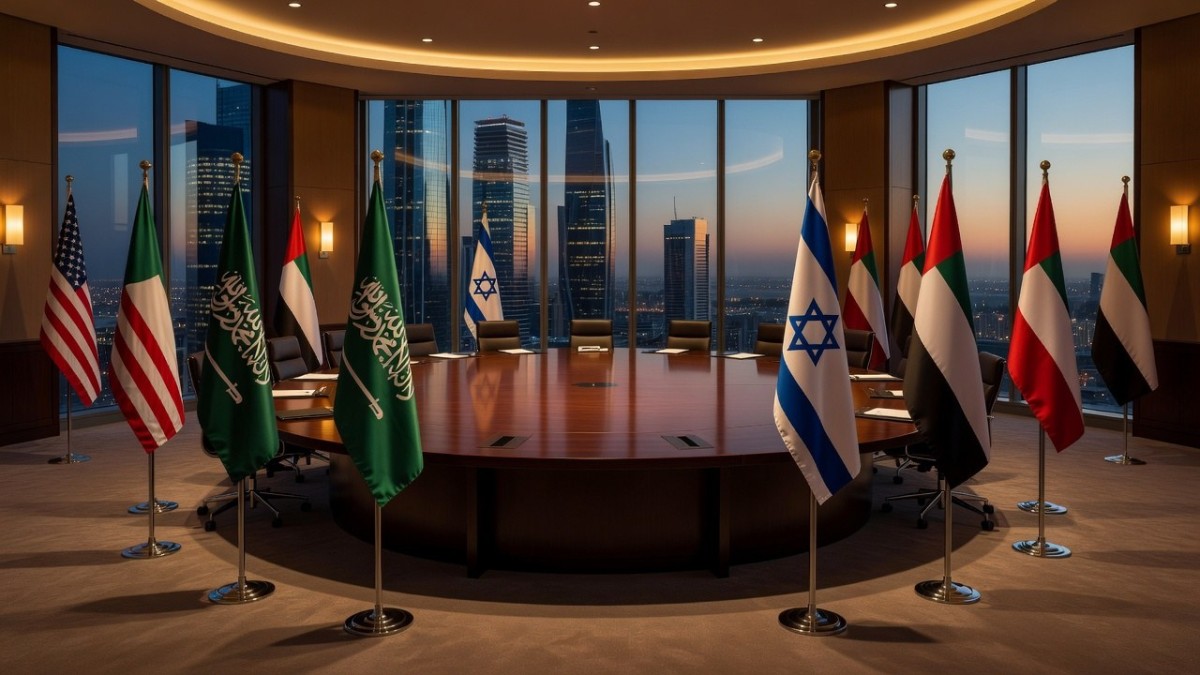
The Shadow of the 2026 Iran War
The strategy cannot be understood outside the context of the ongoing, fitful conflict with Iran. The war, initiated by the United States and Israel on February 28, 2026, has not followed a clean trajectory. A U.S.-Iran ceasefire and memorandum of understanding reached in June 2026 has repeatedly unraveled, with U.S. Central Command conducting further strikes on Iranian military targets as recently as September 1. Trump has sought to downplay the intensity of the current operations, describing the strikes as "intermittent" and dismissing the conflict as "small potatoes" relative to broader strategic goals. This framing aligns with the administration’s forward-looking posture: the war is a means to an end, and that end is a post-conflict order where Iran’s capacity for regional disruption is structurally diminished.
Iran, for its part, has claimed retaliation against U.S. forces stationed in Kuwait and the UAE, though a U.S. official confirmed that no American military facilities in the Middle East were impacted. The fragility of the ceasefire and the persistence of low-level hostilities complicate the administration’s planning timeline. A durable regional alliance cannot be built on quicksand, and the continued unraveling of the June MOU suggests that Tehran retains both the capability and the will to resist U.S. pressure. The drafting of this strategy, therefore, is as much an exercise in contingency planning as it is a statement of intent—Washington is preparing for a post-war environment that has not yet fully materialized.
Electoral Calculus: Jerusalem and Washington
The timing of the strategy’s rollout is inextricably linked to two electoral events that will shape the political landscape in the coming months. Israel’s next parliamentary election is scheduled for October 27, 2026, followed by the U.S. midterm elections on November 3. The Axios report indicates that the administration is acutely aware of these dates, hoping that Israel’s next government will embrace the strategic framework. However, officials reportedly stated that Trump intends to pursue the plan regardless of the election outcome, including in the event of a prolonged political deadlock in Jerusalem that could leave Israel without a stable governing coalition.
This determination reflects a pragmatic recognition that the window for major diplomatic initiatives is finite. A post-midterm lame-duck period or a shift in congressional power could constrain the administration’s freedom of action. Conversely, a favorable midterm outcome could provide Trump with renewed political capital to push a transformative regional agreement. The Israeli election presents a more immediate variable: Prime Minister Benjamin Netanyahu and his rivals have starkly different positions on key elements of the strategy, particularly regarding Palestinian statehood and the terms of any Saudi normalization. The administration’s willingness to proceed even in the face of Israeli political paralysis signals that Washington views the regional alignment as a U.S.-led project, not one that can be held hostage to the vagaries of coalition politics in Jerusalem.
The Saudi-Israeli Conundrum: Riyadh’s Price and Jerusalem’s Red Lines
The most consequential and difficult element of the emerging strategy is the pursuit of Saudi-Israeli normalization. Such a deal would be the most significant Arab-Israeli agreement since Egypt’s 1979 peace treaty, eclipsing the 2020 Abraham Accords that normalized ties between Israel and the UAE, Bahrain, Morocco, and Sudan. However, Israeli media reports, including from the Times of Israel, highlight a fundamental impasse: Riyadh insists on an irreversible pathway to Palestinian statehood as a precondition for any agreement, a demand that Netanyahu and many of his political rivals have categorically ruled out.
This is not a technical disagreement but a chasm of principle. For Saudi Crown Prince Mohammed bin Salman, normalization without a credible Palestinian horizon would undermine his standing in the Arab and Islamic worlds and contradict the kingdom’s longstanding position on the Palestinian cause. For Netanyahu, conceding an irreversible pathway to statehood would threaten the cohesion of his governing coalition and alienate his base. The administration’s strategy appears to envision a creative middle ground—perhaps a phased approach that offers Palestinians meaningful but reversible gains—but the sources cited in the report offer no indication that such a formula has been found. The inclusion of this objective in the strategy may be aspirational, a signal of intent rather than a realistic near-term deliverable.
Regional Dynamics: Gulf Caution and the Abraham Accords Legacy
The broader regional response to the U.S. strategy is far from assured. The Abraham Accords, signed under Trump’s auspices in 2020, created a framework for Arab-Israeli cooperation that has weathered subsequent crises, including the Gaza war and the current conflict with Iran. However, the Gulf states have grown increasingly cautious about being drawn into a U.S.-led confrontation with Tehran that could expose their territories to retaliation. Iran’s claimed attacks on U.S. forces in Kuwait and the UAE, even if unconfirmed in their impact, serve as a reminder of the vulnerability of Gulf hosts to Iranian missile and drone capabilities.
The strategy’s first pillar—a formal regional alliance with Washington as guarantor—would require Gulf states to make explicit security commitments that they have so far preferred to keep informal. The UAE and Bahrain, as Abraham Accords signatories, have demonstrated a willingness to align with Israel against shared threats, but Saudi Arabia has moved more deliberately, balancing its security relationship with Washington against its desire to maintain a channel to Tehran and its leadership role in the broader Islamic world. The success of the post-war strategy hinges on Riyadh’s willingness to step out of the shadows and assume a leadership role in the anti-Iranian alignment, a decision that carries significant domestic and regional risks.
Strategic Implications: A New Architecture or a Bridge Too Far?
The administration’s ambition is clear: to synthesize the disparate threads of post-Oct. 7 diplomacy, the Iran war, and the Abraham Accords into a single, coherent regional order. The linking of Gaza’s post-war arrangements to broader regional security mechanisms represents an acknowledgment that the Palestinian issue cannot be quarantined from the larger strategic picture. Similarly, the proposed Israel-Syria security agreement and the implementation of the Israel-Lebanon accord suggest a comprehensive approach to Israel’s northern front, addressing the state-based threats that have historically been overshadowed by non-state actors like Hezbollah.
Yet the strategy’s success is contingent on variables largely outside Washington’s control. The durability of the Iran ceasefire, the outcome of the Israeli election, the willingness of Gulf states to formalize their security commitments, and the ability of the administration to bridge the Saudi-Israeli divide on Palestine all remain open questions. The source’s characterization of the plan as "not yet cooked" is apt: the ingredients are on the table, but the recipe has not been finalized, and the chefs are still arguing over the proportions. What is clear is that the Trump administration is thinking in terms of legacy and architecture, seeking to define the Middle East’s trajectory for years beyond its own tenure. Whether the region’s actors are prepared to accept that definition remains the central uncertainty of this ambitious undertaking.
By Malik Hassan, Staff Writer
This article was produced with AI-assisted research and editorial support. Sources: Daily Sabah, Axios, The Jerusalem Post, Times of Israel.
What's Your Reaction?
 Like
0
Like
0
 Dislike
0
Dislike
0
 Love
0
Love
0
 Funny
0
Funny
0
 Wow
0
Wow
0
 Sad
0
Sad
0
 Angry
0
Angry
0

Middle East Correspondent at Global1.News. Based in Beirut, covering politics, conflict, energy, and society across the Middle East. Brings context and depth to a region often reduced to headlines.















Comments (0)