
Accidents claim two lives in Aba, injure others
Two tragic road accidents in Aba this week have left families grieving and highlighted the persistent challenges of road safety in Nigeria’s bustling commercial hubs.
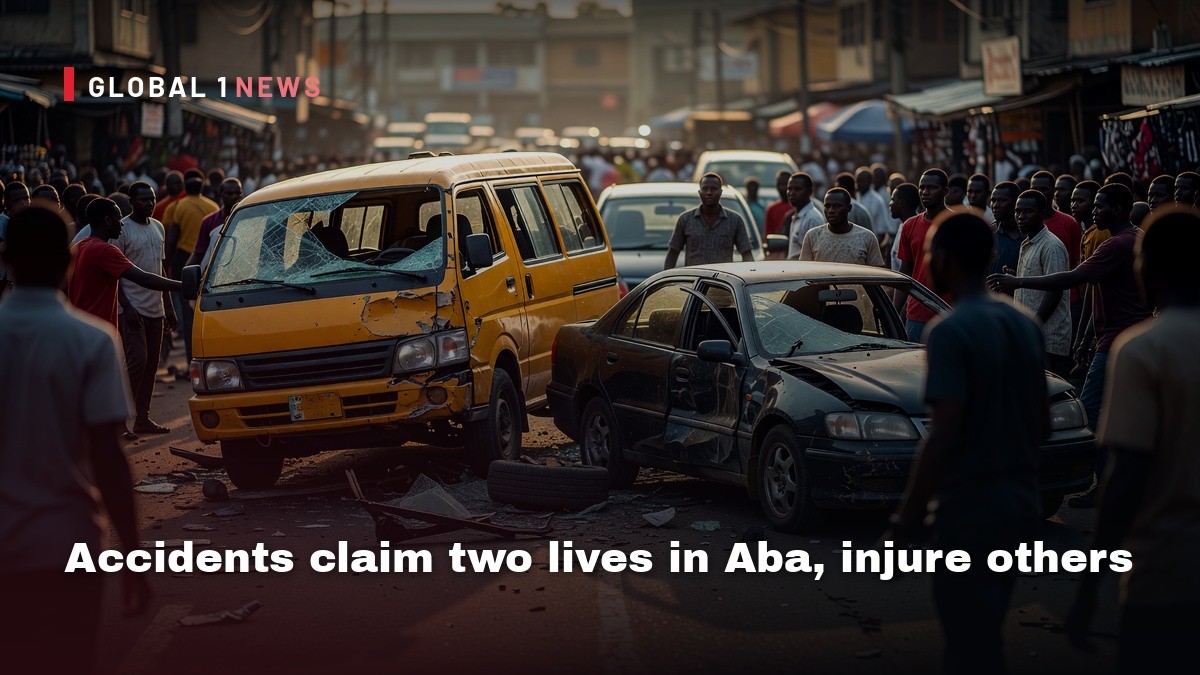
Two tragic road accidents in Aba this week have left families grieving and highlighted the persistent challenges of road safety in Nigeria’s bustling commercial hubs. On Friday, a heavily laden truck careened into a shop at the Osisioma Flyover junction, killing a male adult on the spot and injuring roughly six others. A second crash on Sunday at Port Harcourt Road claimed the life of an unidentified man who was on his way to church when a fast‑moving motorcycle struck him from behind. These incidents, while isolated, echo a broader pattern of high‑speed collisions and vehicle failures that continue to jeopardise the lives of pedestrians, traders and commuters across the nation.
Chronology of the Osisioma Flyover tragedy
The first accident unfolded at the busy Osisioma Flyover junction, a nexus of commercial activity where traders line the sidewalks and pedestrians navigate a maze of traffic. According to an eyewitness present at the scene, a truck loaded with goods was travelling at high speed when it abruptly lost control. The vehicle smashed into a shop, sending debris and shattered glass into the surrounding crowd. The impact was immediate and fatal for a male adult who was caught in the blast, while about six other individuals sustained injuries ranging from cuts to more serious trauma.
Emergency responders arrived swiftly, and the injured were rushed to the nearest hospital for urgent medical attention. The exact cause of the truck’s loss of control remains under investigation; authorities have not yet confirmed whether reckless driving, brake failure or another mechanical fault was to blame. The Sector Commander of the Federal Road Safety Corps (FRSC) for Abia State, Chief Commander Ngozi Ezeoma, confirmed the incident to Daily Post Nigeria, noting the victim’s gender and adult status but offering no further details on the driver’s conduct or the vehicle’s condition.
Details of the Port Harcourt Road fatality
The second fatality occurred on Sunday morning along Port Harcourt Road, a major arterial route that threads through the heart of Aba. An unidentified man, on his way to attend church services, was struck from behind by a fast‑moving motorcycle. The collision proved lethal, and the victim succumbed to his injuries at the scene. Unlike the Osisioma crash, no details were released about the motorcycle rider’s identity, speed, or any possible contributing factors such as road conditions or visibility.
This incident underscores the vulnerability of pedestrians in high‑traffic zones, especially when motorised two‑wheelers weave through congested streets at speed. While the FRSC has not yet issued an official statement on this particular crash, the pattern of a pedestrian being hit from behind by a fast‑moving vehicle mirrors numerous similar occurrences reported across urban centres in Nigeria.
Immediate response and medical care
Both accidents prompted rapid mobilisation of emergency services. In the Osisioma case, the injured were transported to a local hospital where medical staff administered first‑aid and prepared them for further treatment. The promptness of the response likely mitigated the severity of injuries for some victims, though the loss of life could not be averted for the adult male who was struck directly by the truck.
In the Port Harcourt Road incident, the victim’s death on the spot indicates the severity of the impact. While the article does not detail the presence of emergency responders at that particular crash, the swift nature of traffic police and ambulance services in Aba generally ensures that any injured parties receive immediate attention. The repeated reliance on hospital care after such crashes highlights the need for stronger preventative measures to reduce the burden on medical facilities.
Insights from the Federal Road Safety Corps
Chief Commander Ngozi Ezeoma, who heads the FRSC’s Abia State Sector Command, confirmed the Osisioma crash but refrained from attributing blame pending a formal investigation. The FRSC’s typical protocol in such incidents involves a thorough examination of the vehicle’s mechanical condition, driver licensing records, and any possible violations of traffic regulations. While the article does not disclose the outcome of such an inquiry, the FRSC’s involvement signals a commitment to uncovering the root causes of road mishaps.
The FRSC’s broader mandate includes road safety education, enforcement of speed limits, and regular vehicle inspections. In recent years, the agency has intensified campaigns against reckless driving and overloading of commercial trucks, both of which are frequently cited in crash reports. The Osisioma incident, involving a heavily laden truck travelling at high speed, aligns with these recurring risk factors, underscoring the importance of sustained enforcement and public awareness.
Contextualising the accidents within Aba’s traffic landscape
Aba, as the commercial hub of Abia State, experiences intense traffic flow, especially around market areas and major junctions like Osisioma Flyover. The convergence of heavy goods vehicles, motorcycles, and dense pedestrian traffic creates a high‑risk environment where a single lapse can result in catastrophic outcomes. The two incidents this week illustrate how different vehicle types— a truck and a motorcycle— can both pose severe threats to road users.
Urban planning challenges, such as limited pedestrian walkways and inadequate traffic calming measures, exacerbate these risks. While the city has made strides in expanding road infrastructure, the rapid growth of commercial activity often outpaces safety upgrades. The incidents serve as a reminder that infrastructural development must be paired with robust traffic management and enforcement to protect lives.
Broader implications for road safety policy
The twin tragedies in Aba reinforce the urgency of addressing systemic road safety issues across Nigeria. High‑speed collisions, vehicle overloading, and brake failures are recurrent themes in national crash statistics. Although the source material does not provide specific figures, the pattern is well‑recognised by safety experts and policymakers.
Strengthening vehicle inspection regimes, especially for commercial trucks, could help identify brake or other mechanical faults before they lead to loss of control. Moreover, enforcing speed limits in densely populated market zones, coupled with targeted public education campaigns, may curb reckless driving behaviours. The FRSC’s ongoing efforts, as reflected in its prompt response to these incidents, must be bolstered by legislative support and community engagement to achieve lasting impact.
Human stories behind the headlines
Beyond the statistics and policy discussions lie the personal losses that reverberate through families and neighbourhoods. The male adult who perished at Osisioma Flyover was a member of a community that relies on the bustling market for livelihood. His sudden death not only deprives his family of a breadwinner but also serves as a stark reminder of the everyday hazards faced by traders and pedestrians.
Similarly, the unidentified man who died on his way to church on Sunday embodied the routine of faith and community that many Nigerians cherish. His untimely demise while performing a simple act of devotion underscores how road safety concerns intersect with the most ordinary aspects of life. As Aba mourns these losses, the collective grief may galvanise a stronger call for safer streets, ensuring that future journeys to market, work or worship are not shadowed by the spectre of preventable accidents.
This article was produced with AI-assisted research and editorial support. Reporting is based on the source material cited below. Sources: Daily Post Nigeria; dailypost.ng; Global1.News (02 November 2026).
By Sarah Okafor, Staff Writer
What's Your Reaction?
 Like
0
 Dislike
0
 Love
0
 Funny
0
 Wow
0
 Sad
0
 Angry
0

Africa Correspondent at Global1.News. Based in Lagos, covering politics, business, technology, and culture across the continent. Focused on telling African stories beyond the headlines — the innovation, entrepreneurs, and communities shaping the region's future.














Comments (0)