
Trump Declares 'Economic D-Day' Against Iran as Islamabad Pact Expires and Oil Tops $91
Trump declares "economic D-Day" against Iran after the Islamabad MoU expires, threatening crushing sanctions while oil tops $91. China's 90% crude purchases hold the key, but Tehran vows resistance amid soaring food prices and military strain. Midterms loom as the war of attrition deepens.
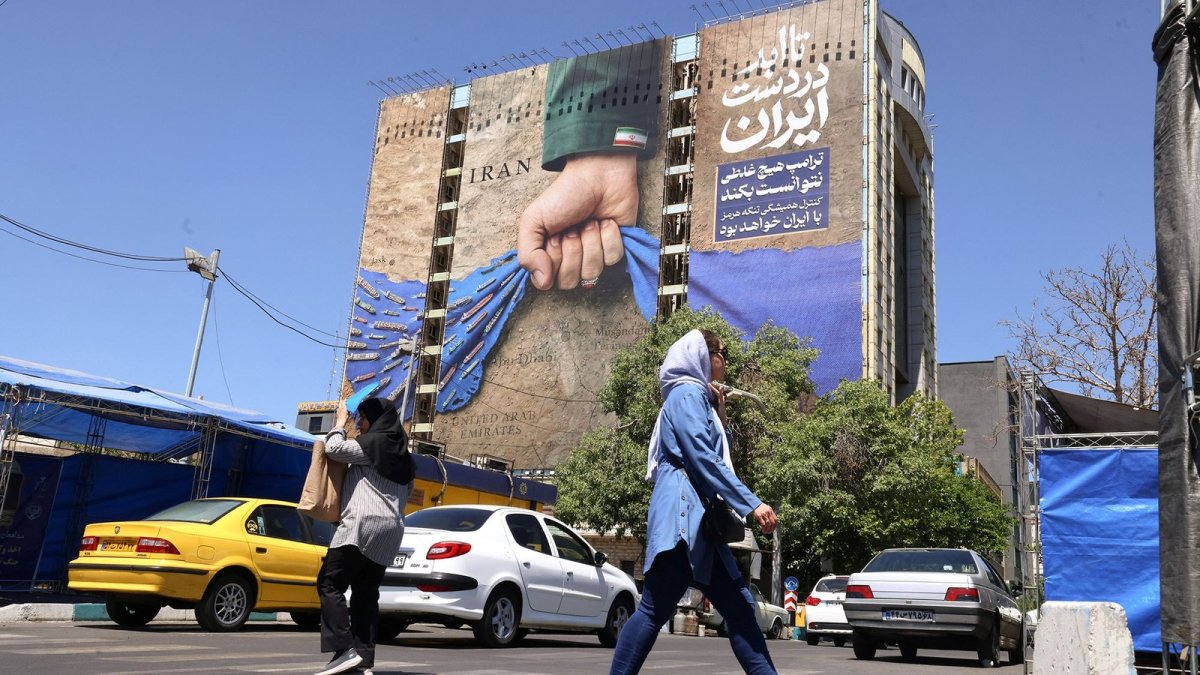
Folks, let's cut through the noise. The 60-day window is shut, the gloves are off, and President Trump has just declared what he calls an "economic D-Day" against Tehran. The Islamabad Memorandum of Understanding, signed back on June 17th by President Trump and Iranian President Masoud Pezeshkian, was supposed to halt military operations and open a path to negotiate the Strait of Hormuz, Iran's nuclear program, and sanctions. That clock ran out on Monday, August 17th, with both sides trading accusations of violations and no extension in sight. We are now deep into the sixth month of this conflict, and the rhetoric has gone nuclear—economically speaking.
On Wednesday, August 19th, Trump took to Truth Social with a promise of "the MOST CRUSHING ECONOMIC OPERATION EVER TAKEN AGAINST ANY COUNTRY." He followed up with a laundry list of targets: "Oil smuggling, swap lines, cash transfers, exchange houses, ship registries, front companies — It all needs to stop NOW." He has halted all conversations with Iran, telling allies there are "no talks or conversations going on, or scheduled." His team has signaled he is settling in for a war of attrition designed to demolish Iran's economy and force capitulation. But here is the rub, folks: he also posted a claim declaring the Strait of Hormuz a new US territory, and this week, he threatened to bomb Oman over its stance in talks. This is high-stakes poker with global energy markets as the pot.
The Squeeze Tightens: Sanctions, Threats, and the 'Survival Economy'
Let's talk about what this "economic D-Day" actually looks like on the ground. The US Treasury isn't messing around. On Thursday, they imposed new sanctions on 10 individuals allegedly part of a network moving "hundreds of millions of dollars" in cash to Hezbollah via couriers on commercial flights between Lebanon, Turkiye, the UAE, and Iran. They also redesignated Hezbollah as an Iranian proxy acting as an extension of the IRGC-Qods Force. This is a direct hit on the financial arteries that keep Tehran's proxies pumping.
But here is the reality check: Iran has been living under sanctions for decades. Jorge Leon, Rystad's head of geopolitical analysis, told CNN that Iran has developed a "survival economy" that "allows them to sustain more economic pain over time." Ship-tracking firm Kpler estimates Tehran may have enough oil already outside the blockade to provide about four months' worth of export revenues. Beyond that, if exports are strangled, oil income could drop to zero. The UAE announced this week it suspended all trade and financial transactions with Iran, which is a significant blow to regional commerce. But the question remains: does this pressure break the regime, or does it just harden their resolve?
Tehran Fires Back: 'Crushing' Responses and a Demand for Permanence
Iran is not blinking. The Foreign Ministry condemned the threat as "unlawful" and "the other side of the coin of war and military aggression," warning via state broadcaster IRIB that those who order or implement the levies "are liable to prosecution and punishment." President Pezeshkian, in a telling interview with state media via Mizan News Agency and ISNA, said it "would be better to end the war today while we are in a position of strength and dignity." That is a calculated message—they are signaling they want out, but only on their terms.
The military brass is even more hawkish. Iran's armed forces chief of staff warned any "new threats" would be met with a "crushing" response, per Mehr News Agency. The Islamic Revolutionary Guard Corps said Thursday it could deploy more "destructive" weapons if the war restarts. Parliament Speaker Mohammad Bagher Ghalibaf said Tehran is prepared to "sacrifice our wealth" to defend the country's "dignity and honor," according to Tasnim. He laid out the conditions for reopening the Strait of Hormuz: the US must lift its naval blockade of Iranian ports, remove oil sanctions, release frozen assets, and end military threats. He dismissed Treasury Secretary Scott Bessent and Defense Secretary Pete Hegseth as "way out of their league." Foreign Minister Abbas Araghchi has framed the Islamabad MoU as representing "the end of the war, not a ceasefire," and Tehran is rejecting another temporary truce, demanding a "permanent end" to the conflict.
The China Factor: The 90% Solution That Could Break the Campaign
Now, folks, this is where the whole strategy gets complicated. China is the key variable, and Beijing holds the cards. According to data from Vortexa Analytics in a Reuters report, China buys about 90% of Iranian crude exports. And here is the kicker: Beijing does not even acknowledge importing Iranian crude in its customs data. The US Treasury has sanctioned independent Chinese refineries that import Iranian crude, but Beijing has ordered its companies to ignore those restrictions. China's foreign ministry spokesperson Lin Jian said "sanctions and pressure tactics are not the solution" and that they do not "fit the interest of any party."
Let me put some numbers on this for you. Trade data shows Iran exported to 147 countries in 2022, with exports to China amounting to $22.4 billion and imports from China at $15.6 billion. That is a massive economic lifeline. And China processes about 90% of the world's rare earths supply—a critical leverage point in any trade war. But here is the political wrinkle: Chinese President Xi Jinping is set to visit the United States in September. That makes it highly unlikely Trump will sanction Chinese banks before that meeting. So, the administration is walking a tightrope, trying to squeeze Iran without pushing Beijing over the edge. The question is whether China will blink or call the bluff.
Oil Markets in Turmoil: Brent Above $91 and Stockpiles Dwindling
The market is feeling the heat, and so will American consumers. Brent crude settled at $91.02 a barrel early Wednesday, August 19th, at 8:06 am Tokyo time—its highest level in more than three weeks. The standoff over Hormuz is driving prices higher, and disruptions to shipping through both the Strait of Hormuz and the Bab al-Mandab strait have prompted major tanker operators to avoid the waterways entirely. The International Energy Agency has issued a stark warning: global oil stockpiles are diminishing at a rapid clip.
This is not just a geopolitical story; it is a kitchen-table story. Democratic Rep. James Walkinshaw told CNN News Central: "I'm not interested in a war of economic attrition with Iran, where the American people are the ones paying the price on our side of the equation, at the gas pump and at the grocery store." And he is right to be worried. With midterm elections just over two months away in November 2026, the political fallout could be severe. Trump's envoys, Jared Kushner and Steve Witkoff, are tasked with managing this crisis, but the clock is ticking on both the diplomatic and electoral fronts.
Military Strain: The USS Abraham Lincoln Heads Home, Morale in Question
While the economic war rages, the military is showing signs of strain. The USS Abraham Lincoln is finally beginning its journey home after an extended deployment of nearly nine months during the Iran war, according to a source familiar with the situation. The USS George Washington arrived Wednesday to relieve the beleaguered carrier, but that leaves the US without an aircraft carrier in the Pacific—a signal retired Rear Adm. Andrew Loiselle called "something incredibly important." The Lincoln's 13,000-mile journey to San Diego will take about a month.
But the homecoming is bittersweet. CNN previously reported that two sailors assigned to the Lincoln strike group had jumped overboard in recent months; both were rescued alive, and others were prevented from jumping. A crew member described morale as very low, with toilets and water fountains frequently closed and hot water often unavailable. The Navy recommends aircraft carrier groups be deployed for seven months. Trump dismissed the concerns, saying the deployment hadn't been long enough, and Hegseth said the ship's conditions had been "completely misrepresented." Sen. Richard Blumenthal has demanded answers. This is a leadership crisis on top of a strategic one.
On the Ground in Iran: Food Prices Double, Luxury Goods Out of Reach
Let's bring this home to the Iranian people, who are bearing the brunt of this economic warfare. According to the state-affiliated Iranian Labour News Agency, citing the Statistical Center of Iran, food prices have more than doubled since July last year. Basic items like eggs, rice, meat, and bread have become "luxury goods" for many. At Tehran and Karaj wholesale markets, sellers sit beside unsold produce. One seller lamented: "A single melon costs 400,000-500,000 tomans ($2.10-$2.60)." That is a staggering price for a fruit that was once a staple of the summer diet.
This is the human cost of a "war of economic attrition." Daniel Citrinowicz, who served in Israel Defense Intelligence including as head of the Iran branch, told CNN: "Those who think that Iran will collapse under the pressure, I think they are mistaken, despite the economic situation." That is a sobering assessment from a man who knows the regime's calculus. The regime is prepared to "sacrifice our wealth" for "dignity and honor," as Ghalibaf put it. The question is whether the Iranian people will continue to bear that sacrifice, or whether the pressure will eventually crack the system from within.
What Happens Next: A War of Attrition with No Clear Exit
So, where do we go from here? Trump has declared the war "over" before—back in early July—only for Iran to suspend its ceasefire days later. This time, he is betting on economic collapse. But the experts are skeptical. Hudson Institute Senior Fellow Ludovic Hood has advocated squeezing IRGC revenues and turning up economic heat on China, but that is a long game. The reality is that Iran has survived decades of sanctions, and their "survival economy" is built to endure pain.
The immediate flashpoints are clear: the Strait of Hormuz remains closed, oil is above $91, and China holds the key to whether this pressure campaign can actually work. If Beijing continues to buy Iranian crude at 90% of exports, the squeeze is more of a pinch. If Trump decides to sanction Chinese banks, he risks a global trade war and a diplomatic rupture ahead of Xi's September visit. The midterms loom in November, and American voters are feeling the pinch at the pump. This is a high-stakes gamble with no clear exit strategy. The only certainty is that the rhetoric is escalating, and the economic consequences are becoming impossible to ignore.
This article was produced with AI-assisted research and editorial support. Sources: CNN, Gulf News.
By Jessica Ali, Staff Writer
What's Your Reaction?
 Like
0
Like
0
 Dislike
0
Dislike
0
 Love
0
Love
0
 Funny
0
Funny
0
 Wow
0
Wow
0
 Sad
0
Sad
0
 Angry
0
Angry
0

Editor-in-Chief at Global1.News. Atlanta-based journalist who cuts through the BS and tells it like it is. Lead anchor, host, and the voice you hear when the spin stops and the truth starts.











Comments (0)