
Trump Pitches Belarusian Potash to Replace Canadian Supply. Belarus Says It Has None to Sell.
President Trump says Washington is working on a deal to buy potash from Belarus instead of Canada. Belarus's own president said the same day that he has no volumes left to sell, because everything is already under contract.
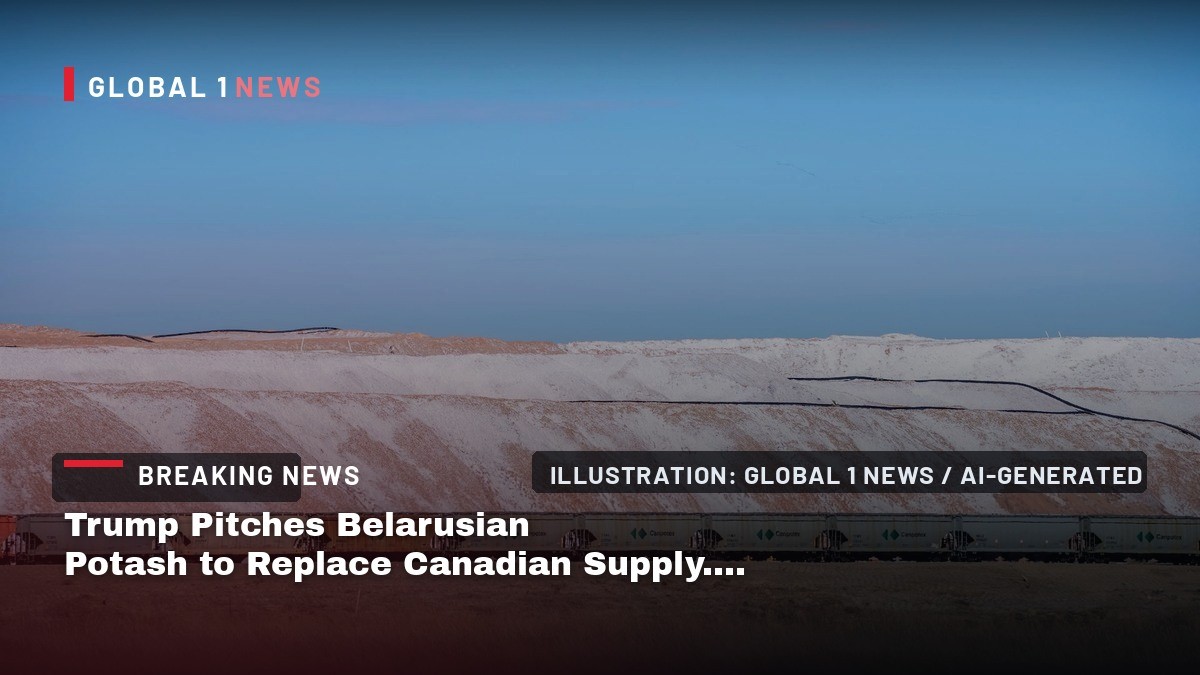
President Donald Trump said on September 21 that Washington is working on a deal to buy potash from Belarus instead of Canada. The same day, Belarusian President Alexander Lukashenko said his country has no volumes to sell to Western markets. No agreement has been published, and no price or volume has been given.
Trump Pitches Belarusian Potash to Replace Canadian Supply. Belarus Says It Has None to Sell.
Washington - September 21, 2026 - Trump announced a possible Belarusian potash purchase on Truth Social, and Minsk answered within hours that its supply is already under contract.
What Trump Actually Announced
Trump's post read: "The United States is working on a massive Deal with respect to the purchase of Potash from Belarus." A second line said: "The pricing would be for substantially less than we are currently paying to Canada, very good news for our Farmers and Ranchers."
Reuters reported that the announcement signals Trump's willingness to use alternative suppliers as leverage in his trade disputes with Canada, which supplies the vast majority of US potash imports, and that it could mark a further thaw in Washington's relations with Belarus after the lifting of sanctions.
No text of any agreement has been published. Trump described a deal being worked on, not a signed agreement. He gave no volume, price, tonnage or timeline.
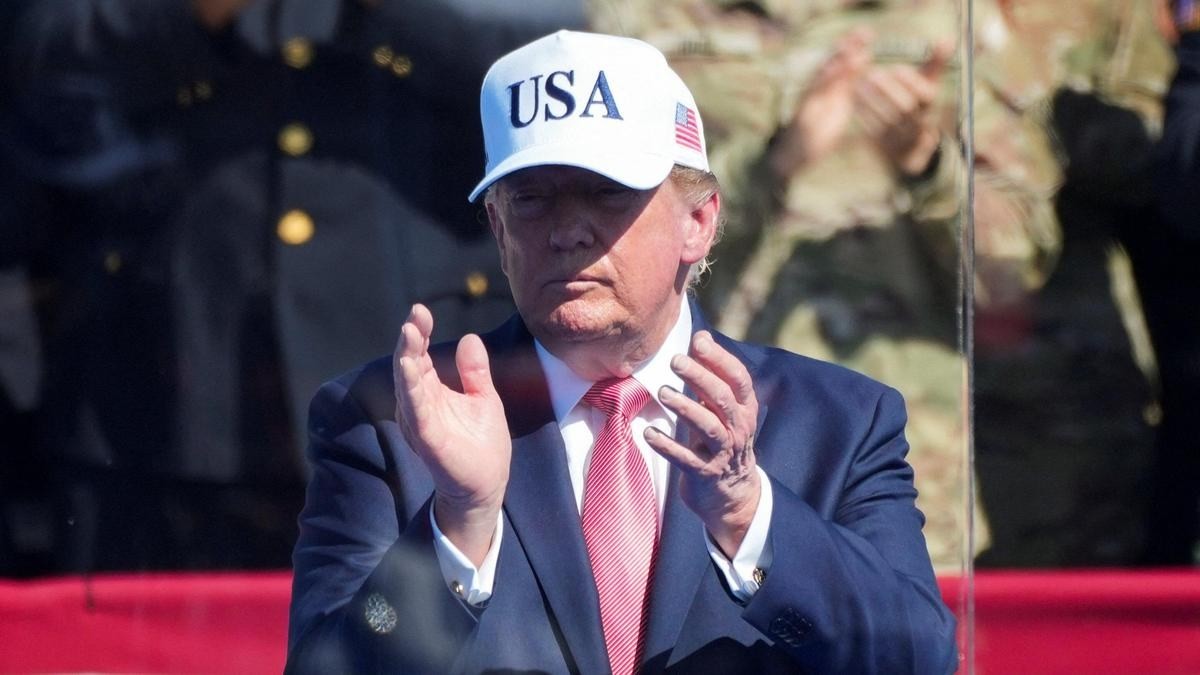
Belarus Says the Cupboard Is Bare
In Minsk on September 21, Lukashenko said he has no available volumes of potash fertilisers for Western markets. He spoke during a report by Uladzimir Arlouski, chairman of the State Customs Committee, and said customs revenue had risen 3.5% over the first eight months of the year.
Lukashenko said: "Even if we wanted to supply something to other markets, Western markets, we simply do not have those volumes. Everything is under contract." He added that Belarus had redirected its trade east, and that "the negotiations with the Americans are evidence of that."
That redirection is measurable. Chinese customs statistics show Belarus shipped 2.58 million tonnes of potassium chloride worth $903.7 million to China between January and August 2026, with volumes up 74.9%. On September 11, Lukashenko had said that loading of a vessel carrying potash fertilisers for the United States was nearing completion. Reuters reported the same day that he said Belarus had resumed selling potash to the United States after US sanctions were eased, and that he wants Washington to return over $40 million "stuck" in the US banking system.
The Numbers Behind America's Dependence
The US Geological Survey's Mineral Commodity Summaries 2026 puts US net import reliance for potash at 92%. Of US imports, Canada supplied 79%, Russia 12%, Israel 3% and other sources 6%. USGS data for 2025 show apparent consumption of 5,900 thousand metric tons, imports of 5,600 and exports of 170, with domestic production of 500, up 22%.
Canada is the world's leading exporter, accounting for over 39% of global exports as of 2024 according to Natural Resources Canada, and more than half of that trade goes to US markets. Canadian producers ship over 22 million metric tons annually, almost two-fifths of global exports, from reserves the Canadian government puts at 1.1 billion tonnes, the largest in the world. In 2024 the United States imported about 12 million tonnes of Canadian potash, all of it dug in Saskatchewan, where it enters tariff-free under the Canada-United States-Mexico Agreement.
Supply is concentrated tightly. Matt Simpson, chief executive officer of Brazil Potash, said three countries account for 80 percent of world potash supply: Russia, Belarus and Canada. Russia is the second largest exporter and Belarus the third. USGS figures put Russia at 34% of global reserves, Canada at 18.6%, Laos at 16.9% and Belarus at 12.7%. Potash was added to the US critical minerals list on November 7, 2025, and on January 14, 2026 Trump issued Proclamation 11001 adjusting imports of processed critical minerals.
How Washington Reopened This Supply Line
The Belarusian potash trade had to be unpicked from sanctions first. Belaruskali OAO, Belarusian Potash Company and Agrorozkvit were added to the SDN List in December 2021 to limit the financial benefits of potash exports to the Lukashenka regime, which the US government linked to corruption and human rights abuses among other issues.
In December 2025, Trump struck a deal under which the Belarusian government released 123 political prisoners; in return Washington agreed to lift sanctions on Belarus's potash exports, The Walrus reported. On December 15, 2025, OFAC issued General License 13, authorising transactions involving Belarusian Potash Company, Agrorozkvit LLC and Belaruskali OAO.
On March 26, 2026, OFAC rescinded Directive 1 under Executive Order 14038, which had prohibited transactions in Belarusian sovereign debt with maturity longer than 90 days, issued General License 14 covering Belinvestbank, and removed several significant Belarusian potash sector entities from the SDN List. Those steps followed joint US-Belarus talks in March and Lukashenko's release of 250 prisoners. The Kyiv Independent reported the December 2025 easing led to more than 100 political prisoners being released, including Maria Kalesnikava and Viktor Babaryka.
The Port That Closed
Even with the licences, the tonnage has nowhere easy to go. Reuters reported that sanctions and the closing of a key port on Lithuania's Baltic coast have made Belarusian supplies expensive to ship to the United States through Russia's Arctic. The landlocked country has been barred from exporting via the Lithuanian port of Klaipeda since February 2022.
That port mattered more than any other. Reuters reported in 2021 that Klaipeda handled 97% of Belarusian potash exports, about 9.7 million tonnes a year, and shipped almost 10.7 million tonnes in 2020 through a terminal 30% owned by Belaruskali. Lithuania stopped railway transit on February 1, 2022, and Belarus diverted shipments to Russian ports. Belarusian Prime Minister Roman Golovchenko said producers "lost a little in margins" because of the longer delivery distance, and that Russia's Baltic ports lack the free capacity to handle the volumes.
Washington has been trying to reopen the route. Reports in spring 2026 said the United States was asking Lithuania, Poland and Ukraine to allow Belarusian fertilisers to transit their territories, and on May 14, 2026 Lithuania said the United States was pressing for a resumption of Belarus potash exports. In July 2026 the EU Court rejected a claim concerning transit of Belaruskali's cargo through Lithuania.
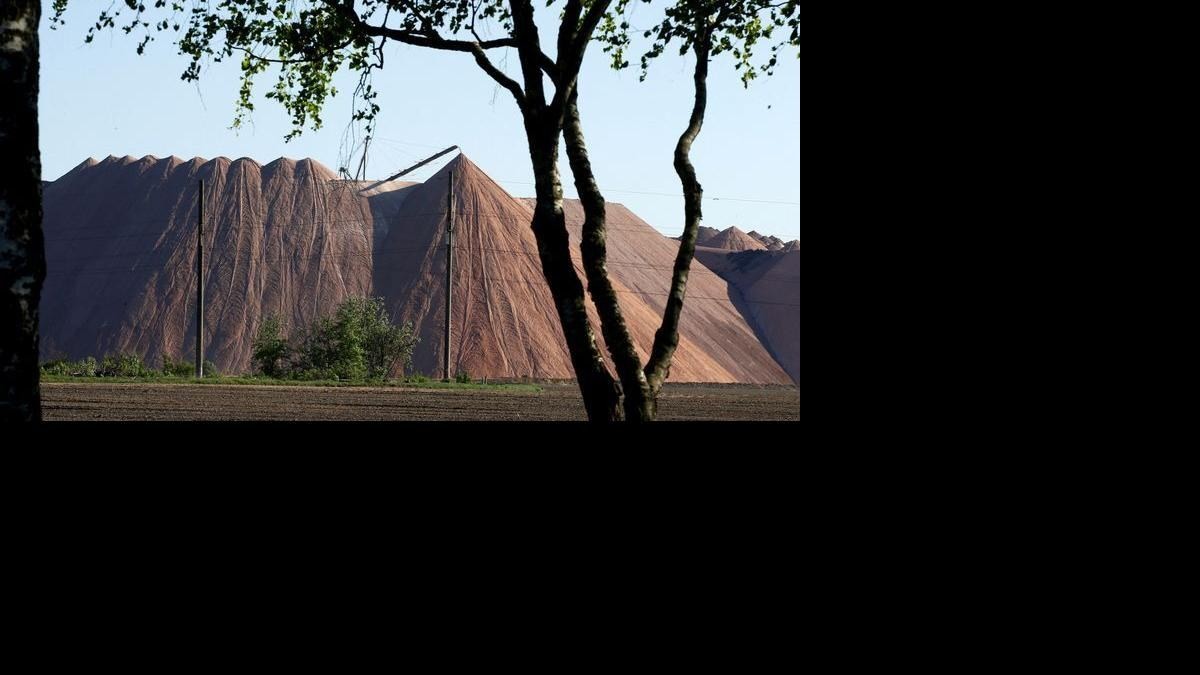
Distance Is the Whole Problem
Matt Simpson of Brazil Potash said displacing Canadian potash means importing from 20,000 kilometres away, paying ocean transportation, hitting ports on the edge of the United States and then railing or trucking the product much longer distances inland. Canadian producers would lose their lowest-cost transportation because they would have to move potash further to sell it elsewhere, he said, and the global price is likely to jump as farmers pass the higher cost on at the grocery store.
Josh Linville, vice president of fertilizers at StoneX, told the Investing News Network that even if Lithuania opened Klaipeda to Belarusian exports, the relatively low current value of potash makes it hard to justify shipping through the Baltic and across the Atlantic. He said the United States is still receiving potash from Russia, but the overwhelming majority of supply comes from nearby Canada.
Simpson said: "They won't be able to get enough from Russia or Belarus, who primarily supply Brazil, India, China, and Europe. They will inevitably have to buy Canadian potash or face having substantially less food grown in their country." Brazil is the world's biggest potash importer, bringing in about 95 percent of what it needs while exporting about $165 billion a year of food.
The Fertilizer Nobody Talks About
Simpson said that along with nitrogen and phosphorus, potash is one of three main nutrients needed to grow food. He said: "It's one thing not having access to cutting-edge AI technology. It's another to not be able to eat."
He said potash strengthens the stem of plants to make them resilient to stress, including erratic weather, temperature swings in a single week, flooding, drought and new waves of pests. It also improves taste and texture; potassium is what makes a tomato ripe and firm and a banana not mushy.
Simpson said: "And no potash, no modern farming. Soil becomes too exhausted to sustain the yields agriculture now requires. The scale we take for granted would be impossible."
The Trade War This Sits Inside
Washington imposed a 50 percent tariff on C$28 billion in Canadian goods after trade talks collapsed on August 21, 2026, and Ottawa responded with matching tariffs on September 8. On September 9 the White House said Canadian dairy products, motorcycles and alcoholic beverages face import bans, while other goods would be hit with 50 percent tariffs. The import ban takes effect September 29; the 50 percent tariff on mattresses, motorboats and golf carts began September 15.
Potash has stayed outside all of it. Non-CUSMA-compliant imports were levied at 10 percent in March 2025, and even with the increase to other goods announced on July 20, 2026, energy and potash remained unaffected. In June, Trump told reporters there is nothing the United States needs from Canada.
Ontario Premier Doug Ford said at a rally in Vaughan on August 26: "If we ever cut out that potash, their agricultural sector would be dead." Alberta Premier Danielle Smith and Saskatchewan Premier Scott Moe said they were concerned about the long-term consequences for those industries, and Moe said that while the province would tariff US alcohol at 50 percent, it would not back actions on potash or oil, citing the risks to jobs and farmers. In May 2026, Carney ruled out Canada using energy or critical minerals as negotiating leverage.
The Market Answered First
Shares of major North American fertilizer producers fell after Trump's post. Mosaic, Intrepid Potash and Saskatoon-based Nutrien fell as much as 5 percent or more. BHP, which is developing the $15.3 billion Jansen potash mine in Saskatchewan, slipped 0.3 percent in US trading to $86.12.
The price picture explains the hesitation. USGS data show the average US potash f.o.b. price rose 4.3% to $1,200 per metric ton, while MOP prices fell 13% to $600 per metric ton. NOLA potash was priced at US$335 to US$345 per metric ton, below the global benchmark of US$395.50 and well below the five-year average of US$490. Corn was trading 6 percent higher, soybeans 9 percent higher and wheat 12 percent higher than their five-year averages.
Markets are tight elsewhere too. Chinese phosphate exports fell to 186,000 metric tons in the first seven months of the year, down from 10 million metric tons in 2021, and the US-Iran war is blocking shipments from Saudi Arabia through the closure of the Strait of Hormuz. Linville said two-thirds of the world's phosphate supply is currently unavailable to the broader market, which could trigger a potash demand run. "In fact, between the higher grain prices making current potash values look very attractive and trade talks not going well, I have almost dropped to begging our clients to lock in their potash," he said.
What Nobody Has Said Yet
Nothing released so far makes the deal concrete. There is no published text, no volume, no price, no tonnage and no timeline from either government, and no confirmation that a Belarusian potash vessel has arrived in the United States.
Both governments have otherwise stayed silent. No White House, USDA, USTR, State Department or Belarusian government statement has gone beyond Trump's Truth Social post, and there has been no Canadian, EU, Lithuanian, Polish or Ukrainian response to the September 21 post specifically.
One limit is worth stating plainly. US sanctions on Belarus have not been lifted wholesale. Specific potash entities were delisted and general licences issued, while the wider Belarus sanctions programme and the European Union's potash restrictions remain in place, and Canadian potash is currently exempt from US tariffs.
By Jessica Ali, Staff Writer
This article was produced with AI-assisted research and editorial support. Sources: Reuters, Kyiv Independent, The Northern Miner, Proactive Investors, Toronto Sun, Investing News Network, The Walrus, Reform.news, the U.S. Geological Survey, Natural Resources Canada, OFAC, DW, AFP and CTV News.
What's Your Reaction?
 Like
0
Like
0
 Dislike
0
Dislike
0
 Love
0
Love
0
 Funny
0
Funny
0
 Wow
0
Wow
0
 Sad
0
Sad
0
 Angry
0
Angry
0

Editor-in-Chief at Global1.News. Atlanta-based journalist who cuts through the BS and tells it like it is. Lead anchor, host, and the voice you hear when the spin stops and the truth starts.












Comments (0)