
Rowley vs Persad-Bissessar: The Visa Row That Echoes Jamaica's Daryl Vaz Precedent
Former prime minister Keith Rowley is demanding that Prime Minister Kamla Persad-Bissessar reveal how many citizens her government reportedly recommended for US visa cancellation, as the Gary Aboud case and Jamaica's Daryl Vaz precedent expose the region's uneasy relationship with US visa power.
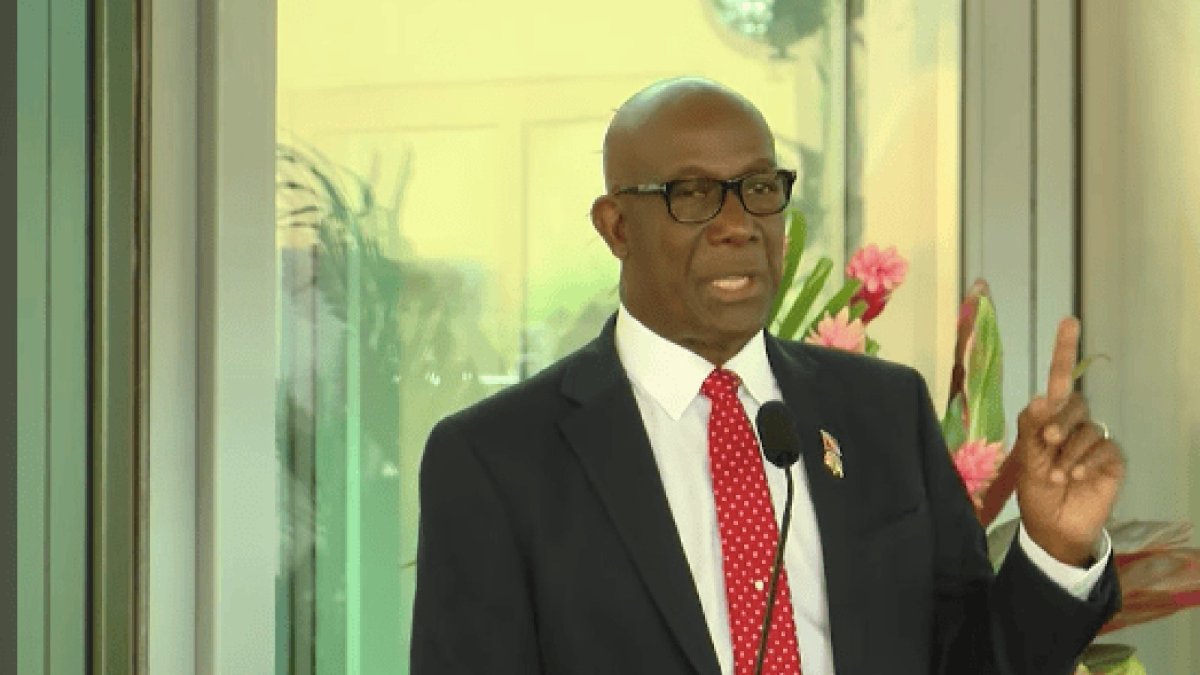
The escalating war of words between former prime minister Keith Rowley and Prime Minister Kamla Persad-Bissessar over US visa cancellations has moved far beyond the usual cut-and-thrust of Trinidad and Tobago politics. At its heart lies a deeply uncomfortable question for the entire Caribbean: has the threat of a foreign government's immigration decision become a domestic political weapon? The answer, as a look at Jamaica's recent history shows, is not merely hypothetical.
Trinidad's Visa Row: Rowley vs Persad-Bissessar and the Jamaican Precedent of Political Fallout
Port of Spain, Trinidad - What began as a fiery accusation at a PNM public meeting in late July 2026 has spiralled into a full-blown national controversy, with Keith Rowley demanding answers from the Prime Minister over her government's alleged role in recommending citizens for US visa cancellation. The claims, which remain unsubstantiated, have drawn a categorical denial from Persad-Bissessar and have thrown a spotlight on the case of Gary Aboud, a civil society leader whose visa revocation has sent shockwaves through the NGO community. For regional observers, the situation bears an uncanny resemblance to the saga of Jamaica's Daryl Vaz, a case that took years and a former US ambassador's public admission of error to resolve.
The Escalation: From Public Meeting to Facebook Demand
The row first ignited in late July 2026, when Rowley, speaking at a PNM public meeting, accused the government of recommending citizens' US visas for cancellation. He offered no evidence at the time, but the charge was potent enough to dominate political discourse for weeks. The former prime minister then doubled down on August 10, 2026, taking to Facebook to publicly demand that Persad-Bissessar disclose exactly how many citizens her government has reportedly recommended to US authorities for visa cancellation.
In his post, Rowley asked the Prime Minister to "tell the country, besides Rowley and Young, how many other citizens she and her Government have reported to the US Government with a recommendation to have their visas canceled," as reported by the Caribbean Times. The demand was pointed, referencing both himself and Stuart Young, the two former prime ministers who were stripped of their diplomatic passports and state security detail on July 4, 2026, a move that has only deepened the political animosity.
Rowley's post also cited a US Department of State communication outlining specific grounds for visa revocation, suggesting that the UNC leadership has used the threat of US visa loss to intimidate citizens and political opponents. He has challenged Persad-Bissessar to identify which US-defined offences he or Stuart Young ever committed to justify calls for their visa cancellation. To date, his allegations remain exactly that - allegations, unsupported by any independent evidence.
Persad-Bissessar's Firm Denial and the Free Speech Defence
Prime Minister Persad-Bissessar has responded with characteristic directness, categorically denying that her government played any role in US visa decisions, including the high-profile revocation of Gary Aboud's visa. She has insisted that such matters fall solely within US jurisdiction, framing her government's posture as one that upholds free speech. In a notable gesture, she has publicly acknowledged that Rowley is free to speak, a pointed reminder that the former prime minister faces no official sanction from her administration.
The Prime Minister's denial, however, has done little to quell the controversy. The political climate in Trinidad and Tobago is already febrile, with the July 4 decision to strip Rowley and Young of their diplomatic passports and security details having set the stage for a bitter confrontation. The visa row has now become the central battleground, with each side accusing the other of wielding foreign policy as a cudgel against domestic opponents.
The Gary Aboud Case: Civil Society Under Siege?
At the centre of the storm is Gary Aboud, corporate secretary of the NGO Fishermen and Friends of the Sea (FFOS). Aboud's B1/B2 US visa was revoked in November 2025, with the US mission describing the decision as based on 'additional information' indicating potential inadmissibility. It is the first known revocation in Trinidad suspected of being linked to criticism of US military operations in the Southern Caribbean.
Aboud had been outspoken in his criticism of US operations against alleged drug boats near Venezuela, and he has drawn a direct line between his advocacy and the revocation. "NGOs are being silenced," he told the Guardian TT, expressing serious concerns about whether foreign powers and the Government were attempting to intimidate or punish civil society voices that speak out. His words have resonated across the region, where the line between legitimate security cooperation and the suppression of dissent can sometimes blur.
Supporting voices from academia and civil society have argued that the timing of Aboud's revocation - amid his vocal criticism of US regional operations - is not coincidental. They contend that the cabinet's open support for US regional action has placed Trinidad dangerously inside superpower politics, with long-term consequences for the country's sovereignty and its citizens' freedom of expression. The concern is not merely theoretical; it speaks to a broader anxiety about the cost of aligning too closely with Washington's security agenda in a region that has historically prized its independence.
The Jamaican Precedent: Daryl Vaz and the Long Road to Reinstatement
For those who follow regional affairs, the Trinidad row is a replay of a script already performed in Jamaica. In 2019, then-Member of Parliament Daryl Vaz had his US visa revoked, reportedly stemming from complaints made to Washington while the People's National Party (PNP) was in government. Allegations surfaced that then-National Security Minister Peter Bunting had directed the Major Organised Crime and Anti-Corruption Agency (MOCA) to investigate Vaz - claims that Bunting categorically denied, and which MOCA also rejected.
The case dragged on for years, with Vaz caught in a diplomatic and political limbo that damaged his reputation and raised questions about the weaponisation of US visa decisions. It was not until former US Ambassador to Jamaica, Donald Tapia, publicly admitted years later that "a wrong was done" and that the revocation rested on unreliable information, that Vaz's visa was finally reinstated in September 2021. In August 2026, Tapia went further, telling Nationwide 90FM and Cliff Hughes Online that lies led to the revocation. Vaz has since said the visa revocation chapter of his career is closed, but the damage to public trust in the system was lasting.
The parallels with Trinidad are striking. In both cases, a political figure has alleged that a foreign government's immigration decision was influenced by domestic political machinations. In Jamaica, the allegation was eventually proven to have merit, with a US ambassador admitting error. In Trinidad, the allegations remain unproven, but the very existence of the Jamaican precedent lends them a credibility they might otherwise lack.
What to Watch: The Fallout and Regional Implications
The immediate effect in Trinidad is a chilling one. Civil society actors, NGO workers, and political figures must now weigh whether their advocacy positions or political affiliations carry real risk of US visa loss. The Aboud case has already demonstrated that such risk is not imaginary, and the Rowley allegations - however unsubstantiated - have put the issue firmly on the national agenda.
The Caribbean360 analysis notes the broader US tightening of visa enforcement, including Executive Order 14419 on birth tourism, which affects Trinidadian and Caribbean nationals with pending or existing US visas. This is not an isolated phenomenon; it is part of a wider trend that has implications for every citizen of the region who relies on US visas for business, education, or family visits.
Several key questions now hang over the Trinidad situation. Will Persad-Bissessar's government publicly disclose any formal or informal communications with US authorities regarding visa recommendations? Will Aboud or FFOS pursue legal or diplomatic remedies to challenge the revocation? And how will the US visa tightening affect Caribbean nationals in civil society or public life more broadly?
For the Caribbean as a whole, the row exposes a fundamental tension. Aligning with US power is a legitimate strategic choice, one that many regional governments have made in pursuit of security and economic benefits. But conflating political criticism with visa risk is a cost the whole region pays. When a citizen's ability to travel is perceived as contingent on their silence, the very fabric of democratic discourse is threatened.
The Jamaican precedent offers both a warning and a measure of hope. It shows that wrongful revocations can be corrected, but only after years of struggle and only when a US official is willing to admit error. Trinidad's political class would do well to heed that lesson before the current row causes further damage to public trust in both the Government and the US relationship. The stakes, as Aboud has warned, are nothing less than the freedom of civil society to speak truth to power - wherever that power resides.
This article was produced with AI-assisted research and editorial support. Sources: Caribbean360, Guardian TT, Trinidad Express, Caribbean Times, Nationwide 90FM.
By Sharon Sahatoo, Staff Writer
What's Your Reaction?
 Like
0
Like
0
 Dislike
0
Dislike
0
 Love
0
Love
0
 Funny
0
Funny
0
 Wow
0
Wow
0
 Sad
0
Sad
0
 Angry
0
Angry
0

Caribbean Correspondent at Global1.News. Based in Port of Spain, Trinidad, covering Caribbean politics, economy, energy, climate, and culture. Amplifying the voices and stories of the Caribbean region.














Comments (0)