
Cameroon Win First WAFCON Title Lionesses Break the Curse
The Indomitable Lionesses of Cameroon have done it. After decades of heartbreak, after three failed attempts on the grandest stage, they finally roared loudest when it mattered most.
The Indomitable Lionesses of Cameroon have done it. After decades of heartbreak, after three failed attempts on the grandest stage, they finally roared loudest when it mattered most. On Sunday at the Moulay Al Hassan Stadium in Rabat, Morocco, Cameroon dismantled a fairytale Malawi side 3-0 to claim their first-ever Women's Africa Cup of Nations title — and in doing so, they sent a seismic shockwave through the entire African women's football landscape. This wasn't just a victory; it was a coronation, a statement, and a warning to the rest of the world ahead of the 2027 Women's World Cup in Brazil.
Cameroon's First WAFCON Crown: Indomitable Lionesses Finally Break the Curse in Rabat
Rabat, Morocco — The noise was deafening, the emotion raw, and the history unmistakable. Cameroon's players collapsed in a heap of jubilation as the final whistle confirmed a 3-0 demolition of Malawi in the Women's Africa Cup of Nations final on Sunday. More than 19,000 fans packed into the Moulay Al Hassan Stadium to witness the birth of a new champion — the fourth different WAFCON winner since 1998, joining the exclusive club that had previously only admitted Nigeria, Equatorial Guinea, and South Africa. For a nation that had lost three previous finals, this was fourth-time lucky, and the Lionesses seized their moment with ruthless efficiency.
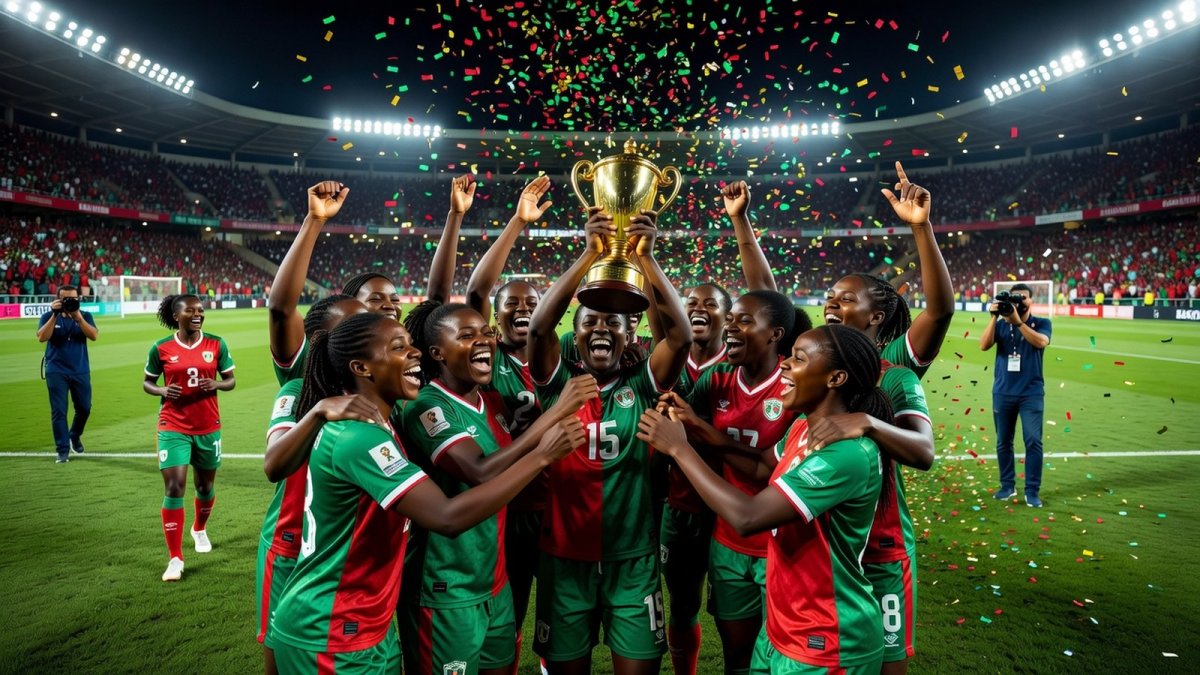
Final Analysis: Lionesses Roar to History
From the opening exchanges, there was a sense of destiny about this Cameroon side. They had already dispatched Nigeria — the tournament's most decorated team with ten titles — in the quarter-finals, and then survived a nerve-shredding penalty shootout against hosts Morocco in the semis. By the time the final arrived, Cameroon were battle-hardened, focused, and utterly clinical. Marie Ngah Manga was the heroine of the hour, opening the scoring after just 20 minutes when she pounced on a loose ball in the box with the predatory instinct of a true striker. Her second arrived in the third minute of first-half added time, a composed finish from Eto's pass that effectively sealed Malawi's fate before the interval.
In between, Naomi Eto had produced the moment of pure quality that broke Malawi's resistance — a swivelling finish on the half-hour mark that left the debutants' defence rooted to the spot. At 3-0 at the break, the contest was effectively over. Cameroon controlled the second half with the calm authority of a team that knew history was within their grasp. They didn't need to chase more goals; they simply managed the game, protected their lead, and allowed the occasion to wash over them. When FIFA president Gianni Infantino placed the gold medals around their necks, with CAF president Patrice Motsepe looking on, the symbolism was unmistakable — African women's football had a new powerhouse, and the continent was watching.
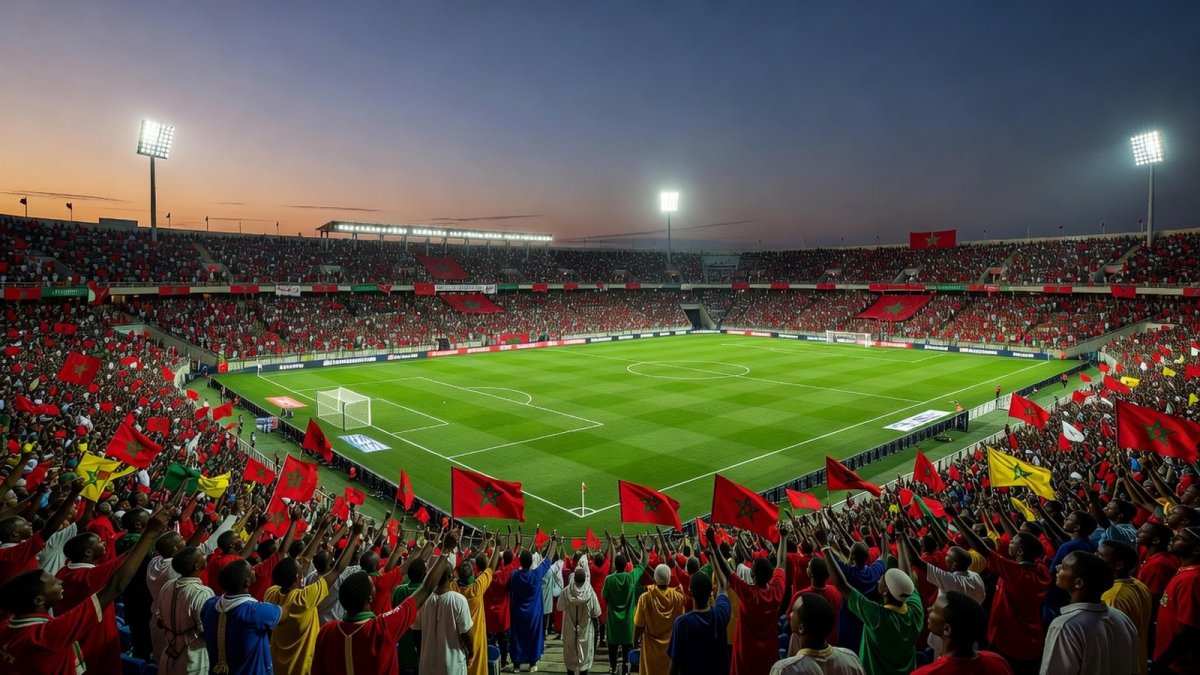
Malawi's Fairytale Run
But while Cameroon celebrated, the story of this tournament belonged just as much to the beaten finalists. Malawi arrived at WAFCON 2026 as rank outsiders — ranked 153rd in the world and 32nd in Africa — and left as one of the most beloved teams in the competition's history. Their run to the final was nothing short of miraculous. In the semi-finals, they dismantled Algeria 3-1, with the Chawinga sisters putting on a masterclass that will be talked about for years. Tabitha Chawinga, who plies her trade at Lyon in France, scored twice — in the 33rd and 76th minutes — while her sister Temwa, of Kansas City Current in the NWSL, added another in first-half stoppage time to take her tournament tally to five goals. Algeria's Morgane Belkhiter was sent off in the 23rd minute, and Malawi's Rose Kadzere also saw red, but by then the damage was done.
Malawi's fairytale was built on the extraordinary talent of the Chawinga sisters, but it was sustained by a collective spirit that captured the imagination of neutrals across the continent. They may have been outclassed in the final, but their achievement — reaching the showpiece on their continental debut and qualifying for the 2027 Women's World Cup in Brazil — is a testament to the rapid growth of women's football across Africa. Malawi and Algeria will both make their World Cup debuts in Brazil, while Morocco will make its second appearance after reaching the round of 16 in 2023. Cameroon, who played in the 2015 and 2019 editions, will return to the global stage with a point to prove.
South African Perspective: Banyana's Pain, Africa's Gain
For South African fans, this tournament has been a bitter pill to swallow. Banyana Banyana arrived in Morocco as defending champions, having lifted the trophy in 2022 under the inspirational Desiree Ellis. But their title defence unravelled in spectacular fashion. They lost their Group B opener 2-1 to Tanzania in Casablanca, recovered to reach the knockouts, and then crashed out in the quarter-finals at the hands of hosts Morocco. The pain of that exit is still fresh, but there is a silver lining — the four quarter-final losers still have a path to the World Cup. Nigeria will play South Africa, and Ghana will face Ivory Coast in Casablanca, with the winners advancing to an intercontinental playoff for a spot at Brazil 2027.
This is a moment for Banyana to regroup, to rediscover the resilience that carried them to continental glory three years ago. The team is backed by long-time sponsor Sasol, whose investment in women's football has been transformative, and the infrastructure is in place for sustained success. But Cameroon's triumph should serve as a wake-up call. The gap between Africa's traditional powers is narrowing, and the emergence of teams like Malawi and the continued rise of Morocco and Algeria means South Africa can no longer rely on reputation alone. The 2022 title was historic, but football is a sport of constant evolution. Banyana must evolve with it, or risk being left behind.
Broader Context: African Women's Football on the Rise
Cameroon's victory is more than just a national triumph — it is a symbol of the continent's growing strength in women's football. Since Nigeria's dominance began in 1998, the trophy has now been shared by four different nations, a sign that the competitive balance is shifting. Equatorial Guinea won twice, South Africa once, and now Cameroon have joined the party. The record attendance at the final — more than 19,000 fans — is further evidence of the sport's surging popularity across Africa. When FIFA president Gianni Infantino and CAF president Patrice Motsepe are both present at a women's final, it signals that the powers-that-be are taking notice.
The qualification of four African teams for the 2027 World Cup — Cameroon, Malawi, Morocco, and Algeria — is a landmark moment. Never before have so many African nations booked their tickets to the global showpiece from a single WAFCON cycle. Morocco's run to the round of 16 in 2023 showed what African teams can achieve on the world stage, and the class of 2027 will be expected to build on that foundation. The presence of players like Tabitha Chawinga at Lyon and Temwa Chawinga at Kansas City Current demonstrates that African talent is increasingly sought after by the world's top clubs, and that exposure is raising the standard of the domestic game.
Implications for Fans and the Sport
For South African fans, the rise of women's football across the continent is a double-edged sword. On one hand, it makes the sport more exciting, more competitive, and more compelling to watch. SuperSport's coverage of WAFCON has brought the tournament into living rooms across the country, and the quality of football on display has been a revelation. On the other hand, it raises the stakes for Banyana Banyana. The days of South Africa being a guaranteed contender are over. Every match is now a battle, every opponent a potential giant-killer.
But this is precisely what the sport needs. Grassroots development programmes, backed by sponsors like Sasol and supported by SAFA, are producing a new generation of players who are technically superior, tactically aware, and mentally stronger than their predecessors. The transformation agenda in South African sport has always been about more than just representation — it is about creating opportunities for young girls to dream, to play, and to succeed. Cameroon's triumph, Malawi's fairytale, and the overall growth of the tournament are proof that those dreams are becoming reality across the continent.
What to Watch For
The immediate focus for South African fans will be the World Cup playoff against Nigeria. This is a rivalry that needs no introduction — the Super Falcons have been the benchmark for African women's football for decades, and Banyana's 2022 triumph was built on overcoming exactly this kind of challenge. The winner will face an intercontinental playoff for a place at Brazil 2027, and the stakes could not be higher. Ghana and Ivory Coast will contest the other playoff, with the winners of both matches advancing to the next stage.
Beyond the playoffs, the focus will shift to the 2027 World Cup itself. Cameroon will arrive in Brazil with a continental crown and a point to prove after their previous appearances in 2015 and 2019 ended in group-stage exits. Malawi and Algeria will be making history simply by being there, while Morocco will look to build on their impressive showing in 2023. For South Africa, the road to Brazil is still alive, but it runs through Nigeria — and that is a challenge that will define the next chapter of Banyana's story.
Cameroon's first WAFCON title is a moment of celebration for African football, but it is also a reminder that the continent's women's game is entering a new era. The old order has been disrupted, new powers have emerged, and the standard of play is rising with every tournament. For South African fans, the message is clear: the future of women's football in Africa is bright, but it will not wait for anyone. Banyana Banyana must rise to the occasion, or watch from the sidelines as the rest of the continent surges ahead.
By Dante Williams, Staff Writer
This article was produced with AI-assisted research and editorial support. Reporting is based on sources cited in the article.
What's Your Reaction?
 Like
0
Like
0
 Dislike
0
Dislike
0
 Love
0
Love
0
 Funny
0
Funny
0
 Wow
0
Wow
0
 Sad
0
Sad
0
 Angry
0
Angry
0

Breaking News and Investigations Correspondent at Global1.News. Based in London, covering global breaking news, security, and investigative stories. Known for digging deeper and connecting the dots across continents.












Comments (0)