
Weapon or wine bottle? China disputes reports of artillery shell in Papua New Guinea
The discovery of a 32‑kilogram, shell‑shaped object in a commercial container in Port Moresby has ignited a diplomatic tug‑of‑war between Papua New Guinea, China and, indirectly, Australia.
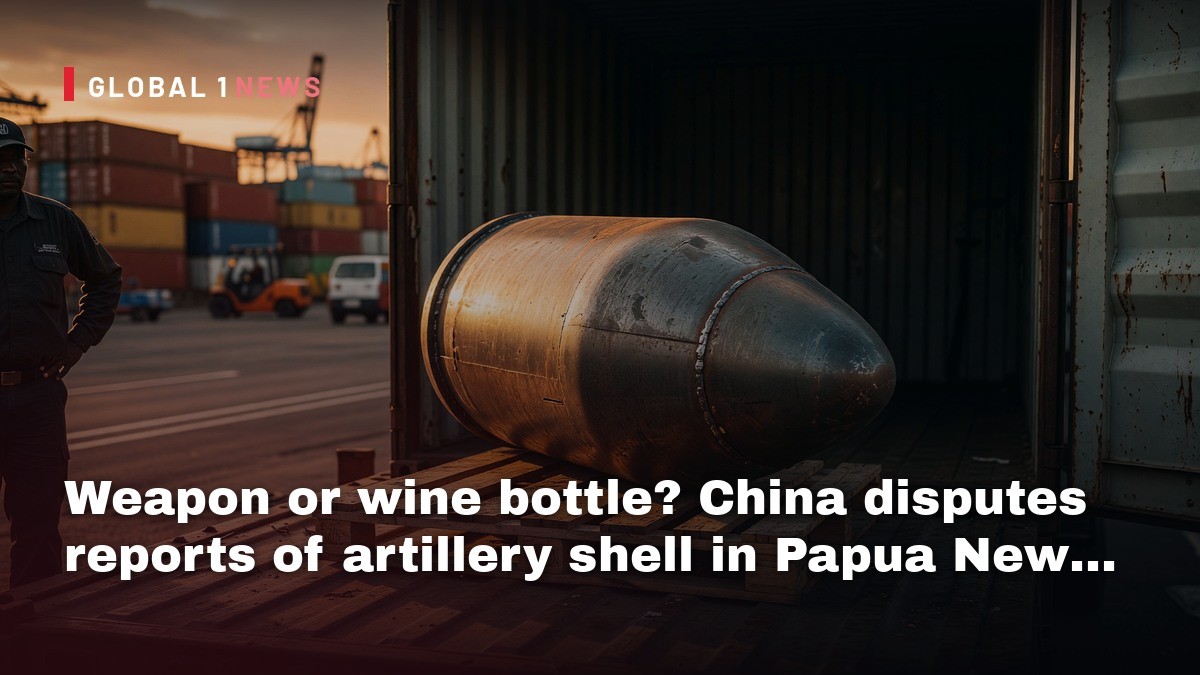
The discovery of a 32‑kilogram, shell‑shaped object in a commercial container in Port Moresby has ignited a diplomatic tug‑of‑war between Papua New Guinea, China and, indirectly, Australia. While Papua New Guinean police initially treated the item as a potential live artillery round, the Chinese embassy has dismissed the claim, describing the object as a “shell‑shaped wine bottle” that poses no danger. The episode highlights the fragility of security protocols in the Pacific, the sensitivities surrounding China’s expanding commercial footprint, and the challenges of verifying information in a region where investigative resources are limited.
Discovery and immediate police response
Police in Papua New Guinea’s capital arrested four Chinese nationals after the 32‑kilogram object was uncovered at a construction site. The arrests occurred on a Friday, shortly after the item was found inside a shipping container that had been cleared for commercial use. Police commissioner David Manning characterised the find as “a very concerning discovery,” emphasizing the potential risk if the object were an undetonated artillery shell.
The initial police narrative dismissed the notion that the object was merely a dummy, as reported by the local newspaper Post Courier. This early stance set the tone for a serious investigation, prompting authorities to consider whether the object could be a live device capable of causing harm.
Chinese embassy’s counter‑narrative
In response, the Chinese embassy posted on Facebook, asserting that the object is “a shell‑shaped wine bottle” and that it “poses no danger at all.” The embassy’s statement stressed that it is “virtually impossible” for an illegal, military‑grade artillery shell to be smuggled from China to Papua New Guinea, citing China’s strict firearm control laws and its reputation as a safe country.
The embassy’s post also invited public skepticism, with commenters questioning the weight of a wine bottle—one user asked, “What sort of wine bottle weighs 32 kilograms?”—and noting the absence of any labeling that would identify the object as a bottle. The tone of the embassy’s response suggests a strategic effort to downplay any security implications and to protect China’s commercial image in the Pacific.
Australian media speculation
Australian media, represented by the Australian Broadcasting Corporation, cited unnamed sources that identified the object as an undetonated 130 mm Chinese Type 59 artillery projectile containing chemical explosives and a fuse. The ABC report framed the find as a potential breach of regional security, given the Type 59’s historical use in various conflicts. However, the BBC noted that it had not independently verified the claim, underscoring the difficulty of confirming technical details without on‑site access.
The reliance on unnamed sources reflects the limited transparency surrounding the investigation. While the ABC’s identification aligns with the police commissioner’s concerns, the lack of verification means the claim remains speculative, leaving room for diplomatic maneuvering by both Papua New Guinea and China.
Implications for Papua New Guinea’s security apparatus
The incident exposes gaps in Papua New Guinea’s customs and security screening processes. A 32‑kilogram object of uncertain nature passed through commercial channels and was only discovered after reaching a construction site, suggesting that existing inspection protocols may not be equipped to detect concealed military hardware. The arrests of four Chinese nationals further raise questions about the presence of foreign actors involved in the movement of such items.
From a policy perspective, the discovery may prompt Papua New Guinea to seek greater assistance from regional partners, particularly Australia, which has historically provided security training and logistical support. Strengthening customs inspections and establishing clearer channels for reporting suspicious cargo could become a priority for the government, especially as the Pacific becomes an increasingly contested space for strategic influence.
China’s diplomatic positioning in the Pacific
China’s swift dismissal of the artillery‑shell narrative aligns with its broader diplomatic strategy in the Pacific, where it seeks to present itself as a benign economic partner while avoiding entanglement in security controversies. By framing the object as a harmless wine bottle, the embassy attempts to defuse any perception that Chinese nationals were involved in illicit arms trafficking.
The emphasis on China’s “strictest firearm control laws” serves a dual purpose: it reassures host nations of China’s compliance with international norms, and it counters narratives that portray Chinese commercial activity as a cover for covert military logistics. This approach mirrors Beijing’s responses in other regions where similar allegations have arisen.
Regional diplomatic ripple effects
The episode is likely to reverberate through the Pacific diplomatic community. Australia, as a key security partner for Papua New Guinea, may view the alleged presence of a Chinese artillery shell as a signal of potential Chinese encroachment into the region’s security domain. While the Australian report remains unverified, the mere suggestion of a Type 59 projectile could influence Canberra’s strategic calculations and its engagement with PNG.
Conversely, China’s denial seeks to maintain its economic foothold without attracting punitive measures. By denying the feasibility of smuggling a military‑grade shell, Beijing aims to preempt any calls for sanctions or restrictions on Chinese businesses operating in PNG. The diplomatic dance underscores the delicate balance each actor must maintain amid competing security and economic interests.
Broader context and future outlook
While the precise nature of the 32‑kilogram object remains contested, the incident illustrates the challenges of information verification in remote regions. The reliance on social media statements, unnamed sources and limited on‑the‑ground reporting means that definitive conclusions are difficult to draw. Nonetheless, the episode will likely prompt Papua New Guinea to reassess its customs and security frameworks, and it may accelerate regional cooperation on illicit trafficking detection.
In the months ahead, the outcome of the police investigation—whether the object is confirmed as a dummy, a wine bottle or an actual artillery shell—will shape the narrative. Should the investigation validate the Australian claim, it could trigger a diplomatic protest from China and a possible tightening of security protocols by PNG and its allies. If, however, the Chinese embassy’s assertion proves accurate, the episode may be relegated to a brief diplomatic spat, reinforcing China’s narrative of safe, lawful commerce in the Pacific.
This article was produced with AI-assisted research and editorial support. Reporting is based on the source material cited below. Sources: BBC News Asia; bbc.co.uk; Global1.News (07 November 2026).
By Kenji Tanaka, Staff Writer
What's Your Reaction?
 Like
0
 Dislike
0
 Love
0
 Funny
0
 Wow
0
 Sad
0
 Angry
0

Japan Correspondent at Global1.News. Tokyo-based voice covering Japanese politics, technology, economy, and culture. Tracks the intersection of tradition and innovation in one of the world's most dynamic societies.















Comments (0)