
The Indian chef who brought curry to America - then vanished
In the autumn of 2026, the story of Ranji Smile—an Indian chef who briefly illuminated New York’s culinary scene before vanishing into obscurity—offers a vivid illustration of early 20th‑century cultural exchange and the perils of self‑mythologising.
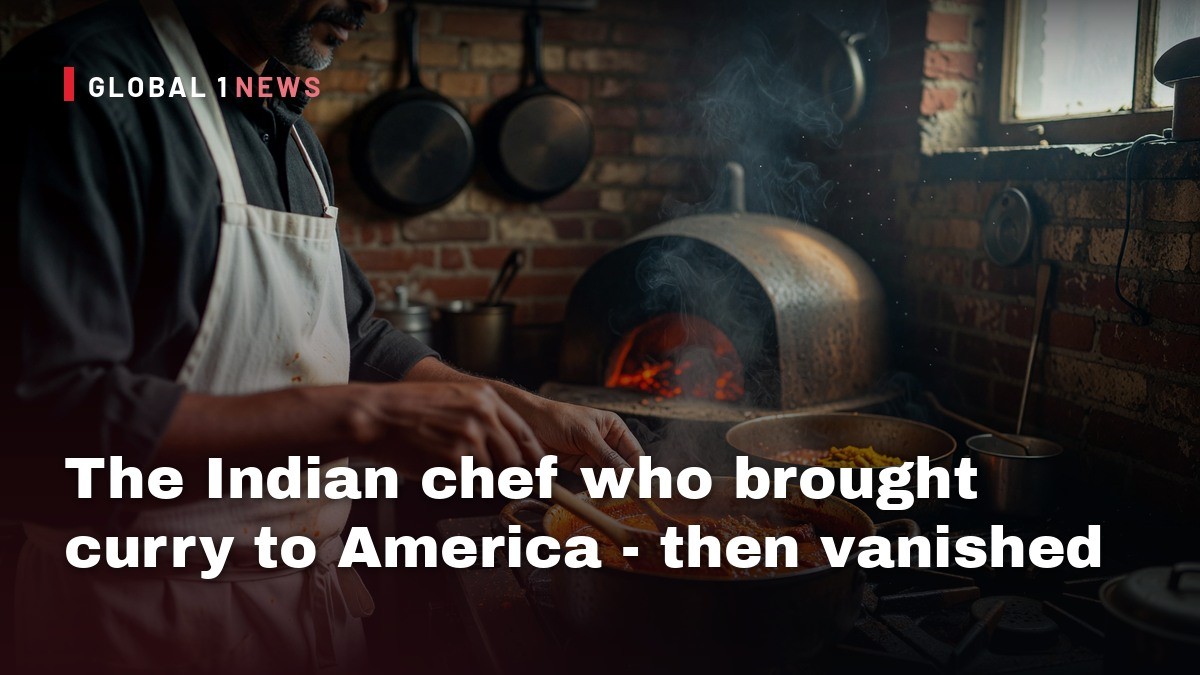
In the autumn of 2026, the story of Ranji Smile—an Indian chef who briefly illuminated New York’s culinary scene before vanishing into obscurity—offers a vivid illustration of early 20th‑century cultural exchange and the perils of self‑mythologising. While the name “Ranji Smile” may be unfamiliar to most contemporary diners, his brief venture, Omar Khayyam, marks a seminal moment in the introduction of Indian cuisine to the United States. This article reconstructs his trajectory from a London kitchen to the glittering tables of Fifth Avenue, examines the social currents that made his venture possible, and reflects on the legacy that persists in today’s Indian‑food boom.
From London’s Hotels to Ellis Island
In the summer of 1899, a chef identified only as “Ranji Smile” embarked on a transatlantic journey from London to New York. Contemporary records do not reveal his birth name or family background; the moniker “Ranji” likely alluded to the celebrated cricketer KS Ranjitsinhji, while “Smile” may have been an anglicised version of “Ismail.” Upon arrival at Ellis Island, he adopted the more Anglophone first name “Joe,” signaling an early pattern of self‑reinvention that would define his public persona.
Before his migration, Smile had honed his craft in the kitchens of the Cecil and Savoy hotels, both prominent London establishments. A 1899 profile in Harper’s noted his reputation as a skilled curry cook, a talent that caught the eye of Louis Sherry, proprietor of the upscale Sherry’s Restaurant on Fifth Avenue. Sherry, seeking to diversify his menu for a clientele accustomed to European haute cuisine, invited Smile to bring his Indian culinary expertise across the Atlantic.
Sherry’s Restaurant: A Stage for Culinary Spectacle
Sherry’s Restaurant, positioned as a rival to the legendary Delmonico’s, catered to New York’s elite—families such as the Astors frequented its opulent dining rooms. The establishment was renowned for theatrical banquets, including events where patrons entered the ballroom on horseback. Within this flamboyant environment, Smile’s presence added an exotic flair that resonated with a city increasingly curious about India, spurred in part by Swami Vivekananda’s lectures in the 1890s and a modest influx of Indian sailors, students, and professionals.
Smile quickly became a focal point of the restaurant’s allure. Dressed in a satin coat and blue silk turban, he performed a brief salutation—“Will you have the curry hot or mild, sahib?”—before serving dishes such as Bombay duck, a glutinous lizardfish prized on India’s western coast, and a novelty creation dubbed “Lettuce Ceylon.” Newspaper photographs captured his flamboyant attire, and headlines proclaimed that “New York women go wild over him,” underscoring his early celebrity status.
Launching Omar Khayyam: Ambition Meets Reality
Buoyed by his popularity at Sherry’s, Smile resolved in 1901 to establish his own restaurant dedicated exclusively to Indian fare. He secured financial backing from Roland R. Conklin, a noted financier and early motorhome inventor, and opened Omar Khayyam at 325 Fifth Avenue later that year. The location occupied prime Manhattan real estate, a block from the original Waldorf‑Astoria and, decades later, the site of the Empire State Building.
Omar Khayyam’s décor featured Indian draperies, hanging lanterns, and a staff of Indian waiters clad in “voluminous turbans,” as reported by the New York Herald. Musicians accompanied the service, creating an immersive environment that sought to transport patrons to the subcontinent. Initial reception appeared enthusiastic, with the restaurant positioned as a tangible embodiment of the American immigrant success narrative.
The Short‑Lived Flourish and Sudden Decline
Despite the initial fanfare, Omar Khayyam shuttered within a year. The New York Sun attributed the closure to a waning public interest, suggesting that New Yorkers had “tired” of Indian fare and dismissed it as a passing fad. This rapid decline highlighted the fragile novelty factor of ethnic cuisine at the turn of the century, when American palates were still acclimating to foreign spices and flavors.
Concurrently, Smile’s flamboyant self‑branding began to veer into deception. He claimed princely lineage as the son of the emir of Baluchistan—a title with no verifiable basis. Prior to opening the restaurant, he reportedly visited Bombay, proclaimed himself a guest at King Edward VII’s coronation, and recruited a retinue that included valets, a dancing girl, and “mahouts to drive his herds of elephants.” Federal investigations later alleged that he illegally trafficked this entourage into the United States, a charge that threatened his residency status.
From Culinary Pioneer to Conman
Although Smile evaded deportation, many of his staff were not as fortunate. He continued to cultivate an elaborate persona, marrying a succession of young American women and promoting Indian cuisine as a secret elixir for feminine beauty—promising “lustrous” eyes and a “lovely” complexion. These claims formed part of his traveling cooking demonstrations, where he paired elaborate dishes with circus‑like entertainment, including jugglers and dancing girls.
His itinerant performances took him to Washington, D.C., where he served dishes such as a dessert called “bungalow,” and to the Midwest, where a newspaper in Idaho reported his self‑styled title as the “great Beglerberg of Baluchistan.” However, the increasingly fantastical nature of his claims eventually attracted legal scrutiny, ranging from allegations of forcibly confining a dancing girl to refusing payment at an Italian restaurant in Manhattan.
The Final Disappearance and Historical Impact
By the 1920s, Smile appears to have abandoned cooking altogether, listing his occupation as a merchant. The last documented episode dates to 1937, when one of his later wives filed for an annulment in the New York Supreme Court, describing him as an “absconded husband.” After this legal proceeding, the historical record on Smile ceases, leaving his ultimate fate shrouded in mystery.
Despite his ignominious end, Smile’s brief experiment with an Indian‑focused restaurant set a precedent that would later be followed by other immigrants. The emergence of Saint Nihal Singh’s establishment in 1909, mentioned in the source material, suggests that Smile’s venture opened a pathway for subsequent Indian restaurateurs. Today, Indian cuisine enjoys mainstream popularity across the United States, a trajectory that can be traced back to the daring, if flawed, enterprise of Ranji Smile.
Legacy and Lessons for Contemporary Gastronomy
Ranji Smile’s story offers several instructive takeaways for today’s culinary entrepreneurs. First, the early 20th‑century appetite for novelty underscores the importance of timing; while curiosity about foreign flavors existed, sustained success required more than a single novelty act. Second, the intertwining of performance and food, evident in Smile’s theatrical presentations, foreshadows modern experiential dining trends, where ambience and storytelling complement the menu.
Finally, Smile’s descent into deception illustrates the risks of over‑extending personal mythos beyond credible bounds. In an era where authenticity is increasingly prized, the balance between branding and honesty remains critical. As the United States continues to diversify its culinary landscape, the tale of Ranji Smile serves as both a cautionary footnote and an early chapter in the long story of Indian cuisine’s integration into American culture.
This article was produced with AI-assisted research and editorial support. Reporting is based on the source material cited below. Sources: BBC News Asia; bbc.co.uk; Global1.News (31 October 2026).
By Kenji Tanaka, Staff Writer
What's Your Reaction?
 Like
0
 Dislike
0
 Love
0
 Funny
0
 Wow
0
 Sad
0
 Angry
0

Japan Correspondent at Global1.News. Tokyo-based voice covering Japanese politics, technology, economy, and culture. Tracks the intersection of tradition and innovation in one of the world's most dynamic societies.














Comments (0)