
Iran's Six Demands on Hormuz Signal Tougher Line, Not Capitulation
Iran issued six demands on Aug. 8 — lifting the US blockade, compensation, passage fees — signaling no capitulation over the Strait of Hormuz. Oman-mediated talks propose a three-month arrangement; oil markets and the White House await a breakthrough or breakdown.
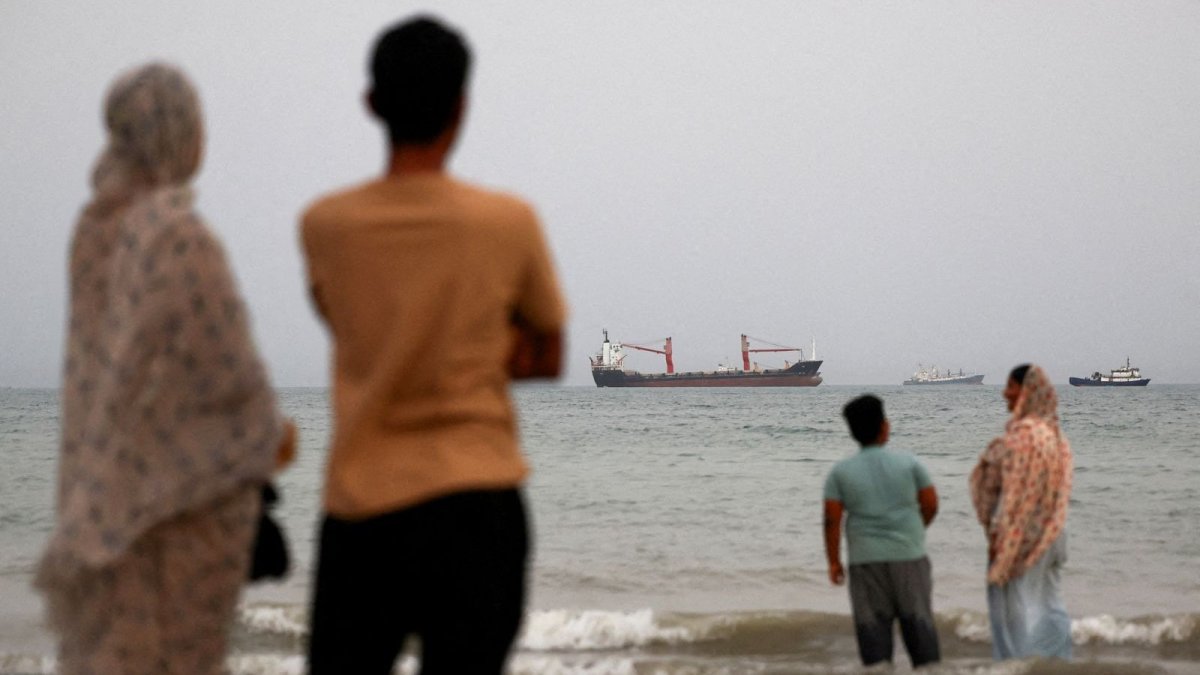
Tehran has answered months of American pressure over the Strait of Hormuz not with concessions but with a sweeping six-point demand list — including lifting the US naval blockade, withdrawing American forces from the region and compensating Iran for what it calls "two invasions and imposed wars." CNN's analysis suggests Tehran believes time and oil prices are on its side, not Washington's.
Tehran's Demands Extend Far Beyond the Waterway
The demands were issued Saturday, Aug. 8, by Mohammad Bagher Zolghadr, secretary of Iran's Supreme National Security Council, and reported by the Guardian. Alongside the call to lift the US naval blockade, Iran is demanding the withdrawal of US naval and air forces from the area surrounding Iran, full compensation for damages incurred from "two invasions and imposed wars" without any deductions, the unconditional lifting of all "unjust and illegal sanctions" imposed on the Iranian people, and a US commitment to never threaten Iran again.
The sixth demand breaks new ground: Iran wants to charge users for passage through the strait. That position transforms Tehran's posture from disruptor of shipping to toll-keeper of one of the world's most critical energy chokepoints — a shift with direct commercial implications for every tanker that transits the waterway.
CNN's analysis, published Aug. 9, noted the list "can't have surprised the White House." The analysis argues Iran is toughening its demands rather than capitulating under military and economic pressure, and that Tehran has likely taken notice of how many times President Trump has threatened major strikes before deciding not to follow through.
How Five Months of Hostilities Reshaped the Gulf
The standoff traces to Feb. 28, 2026, when the United States and Israel went to war with Iran and its regional allies after US-Israeli airstrikes killed several Iranian officials, including Supreme Leader Ali Khamenei.
Washington followed with a naval blockade on Iranian ports to intensify economic pressure on Tehran. Iran answered with its own effective blockade of the Strait of Hormuz, repeatedly attacking ships it accuses of attempting to circumvent its preferred route and seizing cargo vessels, including the Epaminondas.
Both blockades remain in place as of Aug. 9, meaning the waterway's status is not merely a diplomatic dispute but an active naval confrontation with commercial consequences for global energy markets.
A Waterway Carrying One-Fifth of the World's Oil
The stakes are anchored in the strait's outsize role in global energy flows. The waterway carries roughly one-fifth, or about 20 percent, of the world's seaborne oil, connecting Persian Gulf producers to markets across Asia, Europe and beyond.
Markets have already priced in the disruption. Brent crude jumped 65 percent in March 2026 alone, from roughly $76 to $126 per barrel, after Iran shut the strait in response to the US-Israeli strikes.
On Aug. 6, crude prices rose again after Iranian state news published a draft plan with restrictive conditions on ship traffic in the strait, according to CNBC. On Aug. 7, West Texas Intermediate September futures closed up 1.15 percent at $78.18 per barrel — a modest move, but a reminder that every statement from Tehran moves the barrel.
A Narrow Diplomatic Window Opens in Oman
Against that backdrop, a fragile diplomatic channel has emerged through Omani mediation. On Aug. 3, President Trump cited progress in negotiations when he canceled a threatened attack on Iran — but Tehran's foreign ministry said no current talks were under way with the United States, according to the New York Times.
By Aug. 4, CNN reported that Iran's goal in the talks with Oman is to set temporary arrangements, lasting up to three months, under which Iran would control a route through the critical waterway. On Aug. 5, Iran's foreign ministry spokesman, Esmail Baqaei, said progress had been made with Oman, including agreement on the shipping route's geographical coordinates, according to RFE/RL.
The same day, Axios reported that the US "eyes Strait of Hormuz deal 'today or tomorrow,'" while Trump said the reopening would happen "soon." On Aug. 6, Tehran's deputy foreign minister said Iran and Oman were close to finalizing a proposed framework for commercial shipping through the strait.
White House Wavers Between Leverage and Threats
The president's messaging has shifted rapidly across the week. On Aug. 5, as the Houthis claimed an attack on a Saudi oil tanker, Trump warned that Iran will be "hit very hard" if the strait is not open soon. On Aug. 6, he said the US holds "massive amounts" of leverage over Tehran.
By Aug. 9, Trump told Al Jazeera the United States is "only semi-negotiating" with Iran — a formulation that captures the ambiguity of a policy that simultaneously pursues a deal and threatens military action.
Vice President JD Vance said Washington will continue pressuring Iran while testing whether Tehran is willing to reach a long-term deal, Al Jazeera reported. The contrast between Vance's measured framing and Trump's threats reflects a broader uncertainty inside the administration about how to resolve the standoff.
Tehran's Calculus: A President Who Threatens but Hesitates
CNN's Aug. 9 analysis argues the hardening of Iran's position is no accident. Tehran has likely taken notice of how many times Trump has threatened major strikes before not following through on the threat, the analysis noted, giving Iran little incentive to compromise.
That reading is echoed by Robert Kimmitt, a former senior US official, who told Al Jazeera on Aug. 9 that the standoff shows the limits of military pressure alone. "No war has been won" by air power alone throughout history, Kimmitt said, and any US military role in an economic and diplomatic effort to bring Iran back to the table "must change."
The implication: Iran appears to calculate that patience, not capitulation, is the winning strategy — and the six-point demand list issued Aug. 8 reflects that confidence.
What a Three-Month Arrangement Would Actually Look Like
If the Omani-mediated framework is finalized, the most likely outcome is a temporary arrangement of up to three months in which Iran controls a designated shipping route through the strait, according to CNN's reporting.
Details remain scarce. Baqaei said the geographical coordinates of the route have been agreed, but the mechanics of Iranian control — how ships would be cleared, whether tankers would pay passage fees, and how disputes would be resolved — have not been publicly specified.
For shippers and insurers, the distinction between a temporary negotiated passage and a permanent settlement is material. A three-month arrangement would buy time but leave the strait's long-term status unresolved, with oil markets likely to remain sensitive to every announcement from Tehran, Washington and Muscat.
Regional Realignment: The Mecca Defence Pact
The Hormuz talks unfolded alongside a broader regional shift. On Aug. 8 — the same day Iran issued its demands — a trilateral "Mecca defence pact" was signed, according to Al Jazeera, signaling a realignment among regional powers as the Hormuz deal loomed.
The pact's terms were not detailed in the available reporting, but its timing underscores how interconnected the strait's fate is with the wider Gulf security architecture, suggesting regional states are positioning themselves for either outcome — a negotiated reopening or a prolonged confrontation.
As of Aug. 9, the Strait of Hormuz remains contested, one-fifth of the world's seaborne oil flows at risk, and the gap between Iran's demands and Washington's position appears as wide as ever. The coming days will test whether the Oman channel can convert three months of temporary arrangements into something more durable — or whether the pattern of threats and counter-demands resumes.
By Jessica Ali, Staff WriterThis article was produced with AI-assisted research and editorial support. Reporting is based on sources cited in the article.
What's Your Reaction?
 Like
1
Like
1
 Dislike
0
Dislike
0
 Love
0
Love
0
 Funny
0
Funny
0
 Wow
0
Wow
0
 Sad
0
Sad
0
 Angry
0
Angry
0

Editor-in-Chief at Global1.News. Atlanta-based journalist who cuts through the BS and tells it like it is. Lead anchor, host, and the voice you hear when the spin stops and the truth starts.












Comments (0)