
Russia Rejects Black Sea Ceasefire as Ukraine Grain Exports Collapse 76%
Folks. If you’re just waking up, grab a coffee. If you’re as fired up as I am, you already know what’s happening. The Black Sea — that narrow stretch of water that feeds hundreds of millions of people — just became the epicenter of a global food crisis. And Russia, once again, has slammed the door shut on peace. On Friday, Moscow flat-out rejected the idea of a ceasefire with Ukraine in the Black Sea. No truce. No "half-measures." No respite.
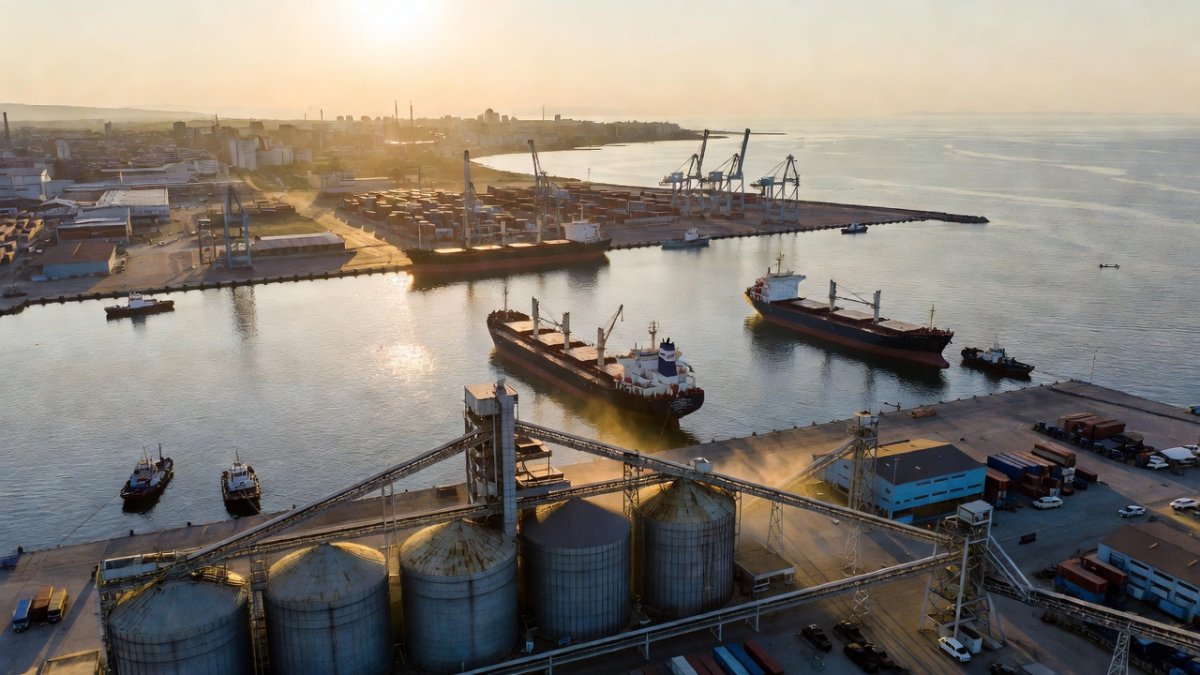
Folks. If you’re just waking up, grab a coffee. If you’re as fired up as I am, you already know what’s happening. The Black Sea — that narrow stretch of water that feeds hundreds of millions of people — just became the epicenter of a global food crisis. And Russia, once again, has slammed the door shut on peace.
On Friday, Moscow flat-out rejected the idea of a ceasefire with Ukraine in the Black Sea. No truce. No "half-measures." No respite. And while the diplomats were busy saying "nyet," the grain terminals were burning, the wheat prices were spiking, and the world’s most vulnerable nations were left wondering if their next shipment of bread is ever going to arrive.
This isn’t just another headline, folks. This is day 1,635 of a war that keeps finding new ways to hurt innocent people. And today, the weapon of choice is hunger.
The Story in One Paragraph
Here’s the deal, plain and simple: Ukraine, desperate to keep feeding the world, quietly floated a proposal through a third-party mediator to halt reciprocal strikes on civilian vessels in the Black Sea. It was a lifeline — a chance to reopen a crucial grain corridor and stop the bleeding. Turkey, the perennial peace-broker, even stepped up with formal proposals for a moratorium on military operations. But Russia, fresh off a devastating Ukrainian strike on its own prized port of Novorossiysk, said no. Moscow’s foreign ministry called the idea of a mutual truce "groundless." And now, with no grain vessels entering Ukraine’s Odesa ports since late July, Ukrainian grain exports have collapsed a staggering 76% year-on-year. The world is watching, and the world is scared.
Moscow's Message: 'No Grounds for Half-Measures'
Let’s get right to the source. Maria Zakharova, the Russian Foreign Ministry spokesperson, came out swinging on Friday. She said Moscow "sees no grounds" for a mutual truce with Ukraine in the Black Sea. And then she did what she always does — flipped the script. Zakharova accused Ukraine of "a deliberate policy aimed at destabilising civilian shipping in the Black Sea region to further escalate tensions and prolong the conflict."
Read that again, folks. Russia, which has been bombing Odesa’s ports for weeks, which has effectively blockaded Ukraine’s coastline, which has sent grain exports plummeting — is accusing Ukraine of destabilizing civilian shipping. It’s like an arsonist blaming the fire department for the smoke.
And if Zakharova’s rhetoric wasn’t enough, Foreign Minister Sergei Lavrov doubled down on August 14. He made it crystal clear that Russia is unwilling to accept any ceasefire that freezes the current frontline. No pause. No breathing room. No chance for Ukraine to rebuild or regroup. And in a particularly smug aside, Russian state media reported Lavrov saying that Ukraine and the West "are already starting to moan" about Russia’s harsher actions.
Moan? Folks, that’s not moaning. That’s the sound of a global food system cracking under the weight of Russian aggression.
The Strike That Shook the Grain Trade
Now, let’s talk about the elephant in the room — or rather, the explosion in the port. On August 12, Ukraine struck Novorossiysk. This isn’t just any port, folks. This is Russia’s largest Black Sea port, one of its most important grain export hubs, and a critical naval base. The strike hit hard. Three people were killed, including a child. At least 24 were wounded, according to regional Governor Veniamin Kondratyev.
And the damage wasn’t just human. Two grain terminals at Novorossiysk stopped operations immediately. A third site, United Grain Co.’s Novorossiysk Grain Plant, sustained serious damage — its loading gallery collapsed. The KSK terminal, a fourth site, was also hit. Wheat prices surged the moment the news broke. Because that’s what happens when you take out the infrastructure that feeds people.
Now, here’s where it gets really interesting. The Financial Times reported that Ukraine had actually halted drone strikes on oil tankers using the Novorossiysk port — at the request of US Vice President JD Vance, no less. President Volodymyr Zelensky personally called off the drone campaign against oil tankers in the Black Sea. It was a gesture. A concession. A sign that Ukraine was willing to de-escalate.
And how did Russia respond? By rejecting a ceasefire outright. By continuing to strike Odesa. By letting the grain rot in silos while the world waits.
Ukraine's Offer — and Why It Matters
Let’s be clear about what Ukraine was offering. This wasn’t a surrender. This wasn’t a capitulation. This was a targeted, pragmatic proposal to stop hitting civilian vessels in the Black Sea. A mutual pause. A chance for grain ships to move safely again. Ukraine floated this deal through a third-party mediator — an apparent attempt to reopen that crucial grain corridor that the world depends on.
And they weren’t alone. Turkey’s Foreign Minister Hakan Fidan has been working the phones. On August 8, in an interview with Anadolu news agency, Fidan called on both Russia and Ukraine to establish a mechanism for declaring a Black Sea ceasefire. Turkey presented Moscow and Kyiv with formal proposals for a moratorium on military operations in the Black Sea. Turkey, folks, has been the mediator in this conflict from day one. They brokered the original grain deal back in 2022. They know the stakes. And they were ready to do it again.
But Russia said no. And here’s the kicker — Ukraine has repeatedly called for a ceasefire after years of fighting. Russia says it wants a settlement, but any solution must involve Ukraine fully ceding four regions Moscow claims, as well as resolving the conflict's "root causes." Ukraine has rejected those demands. And so we’re stuck. Stuck in a cycle of strikes and counter-strikes, with the world’s food supply caught in the crossfire.
Grain Exports Are Collapsing
Now let’s talk numbers, because these numbers are terrifying. Ukrainian grain exports so far in August have tumbled 76% year-on-year. Let me say that again — 76%. That’s not a dip. That’s a cliff dive. And the agricultural sector is warning of vast consequences for the economy should this persist.
Why? Because Russia’s de facto blockade of Ukraine’s Black Sea ports in the Odesa region is working. No grain vessel has entered Ukraine’s Odesa ports since late July. Russia has been striking ports in the Odesa region in recent weeks, turning critical infrastructure into rubble. And without a safe corridor, the ships aren’t coming.
This isn’t just about Ukraine’s economy, folks. This is about the global supply chain. Ukraine is one of the world’s largest exporters of grain. When their exports collapse, prices spike. When prices spike, the poorest nations suffer first. And when the poorest nations suffer, we see instability, migration, and conflict. This is a domino effect, and Russia is happily pushing the first tile.
Global Food Security at Stake
Let’s take this global, because that’s where it matters. On Friday, Zelensky spoke with Egyptian President Abdel Fattah El-Sisi about the threat to food supplies caused by Russian strikes on cargo vessels in the Black Sea. And this wasn’t a hypothetical conversation. A Russian missile hit a civilian ship carrying wheat for Egypt. Wheat. For Egypt. One of the most import-dependent nations on Earth.
Zelensky called on the world to respond, emphasizing the importance of Ukraine's food exports to global security. And he’s right. This isn’t a regional dispute. This is a direct attack on the food security of Africa, the Middle East, and beyond. Nations that had nothing to do with this war are now facing the prospect of empty shelves and hungry children because Moscow refuses to allow grain to move.
And let’s not forget the irony. Ukraine is steadily exporting grains from its Black Sea ports under a wartime deal brokered last month. But that deal has also proven helpful to Russian farmers and the country’s cornerstone agriculture industry. So Russia benefits from the grain corridor — and then turns around and bombs it. It’s a cynical game, folks, and the chips are human lives.
The Bottom Line
So where do we go from here? Let’s be honest. Russia has no interest in a ceasefire. They’ve said it outright. Lavrov won’t accept a frozen frontline. Zakharova sees no grounds for a truce. And in August alone, Ukrainian drones have hit three Russian oil refineries, an airfield, and a warehouse for Russian shipping giant Wildberries. The strikes are escalating on both sides. The window for diplomacy is closing, and the world’s food supply is hanging in the balance.
The stakes couldn’t be higher. If this continues, we’re looking at a global food crisis that will dwarf anything we’ve seen in decades. The 2022 Black Sea Grain Initiative was a lifeline — and it collapsed. The 2025 truce efforts failed. And now, in 2026, we’re watching history repeat itself with even more devastating consequences.
But here’s the thing, folks. We can’t look away. We can’t let this become background noise. The world needs to hear this story. The world needs to know that Russia is weaponizing hunger. And the world needs to pressure every leader, every diplomat, every international body to find a way to get those ships moving again.
So do me a favor. Share this article. Talk about it at dinner. Call your representatives. Write to your newspapers. Because silence is complicity, and hunger is a weapon that kills long after the bombs stop falling.
Stay informed. Stay angry. Stay engaged. Because the Black Sea isn’t just a battleground — it’s the breadbasket of the world. And right now, it’s starving.
By Jessica Ali, Staff Writer
This article was produced with AI-assisted research and editorial support. Sources: Reuters, Financial Times, Al Jazeera, The Guardian, Meduza, Kyiv Post, Arab News, Ukrinform, US News.
What's Your Reaction?
 Like
0
Like
0
 Dislike
0
Dislike
0
 Love
0
Love
0
 Funny
0
Funny
0
 Wow
0
Wow
0
 Sad
0
Sad
0
 Angry
0
Angry
0

Editor-in-Chief at Global1.News. Atlanta-based journalist who cuts through the BS and tells it like it is. Lead anchor, host, and the voice you hear when the spin stops and the truth starts.












Comments (0)