
Mallett Slams 'Scandalous' World Cup Draw as Boks, All Blacks Face Early Clash
Mallett Slams 'Scandalous' World Cup Draw as Boks, All Blacks Face Early Clash Johannesburg — The euphoria of a 29-24 victory over the All Blacks at FNB Stadium is still settling, but the cold, hard reality of next year's Rugby World Cup in Australia has already cast a long shadow.

Mallett Slams 'Scandalous' World Cup Draw as Boks, All Blacks Face Early Clash
Johannesburg — The euphoria of a 29-24 victory over the All Blacks at FNB Stadium is still settling, but the cold, hard reality of next year's Rugby World Cup in Australia has already cast a long shadow. Former Springbok coach Nick Mallett has launched a blistering attack on the tournament draw, labelling it "scandalous" that the world's top two ranked teams are on a collision course to meet in the quarter-finals rather than the showpiece final.
Speaking on SuperSport's 'Final Whistle presents Side Entry' after the Boks' stirring 29-24 victory in Soweto on Saturday, Mallett did not hold back. The potential early meeting between South Africa and New Zealand—the two finalists from the 2023 World Cup—has ignited a firestorm of debate just days before the series finale in Baltimore.
Tags: Springboks, All Blacks, Nick Mallett, Rugby World Cup 2027, Victor Matfield, Dave Rennie, Rugby's Greatest Rivalry, FNB Stadium, Baltimore Test, World Rugby
A 'Scandalous' Injustice for the Game's Best
The sentiment from the SuperSport panel was unanimous, but it was Mallett who cut through the diplomatic niceties with characteristic directness. While legendary lock Victor Matfield expressed regret over the potential fixture, Mallett elevated the frustration to outright condemnation of the tournament's structure.
"It's a pity for me that we'll probably face each other in that quarter-final in the World Cup," Matfield said, to which Mallett responded with emphatic force: "It's scandalous; it's not a pity."
Matfield quickly concurred, framing the issue around the integrity of the competition. "It's the two best teams in the world; they should get to a final if they win all their games," he added, capturing the frustration of a nation that expects its heroes to be contesting silverware on the final Saturday, not the first knockout weekend.
How the Bracket Created a Potential Early Showdown
The mechanics of the expanded 24-team tournament in Australia are at the heart of this controversy. With a new Round of 16 stage introduced before the quarter-finals, the path to the title has become a minefield of bracket permutations that have, ironically, pitted the two giants against each other prematurely.
South Africa were drawn in Pool B alongside Italy, Georgia and Romania—a group that, on paper, offers a comfortable route to the knockout stages with Italy their toughest opposition. The All Blacks, meanwhile, find themselves in Pool A with hosts Australia, Chile and Hong Kong China, a group they are overwhelming favourites to top despite the presence of the Wallabies.
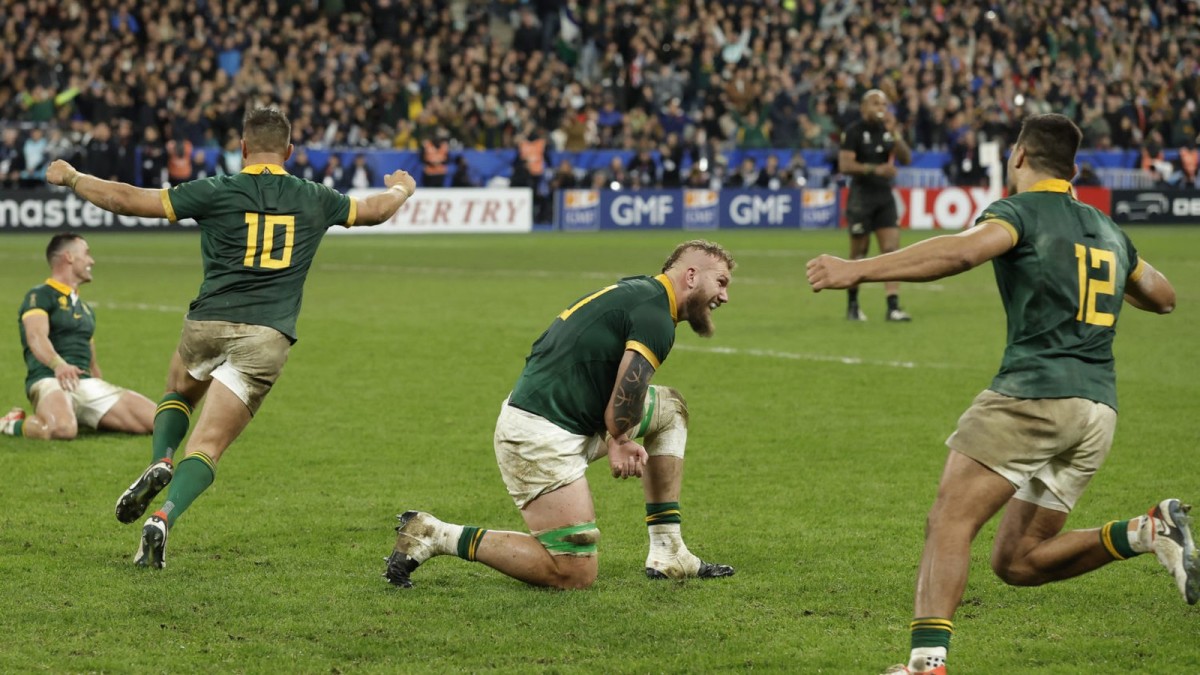
The trouble begins in the knockout bracket. Should both sides top their respective pools as expected, they would face third-place finishers from other groups in the Round of 16—encounters widely expected to be relatively straightforward. However, the winners of those two specific pairings are then hard-wired to meet in the quarter-finals, setting up a potential blockbuster that many believe should be reserved for the final.
The Rankings Promise That Never Materialised
What makes this particularly galling for South African supporters is the pre-draw narrative. Before the pools were set, world rankings were touted as holding the key to how teams would be seeded, and as the No 1-ranked side in the world, it was expected that South Africa would benefit handsomely from the system.
Yet, as The South African noted, "it didn't prove to be quite so simple." Despite being the top-ranked nation, the Springboks have been handed a bracket that could see them face their fiercest rivals a full two rounds before the final. The promise of a rankings advantage has evaporated into the reality of a potential quarter-final against the men in black.
World Rugby has defended the draw, pointing out that the seeding system was established well in advance and that all participating nations were fully aware of how the rankings would influence the pool compositions. But for Mallett and countless Bok fans, that defence rings hollow when the sport's two premier attractions are scheduled to cancel each other out prematurely.
The Weight of Expectation on the Boks' Shoulders
This is not merely an administrative gripe; it is a story about the weight of expectation on South African rugby. The Springboks are the defending champions, a team that has redefined the meaning of resilience and tactical brutality under Rassie Erasmus. The nation does not just hope for victory; it expects it, devouring this rivalry with an insatiable appetite.
The scenario is not guaranteed, of course. Both teams must first navigate their pools and win their Round-of-16 matches for the quarter-final to become a reality. But the probability is high enough that Planet Rugby has argued the structure risks removing the tournament's biggest potential fixture before the final, a scenario that would diminish the spectacle for neutrals and purists alike.
For South Africans, the Rugby World Cup is more than a tournament; it is a unifying force that transcends the sport itself. A potential title defence in Australia next year carries the hopes of a nation that sees the green and gold as a symbol of pride and transformation. The prospect of that journey ending in the last eight against New Zealand is almost too bitter to contemplate.
Rugby's Greatest Rivalry: The Here and Now
While the World Cup draw dominates the headlines, there is the small matter of a series to finish. This Saturday, the Springboks and All Blacks meet in Baltimore, Maryland, for the fourth and final Test of the inaugural 'Rugby's Greatest Rivalry' series—the first time these two nations will clash on American soil. The Boks currently lead 2-1 after a closely fought campaign that saw the All Blacks claim a comfortable win at Ellis Park before South Africa hit back in Cape Town and then edged the third Test 29-24 in Soweto.
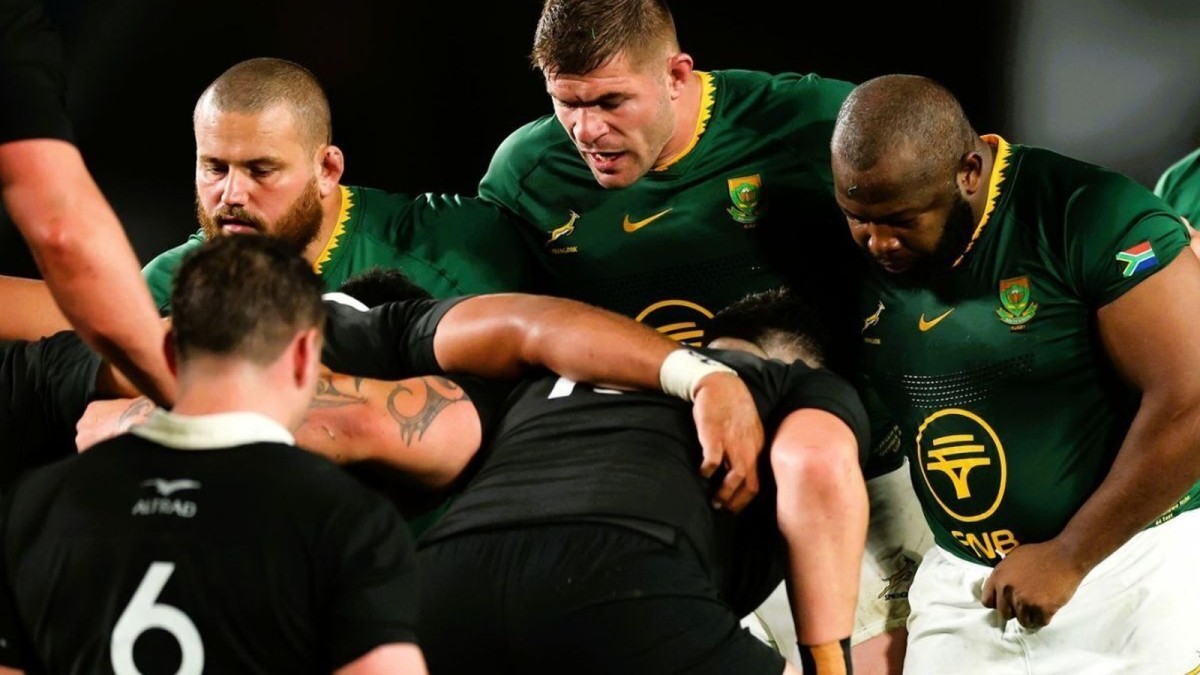
The Soweto crowd witnessed a performance of immense character, but the series has revealed a New Zealand side that is rapidly closing the gap under coach Dave Rennie. Matfield observed that the All Blacks are "catching up," noting a cultural shift within the group. "Something is happening there with the culture within the group. But they will be tested now. They haven't gone through losses," he warned.
Matfield also raised the tactical questions facing Rennie ahead of the Baltimore finale. "Will they make changes? Will they put some of the older guys back in? Do they really believe in the group, or do they stick with the same guys to try and get a win?" he asked, highlighting the selection dilemmas that could define the series result.
The All Blacks' Evolution Under Rennie
Mallett offered a deeper analysis of where the All Blacks stand, suggesting they are on the right track but still trailing the Boks in key areas. He noted that under previous coach Scott Robertson last year, "it sounded like there was a little of a breakdown between the Crusaders and other players. So they're definitely on the right track, but in that second half, it showed they were still a little bit behind us."
Mallett's tactical breakdown was forensic. He identified the potential returns of injured players like Scott Barrett and Brodie Retallick as crucial, while specifically highlighting the need for Tamaiti Williams. "They need Tamaiti Williams back, who's a very good loosehead prop—that'll help them," he said. He also pointed to George Bower as the All Blacks' best lineout jumper, noting their reliance on front-ball, and issued a stark warning: "You're not going to win a World Cup if you're conceding four or five penalties."
Perhaps most intriguingly, Mallett theorised that Rennie and his staff have accepted they cannot beat Erasmus' men in the power game or the scrum. Instead, they have chosen to invest in their own strengths, creating problems in phase play and playing off transitions. Planet Rugby described this new approach as New Zealand playing like 'Rassie's Cheetahs'—a fascinating tactical evolution that makes the Baltimore clash even more compelling.
A Final Word Before the Finale
As the rugby world looks ahead to Saturday's historic clash in Baltimore, the debate over the World Cup draw will continue to rage. Mallett's assessment of the current pecking order is clear: "My view is that they are the top two in the world at the moment, and we can beat anyone. In fact, we'd be very disappointed to lose to anyone at the moment, apart from the All Blacks."
That statement encapsulates the paradox. The Boks fear no one, yet they respect the All Blacks above all others. A World Cup quarter-final between these two titans would be a spectacle of immense proportions, but it would rob the tournament of its most anticipated final. For now, the focus shifts to Baltimore, where the Boks have a chance to stamp their authority on this rivalry before the long road to Australia begins.
This article was produced with AI-assisted research and editorial support. Sources: SARugbyMag, The South African, Planet Rugby, Briefly, WalesOnline (9 September 2026).
By Dante Williams, Staff Writer
What's Your Reaction?
 Like
0
Like
0
 Dislike
0
Dislike
0
 Love
0
Love
0
 Funny
0
Funny
0
 Wow
0
Wow
0
 Sad
0
Sad
0
 Angry
0
Angry
0

Breaking News and Investigations Correspondent at Global1.News. Based in London, covering global breaking news, security, and investigative stories. Known for digging deeper and connecting the dots across continents.














Comments (0)