
Tamil Nadu Backs NEET Exemption as UG Counselling Opens
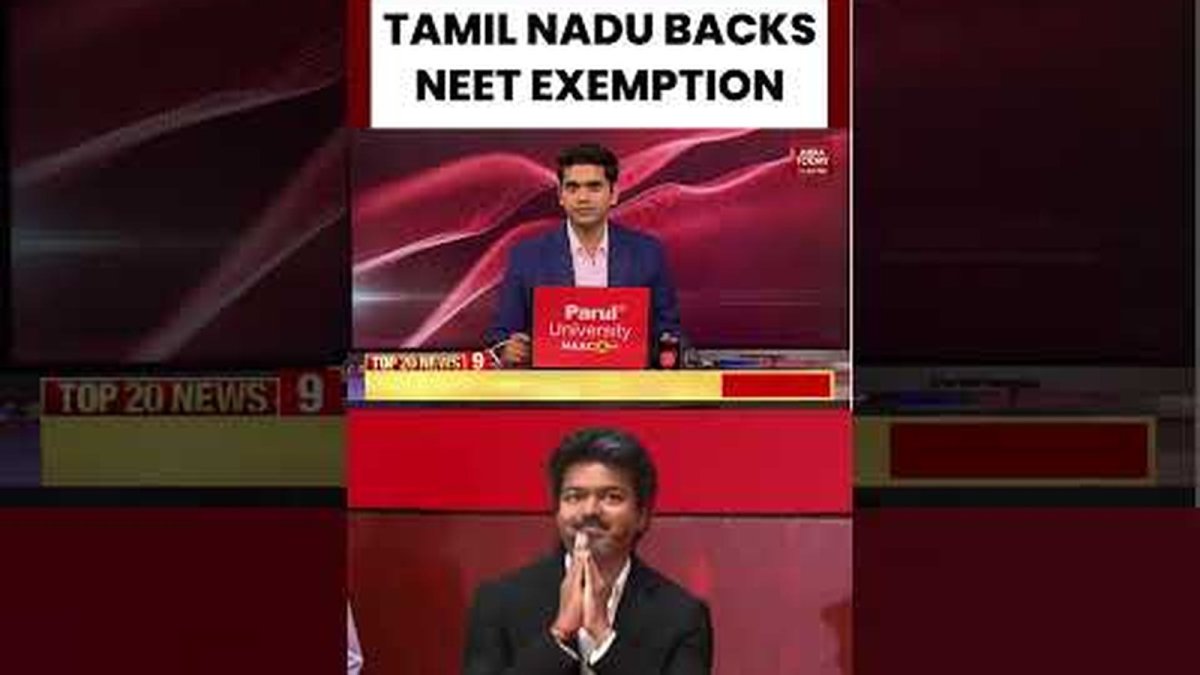
The counselling clock is ticking in Tamil Nadu. As the Directorate of Medical Education and Research (TNMESC) releases the provisional NEET UG 2026 rank list and registration opens on August 13, the state government has formally thrown its weight behind a legislative push to scrap the national entrance test altogether.
The counselling clock is ticking in Tamil Nadu. As the Directorate of Medical Education and Research (TNMESC) releases the provisional NEET UG 2026 rank list and registration opens on August 13, the state government has formally thrown its weight behind a legislative push to scrap the national entrance test altogether. The move, backed by a unanimous Assembly resolution on August 11, sets up a direct constitutional confrontation with the Union government over who controls medical admissions in India's federal structure.
At stake are 641 seats under the state's signature 7.5% government-school quota, 537 MBBS and 104 BDS seats, and the future of nearly 3,000 MBBS aspirants across Tamil Nadu's medical colleges. The state argues that NEET, as currently administered, is a social justice failure that penalises rural, Tamil-medium students while enriching coaching centres. The Centre, for its part, has signalled a possible temporary reprieve via ordinance, but the state is demanding a permanent legislative fix.
Tamil Nadu's NEET Rebellion Intensifies: 641 Quota Seats, 3,225 Accepted Applications, and a Unanimous Assembly Resolution as UG Counselling Opens
Chennai, Tamil Nadu – August 12, 2026 — The Tamil Nadu government has formally backed an exemption from NEET for undergraduate medical admissions, just one day after the state Assembly unanimously passed a resolution urging the Union government to abolish the test. The development comes as TNMESC released the provisional rank list for the 2026 counselling cycle, with registration opening on August 13 at tnmedicalselection.net.
The Counselling Clock: Rank Lists Out, Registration from August 13
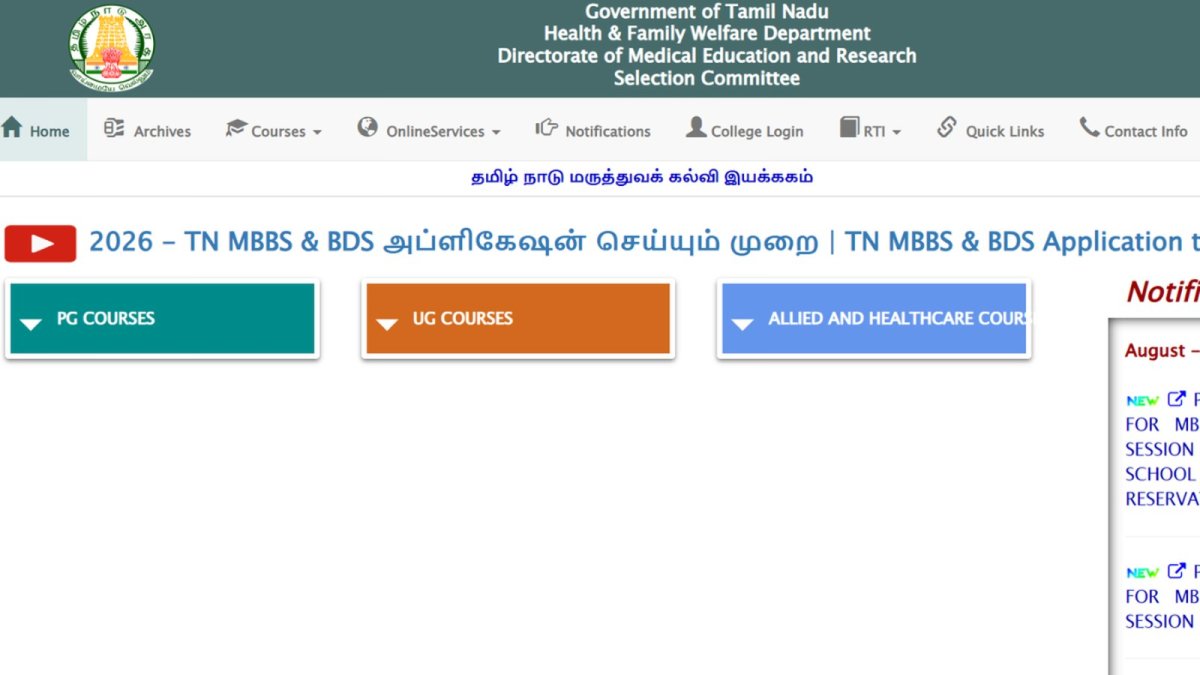
TNMESC published the provisional NEET UG 2026 counselling rank list on August 11, covering government school students under the 7.5% special quota, the government quota, and the management quota. The top general-category ranker is Venkatapathy Velayutham from Villupuram with 705 NEET marks, followed by Srinika B from Pudukkottai with 700 marks, and Sudar from Virudhunagar with 696 marks. In the 7.5% government-school quota category, Dinesh from Nagapattinam topped the list.
The numbers behind this cycle are substantial. A total of 641 seats are available under the 7.5% special quota — 537 MBBS and 104 BDS seats. TNMESC received 4,860 applications under the quota, of which 3,225 were accepted. Registration for counselling begins August 13, and the state's roughly 3,000 MBBS seats across government and private colleges will be filled through this process. The 7.5% horizontal quota for government school students remains a cornerstone of Tamil Nadu's affirmative action framework, designed to channel rural and economically weaker students into medical education.
Why Tamil Nadu Is Backing the Exemption
The Assembly resolution, moved by State Health Minister Dr K G Arunraj on August 11, argues that NEET undermines social justice and equality. The text specifically cites the adverse impact on rural and socio-economically disadvantaged students, particularly those educated in Tamil. It criticises the dependence on expensive coaching centres, which the state says skews admissions toward urban, affluent candidates.
The resolution also points to repeated question-paper leaks and irregularities, including the cancellation of NEET-UG 2026 and its re-conduction. This is not a new position. The Tamil Nadu Assembly unanimously passed Bill No 43 of 2021 — the Tamil Nadu Admission to Undergraduate Medical Degree Courses Bill, 2021 — to exempt the state from NEET. That bill has not received presidential assent for over 1,400 days. In November 2025, the state government moved the Supreme Court over the President's withholding of assent, arguing that the delay violates constitutional federalism.
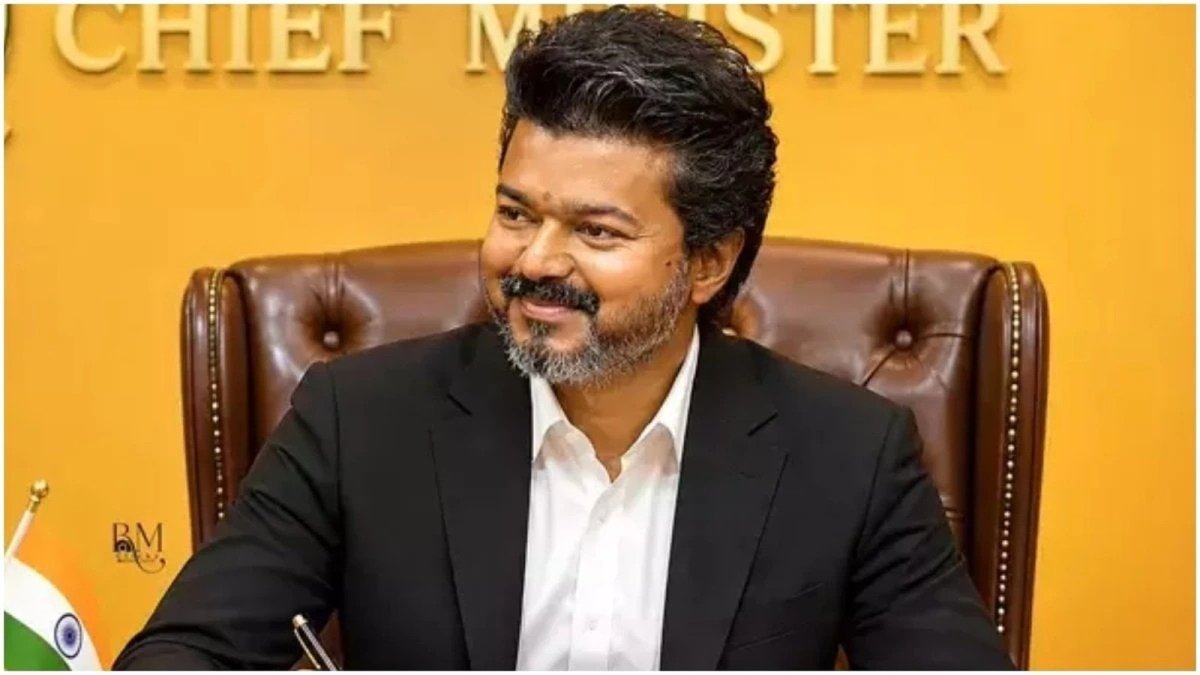
Chief Minister C Joseph Vijay (TVK) has been publicly pressing the issue. On August 2, 2026, he urged the Centre to abolish NEET-based admissions and permit states to fill seats based on Class 12 marks. At a NITI Aayog meeting on June 13, 2026, Vijay also sought a second AIIMS for Tamil Nadu in Coimbatore, linking infrastructure demands with the NEET exemption push.
The Ordinance Question: Centre's Position and the State's Next Move
Union Finance Minister Nirmala Sitharaman has indicated that a temporary NEET exemption for Tamil Nadu is possible. Her stated condition: the state would need to pass an ordinance. She noted that such an exemption would help rural students gain admission to government medical colleges. This is a significant shift from the Centre's earlier stance, which had defended NEET as a uniform national standard.
Former Chief Minister and DMK leader M K Stalin had earlier urged the Centre on May 15, 2026, to exempt NEET-UG for the 2026-27 academic year and allow states to admit students on qualifying-exam marks. Stalin proposed an ordinance route as well. The current Assembly resolution goes further, demanding amendments to the National Medical Commission Act, 2019; the National Commission for Indian System of Medicine Act, 2020; and the National Commission for Homoeopathy Act, 2020.
The state's legal strategy is now multi-pronged: the pending Supreme Court case over the 2021 bill, the new Assembly resolution, and the Chief Minister's direct appeals to the Centre. The ordinance route, if pursued, would require the state to pass a fresh law and then secure presidential assent — a process that has already failed once.
The 2026 Paper-Leak Crisis and the Trust Deficit
The 2026 NEET controversy has fundamentally altered the political landscape. NEET-UG 2026 was cancelled and re-conducted after a paper leak. A CBI probe is underway, with five arrests made in the paper-leak case. Union Education Minister Dharmendra Pradhan resigned on July 25, 2026, following nationwide student protests. The National Testing Agency (NTA) has since published final answer keys for the re-conducted exam, but the damage to public trust is evident.
Tamil Nadu's resolution explicitly references these irregularities as grounds for exemption. The state argues that a test that cannot guarantee integrity cannot be the sole gateway to medical education. This is not merely a Tamil Nadu problem; the leak affected students across India, and the NTA's handling of the crisis has drawn criticism from multiple state governments.
The trust deficit is compounded by the coaching-centre economy. Tamil Nadu's resolution criticises the dependence on expensive coaching, which it says places rural and Tamil-medium students at a structural disadvantage. The state's preference for Class 12 marks as the admission criterion is rooted in the belief that the state board examination is a more equitable and transparent measure of student ability.
What This Means for India's Medical Education Federalism
The Tamil Nadu push is a direct challenge to the centralising tendency of Indian medical education policy. NEET was introduced under the National Medical Commission Act, 2019, which replaced the earlier MCI framework. The Act's uniform national test was intended to standardise admissions, but Tamil Nadu argues it has created a new form of exclusion.
The constitutional question is stark: can a state opt out of a central law that governs professional education? The 2021 bill, pending for over 1,400 days, tests this question. The Supreme Court case filed in November 2025 will likely determine whether presidential assent can be withheld indefinitely, or whether states have a enforceable right to legislate on education under the Concurrent List.
The implications extend beyond Tamil Nadu. If the state succeeds, other states with similar concerns — particularly those with strong state-board systems and rural student populations — may follow. The NITI Aayog meeting on June 13, 2026, where Vijay raised both NEET and AIIMS Coimbatore, suggests the issue is now part of the broader fiscal and federal bargaining between states and the Centre.
Expert Perspectives: Educators and Administrators Weigh In
Educators in Tamil Nadu are divided on the exemption but united on the need for reform. Supporters of the state's position argue that the 7.5% quota has successfully diversified medical college intake, and that Class 12 marks would be a fairer criterion. They point to the 3,225 accepted applications under the quota as evidence of demand from government school students who might otherwise be excluded.
Administrators, however, caution that the logistics of switching to Class 12 marks mid-cycle would be complex. The counselling process for 2026 is already underway, with rank lists published and registration opening August 13. Any change would require the Union government to amend the NMC Act, a process that cannot be completed before the current admission cycle ends.
The state's own data shows the scale of the challenge. With 641 quota seats and 4,860 applications received, the competition ratio under the quota is roughly 7.6 applicants per seat. Under the general category, the top ranker scored 705 marks, indicating a highly competitive field. The state's argument is not that NEET is easy, but that it is structurally biased.
The Bottom Line
Tamil Nadu has moved from symbolic opposition to concrete legislative and legal action. The Assembly resolution of August 11, the pending Supreme Court case, and the Chief Minister's public advocacy form a coordinated strategy. The Centre's willingness to consider a temporary ordinance-based exemption suggests that the political cost of refusing is rising, particularly after the 2026 paper-leak crisis and the resignation of the Union Education Minister.
For Indian students, the stakes are immediate: the 2026 counselling cycle will proceed under NEET, but the state's push could reshape the 2027 cycle. For taxpayers, the question is whether the state's demand for a second AIIMS in Coimbatore and its NEET exemption are linked fiscal and educational demands. For the federal structure, the outcome will define whether states have meaningful autonomy in professional education or whether the Centre's uniform standards prevail.
The counselling clock is running, but the constitutional clock is ticking faster. Tamil Nadu has placed its bet on Class 12 marks and state autonomy. The Supreme Court and the Union government will now decide whether that bet pays off.
— By Dr. Raj Patel, Staff Writer
This article was produced with AI-assisted research and editorial support. Reporting is based on sources cited in the article.
What's Your Reaction?
 Like
0
Like
0
 Dislike
0
Dislike
0
 Love
0
Love
0
 Funny
0
Funny
0
 Wow
0
Wow
0
 Sad
0
Sad
0
 Angry
0
Angry
0

India/South Asia Correspondent at Global1.News. Analytical voice with a background in science and health journalism. Based in New Delhi, covering Indian politics, education, healthcare, technology, and policy. Breaks down complex data into clear, actionable reporting.














Comments (0)