
Surat Doctor's Suicide: 4 Resident Doctors Suspended, FIR Filed
The death of Dr Harsh Subhashchandra Pandya, a 29-year-old first-year postgraduate microbiology student at Government Medical College (GMC) Surat, has exposed a systemic failure that extends far beyond one hostel room.
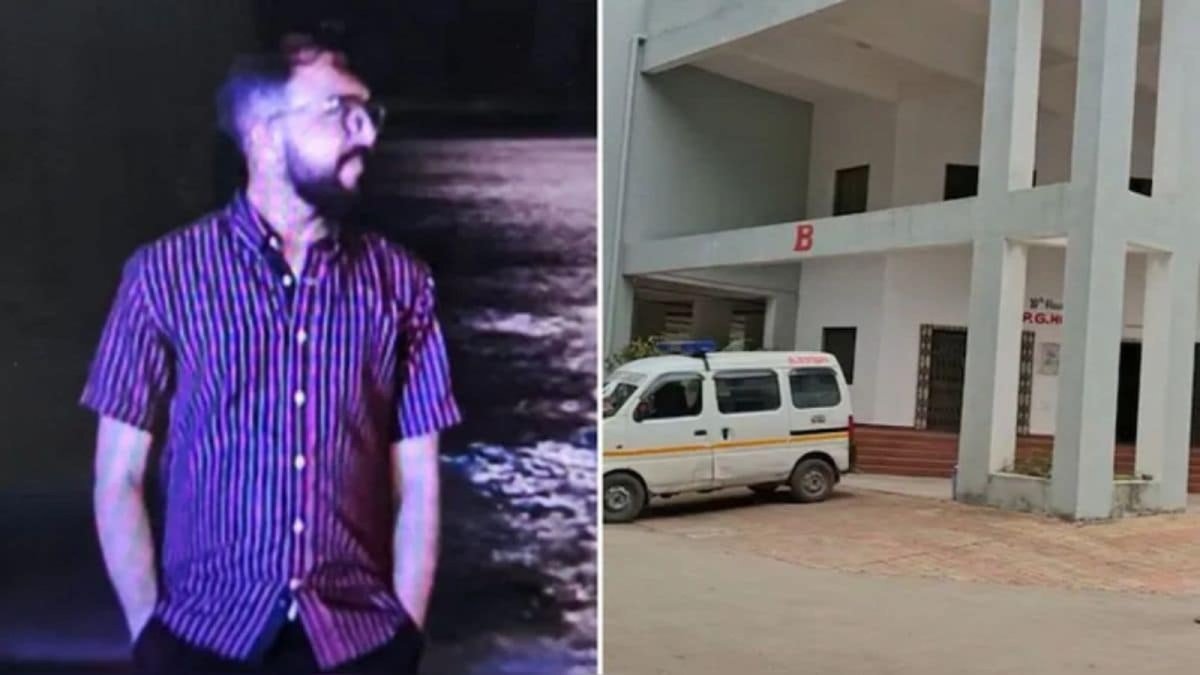
The death of Dr Harsh Subhashchandra Pandya, a 29-year-old first-year postgraduate microbiology student at Government Medical College (GMC) Surat, has exposed a systemic failure that extends far beyond one hostel room. Found hanging from a ceiling fan in his Boys PG Hostel room on the morning of August 9, 2026, Pandya's death has triggered the suspension of four senior resident doctors, an FIR under three sections of the Bharatiya Nyaya Sanhita (BNS), and a state-ordered inquiry — all unfolding precisely as the National Medical Commission's (NMC) mandated anti-ragging week begins on August 12.
Surat Doctor's Suicide: Four Resident Doctors Suspended, FIR Filed as NMC Data Shows 31% of PG Students Report Suicidal Thoughts
Surat, Gujarat – August 12, 2026 — The case against Dr Nirali Vasave, Dr Anuj Maheshwari, Dr Dixitaben Gevriya, and Dr Heenaben Bhoot — all second-year residents at GMC Surat — was registered on Tuesday, August 11, at Khatodara police station. The FIR, filed by GMC Dean Dr Jayesh Brahmbhatt, invokes Sections 127(2) (wrongful confinement), 352 (intentional insult), and 54 (abettor present at the scene) of the BNS. The four were suspended for six months by the college's anti-ragging committee on Monday, August 10, following an eight-hour joint investigation that found they had systematically harassed ten first-year residents of the microbiology department, including Pandya.
A Pattern of Humiliation Documented in an Eight-Hour Inquiry
The college's anti-ragging committee, anti-ragging squad, and college council concluded their joint investigation on August 10, producing findings that paint a damning picture of the power dynamics within the microbiology department. According to In-charge Superintendent Dr Parul Vadgama, the seniors allegedly told Pandya: "You are our servant. If madam has called you, you have to go immediately, no matter what work you are doing." On one occasion, a senior reportedly reprimanded him for nearly an hour in front of all residents, demanding, "Why don't you do this? Why don't you do that?"
The committee found that the four accused had subjected first-year residents to verbal abuse, public humiliation, and a ritual of being made to sit in a room for two hours each while being insulted and called "servants." Critically, the investigation noted that college rules explicitly prohibit second-year residents from assigning tasks to first-year residents — a rule the accused allegedly violated routinely. The committee also found that the seniors lodged false complaints with faculty, claiming juniors were not performing their duties, a tactic that weaponised the faculty evaluation system against the juniors.
Show-cause notices were issued to four faculty members: Microbiology HOD Dr Sumaiya Mulla, Dr Sangeeta Rajde, Dr Yogita Mistry, and Dr Latika Purohit. The notices signal that the college administration recognises the role of faculty oversight — or the lack thereof — in enabling this environment, though no formal disciplinary action has been announced against them as of this report.
The Human Cost: A Family's Loss and a Father's Testimony
Pandya, a native of Modasa in Aravalli district, was the only son of a surgeon father. He had been engaged approximately six months ago. His father told investigators that Pandya had mentioned problems with senior doctors — a disclosure that, in hindsight, was a cry for help that went unheeded by the institution.
The sequence of events leading to his death is stark. Pandya failed to report for duty on Saturday, August 8. Fellow doctors could not enter his room in the Boys PG Hostel (Room 1004), and security staff were eventually called. He was found hanging from the ceiling fan on the morning of Sunday, August 9, and was rushed to the civil hospital where he was declared dead. A forensic post-mortem was conducted. Police have seized Pandya's phone and laptop, and an FSL team will examine his hostel room and belongings. The family suspects foul play, a position that investigators have not ruled out.
The tragedy is not an isolated incident at this institution. GMC Surat has seen approximately five cases of suicides and suspicious deaths of junior doctors in the past three to four years. This pattern suggests a systemic issue within the institution's postgraduate training environment, not merely the actions of four individuals.
National Data: A Mental Health Crisis Among India's Resident Doctors
The Surat case must be contextualised within a broader national crisis. An NMC National Task Force survey — covering 25,590 undergraduate students, 5,337 postgraduate students, and 7,035 faculty members — found that 31.23 percent of PG students had suicidal thoughts in the previous year, and 4.4 percent attempted suicide. Among undergraduate students, 27.8 percent reported a mental health condition, and 16.2 percent had suicidal thoughts.
Perhaps more telling are the help-seeking behaviours. Nearly 41 percent of PG students felt uncomfortable seeking help, and 44 percent refrained due to privacy concerns. A striking 36.4 percent lacked adequate stress-management skills, and 18.2 percent perceived their mentors as unsupportive. These numbers explain why a young doctor like Pandya — facing daily humiliation from seniors — may have seen no institutional pathway for recourse.
The NMC's "Prevention and Prohibition of Ragging in Medical College and Institutions Regulations 2021" (dated 18.11.2021) mandates the very anti-ragging committees and squads that conducted the Surat investigation. The regulations require institutions to maintain vigilance, but the data suggests that compliance is procedural rather than substantive. The fact that this case broke exactly as the UGC and NMC direct all institutions to observe anti-ragging week (August 12-18) is a bitter irony that regulators cannot ignore.
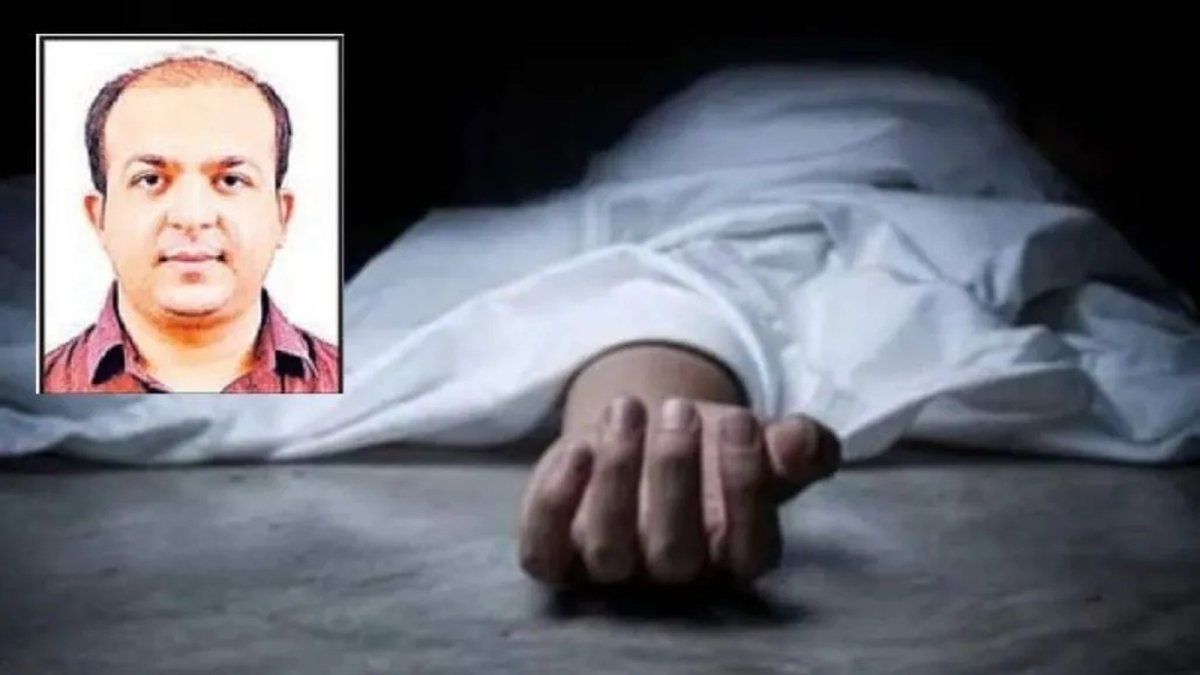
Legal and Regulatory Response: From BNS Sections to State Intervention
Gujarat Health Minister Praful Pansheriya has ordered an internal inquiry into all aspects of the case, including ragging. His appeal to students — urging them to contact their Dean, College Director, the Minister, or the State Government rather than take an extreme step — acknowledges the failure of existing reporting mechanisms. When a student feels the only recourse is suicide, the institutional safety net has already failed.
The legal framework has evolved since the landmark Payal Tadvi case of 2019, when a 26-year-old PG doctor at BYL Nair Hospital in Mumbai died by suicide on May 22, 2019, after alleged ragging and casteist abuse by three senior doctors who were subsequently arrested. That case remains a cornerstone of India's anti-ragging jurisprudence, yet six years later, the same patterns persist. The BNS sections invoked in Surat — 127(2) for wrongful confinement, 352 for intentional insult, and 54 for abettor presence — reflect a legal system attempting to criminalise behaviour that has long been normalised in medical hierarchies.
What This Means for Indian Medical Education and Patient Care
The implications extend beyond the four suspended doctors and the faculty members served show-cause notices. India's medical education system produces over 100,000 doctors annually, and the postgraduate training period is where clinical competence and professional ethics are supposedly forged. When that training environment is toxic, the consequences are twofold: junior doctors suffer psychologically, and the quality of patient care deteriorates as residents operate in fear rather than in a learning environment.
The NMC's own data — showing that 36.4 percent of PG students lack stress-management skills and 18.2 percent perceive mentors as unsupportive — suggests that the regulatory framework has not translated into institutional culture change. The Surat case demonstrates that even when anti-ragging committees exist and function (the eight-hour investigation was thorough), the damage is done long before the inquiry begins. Prevention, not post-mortem investigation, is the unmet need.
For taxpayers funding government medical colleges like GMC Surat, this case raises questions about accountability. The institution has seen five suicides or suspicious deaths of junior doctors in three to four years. Each death represents a trained physician lost to the public healthcare system — a system already grappling with doctor shortages, particularly in specialities like microbiology that are critical for diagnostic capacity.
The Bottom Line
The death of Dr Harsh Pandya is not merely a tragedy; it is a data point in a national pattern of institutional failure. With 31.23 percent of PG students reporting suicidal thoughts and 4.4 percent attempting suicide, the NMC's own survey establishes that the problem is systemic. The suspension of four doctors and the FIR under BNS Sections 127(2), 352, and 54 are necessary but insufficient responses. Until medical colleges treat anti-ragging compliance as a matter of patient safety and public health — not just regulatory paperwork — the cycle will continue. The anti-ragging week that begins today should be a moment of reckoning, not ritual observance. For every Harsh Pandya who dies, there are hundreds of junior doctors silently enduring the same humiliation, waiting for an institution to listen before it is too late.
— By Dr. Raj Patel, Staff Writer
This article was produced with AI-assisted research and editorial support. Reporting is based on sources cited in the article.
What's Your Reaction?
 Like
0
Like
0
 Dislike
0
Dislike
0
 Love
0
Love
0
 Funny
0
Funny
0
 Wow
0
Wow
0
 Sad
0
Sad
0
 Angry
0
Angry
0

India/South Asia Correspondent at Global1.News. Analytical voice with a background in science and health journalism. Based in New Delhi, covering Indian politics, education, healthcare, technology, and policy. Breaks down complex data into clear, actionable reporting.














Comments (0)