
Syria says discussions underway on joining Mecca pact
Syrian motivations for a Mecca pact Shaibani’s remarks underscore a strategic calculus that places Syria’s future security within a broader, multilateral architecture.
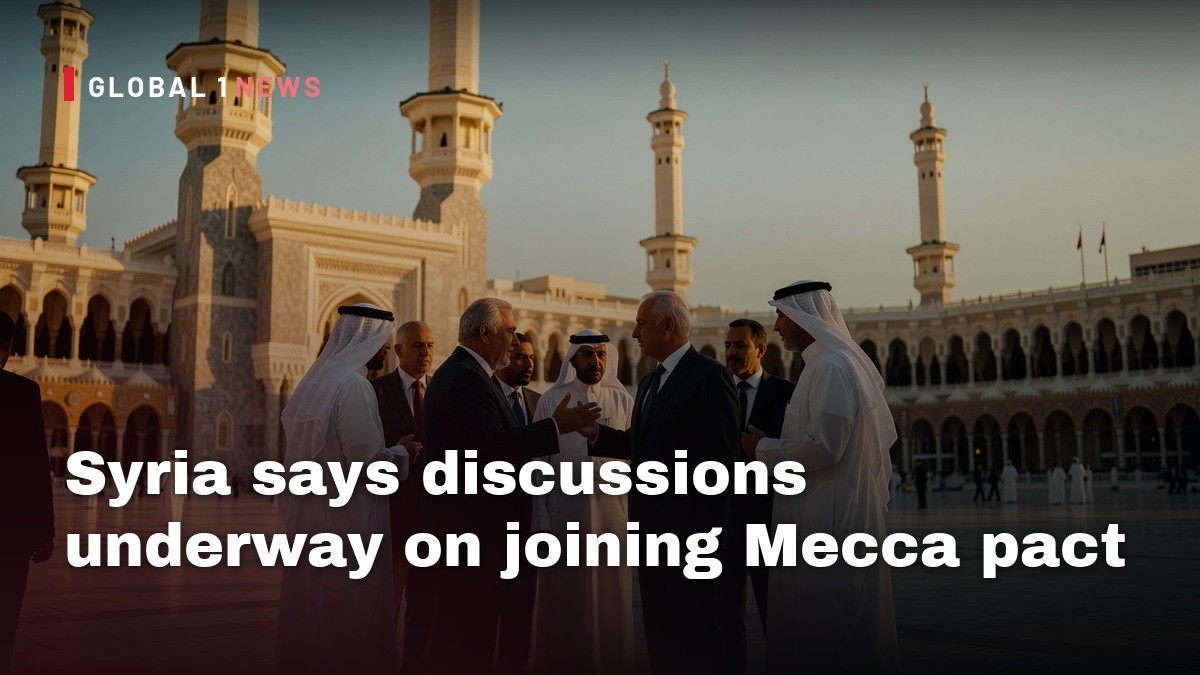
At the Manama Dialogue 2026, Syrian Foreign Minister Asaad al‑Shaibani signalled a potential shift in Damascus’s regional alignment by announcing that “discussions are currently underway to evaluate Syria’s entry into the Mecca alliance.” The Mecca Joint Defense Agreement, already binding Turkiye, Pakistan and Saudi Arabia, is presented by the minister as a framework that could bolster collective deterrence and stability across a region that, in his words, is “in greater need than ever.” While the announcement itself is brief, its implications reverberate through a landscape scarred by war, occupation and a fragile peace that rests on contested borders and unresolved grievances.
Syrian motivations for a Mecca pact
Shaibani’s remarks underscore a strategic calculus that places Syria’s future security within a broader, multilateral architecture. By describing Damascus as an “integral” part of regional security, the minister frames Syrian participation not as a concession to external powers but as a contribution to a collective effort to safeguard stability. The language of “support[ing] any framework aimed at protecting regional stability” suggests that Syria is seeking to re‑enter diplomatic circles from which it was largely excluded after the fall of the Assad regime in December 2024.
Beyond the diplomatic overture, the minister’s emphasis on “joint deterrence and defense systems” reflects a desire to counterbalance the persistent threat posed by Israel’s military actions. In the same speech, Shaibani highlighted that “our territory has been subjected to more than 1,000 Israeli attacks in less than two years, killing dozens,” a stark reminder of the daily security challenges Syria faces. By aligning with the Mecca pact, Damascus hopes to secure a network of allies capable of providing both political backing and, potentially, material support in the event of further escalations.
The Mecca alliance’s existing composition
The Mecca Joint Defense Agreement currently unites Turkiye, Pakistan and Saudi Arabia. Visual evidence of the pact’s public promotion appears in a digital screen on the Republic of Turkiye Directorate of Communications building in Ankara, where campaign content for the agreement was displayed on 10 August 2026. This public display signals the alliance’s intent to project a cohesive security front, one that is increasingly attractive to states seeking to bolster their strategic depth.
Each member brings distinct capabilities: Turkiye’s proximity to the Eastern Mediterranean, Pakistan’s sizable military and strategic ties to both the United States and China, and Saudi Arabia’s financial resources and influence over Gulf security dynamics. By potentially adding Syria, the alliance would extend its geographic reach into the Levant, creating a contiguous bloc that could more effectively coordinate border security, intelligence sharing and joint deterrence measures.
Syrian grievances and international law
Central to Syria’s appeal for inclusion is the unresolved status of the Golan Heights and the broader Syrian‑Israeli border. Shaibani reiterated that “the Golan Heights is Syrian territory and that UN Security Council Resolution 497 serves as the reference on this matter.” The minister also called for a return to the lines established before the Israeli offensive on 8 December 2024 and the full implementation of the 1974 Disengagement Agreement, which created a buffer zone that Israel has since violated, according to United Nations assessments.
By invoking these legal instruments, the Syrian foreign minister places the Mecca pact within a framework of international law, suggesting that any collective security arrangement should respect the sovereignty of its members. The reference to UN resolutions and historic agreements underscores a narrative that Syrian participation would be anchored not merely in geopolitical convenience but in a commitment to uphold the principles of state sovereignty and territorial integrity.
The Yemen factor
In the same session, Shaibani addressed the conflict in Yemen, reaffirming “Syria’s support for the Yemeni government in restoring its sovereignty and stability across the country.” While the Syrian‑Yemeni connection may appear peripheral to the Mecca pact, it aligns with the broader regional security agenda championed by the alliance. Saudi Arabia, a principal member of the pact, has been a leading actor in the Yemeni war, and Turkiye has also expressed concern over the humanitarian crisis there.
Syrian endorsement of the Yemeni government signals a willingness to cooperate on issues that extend beyond immediate border concerns, potentially opening channels for joint diplomatic initiatives or coordinated humanitarian assistance. This stance also reinforces the narrative that Syria, despite its internal challenges, remains a stakeholder in the stability of the wider Middle East.
Israel’s ongoing attacks and the security calculus
Shaibani’s speech highlighted a grim statistic: “more than 1,000 Israeli attacks” on Syrian territory within a two‑year span, resulting in dozens of civilian deaths. He questioned how “calls for border control and placing weapons exclusively under state control” could be justified while Syrian sovereignty is “violated and targeted on a daily basis.” This rhetorical framing positions Israel as a destabilising factor that undermines any collective security framework that excludes Syrian concerns.
The frequency of these attacks, as reported by the Syrian foreign ministry, underscores the urgency with which Damascus seeks external guarantees. Inclusion in the Mecca pact could provide a diplomatic lever to press Israel to respect the 1974 disengagement lines and UN resolutions, or at the very least, to ensure that any future security arrangements consider Syrian red lines.
Potential challenges to Syrian accession
While the prospect of Syria joining the Mecca alliance appears strategically attractive, several hurdles remain. First, the alliance’s existing members must reconcile their own relations with Israel and the United States. Turkiye, for instance, maintains a complex balancing act between its NATO commitments and regional ambitions. Pakistan’s defence posture is heavily influenced by its strategic partnership with the United States, which may view Syrian inclusion—especially given the ongoing Israeli‑Syrian tensions—as a complicating factor.
Second, the alliance must address the practicalities of integrating a war‑torn state whose military infrastructure has been severely degraded since the fall of the Assad regime. The minister’s call for “joint deterrence and defense systems” implies a desire for shared capabilities, yet the capacity of Syria to contribute meaningfully to such systems remains uncertain. Finally, the alliance will need to manage the diplomatic sensitivities surrounding the Golan Heights, ensuring that any collective security framework does not inadvertently legitimize Israel’s continued presence in the buffer zone.
Human cost and the way forward
Beyond the diplomatic chessboard, the human toll of the ongoing conflict looms large. The Syrian minister’s reference to “dozens” of deaths from Israeli attacks underscores a reality in which civilian lives are caught in a perpetual cycle of violence. For families in Daraa, Aleppo and the Golan Heights, the prospect of Syria joining a regional defence pact offers a glimmer of hope that international mechanisms might finally hold violators accountable.
As the Mecca pact deliberates Syria’s potential entry, the international community must keep the human dimension at the forefront. Any agreement that seeks to enhance regional stability must be anchored in respect for international law, guarantee the protection of civilians and provide mechanisms for accountability when violations occur. The coming weeks at the Manama Dialogue and subsequent diplomatic corridors will reveal whether the Mecca alliance can evolve from a symbolic security arrangement into a genuine guarantor of peace for a region that has endured too many years of bloodshed.
This article was produced with AI-assisted research and editorial support. Reporting is based on the source material cited below. Sources: Middle East Monitor; middleeastmonitor.com; Global1.News (02 November 2026).
By Fatima Al-Rashid, Staff Writer
What's Your Reaction?
 Like
0
 Dislike
0
 Love
0
 Funny
0
 Wow
0
 Sad
0
 Angry
0
Gulf/MENA Correspondent at Global1.News. Based in Doha, covering Gulf politics, energy markets, diplomacy, and development across the Middle East and North Africa. Tracks the economic transformation of the Gulf states.











Comments (0)