
Summer 2026 Confirmed as UK's Hottest on Record, Met Office Says
The numbers are stark, and they arrive with a sense of grim inevitability. After a summer of cracked earth, wildfire smoke, and sweltering nights, the Met Office has confirmed what many of us already felt in our bones: this was the hottest summer the United Kingdom has ever recorded.
The numbers are stark, and they arrive with a sense of grim inevitability. After a summer of cracked earth, wildfire smoke, and sweltering nights, the Met Office has confirmed what many of us already felt in our bones: this was the hottest summer the United Kingdom has ever recorded. The provisional data, released on 1 September 2026, marks a profound moment in our national climate story — not merely for the records shattered, but for the uncomfortable reality that we are now breaking them with alarming regularity.
Summer 2026 Confirmed as UK's Hottest on Record — What the Met Office Data Reveals
London, UK – 2 September 2026 — The Met Office has provisionally declared summer 2026 the warmest in a national series stretching back to 1884. The average mean temperature for the meteorological summer — spanning June, July, and August — hit 16.5°C, edging past the previous record of 16.1°C set just last year. This means the United Kingdom has now endured record-breaking hottest summers in two consecutive years, a feat that would have seemed almost inconceivable a generation ago.
The statistic is not merely a line in a ledger. It represents a fundamental shift in what British summers now mean. The season's mean temperature was made around 130 times more likely due to human-induced climate change, according to Met Office analysis. This is not an anomaly; it is the new baseline asserting itself. The infamous scorching summer of 1976 — a benchmark of heat for generations of Britons — has now been relegated to seventh place on the all-time list. Tellingly, the five warmest UK summers have all occurred since 2003.

How the Heat Unfolded: A Season of Broken Records
The summer of 2026 did not creep up on us gradually; it arrived with intent. June was provisionally the UK's second warmest on record, setting the tone for what was to follow. July matched that feat, also ranking as the second warmest July ever recorded. But it was August that delivered the season's most dramatic moment. On 13 August, the mercury hit 38.1°C at Kew Gardens in London — the hottest day of the year in the UK and the fifth-hottest temperature ever recorded in these islands.
Across the spring and summer combined, the UK experienced 40 days above 30°C, smashing the previous record of 34 days. This was not a single heatwave but a sustained assault: five widespread heatwaves rolled across the country, each one testing infrastructure, patience, and physical endurance. The sheer scale of the heat is perhaps best illustrated by the fact that 54 Met Office weather stations broke their all-time daily maximum temperature records this summer. From the Home Counties to the northern reaches of England, local records fell like dominoes.
Sunshine, too, was abundant — though for many, it became a source of anxiety rather than joy. It was the UK's sixth sunniest summer on record, with 621.9 hours of sunshine. England and Wales each experienced their second sunniest summers on record, while Scotland saw close to average sunshine, a reminder that the heat was not uniformly distributed across the nation.
The Human Cost: NHS Strain and Vulnerable Lives
Behind the statistics lie real human consequences. The UK Health Security Agency (UKHSA) interim heat-mortality monitoring reported two notable heat events in England during May and June 2026. These are not abstract figures; they represent additional pressure on an NHS already stretched to breaking point. During the mid-August peak, an England-wide amber heat alert was in force, triggering public health warnings and increased vigilance across the healthcare system.
Hospitals reported record A&E attendances during the summer months. The combination of heat exhaustion, dehydration, and exacerbation of underlying conditions — particularly among the elderly and those with respiratory or cardiovascular issues — placed immense strain on emergency services. For vulnerable populations, particularly older people living in poorly insulated housing or those without access to cooling, the sustained heat presented a genuine health emergency.
The UKHSA's monitoring highlights a worrying trend: heat events are no longer rare occurrences requiring occasional public health messaging. They are becoming a regular feature of the British summer, demanding sustained preparation from the NHS, social care services, and local authorities. The question of how we adapt our healthcare system to a warming climate is no longer hypothetical — it is an urgent operational concern.
Water and the Environment: Drought, Hosepipe Bans, and Wildfire
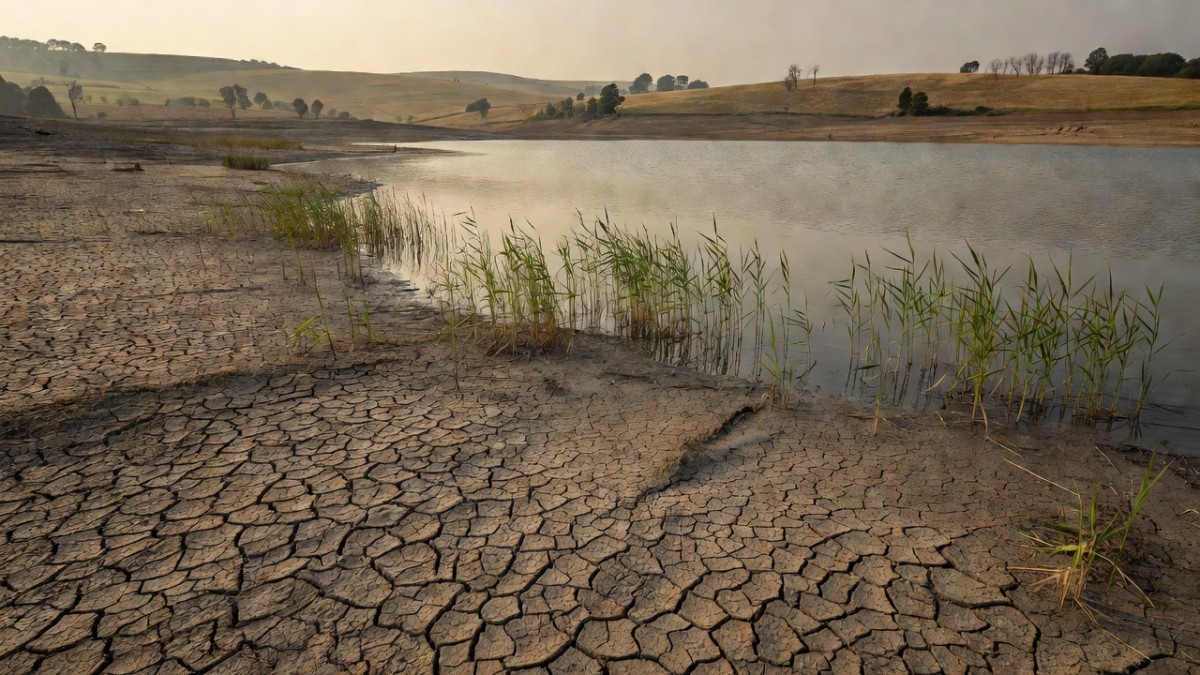
Perhaps nowhere was the severity of summer 2026 more visible than in the parched landscapes of southern England. The Met Office station at Wisley in Surrey recorded an extraordinary 62 consecutive days with no rain — a dry spell that turned the gardens of Surrey into tinderboxes. Heathrow Airport in London and Odiham in Hampshire each recorded dry spells lasting 56 days. For much of the summer, the ground hardened, reservoirs shrank, and rivers slowed to a trickle.
Water companies were forced into action. Cambridge Water imposed hosepipe bans — its first in 30 years — while other suppliers across southern England warned of the strain on supplies. Drought conditions spread across the region, prompting concerns about agriculture, wildlife, and the long-term health of our water infrastructure. The dry conditions also fuelled wildfires, which broke out in several areas, adding to the sense of a landscape under siege.
Late-season rain in August helped steer some areas away from seasonal rainfall records, offering a measure of relief. But the damage was already done. The dry spell at Wisley — 62 days without rain — stands as a stark reminder of how fragile our water security can be in a warming world. The question now is whether water companies, regulators, and government are moving quickly enough to address the infrastructure deficits that these conditions expose.
The Climate Context: Attribution Science and a Changing Europe
The Met Office's attribution analysis is unambiguous: human-induced climate change made this summer's heat around 130 times more likely. This is not a fringe view or an alarmist projection — it is the considered assessment of the UK's national meteorological service, based on established climate science. The long-term impact of climate change is raising baseline temperatures, making what was once exceptional increasingly ordinary.
The UK was not alone in suffering. Record-breaking and back-to-back heatwaves scorched much of Europe this summer, with parts of the continent exceeding 40°C under a heat dome that parked itself over southern Europe. From Spain to Greece, the pattern was the same: prolonged high pressure, dry conditions, and temperatures that pushed beyond historical norms. The Met Office cites dry weather, long periods of high pressure, and the long-term impact of climate change as the driving factors behind the UK's record season.
The comparison with 1976 is instructive. That summer has passed into British folklore as the benchmark of heat — the summer of standpipes in the streets and burning heathlands. Yet it now ranks only seventh on the all-time list. The five warmest UK summers have all occurred since 2003, and two of the top three have now occurred in consecutive years. The climate is not merely warming; it is accelerating, and our records are falling at an increasingly rapid pace.
What This Means for the UK: Adaptation and Preparation
For households across the UK, the implications of summer 2026 extend far beyond the immediate discomfort of hot nights and stuffy offices. The built environment of British cities — designed for a cooler, wetter climate — is ill-suited to prolonged heat. Homes that trap heat rather than dissipate it, hospitals without adequate cooling, and transport systems that falter in high temperatures all represent vulnerabilities that must be addressed.
The agricultural sector has also felt the strain. Farmers across southern and eastern England have contended with dry soils and water restrictions, affecting crop yields and livestock welfare. The economic cost of this summer — in lost productivity, healthcare expenditure, and infrastructure damage — will take months to calculate, but it will be substantial.
There are also deeper questions about water security. The dry spells at Wisley, Heathrow, and Odiham are not isolated incidents but part of a broader pattern of increasing drought frequency in southern England. Water companies face difficult choices about investment in reservoirs, desalination plants, and leakage reduction — choices that will ultimately be reflected in consumer bills and the resilience of our water supply.
The Bottom Line — What Comes Next
As autumn approaches and temperatures moderate, it would be tempting to file summer 2026 away as another extreme weather event. But the evidence suggests otherwise. With record-breaking summers now occurring in consecutive years, and with the five warmest summers on record all occurring since 2003, the pattern is clear: this is not a series of anomalies but the emergence of a new climate reality.
The Met Office's provisional data will be confirmed in the coming weeks, but the direction of travel is unmistakable. The UK must accelerate its adaptation efforts — from heat-resistant housing and healthcare planning to water infrastructure investment and urban cooling strategies. The question is no longer whether we will face more summers like 2026, but how prepared we will be when they arrive. The records will continue to fall; our response must be equally relentless.
By Erica Thornton, Staff Writer
This article was produced with AI-assisted research and editorial support. Sources: Met Office; Sky News; The Guardian; BBC News; UK Health Security Agency.
What's Your Reaction?
 Like
0
Like
0
 Dislike
0
Dislike
0
 Love
0
Love
0
 Funny
0
Funny
0
 Wow
0
Wow
0
 Sad
0
Sad
0
 Angry
0
Angry
0

US Politics and Policy Correspondent at Global1.News. Based in Washington DC, covering American politics, policy, elections, and the courts. Knows how the system works and tells you what it actually means.














Comments (0)