
Guinea-Bissau's New Constitution: A Test for Democracy in West Africa
As Guinea-Bissau prepares for presidential and parliamentary elections scheduled for December, the shadow of last year's constitutional referendum looms large over the country's political landscape. The November 2025 vote, organized by the military government of Transitional President Gen Horta N'Tam, approved a new charter that significantly expands the powers of the presidency.
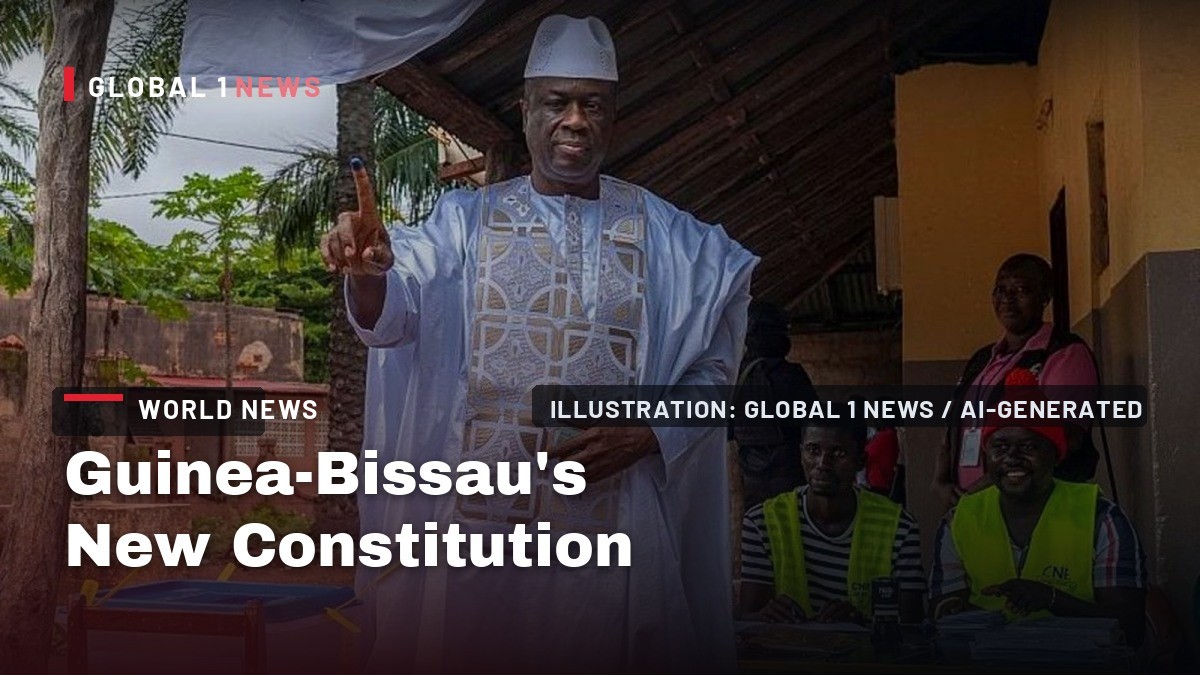
As Guinea-Bissau prepares for presidential and parliamentary elections scheduled for December, the shadow of last year's constitutional referendum looms large over the country's political landscape. The November 2025 vote, organized by the military government of Transitional President Gen Horta N'Tam, approved a new charter that significantly expands the powers of the presidency. Now, with the elections fast approaching, regional observers and citizens alike are watching closely to see whether this new political framework will bring the stability its architects promised, or further entrench the cycle of coups and crises that has plagued the nation since its independence from Portugal in 1974.
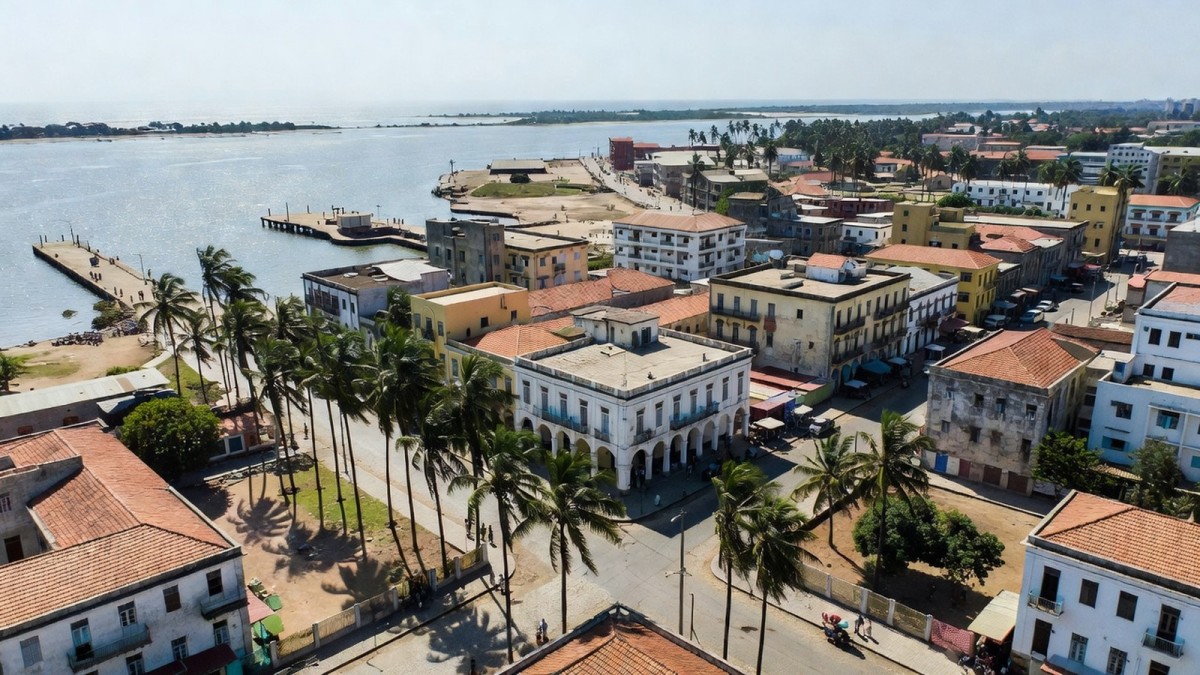
A Charter Written by the Barracks
The constitutional changes were born from a moment of profound political rupture. The military seized power in November 2025 following a disputed presidential election in which then-President Umaro Sissoco Embaló and opposition candidate Fernando Dias both claimed victory. The junta leaders justified their intervention by claiming they had acted to thwart a plot by unnamed politicians who, they alleged, had "the support of a well-known drug baron" to destabilise the country. The referendum itself was held in late November 2025, with provisional results announced on 3 December 2025. According to the country's electoral commission, 70% of voters backed the changes, while 30% voted against them, with turnout reported at nearly 60%. However, these figures have been met with deep skepticism. The main opposition party, the African Party for the Independence of Guinea and Cape Verde (PAIGC), urged its supporters to boycott the vote, and some activists told the BBC that the referendum was a mere formality, claiming that 90% of registered voters did not actually take part. The new constitution delivers sweeping reforms that fundamentally alter the balance of power in this West African nation. Under the new charter, the president gains the authority to appoint and dismiss the prime minister and cabinet, create or abolish ministries at will, and dissolve parliament in the event of what is described as a "grave political crisis." This represents a decisive shift away from the semi-presidential system that had been in place, where the legislature appointed a prime minister from the parliamentary majority, who then formed a cabinet.An "Emperor" in Bissau?
The concentration of power in the presidency has alarmed regional analysts and democracy advocates. Paul Ejime, a regional analyst who spoke to the BBC's Newsday programme, did not mince words in his assessment. Ejime argued that the referendum result did not reflect the will of the people, suggesting instead that the changes were aimed at turning the president into an "emperor." He painted a grim picture of the atmosphere surrounding the vote, stating that "the population is terrified because the military has been going after everyone who opposes them." Ejime also questioned the legitimacy of the junta itself, describing its rise to power as a "very strange coup." He called on the Economic Community of West African States (ECOWAS) to intervene and enforce its own rules, which explicitly bar member states from changing their constitutions within six months of an election. The fact that the referendum was held so close to the disputed vote that triggered the coup raises serious questions about the junta's commitment to democratic norms. The PAIGC, led by Domingos Simões Pereira, has been equally vocal in its opposition. Pereira accused those behind the referendum of seeking to undermine democracy and political freedoms. The party warned that the changes risked concentrating too much power in the presidency, a concern that resonates deeply in a country with a long history of authoritarian rule and political instability.
Beyond the Ballot: The Narco-State Question
The political crisis in Guinea-Bissau cannot be separated from the country's broader challenges. The United Nations has dubbed Guinea-Bissau a "narco-state," a label that reflects the deep entanglement between drug trafficking and political power. The country's coastline, dotted with numerous uninhabited islands, has proven ideal for drug traffickers moving cocaine and other illicit substances between South America and Europe. This context is crucial for understanding the stakes of December's elections. The junta's claim that it acted to thwart a plot involving a "well-known drug baron" speaks to the murky intersection of politics and organized crime that has long defined the country's trajectory. For ordinary citizens, the promise of stability and clean governance has been made before, only to be broken by successive governments and military interventions. Guinea-Bissau has experienced at least nine attempted and successful coups since gaining independence from Portugal in 1974. This staggering statistic places the country among the most coup-prone nations in Africa, and indeed the world. The December elections will now serve as a critical test of whether the military authorities will follow through on their pledge to restore civilian rule, or whether the expanded powers of the presidency will simply provide a new framework for the same old patterns of governance.A Senegalese Lens on Regional Stability
For Senegal, the situation in Guinea-Bissau is not a distant diplomatic concern but a matter of immediate regional significance. Our two countries share a border, with Senegal's Casamance region lying directly to the north of Guinea-Bissau. Both nations are members of ECOWAS, and the stability of one has direct implications for the other. The Casamance region has itself experienced decades of low-level conflict, and cross-border movements between Senegal and Guinea-Bissau are common, both for legitimate trade and, at times, for less savory purposes. When political institutions in Bissau weaken, the consequences can ripple northward. A Guinea-Bissau that is stable and democratic would be a valuable partner in securing the shared border region; a Guinea-Bissau that remains mired in political crisis and military rule presents an ongoing challenge. The broader West African context is also troubling. The military takeover in Guinea-Bissau added the country to a growing list of western and central African nations that have experienced military coups in recent years. From Mali to Burkina Faso to Niger, the region has seen a troubling reversal of the democratic gains made in the 1990s and early 2000s. The international community, including ECOWAS, has struggled to respond effectively to this wave of military takeovers, and the situation in Guinea-Bissau will be a further test of the bloc's resolve.The Mechanics of the New Political Order
Beyond the expansion of presidential powers, the new constitution introduces several other significant changes that will reshape Guinea-Bissau's political landscape. The number of seats in parliament is set to be reduced from 102 to 65, and the number of electoral constituencies will be cut from 29 to 12. These changes are ostensibly designed to streamline governance and reduce the costs associated with a large legislature, but they also have the effect of concentrating political power in fewer hands. The new charter also introduces new eligibility requirements for presidential candidates, including a provision requiring them to have lived continuously in Guinea-Bissau for the five years before an election. This requirement could have the effect of disqualifying opposition figures who have spent time abroad, whether for education, business, or political exile. Critics see this as a mechanism to exclude potential challengers to the military-backed establishment. The military authorities have argued that these changes are necessary to end the repeated disputes between presidents and prime ministers that have historically paralyzed the government. Under the old system, the president and prime minister often came from different political factions, leading to a form of cohabitation that frequently descended into gridlock. By consolidating power in the presidency, the junta argues, the new constitution will provide the strong executive leadership needed to break this cycle of instability.December's Elections: A Hollow Promise or a New Beginning?
As the December elections approach, the fundamental question remains: will the military authorities actually cede power, and if they do, what kind of political system will emerge? The junta has stated that the elections are intended to return the country to civilian rule, but the circumstances surrounding the referendum and the new constitution raise serious doubts about their intentions. The expanded powers of the presidency mean that whoever wins December's vote will inherit a vastly more powerful office than any previous president has held. This could be a force for stability if the winner is committed to democratic governance and national reconciliation. However, it could also be a recipe for authoritarianism if the winner uses these powers to suppress opposition and entrench their own rule. The PAIGC's boycott of the referendum and its vocal opposition to the constitutional changes suggest that the political opposition is not prepared to simply accept the new order. The coming months are likely to see intense political maneuvering as parties position themselves for the December vote. The international community, including ECOWAS and the African Union, will be watching closely, and their response to any irregularities or abuses will be critical. For the people of Guinea-Bissau, one of the poorest countries in the world, the stakes could not be higher. They have endured decades of political instability, economic hardship, and the corrosive influence of drug trafficking. The December elections represent an opportunity to chart a new course, but the constitutional framework approved last year has already stacked the deck in favor of a powerful executive. Whether this leads to the strong, stable governance that the country so desperately needs, or simply to a new form of authoritarianism, remains to be seen. The path forward is fraught with difficulty, but the resilience of the Guinean people should not be underestimated. They have weathered countless political storms, and their desire for peace and prosperity remains undimmed. As a neighbor and fellow member of the West African community, Senegal has a vested interest in seeing Guinea-Bissau succeed. The coming months will reveal whether the promise of a new beginning can overcome the weight of a troubled past. This article was produced with AI-assisted research and editorial support. Sources: BBC Africa. By Amara Diop, Staff WriterWhat's Your Reaction?
 Like
0
Like
0
 Dislike
0
Dislike
0
 Love
0
Love
0
 Funny
0
Funny
0
 Wow
0
Wow
0
 Sad
0
Sad
0
 Angry
0
Angry
0

Amara Diop
West Africa/Sahel Correspondent at Global1.News. Dakar-based journalist covering politics, security, climate, and development across Francophone and Anglophone West Africa. Tells the stories of a region undergoing profound transformation.












Comments (0)