
Stillbirth After Israeli Checkpoint Delay: West Bank Crisis
In a recent Middle East Eye report, presenter Mathilda Mallinson spoke with Aseel Baidoun, Deputy Director of Advocacy and Campaigns at Medical Aid for Palestinians (MAP), about what the video describes as "the reproductive violence of colonialism" in the West Bank.
In a recent Middle East Eye report, presenter Mathilda Mallinson spoke with Aseel Baidoun, Deputy Director of Advocacy and Campaigns at Medical Aid for Palestinians (MAP), about what the video describes as "the reproductive violence of colonialism" in the West Bank. The conversation, published on August 11, 2026, details a healthcare system under siege—where ambulances are blocked, medics are beaten, and where, in July alone, at least two women gave birth in vehicles because checkpoints were closed. The report lands at a moment of acute crisis, punctuated by the story of a 28-year-old woman from the village of Qaryout who delivered a stillborn baby in an ambulance after being delayed by Israeli soldiers at a checkpoint.
Stillbirth at Awarta Checkpoint: A Mother's 30-Minute Wait for Care
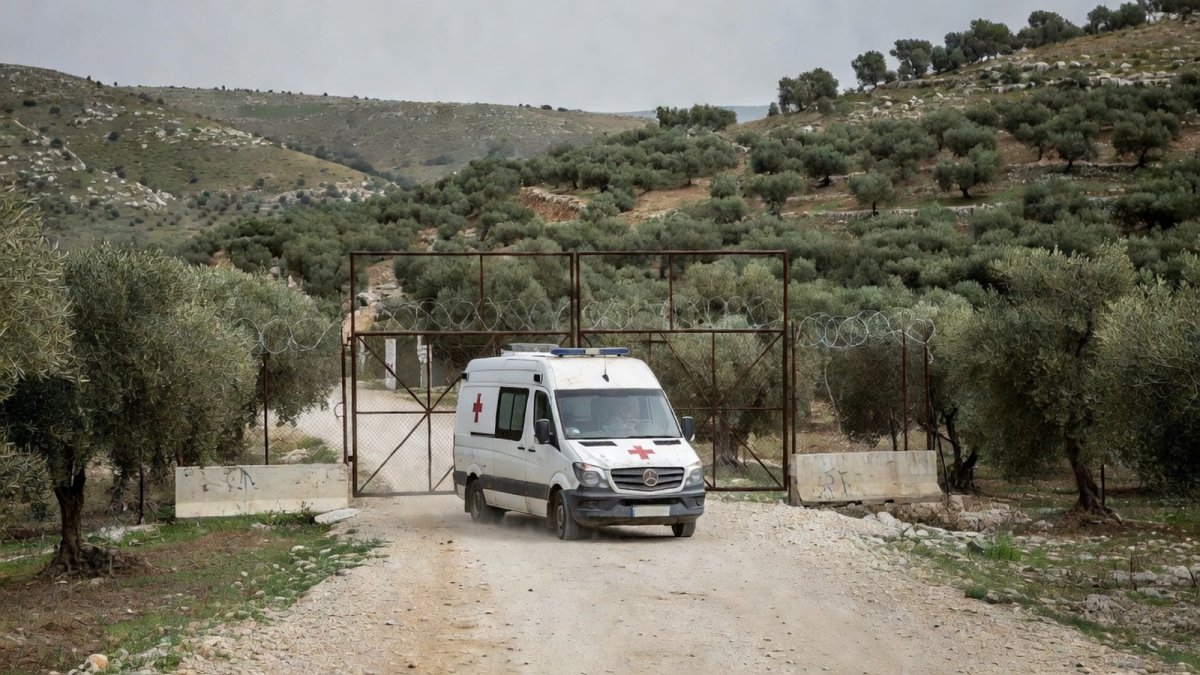
Ramallah, occupied West Bank - Aug 12, 2026 - The journey from the village of Qaryout, south of Nablus, to Rafidia hospital should take minutes. On the morning of Monday, July 27, 2026, it became a desperate race against time that ended in tragedy. According to an AFP report, medics from the Palestine Red Crescent Society (PRCS) were called to the home of a 28-year-old woman, six months pregnant, who was unconscious and suffering from "very heavy bleeding." Medic Bashar Qaryouti described her condition as "extremely critical" as the ambulance set off for the hospital, only to find primary roads closed by the Israeli military.
Forced to navigate dirt tracks through olive groves, the crew reached the Awarta checkpoint, where a gate was shut and a long queue had formed. Qaryouti drove to the front and activated the siren. It took roughly ten minutes for soldiers to emerge from a watchtower. "They forced me, at gunpoint, to switch the vehicle off," Qaryouti told AFP. The soldiers confiscated the crew's identity cards, and the nurse accompanying the woman was forced to deliver the baby inside the vehicle. "The baby was stillborn," Qaryouti said. After more than 30 minutes, the soldiers returned the IDs and allowed the ambulance to continue to Rafidia hospital, where the mother was rushed into surgery to stop the bleeding. Hospital director Fouad Nafaa confirmed the woman was stable but said she had been "prevented by the Israeli army from reaching the hospital." The Israeli military did not immediately respond to an AFP request for comment.
A System Pushed to the Brink
The Qaryout incident is not an isolated tragedy but a symptom of a broader, systematic collapse. A report released in August 2026 by Physicians for Human Rights Israel (PHRI) concludes that Israeli policies are pushing the West Bank healthcare system to the point of failure. The report highlights a compounding crisis: for three years, Israel has withheld billions of dollars in tax and customs revenues collected on behalf of the Palestinian Authority (PA). Without these funds, the PA has struggled to pay health workers and purchase medications, forcing 75% of public hospitals, pharmacies, and clinics to reduce operations to just once or twice a week.
Israeli Finance Minister Bezalel Smotrich stopped sending monthly clearance revenues to the PA last year. As of June 2026, Israel had cumulatively withheld at least $2.5 billion from the PA since 2023, according to the International Crisis Group. Palestinian Health Minister Majed Abu Ramadan told the Associated Press that unpaid staff are not showing up to work, creating a backlog and delaying routine surgeries. Earlier in 2026, Palestinian doctors went on strike, and some primary healthcare centres closed entirely. "If this continues, it is patients - not institutions - who will pay the price," said Milena Ansari, director of PHRI's Occupied Palestinian Territory department.
The Human Cost of Financial Strangulation
The statistics translate into daily suffering. PHRI's mobile clinic patient numbers have doubled in two years, from about 250 a day to around 500. Patients like Bassam Musleh, 70, spent six months searching for blood-pressure medication. Mohammed Sarris, 64, displaced from Nur Shams camp, told AP, "It's degrading... All of this has affected us a lot." The financial crisis is compounded by physical obstruction. The World Health Organization (WHO) documented 233 attacks on health care in the West Bank in 2025, affecting 25 health facilities and 165 ambulances. Of those attacks, 84% (196 of 233) involved obstructed access, including checkpoints, according to an OCHA Fact Sheet on Movement and Access published in April 2026.
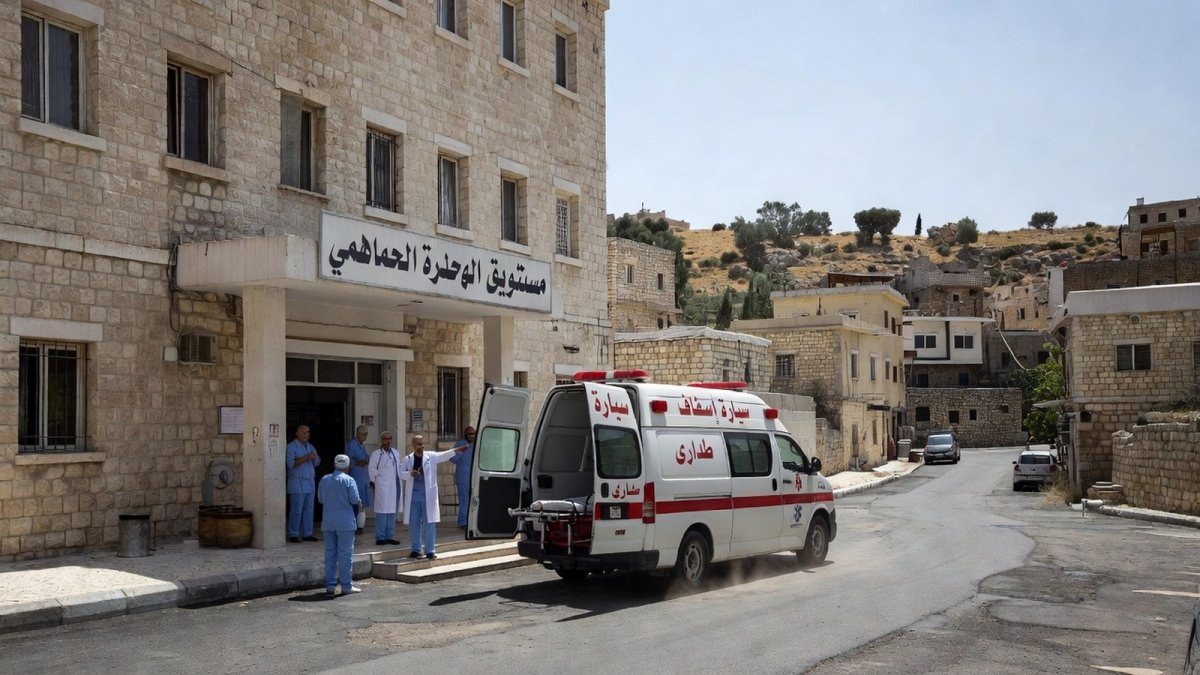
This is not a new phenomenon. Between April and December 2024, OCHA recorded 694 attacks on health care in the West Bank, resulting in 26 deaths and 121 injuries, and affecting 62 health facilities and 475 ambulances. The pattern is clear: checkpoints are used not just to restrict movement but to punish and delay, with lethal consequences. In the week before the MEE video was published, paramedics responding to a settler attack near Bethlehem were themselves pepper-sprayed and cut by glass as settlers smashed the ambulance windows.
Settler Violence and the "Breaking Point"
The attack on the ambulance crew in the Bethlehem area on Friday, August 7, 2026, was particularly brazen. The Palestine Red Crescent Society (PRCS) reported that settlers attacked the crew while they were responding to an earlier attack in Khalayel al-Louz, injuring two paramedics and damaging the vehicle beyond use. The medics were pepper-sprayed and pelted with stones. In the same week, three Palestinians were wounded after settlers attacked vehicles in the Abu Njeim area of Bethlehem, a man was beaten by Israeli forces in Beit Furik east of Nablus, and a two-day Israeli operation on the Qalandiya refugee camp injured 48 people.
The scale of violence is staggering. Since the start of 2026, Palestinians have reported more than 11,000 Israeli attacks across the West Bank, according to the MEE video description. Settlers have killed almost as many people this year as in the whole of last year, and more than 1,500 Palestinians have been driven from their homes. UN Deputy Special Coordinator for the Middle East Peace Process Ramiz Alakbarov told the UN Security Council on August 11, 2026, that the West Bank is at a "breaking point." He detailed that Israeli forces and settlers have killed 76 Palestinians, including 18 children, in 2026 so far, and that about 3,800 Palestinians—nearly half of them children—have been displaced by settler violence, demolitions, and evictions.
De Facto Annexation and the Erasure of Communities
Alakbarov's briefing painted a grim picture of a territory being systematically reshaped. The UN has documented more than 1,430 settler attacks resulting in casualties or property damage across roughly 260 Palestinian communities in 2026, many carried out in the presence of Israeli forces. Since January 2023, 127 Palestinian communities have been fully or partially displaced, including 47 completely uprooted, affecting more than 6,390 people. Settler attacks, once concentrated mainly in Area C, are increasingly spreading into Areas A and B, which were supposed to be under full Palestinian civil and security control.
Simultaneously, Israel has advanced or approved roughly 12,360 settlement housing units across the West Bank in 2026, including 5,160 in occupied East Jerusalem. "These are interconnected steps, not isolated developments," Alakbarov warned, stating that they are advancing "de facto annexation." The UN also reports that Israel has demolished an average of 122 Palestinian buildings every month in 2026. This combination of settlement expansion, forced displacement, and military operations is creating an environment where Palestinian life—and Palestinian healthcare—is rendered secondary.
A Broader Toll and a Call for Action
The broader toll is immense. Since October 2023, Israeli forces and settlers have killed at least 1,182 Palestinians in the occupied West Bank, injured about 13,000, and arrested nearly 25,000, according to Palestinian officials. The current wave of violence follows a deadly clash on Friday, July 24, between settlers and Palestinians in the village of Tell that left two Israelis and four Palestinians dead, prompting the Israeli military to run a "counterterrorism operation" across the West Bank with widespread road closures. These closures are the very mechanisms that delayed the ambulance at Awarta.
For Aseel Baidoun of MAP, the situation is a form of reproductive violence—a deliberate strategy that denies Palestinian women the right to safe childbirth. The fact that at least two women gave birth in ambulances in July 2026 because checkpoints were closed is not a coincidence; it is a policy outcome. The international community has been slow to respond. OHCHR spokesperson Ravina Shamdasani stated in late July 2026, "With attacks by Israeli settlers, and the creation of settlements and outposts hitting an all-time high, third States must act urgently and in unison to halt the continuing killing and dispossession of the Palestinian people."
The stillbirth at Awarta checkpoint is a single, devastating data point in a much larger pattern of obstruction and violence. As the healthcare system collapses under financial strangulation and physical assault, the most vulnerable—pregnant women, the sick, the elderly—are paying the ultimate price. The international community's failure to act, as Shamdasani noted, is not a neutral position; it is a complicity in the ongoing dispossession of a people. Until the checkpoints are opened, the funds are released, and the settlers are held accountable, the ambulances will keep waiting, and the babies will keep dying.
By Fatima Al-Rashid, Staff Writer
This article was produced with AI-assisted research and editorial support. Reporting is based on sources cited in the article.
What's Your Reaction?
 Like
0
Like
0
 Dislike
0
Dislike
0
 Love
0
Love
0
 Funny
0
Funny
0
 Wow
0
Wow
0
 Sad
0
Sad
0
 Angry
0
Angry
0

Gulf/MENA Correspondent at Global1.News. Based in Doha, covering Gulf politics, energy markets, diplomacy, and development across the Middle East and North Africa. Tracks the economic transformation of the Gulf states.










Comments (0)