
A Moment of New Hope for the Rohingya Community
The International Court of Justice’s November 19, 2026 judgment that Myanmar committed genocide against the Rohingya marks a watershed moment for a community that has endured nearly a decade of displacement.
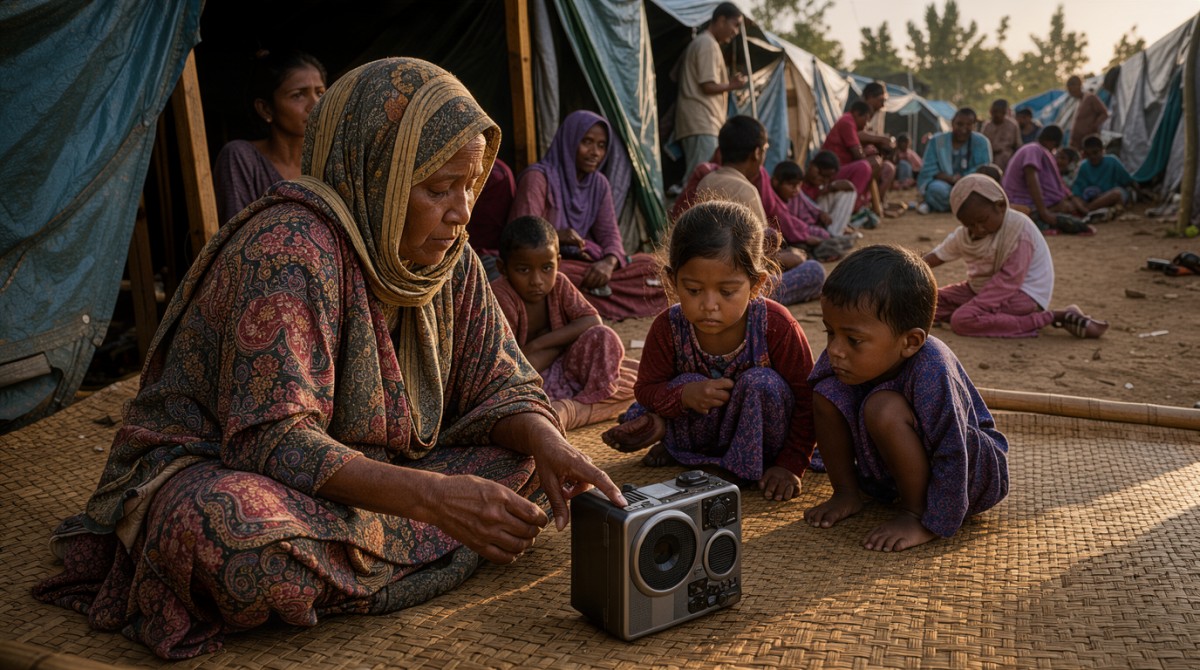
The International Court of Justice’s November 19, 2026 judgment that Myanmar committed genocide against the Rohingya marks a watershed moment for a community that has endured nearly a decade of displacement. The ruling, issued in the case brought by The Gambia, formally applies the United Nations Genocide Convention to the atrocities perpetrated during the 2017 military crackdown in Rakhine State. While the legal victory is undeniable, the real test now lies in translating the court’s findings—recognition of at least 10,000 killings, 1,834 documented rapes, and systematic village destruction—into concrete mechanisms for repatriation, accountability and long‑term security.
Legal Foundations and the ICJ’s Findings
The ICJ’s decision rests on a detailed factual record that includes site‑specific casualty estimates: approximately 750 deaths in Min Gyi (Tula Toli), 358 in Chut Pyin (including 127 children under five), and at least 82 in Maung Nu. Although the court noted that the Chut Pyin figures could not be fully corroborated, it deemed them credible. Moreover, the judgment identified seven additional locations where “serious violence” occurred, underscoring a pattern of planned village demolition followed by the construction of security installations on the cleared land. These findings constitute the first formal state‑level attribution of genocide under the UN Genocide Convention, establishing a legal precedent for future enforcement actions.
Human‑rights documentation cited in the proceedings—ranging from United Nations reports to on‑the‑ground accounts by Médecins Sans Frontières—confirmed that the military’s campaign was driven not by a singular security rationale but by entrenched racial, ethnic and religious discrimination. The court’s acceptance of these evidentiary sources reinforces the legitimacy of advocacy groups that have long argued the Rohingya crisis is a product of systematic state policy rather than isolated incidents.
Humanitarian Scale of the Crisis
Since the 2017 exodus, more than one million Rohingya have been confined to the sprawling camps of Cox’s Bazar, Bangladesh. A Médecins Sans Frontières report cited in the article estimates that over 700,000 were forced out within weeks of the military’s offensive. The refugees endured perilous journeys through forests, hills and across the Naf River, often in small, overloaded boats that capsized, leading to additional loss of life. Those who survived the trek now live in “dire conditions,” with limited access to food, health care and basic shelter, a situation exacerbated by recent international funding cuts.
The demographic profile of the displaced includes a significant proportion of children and women who have experienced sexual violence; the ICJ recorded at least 1,834 acts of rape, a statistic that underscores the gendered dimension of the genocide. Survivors such as Enous Juhar, who recounted losing his home and possessions, articulate a collective yearning for safety, rights and citizenship that extends beyond mere material assistance.
Political Reactions in Bangladesh and the United Nations
Bangladesh’s foreign minister, Dr. Khalilur Rahman—who also presides over the 81st session of the UN General Assembly—visited the Cox’s Bazar camps on November 20, the day after the ruling. His delegation met Rohingya refugees on the Camp 4 football field, where banners bearing his likeness signaled the community’s optimism. Rahman declared the Rohingya crisis a matter for the international community and pledged that “the international community would work to address it as soon as possible,” expressing hope for a timely return of the refugees to their homes.
The minister’s statements, however, must be read against the backdrop of Bangladesh’s strained resources. While Rahman’s assurances reflect diplomatic goodwill, the article notes that “international funding has caused drastic cuts to food and health care for the refugees.” This paradox highlights the tension between political rhetoric and the material constraints confronting host nations, a dynamic that will shape the implementation of the ICJ’s judgment.
Regional Dynamics and Security Concerns
The Rohingya plight is intertwined with broader Northeast Asian security calculations. The ongoing conflict between Myanmar’s military and the Arakan Army in Rakhine State continues to destabilize the region, complicating any immediate repatriation effort. Moreover, the article mentions that Rohingya who fled to Malaysia face “brutal treatment from the government,” indicating that neighboring states are not uniformly prepared to absorb returning populations. These security variables suggest that a coordinated regional response—potentially mediated by ASEAN, the UN and think tanks such as the Asan Institute for Policy Studies—will be essential to guarantee safe and dignified returns.
From a Korean perspective, the situation resonates with Seoul’s own experiences of forced displacement and post‑conflict reconstruction. Korean diplomatic circles, including the Ministry of Foreign Affairs, have historically advocated for robust UN mechanisms to protect vulnerable minorities, a stance that aligns with the current push for enforceable accountability measures against Myanmar’s military leadership.
Accountability Mechanisms and the Role of International Institutions
The ICJ judgment, while legally binding, lacks direct enforcement power, placing the onus on the United Nations and its subsidiary bodies to operationalize the ruling. Human‑rights activists highlighted in the source material call for “concrete steps” to bring perpetrators to justice. Potential avenues include referrals to the International Criminal Court, targeted sanctions by the UN Security Council, and the establishment of an international tribunal—a path previously examined by the Korea Institute for International Economic Policy (KIEP) in its analyses of post‑genocide justice.
South Korea’s own experience with transitional justice—exemplified by the work of the Ministry of Justice and the Korea Development Institute (KDI) in post‑authoritarian reforms—offers a comparative framework for designing reparations and institutional reforms in Myanmar. Collaborative research initiatives between Korean think tanks and Myanmar civil‑society groups could facilitate capacity‑building for future prosecutions and the reconstruction of civil administration in Rakhine State.
Future Prospects and Scholarly Outlook
In the months ahead, the Rohingya community’s hope hinges on the translation of legal recognition into tangible outcomes. As Sirajul Islam, a Rohingya poet, observed, “Our plight and quest for justice ends when our hope for home translates into reality.” The convergence of legal, humanitarian and geopolitical factors creates a narrow window for decisive action. Continued advocacy by NGOs, sustained diplomatic pressure from Bangladesh and the broader international community, and the strategic involvement of regional actors—including South Korea—will be critical.
From an academic standpoint, the 2026 ICJ ruling will likely become a seminal case study in international law curricula, illustrating the interplay between legal adjudication and on‑the‑ground humanitarian realities. Future scholarship should monitor how the judgment influences state behavior, the evolution of UN enforcement mechanisms, and the long‑term integration of Rohingya returnees into Myanmar’s social fabric. If the international community can mobilize the requisite political will and resources, the Rohingya’s “new hope” may indeed crystallize into a durable peace and a restored sense of citizenship for a people long denied.
This article was produced with AI-assisted research and editorial support. Reporting is based on the source material cited below. Sources: The Diplomat; thediplomat.com; Global1.News (21 November 2026).
By Prof. David Park, Staff Writer
What's Your Reaction?
 Like
0
 Dislike
0
 Love
0
 Funny
0
 Wow
0
 Sad
0
 Angry
0

East Asia/Technology Correspondent at Global1.News. Seoul-based voice covering Korean politics, technology, business, and culture. Analyzes how technology and geopolitics intersect across East Asia.














Comments (0)