
UN officials: Occupied West Bank at 'breaking point'
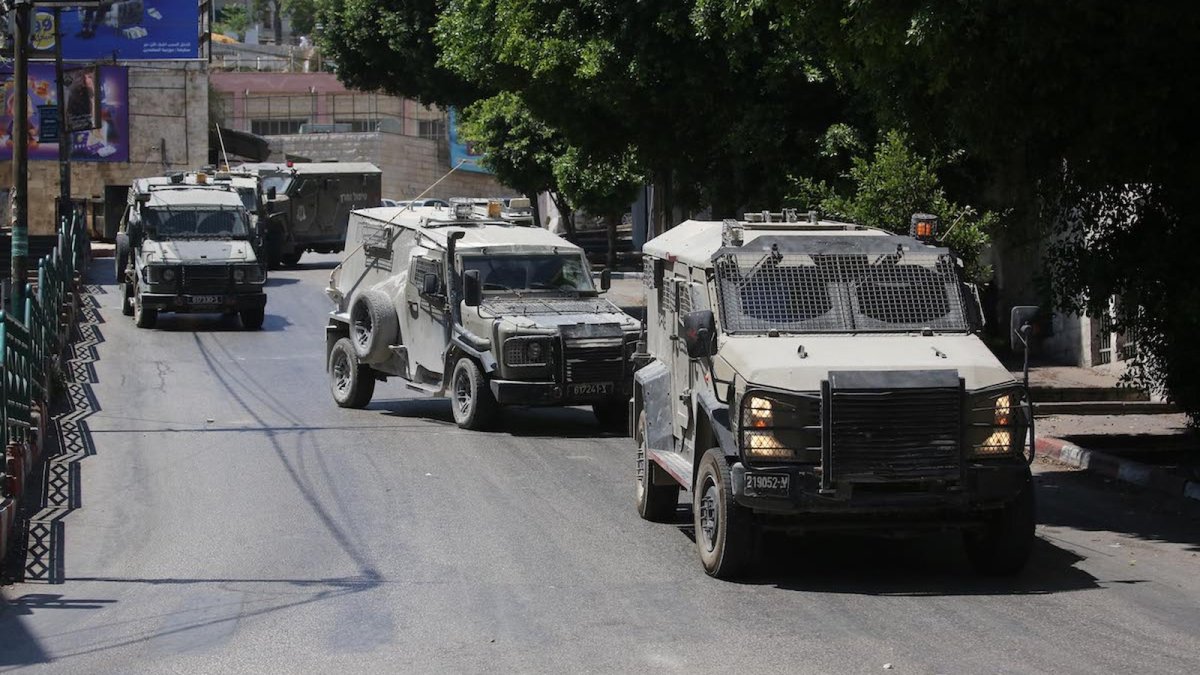
‘Breaking Point’: UN Officials Warn of Systematic Unraveling in the Occupied West Bank NEW YORK — The occupied West Bank has reached a critical "breaking point," according to top United Nations officials who addressed the Security Council on Tuesday, painting a stark picture of escalating violence, forced displacement, and the deliberate dismantling of Palestinian statehood.
‘Breaking Point’: UN Officials Warn of Systematic Unraveling in the Occupied West Bank
NEW YORK — The occupied West Bank has reached a critical "breaking point," according to top United Nations officials who addressed the Security Council on Tuesday, painting a stark picture of escalating violence, forced displacement, and the deliberate dismantling of Palestinian statehood. The briefing, reported by Middle East Monitor and Anadolu, marked one of the most urgent warnings yet from the international body regarding the territory’s trajectory.
"Humanitarian organizations cannot create the political conditions that children need to be safe," said Hannan Sulieman, Deputy Executive Director of UNICEF, in a direct appeal to member states. "That responsibility rests with member states who have the power to change them." Her words cut through the diplomatic formality of the chamber, underscoring a grim reality: the machinery of aid and relief is no substitute for political will.
The session comes amid a sustained Israeli military campaign in the West Bank that has run parallel to the war in Gaza. Since October 8, 2023, Palestinian figures indicate that more than 1,183 Palestinians have been killed in the West Bank, with 13,000 injured and nearly 25,000 arrested. These are not abstract statistics; they represent families shattered, communities under nightly siege, and a landscape increasingly defined by checkpoints, raids, and the constant threat of violence.
A Generation Under Siege: The Toll on Palestinian Children
Sulieman’s testimony focused on the most vulnerable victims of this escalation. She reported that 174 Palestinian children have been verified killed in the occupied West Bank since January 2024. "That is more than one child every week," she noted, her voice carrying the weight of a generation lost to a conflict they did not create.
The figures are harrowing, but the lived reality is even more so. Children in the West Bank are not merely caught in the crossfire; they are targets of a system that increasingly treats them as threats. Sulieman revealed that at least 355 Palestinian children are currently held in military detention—the highest number in eight years. Nearly half of these minors are detained without charge or trial, a practice that violates international law and leaves families in a state of perpetual anxiety.
These children are denied the basic protections afforded by the Geneva Conventions. They are interrogated without legal counsel, held in facilities far from their homes, and subjected to procedures that human rights organizations have long condemned as systematic abuse. The psychological scars, Sulieman implied, will last far longer than any prison sentence.
Forced Displacement and the Scourge of Demolitions
Deputy Special Coordinator Ramiz Alakbarov echoed Sulieman’s alarm, describing the situation as an emergency requiring immediate action to prevent de facto annexation. He detailed a campaign of forced displacement that has accelerated in 2026, with dozens of Palestinians killed and approximately 3,800 displaced due to demolitions, evictions, and attacks by Israeli occupiers.
The pattern is chillingly methodical. Villages in the Jordan Valley and the southern Hebron Hills—areas long targeted by Israeli authorities—are being emptied under the guise of "military training zones" or "archaeological sites." Homes that have stood for generations are reduced to rubble within minutes, their inhabitants left with nothing but the clothes on their backs.
Alakbarov warned of a clear pattern where Palestinian populations are forcibly removed from their villages before occupiers seize the vacated land. This is not spontaneous violence; it is a coordinated strategy of demographic engineering. The international community has repeatedly condemned such actions, yet the demolitions continue, often with the logistical support of the Israeli military.
Settler Violence and the Seizure of Area A
"Settler violence has reached unprecedented levels," Alakbarov emphasized, citing more than 1,400 documented incidents this year affecting 260 communities. These are not isolated clashes between neighbors; they are organized attacks, often carried out under the protection of Israeli forces, designed to intimidate and displace Palestinian communities.
In a particularly alarming development, Alakbarov noted that for the first time, land was explicitly seized in "Area A"—the zone that, under the Oslo Accords, was supposed to be under full Palestinian administrative and security control. This seizure, intended to build infrastructure for Israeli occupiers, represents a fundamental breach of the agreements that have governed the territory for three decades.
The implications are profound. If Area A can be violated with impunity, then the entire framework of the Oslo Accords is rendered meaningless. The two-state solution, already on life support, is being systematically suffocated by these facts on the ground.
The Palestinian Authority’s Fiscal Crisis
Amid the violence and displacement, the Palestinian Authority (PA) is facing an acute fiscal crisis that threatens its very survival. Alakbarov highlighted that the PA reportedly lacks $6 billion in clearance revenues withheld by Israeli authorities. These funds, collected by Israel on behalf of the PA under the Paris Protocol, are the lifeblood of the Palestinian public sector.
The withholding of these revenues is a political weapon, wielded to pressure the PA into submission. It has resulted in salary delays for civil servants, shortages of medical supplies in hospitals, and a general paralysis of governance. The PA, already struggling to maintain legitimacy in the eyes of its people, is being pushed to the brink of collapse.
This fiscal strangulation is not an accident; it is a deliberate policy. By crippling the PA, Israeli authorities undermine the very institution that is supposed to negotiate on behalf of the Palestinian people. The result is a vacuum that is increasingly filled by chaos and despair.
Elections, Resolution 2803, and the Path Forward
Amid the turmoil, Alakbarov welcomed preparations for legislative elections scheduled for Nov. 28. These elections, the first in nearly two decades, represent a glimmer of hope for Palestinian democracy. However, they are fraught with challenges, including Israeli restrictions on movement and the ongoing detention of candidates and activists.
Alakbarov concluded that the various crises are "interconnected steps, not isolated developments," aimed at weakening Palestinian governance. He warned that if the situation continues to unravel, it will undermine implementation of resolution 2803 (2025) and erode the prospects for realizing a negotiated Israeli-Palestinian peace based on the two-state solution.
Resolution 2803, which endorses a peace plan proposed by US President Donald Trump for the Gaza Strip and a temporary international force in the enclave, is seen by many as a flawed framework. Yet Alakbarov urged its "immediate and full" implementation, together with the New York Declaration, as a necessary step to halt the slide toward annexation.
What This Means for Daily Life and the Two-State Solution
For Palestinians in the West Bank, these developments are not abstract geopolitical maneuvers. They are the daily reality of checkpoints, curfews, and the constant fear of losing one’s home. The "breaking point" described by UN officials is not a metaphor; it is the lived experience of a people who have been denied their rights for decades.
The erosion of the two-state solution is not a future possibility; it is happening now, in real time. Every demolition, every detention, every land seizure brings the region closer to a one-state reality characterized by inequality and conflict. The international community, Sulieman and Alakbarov both implied, must act before it is too late.
The responsibility, as Sulieman noted, rests with member states. They have the power to impose sanctions, to demand accountability, and to enforce international law. The question is whether they have the will. For the children of the West Bank, the answer will determine whether they grow up in a homeland or in exile.
By Fatima Al-Rashid, Staff Writer
This article was produced with AI-assisted research and editorial support. Reporting is based on sources cited in the article.
What's Your Reaction?
 Like
0
Like
0
 Dislike
0
Dislike
0
 Love
0
Love
0
 Funny
0
Funny
0
 Wow
0
Wow
0
 Sad
0
Sad
0
 Angry
0
Angry
0

Gulf/MENA Correspondent at Global1.News. Based in Doha, covering Gulf politics, energy markets, diplomacy, and development across the Middle East and North Africa. Tracks the economic transformation of the Gulf states.









Comments (0)