
Spokane's Inferno: A Hemispheric Fire-and-Health Crisis With Deep Meaning for Latin America
The air in Spokane tasted of copper and ash for ten straight days. By the time the winds finally relented on August 10, 2026, this city of 230,000 had survived its most destructive fire event in recorded history—a complex of three arson-driven blazes that forced 65,000 people from their homes, destr.
The air in Spokane tasted of copper and ash for ten straight days. By the time the winds finally relented on August 10, 2026, this city of 230,000 had survived its most destructive fire event in recorded history—a complex of three arson-driven blazes that forced 65,000 people from their homes, destroyed more than 900 structures, and sent a plume of toxic smoke across the northern Rockies. But this story is not just about one American city. It is a hemispheric alarm bell, a preview of the fire-and-health crisis now converging on Latin America, where August is the peak burn month in the Amazon, Cerrado, and Pantanal.
Spokane's Inferno: A Hemispheric Fire-and-Health Crisis With Deep Meaning for Latin America
Spokane, Washington - August 11, 2026 — The first flames were spotted at 12:00 pm PDT on August 1, 2026, west of Spokane near Airway Heights. Within hours, the Old Trails Fire had jumped the Spokane River, racing into the Indian Trail neighborhood with an explosive fury that left firefighters speechless. By August 10, the Spokane Complex—comprising the Old Trails, Autumn Lane, and Fairview fires—had burned 10,363 acres (4,194 hectares), destroyed 846 structures, and triggered the largest evacuation in Washington state history. The suspect, a 37-year-old man who confessed to setting more than 25 fires since 2025, called the flames "beautiful" and "powerful." But for the tens of thousands who fled, and for the millions more across the Americas breathing wildfire smoke this month, there is nothing beautiful about a burning future.
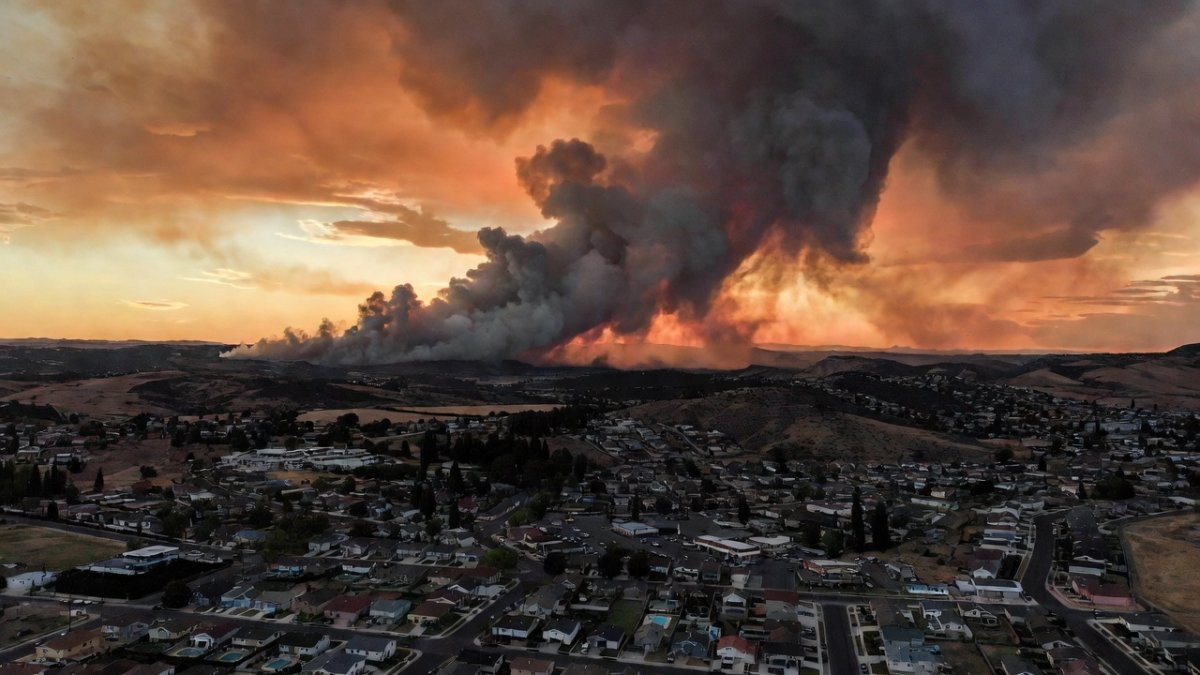
A City Under Siege: 65,000 Evacuated in Spokane's Worst Fires
The scale of displacement is almost impossible to grasp. At the peak of the crisis, roughly 65,000 people—more than a quarter of Spokane County's population—were under evacuation orders. The Spokane Convention Center and Jenkins High School became emergency shelters, while the National Guard and police deployed within hours to manage the chaotic exodus. The VA hospital and Fairchild Air Force Base were partially evacuated, Mead schools emptied their classrooms, and courts suspended operations until August 10. Explosions were reported as fire consumed vehicles and propane tanks in the Indian Trail neighborhood, a residential area that had never seen flames this close.
The human toll is still being counted. Al Jazeera's tally, which includes damaged homes, puts the number above 900. Firefighters from 24 states, including Task Force Utah, joined 1,500+ personnel on the front lines, with California Interagency Incident Management Team 7 leading the response under Tom Clemo. By August 10-11, containment had reached 53% on the Old Trails Fire, 73% on Autumn Lane, and 53% on Fairview, allowing tens of thousands to return to what remains of their neighborhoods. But the psychological scars are deeper than the burn scars. "We trained for this," one resident told local media, "but you can never train for the sound of your own street igniting."
Perfect Fire Storm: Heat Dome, Hurricane Winds and a Historic Warning
Meteorologists used language they had never deployed before in Washington state. On August 1, the National Weather Service issued the state's first-ever "particularly dangerous situation" (PDS) Red Flag Warning for Central and Eastern Washington. This is the highest alert level in the fire-weather lexicon, reserved for conditions that can produce fire behavior so extreme that standard suppression tactics fail. The ingredients were textbook: a heat dome that had baked the western United States for a week, sustained winds of 35-40+ mph (up to 64 km/h), and single-digit humidity that turned vegetation into tinder.
Governor Bob Ferguson declared a state of emergency at noon on August 1, just as the Old Trails Fire was igniting. The timing was not coincidental—the suspect, according to the probable cause affidavit, waited for exactly this kind of hot, windy day. The fire jumped the Spokane River, a natural barrier that had historically protected the city's northern neighborhoods. About 40,000 people lost power as flames threatened transmission lines. Washington was already reeling from one of its worst fire seasons on record: by late July, more than 1,000 fires had burned approximately 425,000 acres, the most since 2021, with 12 large fires covering 200,000 acres still burning on July 31. The Spokane Complex was not an anomaly; it was the culmination of a season pushed to the brink by climate change.
Arson at the Center: The Man Accused of Setting the Old Trails Fire
Aaron Farinacci, 37, was arrested on August 3 and charged with first-degree arson. His bail was initially set at $1 million, then raised to $2 million after prosecutors detailed the scope of his alleged crimes. On August 6, Farinacci confessed to setting more than 25 fires since 2025, describing fire as "beautiful," "powerful," and a means of "rebirth." He reportedly studied serial arsonist John Leonard Orr, a former fire investigator who set dozens of fires in California in the 1980s. Farinacci's criminal history includes a 2010 guilty plea to manslaughter in the death of his adoptive father; he was released from prison in December 2020.
The confession has shaken Spokane to its core. This was not a lightning strike or an accident—it was a deliberate act of destruction by someone who understood fire behavior and waited for the perfect meteorological conditions. The probable cause affidavit states the fire was started with an open flame to vegetation, using a lighter or match. The psychological impact on a community already traumatized by evacuation is profound. Residents are asking how a known arsonist with a violent history was free to roam. The answer, as with so much of this crisis, lies in the intersection of mental health failures, criminal justice gaps, and a climate that now provides the "perfect" conditions for catastrophic fires with alarming regularity.
The Hidden Health Emergency: Smoke, Hospitals and Toxic Air
While the flames captured headlines, the smoke was quietly overwhelming the region's healthcare system. Oregon health officials reported that wildfire smoke sent more residents to emergency rooms and urgent care centers in early August 2026 than in any comparable period on record. In Washington, hospitals saw surges in respiratory complaints, asthma attacks, and cardiac events. The health data is stark: new research published in August 2026 shows that wildfires are now the dominant contributor to unhealthy PM2.5 levels in the US Northwest, with the wildfire share of PM2.5 surging from 5.1% to 13.3% in just a few years. Western states overall saw the share jump from approximately 3.7% to 9.7%.
The health impacts extend far beyond the lungs. A US study released on August 8, 2026, found that wildfire smoke is a growing threat to pregnant women, as climate-driven fires expose more expectant mothers to harmful pollution linked to preterm birth and low birth weight. Smoke exposure has also been associated with poorer cognitive performance, increased mental-health emergency visits, and possible cancer links. British Columbia issued air-quality warnings on August 9, urging residents to reduce strenuous outdoor activity. In Spokane, hazmat specialists were deployed to Level 3 zones on August 7 because urban fires burn toxic materials—plastics, electronics, treated lumber—creating a chemical cocktail far more dangerous than a forest fire's smoke. The health emergency is not over when the flames die; it lingers in the air for weeks.
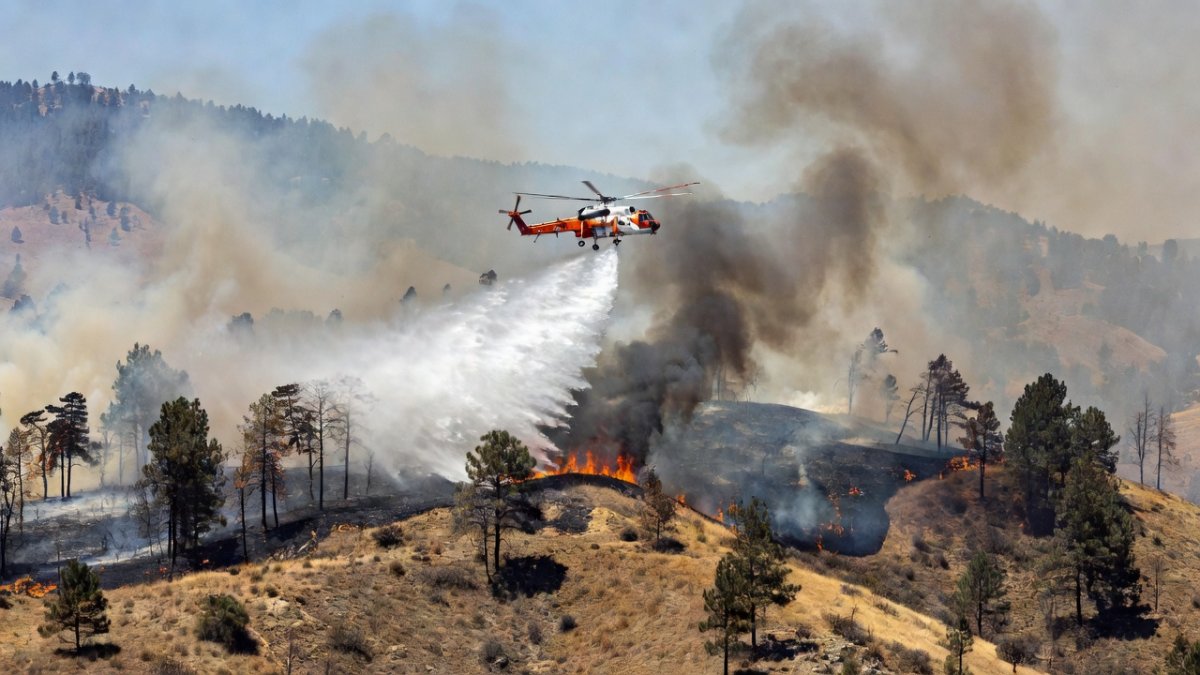
A Hemisphere Burning: From British Columbia to California
Spokane was not alone. The first week of August 2026 saw fires stretching across western North America—British Columbia, Washington, Oregon, Idaho, Utah, and California all reported major incidents. British Columbia issued province-wide air-quality warnings as smoke from multiple fires merged into a single, oppressive haze. California, still recovering from its own heat dome, deployed resources north while managing its own blazes. The interconnectedness of these fire seasons is no longer theoretical; it is a continental reality. Smoke from the Spokane Complex traveled hundreds of miles, degrading air quality in states that had no fires of their own.
This is the new normal for the Americas. Fire seasons are lengthening and intensifying with climate change, and the smoke they produce is a transboundary health issue that ignores political borders. The data from the US Northwest—where wildfire's share of PM2.5 has more than doubled—is a warning for every region that shares this fire-prone hemisphere. In Brazil, August is the peak fire month in the Amazon, Cerrado, and Pantanal biomes, according to INPE satellite monitoring and WWF-Brasil. Brazilian fire experts are watching the Amazon "with bated breath" as global temperatures run off the charts and the fire season gains momentum. The same atmospheric dynamics that fueled Spokane's inferno are now priming South America's dry season for catastrophe.
What This Means for Latin America: Fire Seasons on the Frontline
For Latin America, Spokane is not a distant tragedy—it is a case study. Cities from Mexico City to Santiago face hotter, drier conditions that make urban-adjacent fires more common. My own reporting for Global1.news in July 2026 highlighted Brazil's paradox: record-low deforestation rates, yet the Amazon and Pantanal are still burning, driven by hydrological collapse and extreme drought. The fires in Spokane were set by an arsonist, but the conditions that turned his match into a megafire—heat, wind, dryness—are the same conditions now gripping South America's fire-prone biomes.
Chile suffered deadly wildfires earlier in 2026, with 112+ killed in February, a tragedy that exposed the region's vulnerability to fire in peri-urban zones. Europe's megafires have repeatedly served as warnings for Latin America, but Spokane offers a more direct parallel: a mid-sized city, surrounded by wildland-urban interface, facing a firestorm that overwhelmed its infrastructure. The health data from the US Northwest—the surge in PM2.5, the pregnancy risks, the mental-health toll—is a preview of what Latin American cities will face as fire seasons lengthen. The region must prepare not just for fires, but for the smoke that follows, and the healthcare burden that comes with it.
Lessons in Preparedness: The Drills That Saved Spokane
Spokane's survival—and it is a survival, despite the destruction—was not luck. The city had invested in evacuation preparedness in ways that paid off dramatically. In April 2026, just months before the fires, Spokane conducted a full-scale evacuation drill for the Latah Hangman and Eagle Ridge neighborhoods. In May 2025, a similar drill covered Thorpe and Grandview. These exercises, combined with the Alert Spokane notification system, meant that when the Old Trails Fire jumped the river, residents knew exactly what to do. The National Guard and police deployed immediately, shelters opened within hours, and the evacuation of 65,000 people proceeded with remarkably few injuries.
This is the lesson Latin America must absorb. Fire preparedness is not about buying more fire trucks; it is about building community resilience. It means mapping evacuation routes in advance, testing alert systems, training residents on what to pack and where to go, and ensuring that shelters can handle the influx of displaced people. It means recognizing that urban-adjacent fires are becoming more common and planning accordingly. Spokane's drills did not prevent the fire, but they almost certainly saved lives. For cities across Latin America facing hotter, drier futures, the cost of these drills is trivial compared to the cost of a single unprepared evacuation.
The Bottom Line: A Shared Fire Future
The Spokane Complex will be studied for years, not just as a fire event but as a public health and climate crisis. The arsonist's confession—that he found fire "beautiful" and "powerful"—is a chilling reminder that human agency is part of this equation. But the deeper truth is that climate change is loading the dice. The heat dome, the hurricane-force winds, the single-digit humidity—these are the conditions that turn a spark into a catastrophe. And they are becoming more common across the Americas.
For Latin America, the message is urgent. The Amazon's fire season is gaining momentum, the Pantanal is drying, and the Cerrado is burning. The smoke from these fires will not stay within national borders; it will drift across the continent, affecting health in cities thousands of miles away. The data from the US Northwest—wildfire's share of PM2.5 doubling, pregnancy risks rising, emergency rooms filling—is a preview of what is to come. Spokane's 65,000 evacuees are not just a statistic; they are a warning. The hemisphere is burning, and we are all breathing the same air. The question is whether we will learn from Spokane's pain or repeat it.
By Elena Vasquez, Staff Writer
This article was produced with AI-assisted research and editorial support. Sources: Al Jazeera English, Wikipedia (Spokane area fires), Associated Press, NPR, WWF-Brasil, INPE, Oregon Health Authority, The Spokesman-Review, Washington State Emergency Management.
What's Your Reaction?
 Like
0
Like
0
 Dislike
0
Dislike
0
 Love
0
Love
0
 Funny
0
Funny
0
 Wow
0
Wow
0
 Sad
0
Sad
0
 Angry
0
Angry
0

Latin America Correspondent at Global1.News. Based in Mexico City, covering politics, economics, energy, and culture across the region. Brings an on-the-ground perspective to stories spanning from the Rio Grande to Patagonia.













Comments (0)