
Mexican Influencer Killed Live on Camera in Culiacan
Influencer Cesar Gastelum, 25, was shot dead while livestreaming outside a KFC in Culiacan, Sinaloa, on Tuesday. At least ten content creators have been killed since the Sinaloa cartel war began. President Sheinbaum has pledged to pursue the killers and their backers.
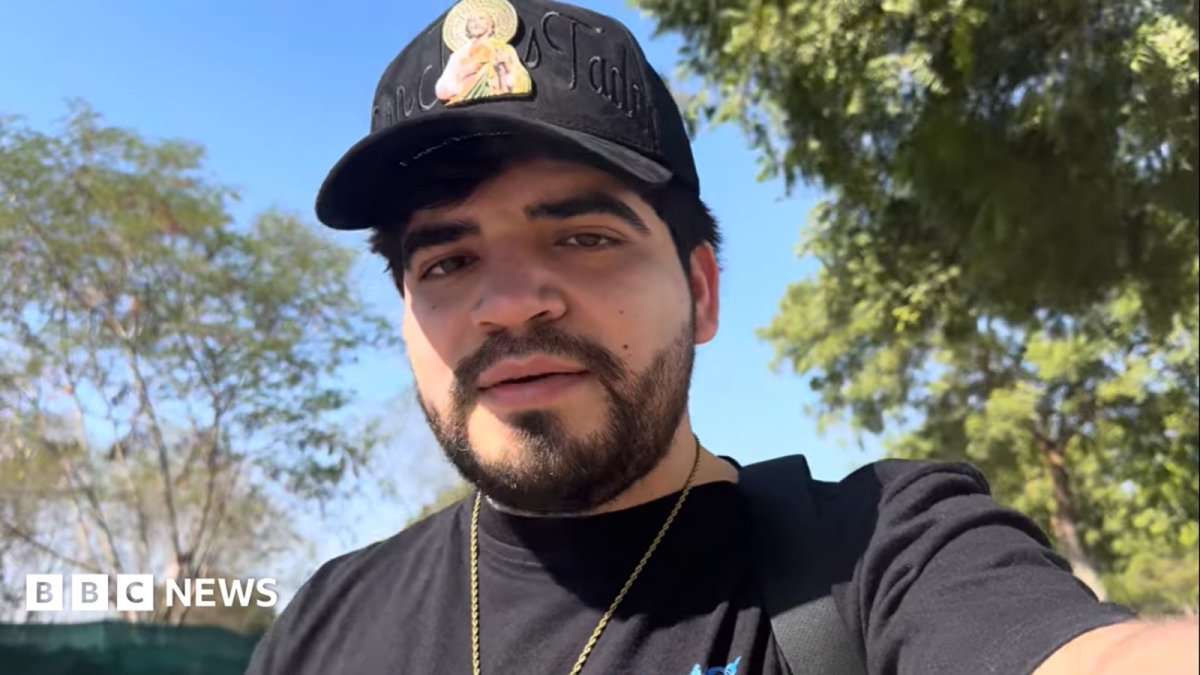
On Tuesday evening, a 25-year-old man sat outside a KFC in Culiacan, Sinaloa, dressed as a food delivery worker for a social media challenge. He was chatting with two friends, livestreaming the mundane moment to his followers on the platform Kick. Within seconds, the feed turned into a murder scene: two helmeted men on a motorcycle pulled up, the driver fired a single shot at close range, and the stream went dark. The victim, Cesar Gastelum, a TikTok creator with nearly 600,000 followers, was dead before his audience could process what they had witnessed.
Culiacan, Mexico — The killing of Gastelum, which unfolded live before hundreds of anonymous viewers, is not an isolated tragedy. It is the latest and most visceral example of a brutal trend that has defined Sinaloa's two-year cartel war: the systematic targeting of content creators who have become entangled—willingly or not—in the propaganda machinery of organized crime. According to BBC News Mundo, at least ten content creators have been murdered in Sinaloa since the violent split between the "Los Chapitos" and "La Mayiza" factions of the Sinaloa cartel — clashes that the International Crisis Group dates to September 2024. Gastelum's death, captured in real time, has forced a reckoning in Mexico about the deadly intersection of social media fame, narcoculture, and the cartels' need for digital legitimacy.
A Murder Broadcast to Hundreds of Followers
The attack occurred around 8pm local time in a crowded shopping district of Culiacan, the state capital, according to regional reports. Gastelum was livestreaming a challenge that required him to pose as a delivery worker, a stunt typical of his content—comedy skits, challenges, and flashy clips of luxury cars, nightlife, and expensive trips. The two motorcycle riders had passed by Gastelum and his friends several times before the fatal approach. In a moment captured on the stream, Gastelum reportedly told his companions, "Those kids scare me, man," according to regional coverage. Seconds later, the driver fired a single shot to his head and fled.
The livestream was promptly shut down and removed from the platform, but not before the footage was copied and circulated across social media. The shooting occurred near the state prosecutor's office, prompting a large-scale security operation involving military and police units. As of this week, no arrests have been made, according to regional reports. The Sinaloa state prosecutor's office has offered little detail but stated that its lines of investigation include a number of posts Gastelum had published, "some of which refer to a criminal group." Officials have clarified that Gastelum had not received direct threats from criminal organizations, nor was he under police investigation for alleged criminal links—a distinction that sets him apart from other influencers previously targeted.
The Dangerous Allure of the Narco-Influencer Label
Gastelum's case fits a disturbing pattern that has emerged in Sinaloa since the cartel war began. In January 2025, leaflets were dropped from an aircraft onto the streets of Culiacan, according to BBC News Mundo. The pamphlets accused 25 influencers and musicians of having links to "La Mayiza," one of the warring factions. Four of those named had already been killed and were marked on the leaflet as "eliminated." Two more have been murdered since. Gastelum's name was not on that list, yet his killing is widely seen as part of the same phenomenon: young public figures with large followings becoming targets in a conflict where digital presence is as strategic as territorial control.
Content creators in Culiacan have vehemently rejected the "narco-influencer" label, arguing that being a young public figure who flaunts a luxurious lifestyle can make you a target regardless of actual cartel ties. In one photo Gastelum posted, he could be seen at the grave of Leobardo Aispuro, better known as "El Gordo Peruci," an influencer who was murdered in 2024. Such associations, even if purely social, can be deadly in a city where the cartel's intelligence apparatus monitors social media as closely as police do.
Cartels as Multinationals: The Business of Digital Propaganda
Claudia Arrunada, a communications expert at Mexico's Iberoamerican University, argues that the relationship between cartels and content creators is not coincidental but structural. "The algorithm and the narcos promote the same thing: consumption and luxury as ultimate values, to be achieved in the quickest way possible," Arrunada told BBC News Mundo. "The model for success is no longer based on methodically working on your career, but rather on having a meteoric rise." This convergence of incentives has created a dangerous ecosystem where young creators, seeking fame and fortune, inadvertently align themselves with the aesthetics of organized crime.
Studies cited by BBC suggest that cartels—which function like multinational companies with diverse business interests—use content creators as community managers to promote their "brand." When rival factions turn on each other, those seen as spreading propaganda for one group can quickly become targets for its enemies. The cartels have learned that a single viral video can shape public perception more effectively than any armed operation. In this context, the murder of an influencer is not just an act of violence; it is a message broadcast to millions, a warning about the consequences of perceived allegiance in a war where neutrality is not an option.
Government Response: A War on Two Fronts
President Claudia Sheinbaum addressed the killing on Wednesday, stating that local and national authorities would pursue both those who murdered Gastelum and those who ordered the hit, according to official statements. The Sheinbaum administration has made a concerted effort to sever the link between popular culture and the criminal underworld, denouncing narcocorridos—songs that glorify criminals—while simultaneously tackling crime head-on. Official figures suggest that the number of murders fell by 48% in 2025, a statistic the government has touted as evidence that its security strategy is working.
But killings like Gastelum's, witnessed live by followers, undermine that narrative. They strengthen the impression that narcos continue to wield power and death not just on the streets of Culiacan but also on digital platforms, where they can execute someone in front of a global audience with impunity. The government's challenge is twofold: it must dismantle the cartels' operational capacity while also addressing the cultural conditions that make young people vulnerable to their influence. The war on narcoculture is as much about algorithms as it is about arrests.
Beyond Sinaloa: A Regional Pattern of Violence Against Creators
The phenomenon extends far beyond Sinaloa. BBC News Mundo also reported on the case of Valeria Marquez, a 23-year-old beauty influencer with nearly 200,000 TikTok followers, who was killed while streaming in her beauty salon in Guadalajara, Jalisco state. A man entered on the pretext of delivering a gift before opening fire, according to wire coverage. The parallels are striking: both women and men, young and ambitious, killed in public spaces while their cameras rolled. The message is the same—no one is untouchable, and digital fame can be a death sentence.
This pattern has echoes across Latin America, where social-media fame increasingly intersects with organized crime aesthetics. In countries like Chile and Brazil, the glorification of luxury and the "narco" lifestyle has permeated popular culture, creating a generation of young people who see criminal wealth as aspirational. The cartels, for their part, have adapted to this reality, using influencers as both recruiters and targets. In Culiacan, the capital of Mexico's most powerful cartel, the line between content creator and casualty has become tragically thin.
The Algorithm of Death: What Gastelum's Murder Reveals
Gastelum's death is a grim reminder that in Mexico's cartel war, social media is not a refuge but a battlefield. The same platforms that allowed him to build a following of nearly 600,000 people also made him visible to the wrong eyes. His murder, broadcast live, was a performance of power—a demonstration that the cartels can reach anyone, anywhere, at any time. The fact that it happened near the prosecutor's office, in a crowded commercial district, only amplifies the message of impunity.
For the young people of Culiacan, the lesson is chilling: the pursuit of fame and fortune through social media can make you a target, whether or not you have any real connection to organized crime. The cartels have weaponized the algorithm, turning the very tools of self-promotion into instruments of death. As the Sheinbaum government struggles to contain the violence, the case of Cesar Gastelum stands as a stark warning about the cost of narcoculture in the digital age. His last moments, witnessed by hundreds online, will not be forgotten—nor will the questions they raise about the role of social media in Mexico's ongoing tragedy.
By Elena Vasquez, Staff Writer
This article was produced with AI-assisted research and editorial support. Reporting is based on sources cited in the article.
What's Your Reaction?
 Like
0
Like
0
 Dislike
0
Dislike
0
 Love
0
Love
0
 Funny
0
Funny
0
 Wow
0
Wow
0
 Sad
0
Sad
0
 Angry
0
Angry
0

Latin America Correspondent at Global1.News. Based in Mexico City, covering politics, economics, energy, and culture across the region. Brings an on-the-ground perspective to stories spanning from the Rio Grande to Patagonia.











Comments (0)