
Trump Demands Iran Compensation as Hormuz Talks Stall
Trump demands Iran pay compensation for deaths and injuries he attributes to Tehran over decades, countering Iran's war reparations demand as a condition for reopening the Strait of Hormuz - the latest sign the five-month U.S.-Israel war on Iran has hit an impasse.
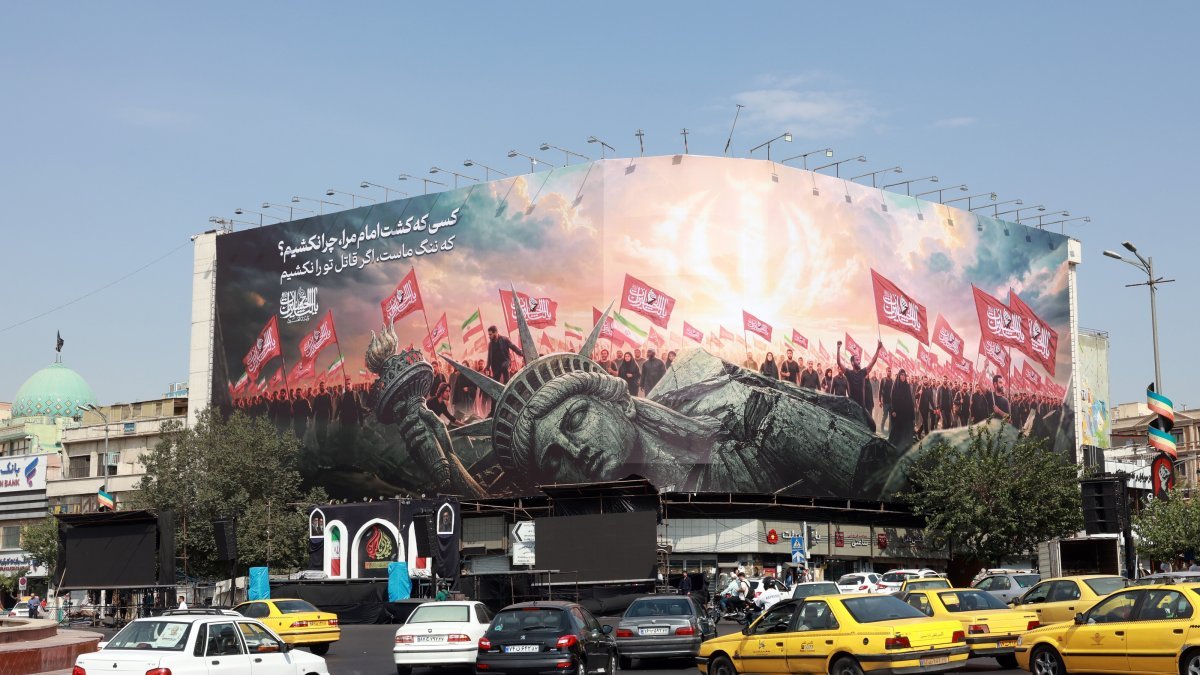
U.S. President Donald Trump has escalated the standoff over the reopening of the Strait of Hormuz by demanding that Iran pay compensation for decades of deaths and injuries his administration attributes to Tehran, directly countering Iran's insistence on U.S. war reparations as a precondition for restoring shipping through the strategic waterway. The exchange, which unfolded across Trump's Truth Social platform and White House remarks on Monday, marks the clearest signal yet that the five-month U.S.-Israel war on Iran and the fragile negotiations to end it have reached a critical impasse.
Trump Demands Iran Compensation as Hormuz Talks Stall
Washington, D.C. – August 11, 2026 — The president's demands, which include compensation for the 2000 bombing of the USS Cole, roadside bomb attacks, and Iran's domestic crackdowns, are likely to be a nonstarter for Tehran's leadership. They come at a moment when Israel has rejected a U.S.-backed roadmap for Gaza, and the region's energy arteries remain choked by a naval blockade that has halted Iranian oil exports entirely.
The Compensation Standoff: A Direct Counter to Tehran's Claims
Trump's initial post on Truth Social on Monday framed the demand as a rhetorical mirror of Iran's own negotiating position. "It is an interesting idea because now I am likewise demanding compensation from Iran, for all of the people that they have killed and gravely wounded with their roadside bombs and many conflicts," he wrote, referencing the October 2000 attack on the USS Cole that killed 17 U.S. sailors and wounded more than three dozen others. The FBI has attributed that bombing to al Qaeda, not Iran, a distinction Trump's post ignored.
The president broadened his scope an hour later, writing: "Also, with respect to the Iran negotiations, Iran should be responsible for the damages and death caused to the people of Lebanon, Syria, Yemen, and Gaza!" Speaking to reporters at the White House, Trump framed the move as a direct response to Tehran's claims for damages from the U.S.-Israeli bombing campaign. "They asked for reparations, you might say. Or they asked for money for the damage that we've done. I said that's a good idea. Well, we're going to ask for money for the damage they've done over a 50-year period," he said.
Trump also demanded compensation for the families of protesters killed during Iran's domestic unrest, claiming 52,000 people have died in the past five months. Tehran says some 3,117 people died in the January protests that preceded the war, while the U.S.-based Human Rights Activists News Agency (HRANA) reported about 7,000 deaths, including 6,500 protesters. The president concluded his post by instructing his representatives to "put this firmly into any, and all, future negotiations."
The Hormuz Context: A Chokepoint Under Siege
The compensation standoff is playing out against the backdrop of the most significant disruption to global oil trade in decades. Before the U.S.-Israel war on Iran began in late February, the Strait of Hormuz carried approximately 20% of global oil and liquefied natural gas trade. That flow has been reduced to a trickle, with the U.S. Navy reinstating a blockade of Iranian ports in July after a June memorandum of understanding collapsed over disputes on control of the strait.
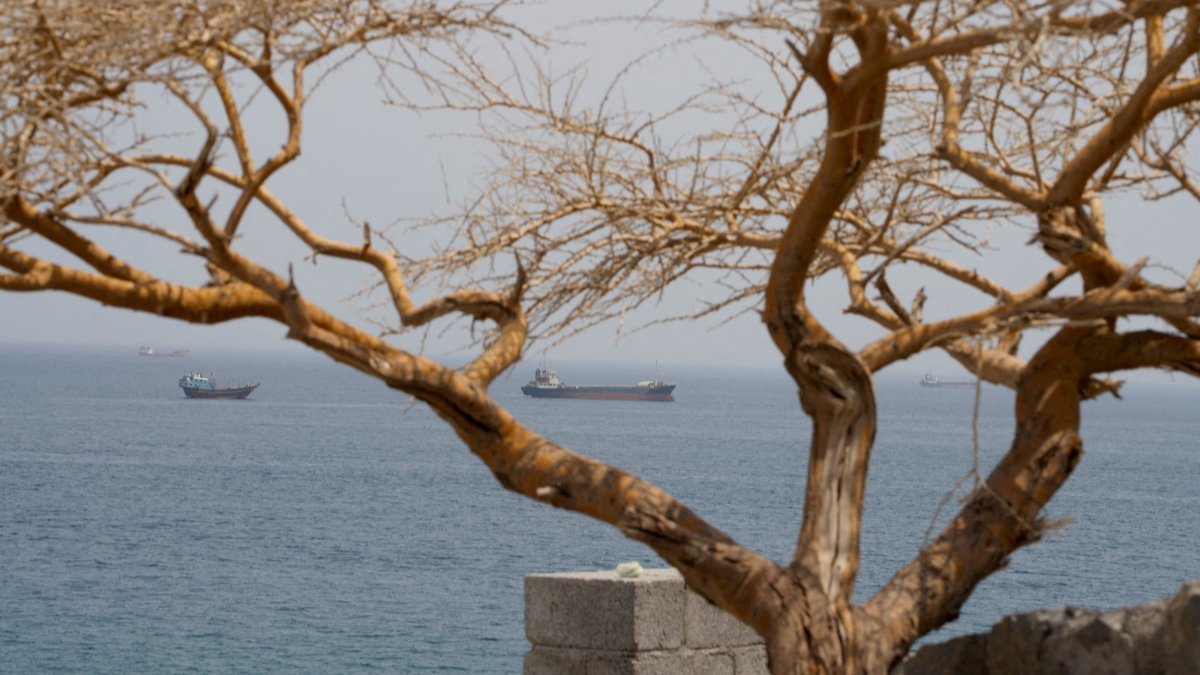
U.S. Central Command said Monday it has redirected 55 commercial vessels since reinstating the blockade and "disabled" at least two. According to Windward, a maritime intelligence firm, the blockade has resulted in a "complete halt" to Iranian oil exports from Kharg Island, the country's main export terminal. Trump described the blockade as a "steel wall" and claimed "the only one that has control of the Strait of Hormuz right now is the United States Navy," adding that the waterway was open and cleared of mines.
Shipping data tells a different story. MarineTraffic reported that crossings through the strait dropped from 15 on Friday to 11 on Saturday, and just six on Sunday. The data showed 17 vessels passed through the Iran-designated route, while 10 others took a route classified as "undetermined." Iran's Foreign Ministry spokesman Esmaeil Baghaei told state media Monday that talks with Oman were "progressing smoothly and constructively," with an agreement reached on a shipping route map, though some technical issues remained unresolved. He added that Washington's naval blockade of Iranian ports constitutes an "act of aggression."
Iran's Conditions: Compensation, Sanctions, and the Supreme Leader's Shadow
Iran's position has been consistent since the June memorandum fell apart. Foreign Minister Abbas Araqchi said Sunday that a deal with Oman defining new shipping lanes was in its "final stages" but reiterated that the waterway would reopen only once the U.S. meets other conditions. Those conditions, listed by the secretary of Iran's top national security body, Mohammad Baqer Zolqadr, include U.S. compensation for its attacks, an end to threats against Iran, cessation of aggression against Iran and its Lebanese, Palestinian, Yemeni, and Iraqi allies, lifting the blockade and sanctions, and freeing Iranian assets.
Iran and the U.S. are not engaged in direct talks, Araqchi said, adding that messages are being exchanged via intermediaries. Ultimate decision-making rests with Supreme Leader Mojtaba Khamenei, who has not been seen in public since an air strike killed his father and predecessor on February 28, the first day of U.S.-Israeli strikes. State media said Sunday that President Masoud Pezeshkian met Khamenei in late July, and a paramilitary leader promised footage of the supreme leader, who was reportedly injured in the strike that killed his father, would soon be released publicly.
The Iranian demands are largely in line with the terms of the June interim agreement, which has since broken down. A U.S. official told Reuters on condition of anonymity that "once the deal is announced to restore commercial shipping without impediments, the US will lift the blockade of Iranian ports." That linkage, however, has yet to produce a breakthrough.
The Wider Regional Picture: Gaza, Houthis, and the Mecca Defence Pact
Trump's compensation demands come as his broader efforts to end multiple Middle East conflicts before the November midterms face mounting setbacks. On Sunday, Israeli Prime Minister Benjamin Netanyahu rejected the Trump-backed Board of Peace's 15-point plan to end Israel's war in Gaza, insisting that Hamas must fully disarm before Israel would consider a phased withdrawal. "Unlike all those who lecture us, we do what needs to be done for Israel's security, and we can and know how to stand our ground, even against our best friends when necessary," Netanyahu said.
The Gaza rejection complicates Trump's regional strategy, which has sought to bundle a ceasefire in Gaza with the Iran negotiations and a halt to attacks by Iran's regional proxies. Those proxies remain active. The Houthis, Iran's Yemen-based allies, declared a naval blockade against Saudi Arabia in the Red Sea last month in response to what they said was a Saudi siege on them in Yemen, an allegation denied by Riyadh. The group said they attacked Saudi Aramco's Jazan refinery on Sunday, two days after the kingdom signed a defence pact with Sunni Muslim allies Turkey and Pakistan in response to growing regional instability from the war on Shi'ite Iran. The Saudi energy ministry said a fire broke out at the refinery but was extinguished with no injuries. Turkish Foreign Minister Hakan Fidan said the new alliance was not directed against Iran or any other country but served as a general pledge to support security.
The United Arab Emirates said Saturday that Iran had attacked a ship affiliated to its state oil company, adding another layer of tension to Gulf state calculations. The UAE, along with Saudi Arabia, has sought to maintain a delicate balance between supporting U.S. security guarantees and avoiding direct entanglement in the war on Iran.
Strategic Calculus: "Banter" or a Path to Resolution?
Charles Kupchan, a former special assistant to President Barack Obama, described Trump's compensation remarks as "banter" and said both sides have strong incentives to reach a deal. "Unfortunately, we are just looking at some back-and-forth banter here, where neither the Iranians nor the Trump administration is being serious," he told Al Jazeera. "Iran cannot survive if it won't be able to export its oil," and Trump does not want to go into the U.S. midterms with high gas prices. There is also pressure on the Pentagon in light of reports that U.S. munitions stockpiles are low, Kupchan added.
Trump's rhetoric has oscillated dramatically in recent weeks. On Aug. 3, he warned he was giving Iran one final opportunity to agree to a peace deal or risk "decapitation." By Aug. 9, in a phone interview with Axios, he said the U.S. was prepared to hold off on new military action to watch economic pressure on Tehran play out. "We are low-keying it," Trump said, adding that talks had slowed. "We are only semi-negotiating with them. We are just watching Iran with its huge inflation and the fact they have no money."
The economic pressure is real. Iran's oil exports have been halted entirely, and its economy is under severe strain. But Tehran's leadership, now under the untested authority of Mojtaba Khamenei, faces its own domestic pressures. The regime has continued to crack down on opponents during the war, according to rights groups, and the January protests demonstrated the fragility of its internal control. For both sides, the calculus is about survival: Iran cannot sustain its economy without oil exports, and Trump cannot sustain his political position with high gas prices heading into the midterms.
Regional Implications: Energy Markets, Gulf Alliances, and What Happens Next
The impasse has profound implications for global energy markets and regional alliances. With Hormuz effectively closed to Iranian traffic and the Houthis threatening shipping in the Red Sea, the world's oil supply chains remain vulnerable. The Saudi-Turkish-Pakistani defence pact, signed in response to regional instability, signals a realignment of Sunni alliances that could reshape the region's security architecture. The pact is not directed against Iran, according to Fidan, but its timing — two days before the Jazan refinery attack — underscores the escalating risk.
For the Gulf states, the war has created a dilemma. Saudi Arabia and the UAE have sought to avoid direct involvement while managing the fallout from attacks on their infrastructure and shipping. The UAE's accusation that Iran attacked its state oil company's ship adds pressure on Abu Dhabi to respond, while Riyadh's new defence pact with Turkey and Pakistan suggests a hedging strategy against both Iranian aggression and U.S. unreliability.
The path forward remains unclear. Trump's compensation demands are likely to harden Tehran's position, making a deal on Hormuz even more distant. Iran's leadership, facing existential threats, may calculate that it has little to lose by holding out. The U.S., meanwhile, faces the prospect of entering the midterms with high oil prices and an unresolved conflict that has already claimed the lives of at least 18 U.S. service members in attacks connected to the war.
The June memorandum's collapse and the subsequent blockade have created a cycle of escalation that neither side appears able to break. Iran's talks with Oman on shipping lanes suggest a technical path to reopening the strait exists, but the political conditions attached to it — compensation, sanctions relief, and an end to threats — remain unresolved. Trump's demand for counter-compensation, framed as a negotiating tactic, may be precisely the kind of "banter" Kupchan described. But in a region where miscalculation has repeatedly led to war, the stakes are far too high for posturing alone.
By Malik Hassan, Staff Writer
This article was produced with AI-assisted research and editorial support. Sources: Daily Sabah, Reuters, The Guardian, Al Jazeera, USA Today
What's Your Reaction?
 Like
0
Like
0
 Dislike
0
Dislike
0
 Love
0
Love
0
 Funny
0
Funny
0
 Wow
0
Wow
0
 Sad
0
Sad
0
 Angry
0
Angry
0

Middle East Correspondent at Global1.News. Based in Beirut, covering politics, conflict, energy, and society across the Middle East. Brings context and depth to a region often reduced to headlines.










Comments (0)