
South Korea's S-10 Project: 3 Regional Universities Get Billions
South Korea has picked its first three regional universities for a massive state investment program aimed at building institutions that can rival Seoul National University — a direct challenge to the capital's decades-long grip on the country's best minds and brightest futures.
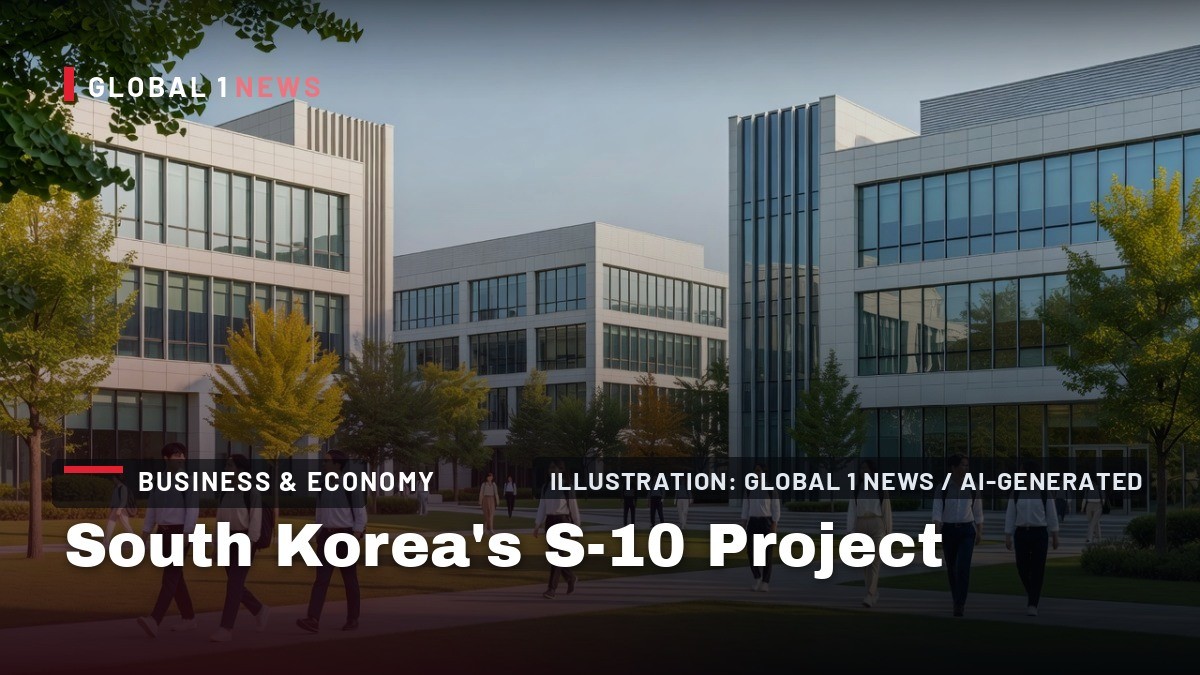
South Korea has picked its first three regional universities for a massive state investment program aimed at building institutions that can rival Seoul National University — a direct challenge to the capital's decades-long grip on the country's best minds and brightest futures. The selections mark the first concrete step in President Lee Jae-myung's flagship "S-10" project, and the stakes could not be higher for a nation whose regional campuses are bleeding students.
South Korea's S-10 Project: 3 Regional Universities Get Billions
Seoul, South Korea — The Ministry of Education on Tuesday named Pusan National University, Chonnam National University and Chungnam National University as the first recipients of the government's "Making 10 Seoul National Universities" initiative, a five-year package worth roughly 500 billion won — about US$380 million — per institution. The funding, running from 2026 through 2030, begins with around 70 billion won this year and is designed to build AI talent pipelines and industry-academia-research hubs outside the capital.
The First Three Selections
The announcement, made September 1, 2026, came through a pan-government council after a formal application and review process, according to the Korea JoongAng Daily and Financial News. The three winning universities represent distinct regional anchors: Pusan National University in Busan, the southeastern port metropolis and South Korea's second-largest city; Chonnam National University, which serves the Gwangju and South Jeolla Province area in the southwest; and Chungnam National University in Daejeon, the central science city that hosts the Daedeok Innopolis research cluster.
Each institution will receive about 500 billion won over the five-year window, a figure confirmed by Seoul Shinmun and the Korea JoongAng Daily. The Education Ministry has separately said it aims to invest 100 billion won a year in each supported regional flagship.
The selection process was notable for its cross-government coordination: a pan-government council — rather than the education ministry alone — made the final call, signaling the initiative is as much economic and industrial policy as education policy. Busan, Gwangju and Daejeon anchor three of the country's five major regional blocs, each with infrastructure for the new money to build on.
For Pusan National University, the designation carries particular weight. Busan has long struggled to retain young talent against Seoul's magnetic pull, making the university — the premier public institution in the southeast — a natural test case for whether state investment can reverse the capital-ward flow of students and workers. Chonnam serves a southwest region long underserved by national development policy, while Chungnam National sits in Daejeon, already home to the Daedeok Innopolis research cluster and a dense concentration of government-funded research institutes.
What the Money Buys
The funding is not a blank check for general operations. The package is explicitly targeted at developing AI talent and building industry-academia-research hubs, according to the Seoul Shinmun and Korea JoongAng Daily. Pusan National University, in its official notice, described the support as coming under the government's "2026 Growth Engine & AI Package Support Program."
That program is part of a broader national strategy called "Five Poles and Three Special Zones," which organizes the country around five major regional blocs. The stated goal, per Pusan National University's announcement, is to foster regional talent and advance balanced national development beyond the capital. For Chonnam National University, the ambition is to become a regional hub research institute for Gwangju and South Jeolla, according to university announcements.
The emphasis on AI is deliberate. South Korea's government does not want its AI ecosystem to be yet another Seoul-centric phenomenon; directing major resources to regional campuses for AI talent and industry-academia-research pipelines is an attempt to seed tech innovation outside the capital.
The '10 Seoul National Universities' Ambition
The project's name is deliberately provocative. Seoul National University is South Korea's most prestigious institution, and the S-10 project — as it is commonly called — aims to lift regional flagship universities toward that level of quality and prestige. The initiative was launched as a major national task of the Lee Jae-myung administration, according to Chosun Biz reporting from December 2025.
The project began in earnest after the education ministry finalized a record 106.36 trillion won budget for 2026, a figure reported by Chosun Biz.
The name carries deep resonance for Koreans. Seoul National University is not merely the country's top university; it is the gateway to its most powerful networks in government, business, law and academia. For decades, the path to success in South Korea has run through the capital. Naming a national project after that institution is an explicit acknowledgment that this concentration of opportunity is a national problem.
There is a political dimension, too. President Lee Jae-myung has staked considerable political capital on regional balanced development, and the S-10 initiative is among his administration's most visible higher education policies. Its success or failure will be read as a verdict on that broader agenda — giving the project powerful high-level backing, but also magnifying any setback.
The Free-Tuition Companion Policy
The S-10 project does not stand alone. The same ministry recently announced plans to make tuition free for students at about 30 national universities outside the Seoul metropolitan area, according to the Seoul Economic Daily's August 28, 2026 reporting and The Korea Herald. The government has allocated 213 billion won for next year, with roughly 200 billion won planned annually, aiming to cover all class years by 2030.
The free-tuition plan includes a clawback provision: funds would be reclaimed from students who leave before graduating, such as by withdrawing. The funding draws partly on excess tax revenue from South Korea's semiconductor industry boom, a detail reported by the Seoul Economic Daily. This coupling of free tuition with the S-10 investment represents a two-pronged approach — reduce the cost barrier for attending regional schools while simultaneously upgrading their research and AI capabilities.
The logic of pairing the policies is straightforward. Free tuition attacks the demand side — the cost barrier for families weighing a regional campus against a Seoul education — while the S-10 investment attacks the supply side, aiming to make regional universities genuinely excellent so that students who enroll for financial reasons discover a world-class education.
The clawback provision is a telling detail: it shows the government understands that free tuition alone will not hold students if quality or local job prospects disappoint. Whether that provision proves enforceable — and whether it is applied with flexibility — remains to be seen.
Why the Government Is Acting
The demographic driver is stark. South Korea has one of the world's lowest birth rates, its school-age population is shrinking, and students continue to concentrate in the Seoul capital area, according to AJU Press and the Korea JoongAng Daily. These pressures have shaken the foundations of regional universities, which have seen enrollment declines and budget strains as the country's youth vote with their feet — moving to the capital for better schools, better jobs and better prospects.
The government's target is specific: raise per-student spending at supported regional universities to 70 percent of Seoul National University's level by 2030, according to the Seoul Economic Daily. That metric, while technical, speaks to a fundamental disparity — the gap in resources between the capital's elite institutions and the regional flagships that anchor local economies across the country.
The demographic math is unforgiving. With one of the world's lowest fertility rates, the pool of university-age applicants is shrinking year after year — an existential threat to regional campuses, which compete hardest for each remaining student as capital concentration leaves seats empty and finances strained.
Regional universities are also economic anchors. They employ faculty and staff, attract research funding, support local businesses and produce the doctors, engineers, teachers and public servants who staff regional hospitals, factories and schools. When a regional campus declines, the ripple effects hit regional healthcare, industry and public services — which is why the government frames this as growth policy, not just education policy.
Pushback From Private Universities
Not everyone is cheering. Presidents of private universities have publicly denounced the state-funded free-tuition plan for regional public universities, arguing it skews competition, according to The Korea Herald and AJU Press debate coverage. Their argument is straightforward: government-subsidized tuition at public regional schools creates an uneven playing field that private institutions — many of them also outside the capital — cannot match.
Critics and editorialists have also questioned whether free tuition or large cash injections alone can revive regional universities without deeper reforms to academic quality, local job creation and fairness, according to The Korea Herald and a Korea JoongAng Daily opinion piece. The concern is that money alone cannot fix what ails regional higher education — that students will not stay in Busan or Gwangju or Daejeon just because tuition is free, if the jobs they want remain concentrated in Seoul.
The private universities' objections carry weight. Many private institutions also operate outside the capital and serve regional students without comparable tuition subsidies; if enrollments shift to free public campuses, regional private schools could see their strained numbers fall further — a perverse outcome for a policy meant to strengthen regional higher education as a whole.
The deeper critique — that money alone cannot solve the problem — is harder to dismiss. Regional universities' struggles are reputational and structural as much as financial, and no amount of funding can instantly change perceptions built over decades. The jobs young South Koreans seek remain disproportionately concentrated in Seoul; if regional graduates cannot find meaningful local careers, the cycle of out-migration will continue.
What Success Would Look Like
The 2030 targets are the clearest benchmarks. By then, the government aims to have per-student spending at supported regional universities at 70 percent of Seoul National University's level, and free tuition fully phased in across all class years at the roughly 30 eligible national universities. The S-10 project's five-year funding window also closes in 2030, making that year a natural point to assess whether the investment has moved the needle.
What to watch next is the rollout: whether the first three succeed in building AI talent pipelines and industry-academia-research hubs will shape whether the government expands the program or retreats. The demographic headwinds will not ease, and the competition for students will only intensify.
Success will ultimately be measured in outcomes: whether regional universities attract and retain talented students, whether those graduates find meaningful careers outside the capital, and whether Seoul's gravitational pull begins to weaken. The 70 percent spending target is a useful proxy, not the goal itself. The real goal is a South Korea where young people can pursue a world-class education and a fulfilling career without leaving their regions.
The S-10 project is, at its core, a bet that regional universities can be more than consolation prizes — that they can become genuine alternatives to the capital's dominance. The money is now committed. The universities are chosen. The question is whether the results will follow.
By Jessica Ali, Staff Writer
This article was produced with AI-assisted research and editorial support. Sources: Seoul Shinmun, Korea JoongAng Daily, The Korea Times, Seoul Economic Daily, The Korea Herald, AJU Press, Pusan National University.
What's Your Reaction?
 Like
0
Like
0
 Dislike
0
Dislike
0
 Love
0
Love
0
 Funny
0
Funny
0
 Wow
0
Wow
0
 Sad
0
Sad
0
 Angry
0
Angry
0

Editor-in-Chief at Global1.News. Atlanta-based journalist who cuts through the BS and tells it like it is. Lead anchor, host, and the voice you hear when the spin stops and the truth starts.













Comments (0)