
Toronto voters want action on affordability, housing ahead of municipal election
Toronto voters are heading to the polls this month with a clear message: affordability, housing and basic services must be at the forefront of the next mayor’s agenda.
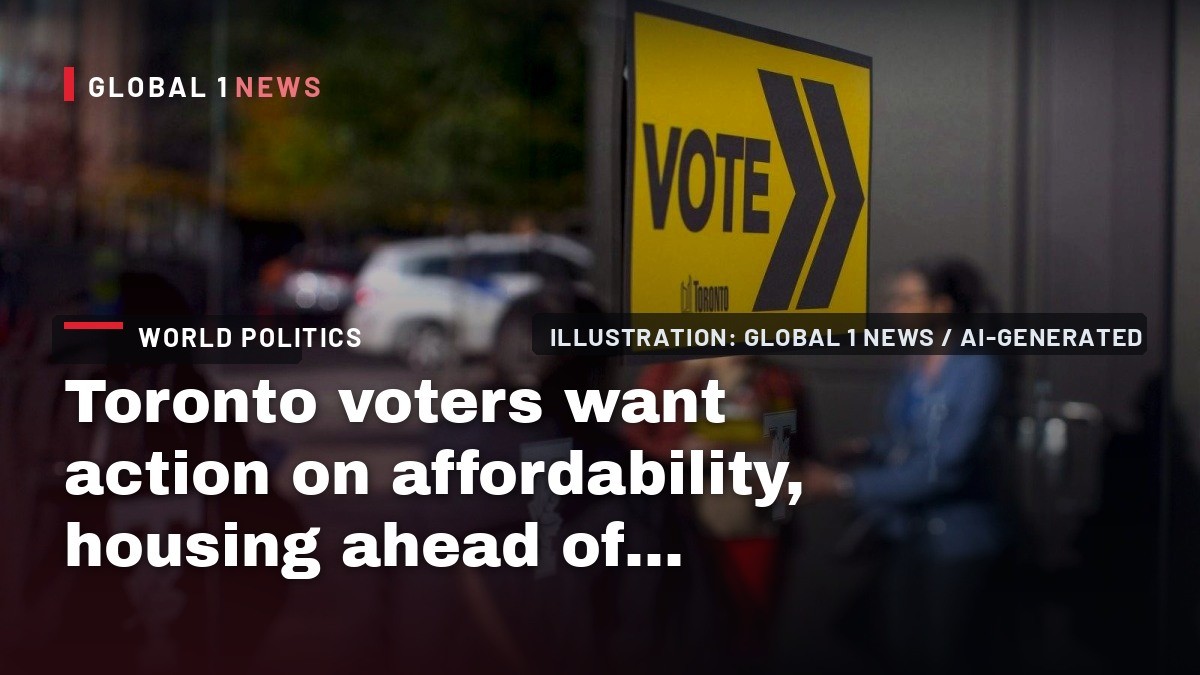
Toronto voters are heading to the polls this month with a clear message: affordability, housing and basic services must be at the forefront of the next mayor’s agenda. More than 50 candidates have entered the race for the city’s top job, but recent polling points to a close contest between incumbent mayor Olivia Chow and councillor Brad Bradford. As the campaign intensifies, residents across the city are weighing promises on grocery costs, property taxes, transit expansion and public safety, hoping the new administration will address the pressing challenges that have intensified since the pandemic.
Affordability drives voter priorities
For many Torontonians, the cost of living has become a daily concern. Ilham Saydna, a 30‑year‑long resident of North York, summed up the sentiment: “I am looking to see who is going to be having a good platform for food security because a lot of people are hungry right now, and people are going to food banks and they cannot afford to pay rent.” Her remarks echo a broader anxiety about rising expenses, especially for renters who feel the definition of affordable housing needs to be revisited.
Mayor Chow has pledged to lower grocery prices, provide free school lunches and increase the supply of affordable units. By contrast, Bradford’s platform includes a freeze on property tax rates during his first year and the elimination of the land transfer tax for homes priced under $1.1 million. Both proposals aim to ease household budgets, yet voters like Saydna remain cautious, insisting that any credible plan must directly tackle food security and rental stability.
Housing supply and the homelessness debate
Housing shortages and the homelessness crisis dominate the municipal conversation. While the city’s ten‑year plan to add more shelters—including sites outside the downtown core—has been rolled out, reactions are mixed. Patty Wegrzyn, a Scarborough homeowner who sold her property after struggling with rising property taxes, voiced a common concern: “Everybody has a right to have a home, but do not put homeless shelters where there are small children and families.” Her stance reflects a tension between expanding shelter capacity and preserving neighbourhood safety.
Both mayoral hopefuls have offered distinct strategies. Chow argues that her current approach to reducing homelessness is working, whereas Bradford promises to boost supportive and transitional housing options. Peter Formica, a senior living in co‑operative housing, suggested the city could generate funds for senior‑focused affordable homes by selling underused high‑value properties and repurposing larger vacant units. His ideas illustrate the diverse ideas circulating among residents on how to stretch municipal resources to meet housing needs.
Public safety linked to poverty reduction
Crime rates have been a point of discussion, though recent police data show a downward trend in homicides, shootings and robberies. Saydna linked safety to economic security, noting, “If we tackle poverty and people’s needs, crime will go down. If people are not properly housed and they live on the streets, you can’t blame them for trying to survive.” This perspective underscores a growing belief that addressing poverty is integral to sustaining public safety.
Ross Rowlands, a Beaches resident and avid cyclist, called for a shift from reactionary policing to preventative measures addressing mental health and underlying social issues. He also criticised Ontario Premier Doug Ford’s recent decisions to ban municipal speed cameras and remove bike lanes, describing the changes as “terrible” and “unsafe.” Rowlands’ comments highlight how provincial policies intersect with local safety concerns, especially for active‑transport users.
Transit expansion and the Scarborough gap
Transit remains a pivotal issue, particularly in Scarborough, a district of more than 600,000 residents often described as a “transit desert.” The recent opening of a four‑kilometre Scarborough Busway, connecting Kennedy Station to Scarborough Town Centre, was hailed as a major achievement, especially because it opened six months ahead of schedule. Yet many residents feel the improvement is insufficient.
Leonel Juan expressed frustration that while subway extensions have reached Vaughan in the north, Scarborough’s integration into the wider transit network lags nearly three decades after the city’s amalgamation. The long‑awaited Scarborough subway extension remains years from completion, and the Scarborough East Rapid Transit light‑rail project, now in the design phase, has been delayed for almost two decades. Juan urged the next mayor to accelerate these projects and to allow more development along the district’s waterfront to alleviate housing pressures.
Provincial relations and municipal autonomy
The relationship between Toronto’s municipal leaders and the provincial government under Premier Doug Ford continues to shape policy outcomes. Ross Rowlands criticised Ford’s removal of bike lanes, noting that empirical studies have shown such infrastructure improves road safety. Conversely, Mayor Chow has publicly opposed the speed‑camera ban and bike‑lane cuts, yet she has also worked closely with the premier on other matters, with Ford describing their rapport as “phenomenal.” This duality illustrates the nuanced dance municipal leaders perform to balance advocacy for city interests while navigating provincial authority.
Bradford’s pledge to scrap the land transfer tax for homes under $1.1 million directly challenges a provincial revenue stream, signalling a willingness to confront provincial policy where it impacts affordability. Voters like Terry Chamberlain, who lives in Don Mills, watch these dynamics closely, recognising that municipal‑provincial cooperation—or conflict—will shape the city’s capacity to deliver on promises.
Community priorities beyond the headline issues
Local concerns extend beyond the big‑ticket items of housing and transit. Chamberlain, a Don Mills resident, highlighted the need for a new community centre and child‑focused facilities in his neighbourhood, while also supporting reasonable development that fits the area’s character. His view reflects a broader desire for balanced growth that respects existing community fabric.
Meanwhile, senior‑focused solutions, such as the suggestion to sell underused city properties to fund affordable housing for older adults, point to a demographic shift that municipal policy must address. As Toronto’s population ages, integrating senior housing into the broader affordability agenda will become increasingly important.
What the next mayor could mean for Toronto’s future
The upcoming municipal election will determine how Toronto navigates a complex web of affordability, housing, transit and safety challenges. If Mayor Chow’s platform of grocery price reductions, free school lunches and expanded affordable housing gains traction, the city may see a more direct interventionist approach to cost‑of‑living pressures. Conversely, a Bradford victory could usher in tax freezes and a focus on reducing land‑transfer costs, potentially easing the financial burden on homebuyers while emphasizing private‑sector development.
Both candidates have signalled a willingness to engage with provincial leaders, but the extent of that cooperation will be critical. As residents like Ilham Saydna, Ross Rowlands and Leonel Juan have demonstrated, the electorate is looking for concrete actions that translate into daily relief—whether that means more shelter beds, safer streets, or a subway line that finally reaches Scarborough. The tight race underscores a city at a crossroads, where the next mayor’s decisions will reverberate through neighbourhoods, impact provincial negotiations and shape the lived experience of millions of Torontonians for years to come.
This article was produced with AI-assisted research and editorial support. Reporting is based on the source material cited below. Sources: Global News Canada; globalnews.ca; Global1.News (12 October 2026).
By Alex Thompson, Staff Writer
What's Your Reaction?
 Like
0
Like
0
 Dislike
0
Dislike
0
 Love
0
Love
0
 Funny
0
Funny
0
 Wow
0
Wow
0
 Sad
0
Sad
0
 Angry
0
Angry
0
Canada Correspondent at Global1.News. Based in Toronto, covering Canadian politics, energy, trade, and US-Canada relations. Provides the Canadian perspective on North American and global affairs.













Comments (0)