
Singapore, Indonesia Ready to Address Bilateral Issues Including Haze, Minister Says
Singapore and Indonesia have entered a critical phase of diplomatic engagement as both governments seek to defuse a series of escalating bilateral tensions.
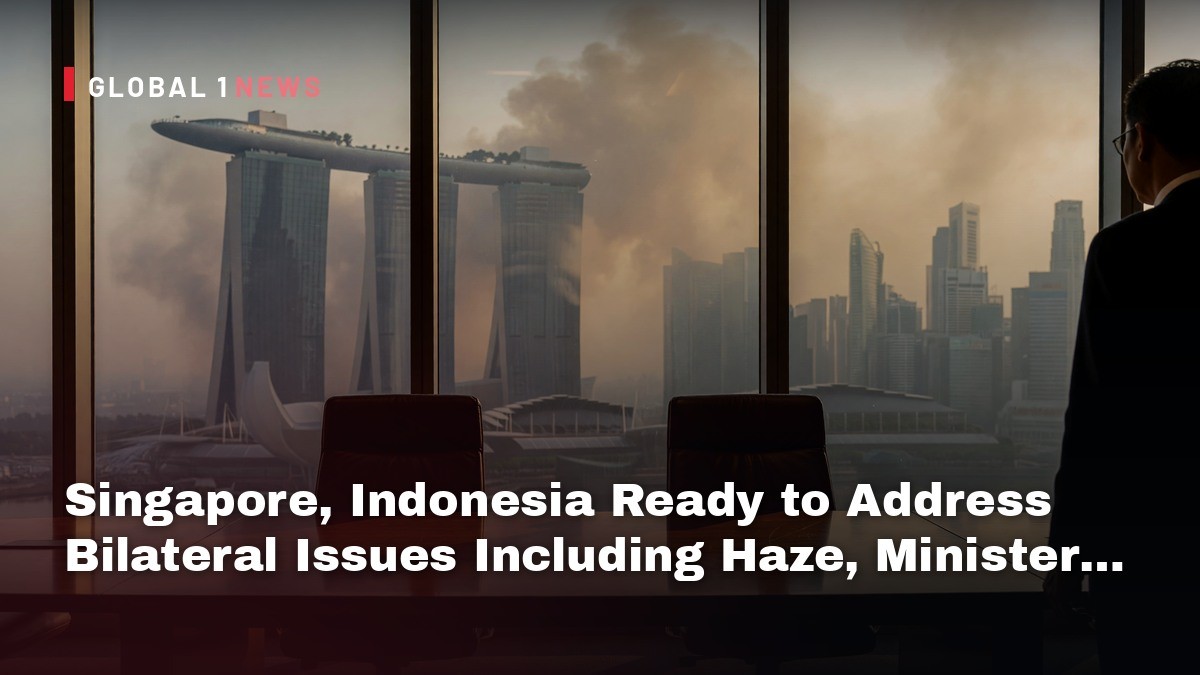
Singapore and Indonesia have entered a critical phase of diplomatic engagement as both governments seek to defuse a series of escalating bilateral tensions. Over the past several weeks, disputes over transboundary haze, energy supplies, and market transparency have strained the traditionally stable relationship between the two neighbours. In a series of high‑level meetings that culminated this week, Singapore’s Foreign Minister Vivian Balakrishnan and Indonesia’s President Prabowo Subianto, together with senior officials from both sides, pledged to translate political commitment into concrete action. The outcome—a joint task force on haze, a new bilateral hotline, and reiterated expectations on gas contracts—signals an attempt to move from rhetoric to implementation before the disputes widen into a broader diplomatic rift.
High‑level dialogue sets the tone for cooperation
Balakrishnan’s remarks in Jakarta underscored that “communication has occurred at the highest level” between Singapore’s Prime Minister Lawrence Wong and President Prabowo. The official transcript records that the two leaders exchanged messages in recent weeks, establishing a political framework for the subsequent technical talks. While Balakrishnan declined to disclose the specifics of his conversation with Prabowo, he emphasized that the senior‑level engagement creates a binding commitment to “do what is necessary” and to implement agreed plans promptly.
This diplomatic choreography reflects a broader pattern in Southeast Asian relations, where senior officials often use personal rapport to smooth over contentious issues. The Singapore‑Indonesia partnership, described by Indonesia’s foreign minister Arrmanatha Nasir as “mature enough” for candid exchanges, appears to be leveraging that maturity to manage current frictions without allowing them to spiral into a more entrenched confrontation.
Transboundary haze remains the most visible flashpoint
The haze crisis, driven by raging forest and peatland fires in Indonesia, has repeatedly pushed Singapore’s air quality to hazardous levels. Recent spikes in pollution, described as “some of the worst in more than a decade,” have amplified public frustration in Singapore and heightened political pressure on Jakarta to act decisively. Prime Minister Wong publicly signalled a willingness to investigate Indonesian companies that may be linked to the fires, invoking Singapore’s Transboundary Haze Pollution Act as a possible legal avenue.
In response, Senior Minister K Shanmugam pledged on October 19 to “sustain pressure” on those firms even after the immediate haze episode subsides. The bilateral talks produced a joint task force, announced after Balakrishnan’s meeting with Foreign Minister Arrmanatha. Although the composition and staffing of the task force were not disclosed, both sides agreed that it would “exchange information, to facilitate each authority’s work in our respective jurisdictions.” The task force is intended to coordinate investigations across the fire‑prone regions of Borneo and Sumatra, reflecting a shared recognition that unilateral action alone will not resolve the problem.
Energy supply tensions surface alongside environmental concerns
Parallel to the haze dispute, Indonesia’s recent reduction of natural gas exports to Singapore has added another layer of strain. The cut, described as a 9 percent reduction, was justified by Jakarta as being within contractual limits, aimed at diverting more gas to meet domestic electricity demand. Singapore’s Prime Minister Wong, speaking on Sunday, reiterated that all parties bound by commercial contracts must “honor their commitments,” and warned that Singapore’s gas importer would take necessary steps to protect its rights and interests.
Energy Minister Bahlil Lahadalia’s remarks that Indonesia might curtail energy supplies to nations that “do not respect Indonesia” were interpreted as a direct reference to Singapore’s stance on the haze issue. This linkage suggests that the two disputes are not being treated in isolation; rather, they are influencing each other in the broader context of bilateral trust and reciprocity.
Market transparency and the MSCI downgrade threat
Complicating the diplomatic landscape is the looming threat from global index provider MSCI, which has signalled a possible downgrade of Indonesia to “Standalone Market” status. The downgrade would stem from perceived deficiencies in market transparency, a concern amplified by comments from a former Indonesian minister alleging that Singaporean state investment firms pressured MSCI to downgrade the country. While the source material does not detail the veracity of these claims, the perception of external pressure has contributed to a climate of suspicion.
Both governments appear keen to prevent the MSCI issue from further destabilising their relationship. By focusing on concrete, mutually beneficial actions—such as the haze task force and the new bilateral hotline—each side signals a willingness to compartmentalise the market dispute while addressing more immediate, tangible concerns that directly affect citizens and businesses.
Institutional mechanisms for rapid resolution
One of the tangible outcomes of the recent talks is the establishment of a new hotline designed to handle bilateral differences swiftly. The hotline reflects an acknowledgement that timely communication can prevent misunderstandings from escalating into larger diplomatic incidents. Arrmanatha highlighted that the “mature” nature of the Indonesia‑Singapore relationship allows leaders to speak candidly, but also that institutional tools are essential for managing the day‑to‑day frictions that arise from complex interdependence.
Balakrishnan described the discussions with Indonesia’s new foreign minister as “very fruitful and sincere,” suggesting that the personal rapport between the two officials will underpin the operational effectiveness of the hotline and the task force. The emphasis on “quickly, promptly, and effectively” execution indicates that both sides are aware of the limited window for decisive action before public pressure and economic consequences intensify.
Implications for regional stability and future cooperation
The current diplomatic effort, while focused on immediate bilateral issues, carries broader implications for Southeast Asian stability. The haze problem, for instance, is a transnational environmental challenge that affects multiple ASEAN members beyond Singapore and Indonesia. A successful joint task force could serve as a model for cooperative fire‑management strategies across the region, potentially reducing the frequency and severity of future haze episodes.
Similarly, the handling of the gas export reduction and the MSCI transparency concerns will be watched closely by other regional partners. If Singapore and Indonesia can demonstrate that contractual disputes and market‑related tensions can be resolved through dialogue and established mechanisms, it may reinforce confidence in the ASEAN principle of non‑interference coupled with constructive engagement.
In the short term, the effectiveness of the task force and the responsiveness of the hotline will be the primary metrics by which observers assess progress. The willingness of senior leaders to maintain “constructive, respectful, and open” communication, as articulated by Arrmanatha, will be essential in translating political commitment into tangible outcomes that alleviate the immediate hardships faced by citizens on both sides of the Strait.
This article was produced with AI-assisted research and editorial support. Reporting is based on the source material cited below. Sources: The Diplomat; thediplomat.com; Global1.News (29 October 2026).
By Kenji Tanaka, Staff Writer
What's Your Reaction?
 Like
0
 Dislike
0
 Love
0
 Funny
0
 Wow
0
 Sad
0
 Angry
0

Japan Correspondent at Global1.News. Tokyo-based voice covering Japanese politics, technology, economy, and culture. Tracks the intersection of tradition and innovation in one of the world's most dynamic societies.











Comments (0)