
Saudi Arabia's Heritage Gamble: How Vision 2030 Is Turning Archaeology into Economic Power
Across the Gulf, a quiet but fierce competition is underway—not for oil market share or military basing, but for the past itself. As the UAE pivots toward artificial intelligence and Qatar consolidates its media empire, Saudi Arabia is deploying its vast sovereign wealth to reclaim a deeper currency: historical legitimacy.
Across the Gulf, a quiet but fierce competition is underway—not for oil market share or military basing, but for the past itself. As the UAE pivots toward artificial intelligence and Qatar consolidates its media empire, Saudi Arabia is deploying its vast sovereign wealth to reclaim a deeper currency: historical legitimacy. The Kingdom's bet, orchestrated by Crown Prince Mohammed bin Salman, is that heritage preservation is not a brake on modernization but its most potent accelerator. By transforming archaeological ruins into tourist destinations and mud-brick districts into luxury hospitality zones, Riyadh is attempting something unprecedented in the modern Middle East—a full-spectrum economic transformation that treats the past as a growth sector.
Saudi Arabia's Heritage Gamble: How Vision 2030 Is Turning Archaeology into Economic Power
Riyadh, Saudi Arabia – August 28, 2026 — When Crown Prince Mohammed bin Salman unveiled Vision 2030 in 2016, the strategic calculus was stark: oil revenues could no longer sustain a young, aspirational population. Nine years later, the numbers suggest the bet is paying off. Saudi Arabia welcomed 122 million visitors in 2025, surpassing the original target of 100 million five years ahead of schedule. The 2030 goal has been raised to 150 million—70 million international and 80 million domestic. Total tourism spending reached SAR 300 billion (USD 80 billion) in 2025, up 6% year-on-year, with the Kingdom ranking first globally in tourism revenue growth and topping the G20 in international visitor growth.
Yet the deeper story is not merely quantitative. It is about how a conservative monarchy, which only issued its first general tourist visas in September 2019, has repositioned itself as the custodian of Arab and Islamic civilization. Before that landmark policy shift, entry to the Kingdom was restricted to pilgrims, invited business travelers, and diplomats. Today, the same territory that was once sealed is being marketed as an open-air museum—and the strategic implications for the Gulf's balance of soft power are profound.
The UNESCO Scorecard: From Four to Eight Inscriptions
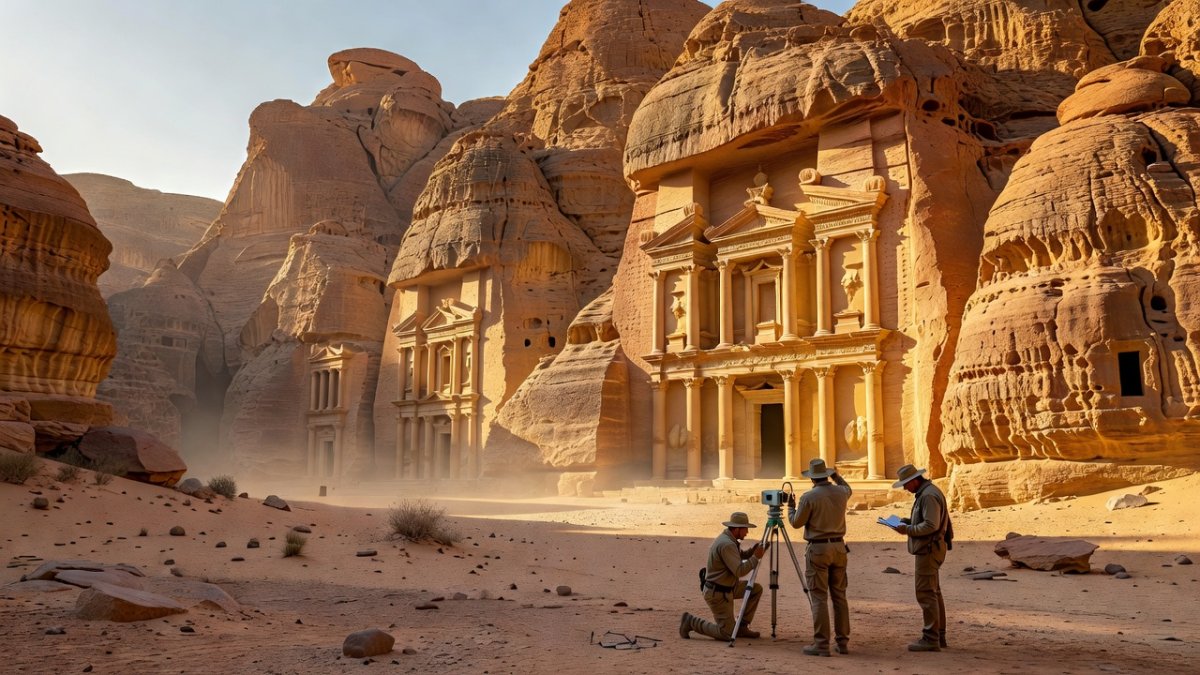
The most tangible evidence of this transformation is Saudi Arabia's UNESCO portfolio. In 2016, the Kingdom held four World Heritage inscriptions. Today it holds eight—a doubling that reflects both genuine archaeological wealth and a deliberate state strategy to legitimize its heritage claims on the global stage. The list reads as a chronological map of the Arabian Peninsula's civilizational depth: Hegra (inscribed 2008), the first site and the largest Nabataean settlement south of Petra, with 111 rock-cut tombs; At-Turaif District in ad-Diriyah (2010), the mud-brick capital of the first Saudi state founded in 1727; Historic Jeddah (2014), the historic Gate to Makkah; Rock Art in the Hail Region (2015), featuring approximately 10,000 years of petroglyphs; Al-Ahsa Oasis (2018), the world's largest self-contained oasis with 2.5 million date palms; Hima Cultural Area (2021), a 557-square-kilometer rock art complex in Najran; Uruq Bani Ma'arid (2023), the first natural inscription covering 12,765 square kilometers of the Empty Quarter; and Al-Faw Archaeological Area (2024), the pre-Islamic capital of the Kindah Kingdom.
The regional comparison is striking. The UAE holds one UNESCO inscription, Qatar one, Bahrain three, and Oman five. Saudi Arabia's eight inscriptions are not merely a matter of national pride—they are a strategic asset in the Gulf's soft power rivalry. When Western tourists choose between Dubai's artificial islands and AlUla's Nabataean tombs, they are choosing between two competing visions of Gulf modernity: one that builds the future from scratch, and one that excavates the past to fund the future.
AlUla: The Crown Jewel of the Heritage Economy
Nowhere is this strategy more visible than in AlUla, the desert valley in northwest Saudi Arabia that has become the flagship of the heritage economy. The Royal Commission for AlUla (RCU), established by royal decree in July 2017 and chaired personally by Crown Prince Mohammed bin Salman, has overseen a transformation that is both archaeological and commercial. The Journey Through Time Masterplan, unveiled in April 2021, is structured around USD 15 billion of public-private partnership opportunity. Its 2035 targets are ambitious: 2 million annual visitors, 38,000 to 40,500 new jobs, and a cumulative GDP contribution of SAR 120 to 150 billion (USD 32 to 40 billion).
The centerpiece is Hegra, which opened to the general public in October 2020—the first time non-Saudi visitors could enter without special authorization. The site, a Nabataean city that predates Petra's most famous monuments, has become the visual shorthand for the new Saudi Arabia: ancient tombs rendered in golden sandstone, photographed by influencers and heritage tourists alike. The RCU has also leveraged international expertise through the AFALULA partnership with France, established under a 2018 intergovernmental agreement. The Agence Française pour le Développement d'AlUla supplies archaeological and curatorial expertise, a deliberate borrowing of European heritage management models that signals Riyadh's willingness to learn from established players.
Diriyah Gate: Rebuilding the Cradle of the Saudi State
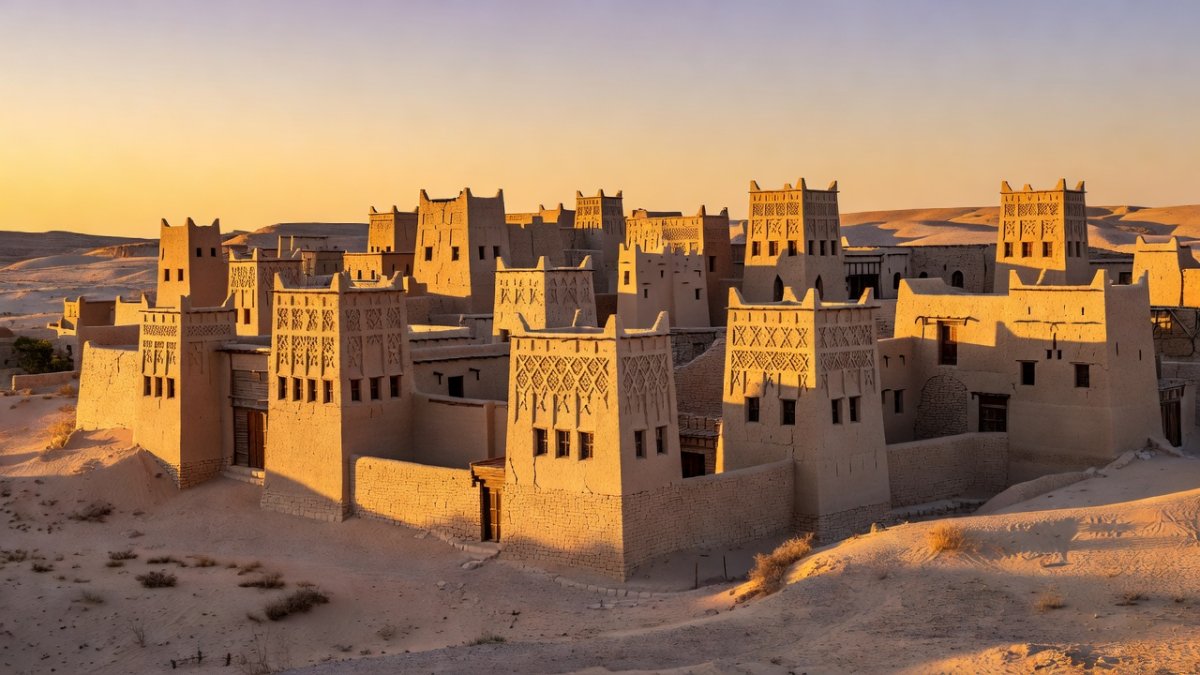
If AlUla represents the archaeological frontier, Diriyah Gate represents the political heart of the heritage project. At-Turaif, the mud-brick capital of the first Saudi state founded in 1727, was destroyed by Ottoman-Egyptian forces in 1818—a historical wound that the current leadership is literally rebuilding. The Diriyah Company, under Public Investment Fund (PIF) ownership and chaired by MBS, is executing a project with a total value of USD 63.2 billion (SAR 237 billion). The developed area spans 14 square kilometers and will include 28 luxury hotels—including Four Seasons, Ritz-Carlton Reserve, Aman, Raffles, Rosewood, Six Senses, Faena, Capella, Armani, and Bulgari—alongside 400 luxury retail units and 150 high-end dining establishments.
The architectural governance is as significant as the scale. A Najdi-inspired design code mandates mud-brick rendering and geometric mashrabiya screens, ensuring that the new development echoes the traditional architecture of the central Arabian plateau. The visitor target is 27 million annually by 2030, with roughly 7 million expected at the UNESCO core. The first operational phase, Bujairi Terrace dining precinct, opened in late 2022 and has become a weekend destination for Riyadh's elite. Conservation work is supervised by the Heritage Commission in collaboration with ICOMOS and the Aga Khan Trust for Culture—an unusual coalition that underscores the seriousness of the preservation effort.
Financing for Diriyah Gate reflects the sophistication of Saudi capital markets. The project combines direct PIF equity, hotel operator joint ventures, and debt issuance—including a SAR 11.25 billion debut sukuk priced in February 2025. This financial engineering is not incidental; it signals to international investors that Saudi giga-projects are bankable, not merely state-funded vanity.
Historic Jeddah: Adaptive Reuse and Its Discontents
The third pillar of the heritage strategy is Historic Jeddah, known as Al-Balad. The historic core spans approximately one square kilometer and contains more than 650 historic buildings, 36 mosques, five historic markets, and 16 ribats (historic caravanserais). The district's wooden roshan-fronted merchant houses, which once served as the gateway for pilgrims arriving by sea, are being restored under a multi-billion-dollar program announced by MBS in 2019. The initial phase covered 56 historic buildings; the scope has since expanded to the full 650-building inventory. The targets are 20 million annual visitors by 2035 and 25,000 jobs.
The adaptive reuse strategy prioritizes cultural and hospitality functions: three boutique heritage hotels—Beit Banaja, Beit Beeshi, and Beit Jokhdar—now operate in restored merchant houses. The district hosts the Islamic Arts Biennale at the Western Hajj Terminal and the Red Sea International Film Festival, positioning Al-Balad as a cultural hub rather than a static museum. However, this approach has drawn measured criticism from heritage specialists concerned about social fabric loss. The displacement of long-standing residents to make way for luxury hospitality is a tension that Riyadh has yet to fully resolve—a reminder that heritage preservation is never purely technical, but always political and social.
The Strategic Calculus: Diversification, Soft Power, and the PIF
The heritage economy is inseparable from the broader Vision 2030 diversification drive. The PIF's assets under management reached USD 1.21 trillion in 2025, making it one of the largest sovereign wealth funds globally. Non-oil GDP now accounts for 55% of 2025 real GDP, and female labor participation reached 33.9% in Q1 2026—figures that would have been unthinkable a decade ago. The giga-projects—NEOM (USD 500 billion), Red Sea, Qiddiya, ROSHN, and AMAALA—are often discussed as futuristic ventures, but they share a common logic with the heritage sites: all are designed to create new economic sectors that do not depend on hydrocarbon revenues.
The strategic calculus extends beyond economics. By positioning itself as the guardian of Arab and Islamic heritage, Saudi Arabia is challenging the UAE's and Qatar's claims to regional cultural leadership. Dubai has the Burj Khalifa and the Louvre Abu Dhabi; Doha has the Museum of Islamic Art and the World Cup. Saudi Arabia now offers something they cannot replicate: authenticity. The Nabataean tombs of Hegra, the mud-brick palaces of Diriyah, and the coral-stone houses of Jeddah are not imported or constructed—they are excavated and restored. In a region where legitimacy is often contested, the ability to claim the past is a form of power that money alone cannot buy.
Regional Implications
The Saudi heritage model is being watched closely across the Gulf. If AlUla and Diriyah Gate meet their 2030 targets, they will have demonstrated that heritage tourism can be a meaningful economic sector in the Gulf—not merely a cultural amenity. That would pressure the UAE and Qatar to deepen their own preservation efforts, potentially triggering a regional race for UNESCO inscriptions and heritage investment. The competition is not zero-sum, however. A rising tide of Gulf tourism could benefit all players, particularly if Saudi Arabia's 150 million visitor target materializes and regional travel networks expand.
The deeper question is whether the Saudi model can sustain its balance between progress and preservation. The tension is real: luxury hotels in mud-brick districts, influencer marketing at archaeological sites, and the displacement of historic communities all carry risks. Yet the Crown Prince's bet is that the economic returns—jobs, investment, and global prestige—will outweigh the cultural costs. If he is right, Saudi Arabia will have achieved something remarkable: a modernization that draws strength from the past rather than erasing it. If he is wrong, the Kingdom will have traded its heritage for a hospitality empire. The next decade will determine which legacy prevails.
By Malik Hassan, Staff Writer
This article was produced with AI-assisted research and editorial support. Sources: Al Arabiya English, Saudi Vision 2030, UNESCO, Saudi Press Agency, Royal Commission for AlUla.
What's Your Reaction?
 Like
0
Like
0
 Dislike
0
Dislike
0
 Love
0
Love
0
 Funny
0
Funny
0
 Wow
0
Wow
0
 Sad
0
Sad
0
 Angry
0
Angry
0
Middle East Correspondent at Global1.News. Based in Beirut, covering politics, conflict, energy, and society across the Middle East. Brings context and depth to a region often reduced to headlines.








Comments (0)