
Ankara Leads OIC Push for Gaza Ceasefire and Palestinian Rights
Türkiye chaired the OIC's 23rd Extraordinary Session in Jeddah, demanding stronger global action on Gaza ceasefire implementation, Palestinian rights, and accountability for Israeli violations.
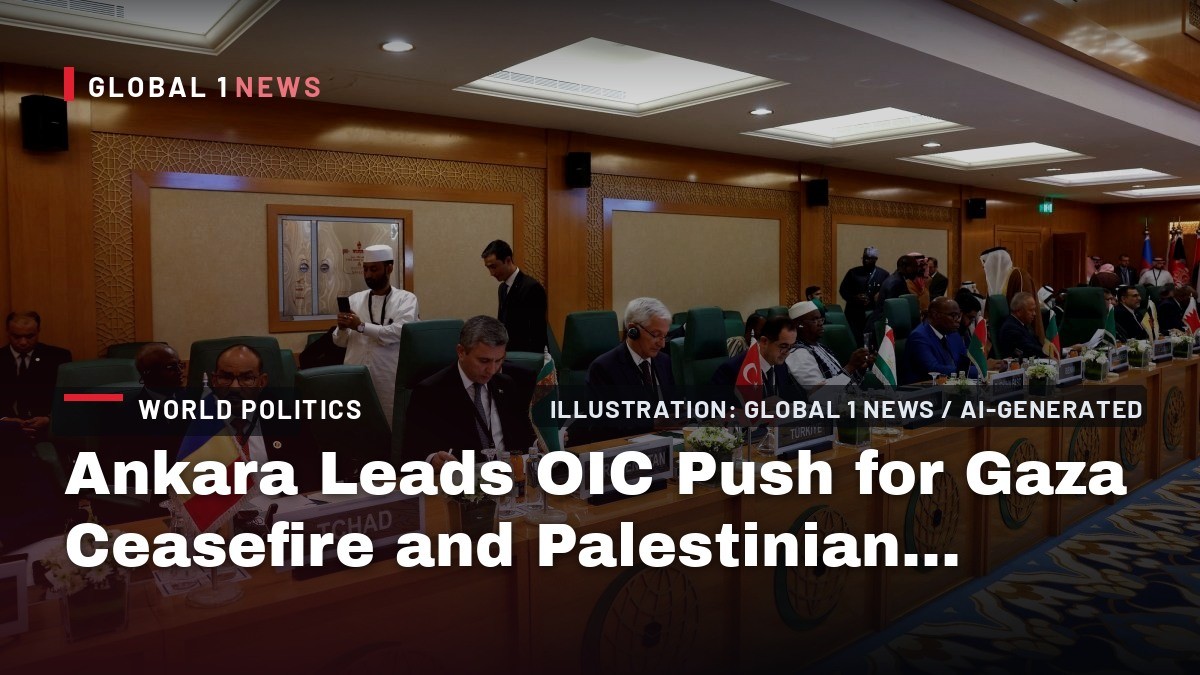
The Organization of Islamic Cooperation convened an extraordinary session in Jeddah this week with Türkiye at the helm, as Ankara pressed the international community to move beyond rhetoric and enforce accountability over Israel's ongoing violations in Gaza and the occupied West Bank. The meeting comes at a critical juncture, with Washington's 20-point Gaza plan facing mounting skepticism and the ceasefire teetering on what a senior U.S. envoy has called a "point of no return."
Ankara's Diplomatic Offensive: Türkiye Chairs OIC's 23rd Extraordinary Session in Jeddah
Jeddah, Saudi Arabia – August 28, 2026 — Turkish Deputy Foreign Minister Musa Kulaklıkaya chaired the OIC's 23rd Extraordinary Session of the Council of Foreign Ministers in Jeddah on Thursday, using the platform to demand stronger international action to halt Israeli attacks, fully implement the Gaza cease-fire, and secure the legitimate rights of the Palestinian people. The meeting, convened at a moment of acute regional fragility, focused on the Palestinian issue and the election of a new OIC secretary-general.
Ankara's Core Demands: Ceasefire Implementation and Humanitarian Access
In his address to the 57-member body, Kulaklıkaya delivered a pointed message: the time for passive observation has ended. He stressed the urgent need to halt attacks in Gaza, fully implement the cease-fire agreement, and ensure the uninterrupted, unhindered, and sustainable delivery of humanitarian assistance to the enclave's beleaguered population. The Turkish deputy minister framed these demands not as optional concessions but as binding obligations under international law.
Kulaklıkaya's emphasis on "unhindered" aid delivery carries particular weight. Months after the cease-fire took hold, humanitarian organizations continue to report significant obstacles to getting supplies into Gaza, with Israeli inspections and security protocols slowing the flow of food, medicine, and reconstruction materials. The Turkish position, echoed by multiple OIC member states, is that the cease-fire's credibility hinges on tangible improvements in living conditions for Gaza's civilians, not merely a reduction in hostilities.
No New Status Quo: Ankara's Warning on Israeli Violations
Perhaps the most significant element of Kulaklıkaya's address was his warning that Israeli violations against Palestinians and practices that Türkiye considers contrary to international law must not be allowed to become a "new status quo." This formulation signals Ankara's concern that the international community is gradually normalizing Israeli actions that were once universally condemned — a process of incremental acceptance that Türkiye is determined to resist.
The deputy minister called for stronger international efforts to ensure accountability, a phrase that resonates differently across the region. For Türkiye and many OIC members, accountability implies concrete consequences for violations, whether through diplomatic pressure, economic measures, or international legal mechanisms. For Israel and its allies, such language raises concerns about politicization of international bodies. The gap between these perspectives remains a fundamental obstacle to unified action.
The West Bank Dimension: Settler Violence and Al-Aqsa Provocations
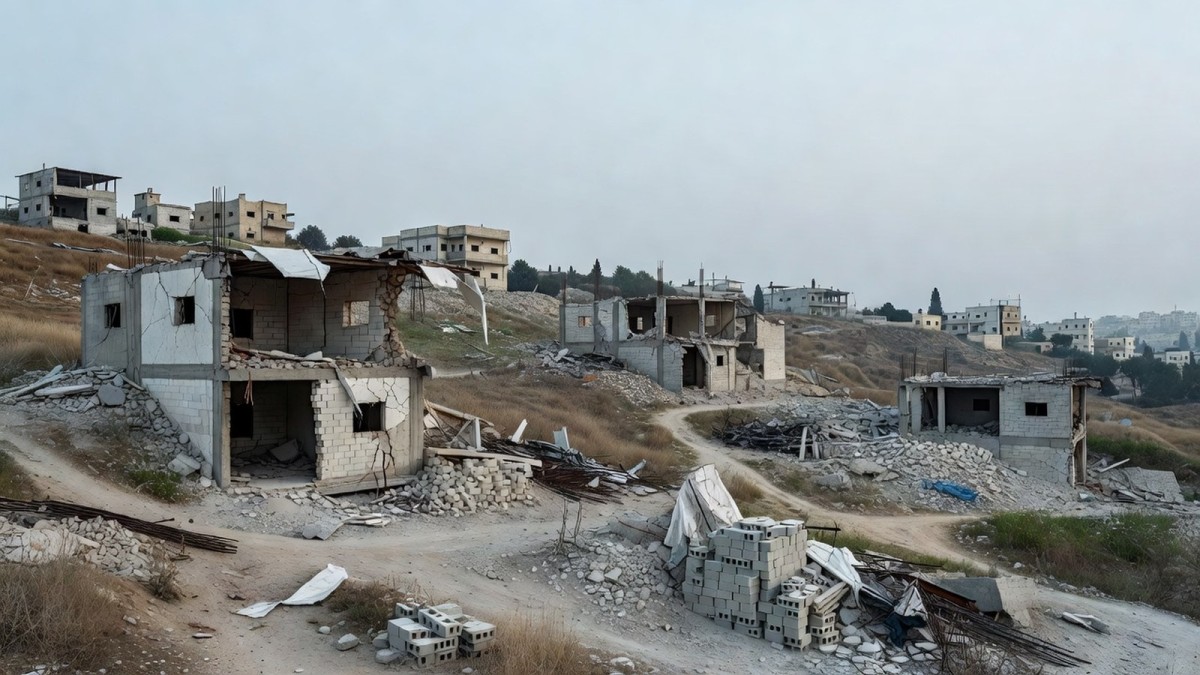
Kulaklıkaya's address devoted significant attention to the occupied West Bank, an arena that often receives less international focus than Gaza but where conditions are deteriorating rapidly. He expressed concern over the displacement of Palestinian families and rising settler violence, issues that have intensified in recent months as Israeli settlement expansion continues unabated.
The Turkish deputy minister also addressed provocations targeting Al-Aqsa Mosque and other holy sites in Jerusalem, warning that such actions risk fueling regional tensions. He reaffirmed Türkiye's support for preserving the historical status quo at the holy sites — a position that aligns Ankara with Jordan's custodial role and the broader Muslim world's concerns about Israeli attempts to alter the delicate arrangements governing access to the compound. The status quo question is not merely symbolic; it has historically served as a flashpoint capable of igniting wider regional conflict.
OIC's Institutional Role: A Collective Voice Under Strain
The OIC's 23rd Extraordinary Session underscores the organization's continued relevance as the only official body representing the Muslim world. Established at a summit in Rabat, Morocco, on September 25, 1969, in direct response to the burning of Al-Aqsa Mosque in Israeli-occupied East Jerusalem, the OIC was born from the very issue that dominated this week's discussions. Türkiye was among the organization's 25 founding members, and its Permanent Mission to the OIC has operated in Jeddah since July 24, 2015.
With 57 member states, the OIC is the world's second-largest intergovernmental organization after the United Nations. Its charter designates Jerusalem as the organization's headquarters, although the General Secretariat has operated from Jeddah since its establishment — a symbolic commitment to the Palestinian cause that remains unfulfilled. Russia, Bosnia-Herzegovina, Thailand, the Turkish Republic of Northern Cyprus, and the Central African Republic hold observer status, extending the organization's reach beyond the Muslim world proper.
The Diplomatic Backdrop: Washington's Plan and the 'Point of No Return'
The OIC meeting unfolded against a backdrop of intense diplomatic maneuvering over Washington's 20-point Gaza plan. Nikolay Mladenov, the U.S. official overseeing President Donald Trump's cease-fire proposal, insisted to the U.N. Security Council on Wednesday that the plan "has moved from the negotiating table to the engineering table." He confirmed that Hamas has agreed to the proposal's key provision to disarm and turn Gaza over to civilian rule.
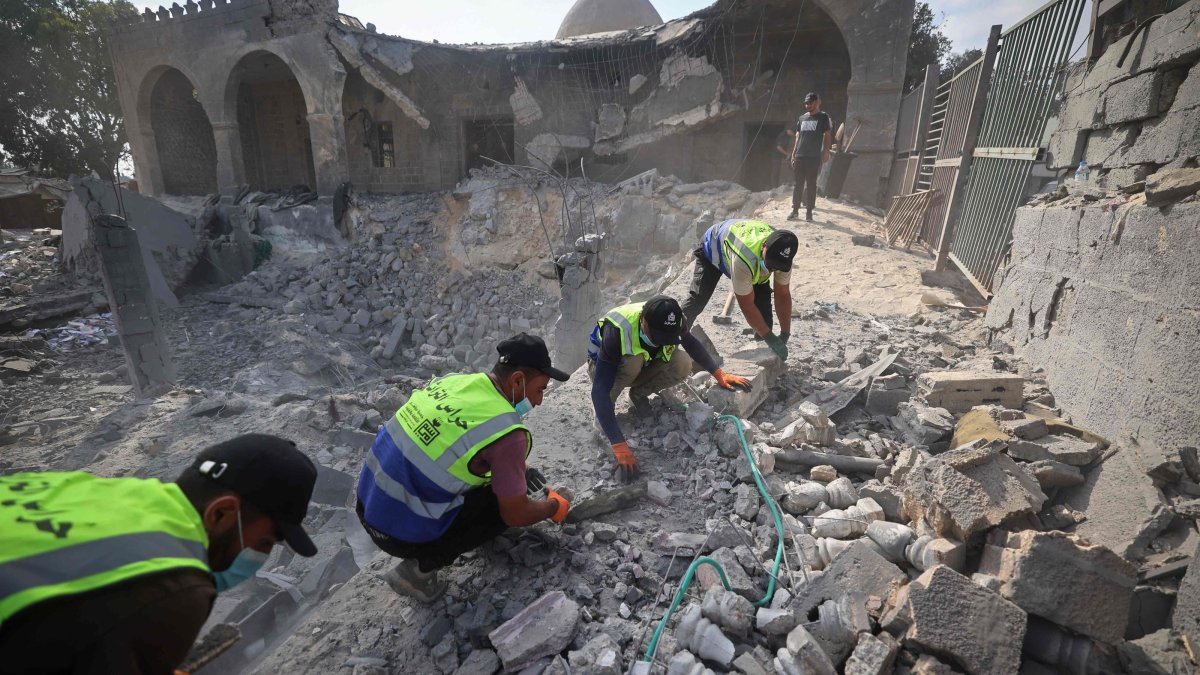
Yet Mladenov's own assessment was sobering. He warned that Israel's ongoing strikes since last October's cease-fire are still killing Palestinians — though in much smaller numbers — and that Gazans cannot feel the conflict is ending. His stark warning that a return to war would constitute "a point of no return for everyone" framed the stakes for the OIC deliberations. Israeli Prime Minister Benjamin Netanyahu, meanwhile, maintains that his forces will not withdraw from their current lines in Gaza until Hamas has handed over all its weapons — a condition that Hamas has not fully met despite its agreement to disarm.
Strategic Analysis: Türkiye's Regional Calculus and the Palestinian Cause
Ankara's decision to chair this extraordinary session reflects a deliberate strategic choice. Türkiye has positioned itself as the most vocal Muslim-majority state on the Palestinian issue, using its diplomatic weight to compensate for what it perceives as Arab states' hesitancy to confront Israel directly. This posture serves multiple purposes: it reinforces Türkiye's leadership credentials in the Islamic world, distinguishes Ankara from Arab capitals pursuing normalization with Israel, and aligns with domestic political currents that view Palestine as a core national concern.
The timing is significant. With the Abraham Accords having reshaped regional alignments, Türkiye has consistently criticized normalization agreements that proceed without meaningful progress on Palestinian statehood. By convening the OIC at this moment, Ankara is signaling that the Palestinian issue cannot be relegated to the margins of regional diplomacy, regardless of bilateral Israeli-Arab rapprochement.
Bilateral Diplomacy: Kulaklıkaya's Sideline Meetings
On the sidelines of the main session, Kulaklıkaya conducted a series of bilateral meetings that underscored Türkiye's diplomatic reach. He held talks with Palestinian Foreign Minister Varsen Aghabekian, reaffirming Türkiye's support for the Palestinian cause and stressing the importance of maintaining diplomatic pressure on the Israeli government to fulfill its commitments and move to the second phase of the Gaza peace plan.
Additional meetings with Saudi Deputy Foreign Minister Waleed bin Abdulkarim El Khereiji, Maldives Foreign Minister Abdulla Khaleel, and Bangladesh State Minister for Foreign Affairs Humayun Kabir covered bilateral ties and regional issues. Kulaklıkaya also met newly elected OIC Secretary-General Ismail Ould Cheikh Ahmed, Indonesian Deputy Foreign Minister Anis Matta, Senegalese Foreign Minister Cheikh Niang, and Gambian Foreign Minister Sering Modou Njie — a diplomatic whirlwind that demonstrated Ankara's engagement across the Islamic world's diverse constituencies.
The Palestinian Perspective: Aghabekian's Push for Sustained Pressure
Palestinian Foreign Minister Varsen Aghabekian used the Jeddah platform to call for intensified efforts to secure humanitarian aid, support the Palestinian government, and address Israeli settlement activity. Her separate meetings with officials from Saudi Arabia, the UAE, Senegal, Indonesia, and Somalia reflected a coordinated Palestinian strategy to mobilize support across the OIC's geographic and political spectrum.
The Palestinian diplomatic push comes at a moment of profound uncertainty. The Palestinian Authority faces fiscal crisis, political marginalization, and Israeli restrictions that undermine its ability to govern effectively. Aghabekian's emphasis on supporting the Palestinian government signals concern that the international community's focus on Hamas disarmament may come at the expense of strengthening the institutions that could eventually govern a Palestinian state.
Regional Implications: Ceasefire Sustainability and the Road Ahead
The OIC's extraordinary session leaves several questions unanswered. Can the organization translate its collective condemnation into concrete action that influences Israeli behavior? Will the newly elected secretary-general, Ismail Ould Cheikh Ahmed, bring fresh energy to the Palestinian file? And critically, can the Trump administration's plan survive the gap between its ambitious vision and the realities on the ground?
Mladenov's warning that a return to war would leave "nothing left on the ground to rebuild" underscores the catastrophic stakes. His framing of the choice — "A Gaza disarmed, rebuilt and reconnected to the world. Or a Gaza rearmed, divided and in rubble, with a radicalized generation raised inside it and the next war already on the horizon" — captures the binary facing regional and international actors.
For Türkiye, the OIC chairmanship represents an opportunity to shape the narrative and maintain pressure on Israel and its allies. But Ankara's influence has limits. The United States remains the indispensable actor in Israeli-Palestinian diplomacy, and Washington's willingness to pressure Netanyahu will ultimately determine whether the ceasefire holds and whether the two-state solution remains viable.
The OIC's founding purpose — responding to the desecration of Al-Aqsa — remains tragically relevant nearly six decades later. This week's extraordinary session in Jeddah demonstrated that the organization retains its collective voice on Palestine, but whether that voice translates into meaningful change depends on factors largely beyond the OIC's control: Israeli political calculations, American diplomatic will, and the resilience of a Palestinian population that has endured decades of displacement, occupation, and war.
By Malik Hassan, Staff Writer
This article was produced with AI-assisted research and editorial support. Sources: Daily Sabah, Reuters, Associated Press.
What's Your Reaction?
 Like
0
Like
0
 Dislike
0
Dislike
0
 Love
0
Love
0
 Funny
0
Funny
0
 Wow
0
Wow
0
 Sad
0
Sad
0
 Angry
0
Angry
0

Middle East Correspondent at Global1.News. Based in Beirut, covering politics, conflict, energy, and society across the Middle East. Brings context and depth to a region often reduced to headlines.











Comments (0)