
Saint-Louis' Hidden Slave-Trade Legacy Fades as Time Erases Its Traces
In the northern reaches of Senegal, where the Atlantic Ocean meets the Senegal River, the island city of Saint-Louis holds a secret that is quietly crumbling into dust. A two-century-old building, its walls scarred by salt air and neglect, stands as one of the last physical witnesses to a chapter of history that many here would rather forget.
In the northern reaches of Senegal, where the Atlantic Ocean meets the Senegal River, the island city of Saint-Louis holds a secret that is quietly crumbling into dust. A two-century-old building, its walls scarred by salt air and neglect, stands as one of the last physical witnesses to a chapter of history that many here would rather forget. As the traces of this slave-trading past fade, so too does a crucial piece of Senegal's memory, a story that connects our shores to the wider African diaspora in ways that remain profoundly under-told.
Saint-Louis' Hidden Slave-Trade Legacy Fades as Time Erases Its Traces
Saint-Louis, Senegal — For generations, the world has looked to Goree Island as the symbol of Senegal's painful encounter with the transatlantic slave trade, its infamous House of Slaves drawing pilgrims and presidents alike. Yet just a few hours north, the island of Saint-Louis, France's first trading post in sub-Saharan Africa, played a role that was equally significant, if far less celebrated. This is the story of a city that served as a major transit hub for captives, a history now threatened by silence, decay, and the relentless passage of time.
A Forgotten Hub of the Transatlantic Trade
Saint-Louis occupies a unique and striking geography, perched on a narrow strip of land between the Atlantic Ocean and the Senegal River. This strategic position made it a natural gateway for European powers seeking to penetrate the African continent. Established in 1659, it was France's first trading post in sub-Saharan Africa, a distinction that would shape its destiny for centuries. By the 18th century, it had grown into the capital of the French colonial empire in West Africa, a bustling, cosmopolitan city where commerce, culture, and cruelty intermingled on the same quays.
The island's role in the slave trade was not as a final point of departure for the Americas, but rather as a crucial holding point. Captives were brought from the interior, held in depots across the city, and then shipped onward, often to Goree or directly to Caribbean plantations. Tens of thousands of Africans passed through this transit hub, their fates sealed within the walls of buildings that still stand today, though few recognize their original purpose. The sheer scale of this operation is a stark counterpoint to the city's current reputation as a sleepy, artistic enclave.
Unlike Goree, which has been meticulously curated as a site of memory, Saint-Louis has never fully confronted its role in this history. The narrative of the island has been dominated by its colonial architecture, its jazz festival, and its status as a UNESCO World Heritage site, while the darker foundations of its prosperity have been left unexamined. This silence is not accidental; it is a choice made by generations who found it easier to look away from the foundations upon which their city was built.
The muted role of Saint-Louis in the national memory is striking when one considers the evidence. The island was not a peripheral player; it was a central cog in the French colonial machine. The wealth that built the grand balconies and ornate facades of the city's mansions was, in large part, derived from the bodies of enslaved people. To walk the streets of Saint-Louis today is to walk over a history that has been deliberately paved over, a history that is only now beginning to resurface through the work of dedicated historians and the fading traces of the buildings themselves.
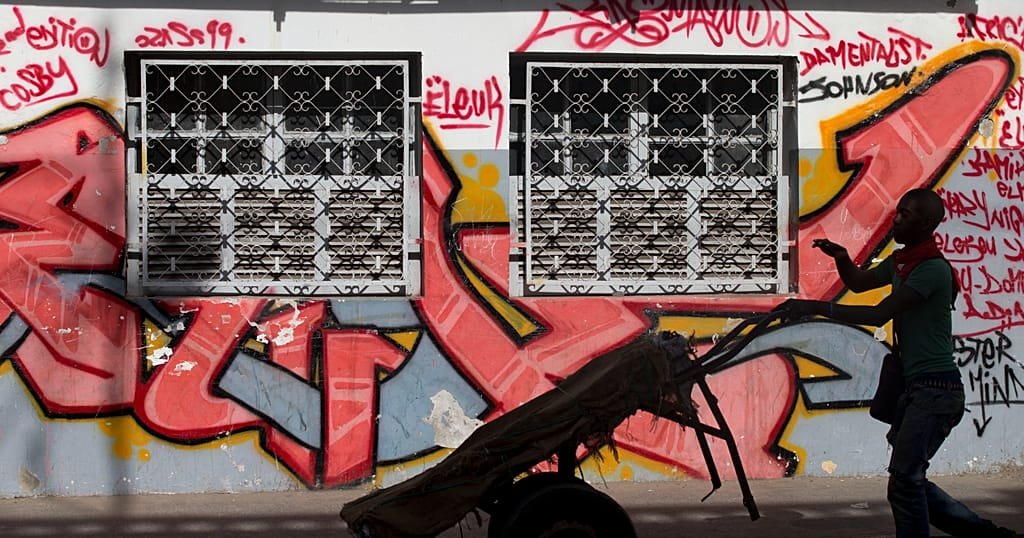
The Last Surviving Slave Depot
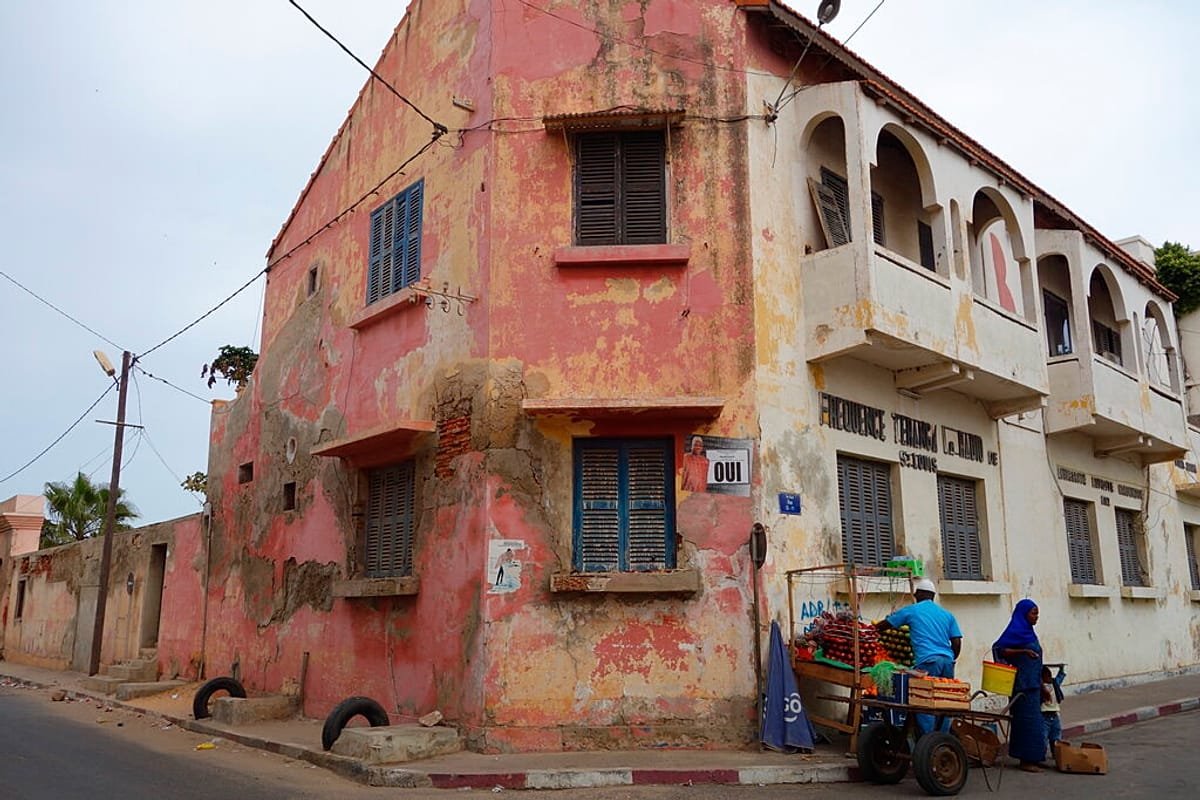
On the banks of the river, a three-storey building faces the water, its facade weathered and its purpose obscured by time. A discreet plaque affixed to the wall offers the only clue to its past, reading: "On the ground floor lie the remains of the only slave depot preserved in Saint-Louis." This building, known to local historians, is the last of its kind on the island, a fragile relic of a brutal system that once defined the city's economy.
Historian and teacher Mamadou Diallo has dedicated years to studying this structure and the history it represents. According to Diallo, the building was constructed by the Bordeaux-based trading company Maurel and Prom, a powerful commercial house that dominated trade along the West African coast. Built between 1822 and 1825, the depot was designed for efficiency, with five cells in the holding areas where captives were packed before being loaded onto ships. The architecture itself speaks to the dehumanizing logic of the trade: spaces designed not for living, but for containment.
Today, the interior of the building is a shadow of its former self. Overgrown weeds and debris litter the ground floor, and the walls are stained with damp and neglect. Yet, remarkably, the original wooden ceiling remains intact, a silent witness to the horrors that occurred beneath it. The building is today owned by a Senegalese family, who inherited the property but have done little to preserve or interpret its history. It stands as a monument not to memory, but to indifference.
Diallo laments the state of the depot, noting that the lack of recognition is a form of erasure. A surviving slave depot that has endured for two centuries is being allowed to decay, he said, while the contrast with Goree is stark. There, the House of Slaves has been transformed into a pilgrimage site, a place where visitors can confront the past. Here, in Saint-Louis, the equivalent structure is left to crumble, its story untold to the thousands of tourists who pass by each year without a second glance.
The fate of this building is symbolic of a larger problem. The preservation of memory requires resources, political will, and a collective desire to confront uncomfortable truths. In Saint-Louis, all three have been in short supply. The depot, once a site of immense suffering, is now merely an abandoned building, its significance known only to a handful of historians and the families who live in its shadow.
Numbers Behind the Silence
The statistics surrounding Saint-Louis' role in the slave trade are staggering, yet they remain largely absent from the public discourse. Historical records indicate that at least 10,000 enslaved people passed through Saint-Louis every year during the 18th century, a figure that underscores the island's importance as a transit hub. The peak of this trade occurred during the "high-water season, from May to November," when the Senegal River was navigable and captives could be transported from the interior with greater ease.
The victims of this trade were not random; they were drawn from specific regions, most notably the pre-colonial kingdom of Galam, located between modern-day Senegal and Mali. This kingdom was a major source of captives, who were marched hundreds of miles to the coast in chains. Historian Ibrahima Seck, director of research at the Whitney Plantation Slavery Museum in Louisiana, has studied these routes extensively. He notes that "gold and captives were the primary commodities" traded in Saint-Louis, alongside other valuable goods like gum and ambergris.
Seck's research paints a vivid picture of a city built on human suffering. "Every old house was potentially a slave-holding facility," he has observed, a statement that reframes the way we view the colonial architecture of Saint-Louis. The grand mansions, the elegant courtyards, the sweeping staircases—all of these were, in some cases, spaces where human beings were held against their will, awaiting transport to an unknown fate. The scale of this operation is difficult to comprehend, yet the numbers force us to confront it.
According to the Atlas of the Transatlantic Slave Trade, some 145,000 captives were officially transported from Saint-Louis during the course of the trade. This figure, while significant, likely undercounts the true number, as many captives died before embarkation or were transported through unofficial channels. The official records, however, are enough to establish Saint-Louis as a major player in the transatlantic slave trade, a fact that stands in tension with the city's self-image as a cultural and intellectual center.
The silence surrounding these numbers is deafening. In schools, in museums, and in public discourse, the slave trade is rarely discussed in the context of Saint-Louis, where the focus falls instead on colonial architecture and artistic legacy. It is a comfortable fiction that grows increasingly untenable as historians like Seck and Diallo bring the facts to light.
Revolt, Resistance and the Signares
The history of Saint-Louis is not solely one of victimhood; it is also a history of resistance. In 1779, a group of captives who had been held for 11 months awaiting transport staged a revolt, killing a French guard in a desperate bid for freedom. The rebellion was brutally suppressed, and many of the captives were subsequently massacred. This event, though little known, is a testament to the resilience of those who refused to accept their fate passively.
The city was also home to a unique class of women known as the signares. These were wealthy African or biracial women who formed alliances or temporary marriages with European merchants and officers. The signares were powerful figures in Saint-Louis society, controlling property, trade, and even political influence. Their existence complicates the narrative of the slave trade, as they were both participants in and victims of the colonial system. Some signares owned enslaved people themselves, while others used their positions to protect their families and communities.
The legacy of the signares is still visible in Saint-Louis today, in the grand mansions that line the grid-pattern streets of the island. These colonial mansions, with their balconies and crumbling walls, are a reminder of a time when the city was a crossroads of cultures and economies. The governor's palace, once the seat of French colonial power, also housed slave depots, a fact that is rarely mentioned in the official histories of the building.
The physical remnants of this era are everywhere, yet they are often overlooked. The ancient trading houses along the river quays, which once served as depots for captives and goods, are now abandoned or repurposed. The grid-pattern streets, a hallmark of French urban planning, were designed to facilitate the movement of goods and people, including the enslaved. To walk these streets today is to walk in the footsteps of both the oppressors and the oppressed, a duality that is central to the city's identity.
A Taboo Subject in a City of Memory
Despite the wealth of historical evidence, the slave trade remains a taboo subject in Saint-Louis. Writer and local expert Louis Camara has been outspoken on this issue, noting that the history is "completely unknown to the majority of Saint-Louis residents who prefer to sweep it under the rug." This willful ignorance is a coping mechanism, a way of distancing oneself from a past that is too painful to confront directly.
Historian Mamadou Diallo echoes this sentiment, calling the topic "a taboo subject" that is rarely discussed in public forums. The silence is not limited to casual conversation; it extends to official institutions, including schools and museums. There is no memorial to the victims of the slave trade in Saint-Louis, no museum dedicated to their memory. The city has chosen to forget, and in doing so, it has allowed the physical traces of this history to decay.
The contrast with Goree Island is instructive. Goree's House of Slaves was championed by its renowned curator, Joseph Ndiaye, who dedicated his life to preserving the memory of the slave trade and educating visitors about its horrors. Ndiaye's work turned Goree into a symbol of the African diaspora's resilience, a place where the past is not only remembered but honored. Saint-Louis, by contrast, has no such champion, no figure who has taken on the mantle of preserving its slave-trade history.
The abolition of the slave trade in France's colonies in April 1848 brought an end to the legal trade, but it did not bring an end to the suffering. Former captives were resettled in "freedom villages," where they struggled to rebuild their lives in the shadow of their trauma. These villages, like the slave depots, have largely been forgotten, their histories unmarked and uncelebrated.
The taboo surrounding the slave trade in Saint-Louis is not unique to Senegal; it is a phenomenon seen across Africa, where the legacy of the trade is often overshadowed by the narrative of colonial oppression. Yet the silence is particularly striking in Saint-Louis, a city that prides itself on its cultural heritage and its role as a center of memory. To truly honor that heritage, the city must confront the full scope of its history, including the parts that are difficult to acknowledge.
What's at Stake for Senegal's Heritage
The stakes of this forgetting are high, not just for Saint-Louis, but for Senegal and Africa as a whole. In mid-June, Ghana hosted a first global conference aimed at turning the UN resolution recognizing the transatlantic slave trade as "the gravest crime against humanity" into concrete commitments. The conference brought together scholars, activists, and government officials from across the diaspora to discuss reparations, memorialization, and education. Saint-Louis, with its rich but neglected history, should have been a central player in these discussions.
The descendants of those involved in the trade and those enslaved are mostly not talking about it, a silence that perpetuates the erasure of this history. Yet the preservation of Saint-Louis' memory matters deeply for Senegal's cultural identity. The island is a UNESCO World Heritage site, celebrated for its architecture and its role in the development of West African culture. To ignore its slave-trade history is to present a distorted picture of the city and the nation.
Tourism could play a role in changing this narrative. Saint-Louis already attracts visitors from around the world, drawn by its jazz festival, its colonial architecture, and its unique atmosphere. By incorporating the slave-trade history into the city's tourism offerings, Senegal could create a more complete and honest portrait of its past. This would not only educate visitors but also provide economic opportunities for local communities, who could benefit from heritage tourism.
The preservation of the last surviving slave depot is a starting point, but it is not enough. The city needs a comprehensive strategy for memorialization, one that includes the restoration of historic buildings, the creation of interpretive centers, and the integration of this history into school curricula. Such efforts would honor the memory of the tens of thousands of Africans who passed through Saint-Louis and ensure that their stories are not lost to time.
For Senegal, a nation that has positioned itself as a leader in African culture and diplomacy, the failure to preserve this history is a missed opportunity. The country has the chance to set an example for the rest of the continent, showing that it is possible to confront the painful aspects of the past while building a brighter future. The fading traces of Saint-Louis' slave-trading past are a call to action, a reminder that memory is a choice, and that the choice to forget has consequences.
As the walls of the old depot continue to crumble, so too does the opportunity to preserve this history for future generations. The island of Saint-Louis, with its unique beauty and its complex history, deserves to be remembered in full — not just for its architecture and its music, but for the truth of what happened within its walls.
By Amara Diop, Staff Writer
This article was produced with AI-assisted research and editorial support. Reporting is based on sources cited in the article.
What's Your Reaction?
 Like
0
Like
0
 Dislike
0
Dislike
0
 Love
0
Love
0
 Funny
0
Funny
0
 Wow
0
Wow
0
 Sad
0
Sad
0
 Angry
0
Angry
0

West Africa/Sahel Correspondent at Global1.News. Dakar-based journalist covering politics, security, climate, and development across Francophone and Anglophone West Africa. Tells the stories of a region undergoing profound transformation.













Comments (0)